
Rated Load Output as a Procurement-Level Requirement
In regulated and B2B deployment scenarios, chargers are rarely evaluated by peak output alone. Procurement decisions increasingly focus on how a charger behaves when operating at its rated load for extended periods. Offices, retail counters, logistics facilities, and shared charging stations often keep chargers plugged in continuously, supplying power close to their nominal rating rather than cycling between idle and short bursts.
Under these conditions, output stability becomes a measurable requirement. Voltage deviation, current fluctuation, and thermal drift directly affect device safety, charging consistency, and component lifespan. A charger that meets nominal specifications but cannot maintain stable output under rated load introduces operational risk after deployment.
For this reason, stable rated-load performance is a core qualification criterion when selecting a certified charger supplier for large-scale programs.
Design Measures That Enable Continuous Rated Output
AOVOLT chargers are designed with continuous rated operation as a baseline scenario rather than an edge case. Electrical and thermal margins are built into the design so that rated load does not represent a stress condition.
Key implementation measures include:
-
Power stage sizing above nominal requirement
Switching components, transformers, and rectification stages are selected with sufficient margin to avoid operating at their maximum limits during rated output. -
Efficiency optimization at rated load
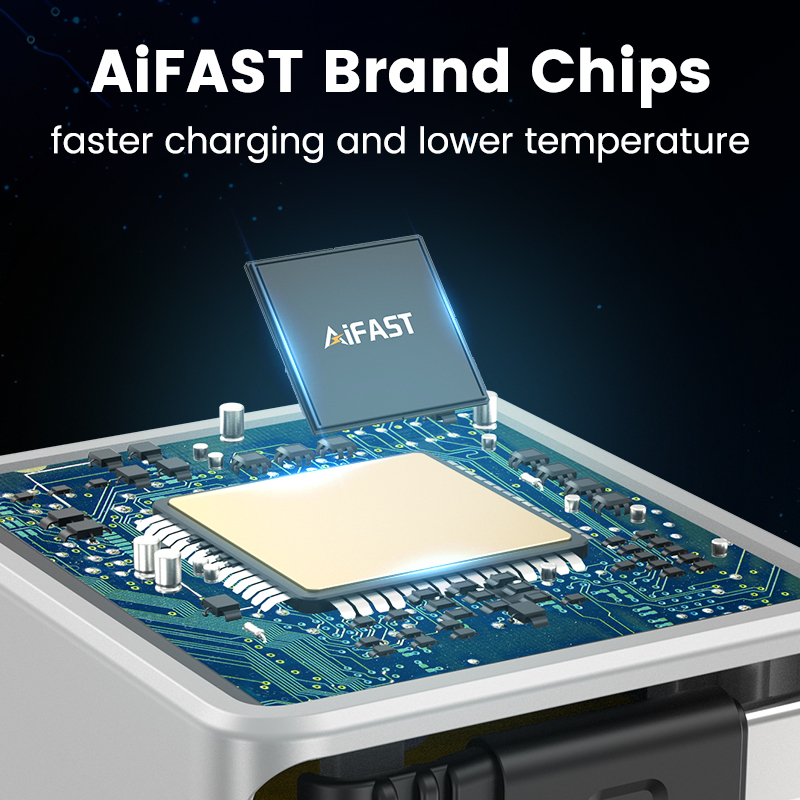
Conversion stages are tuned to achieve high efficiency near the rated output point, minimizing energy loss and reducing internal heat accumulation. -
Thermal dissipation aligned with enclosure constraints
Heat paths are designed to spread thermal load across multiple surfaces instead of concentrating it near high-power components.
Once validated, these configurations are fixed at the production level to ensure that every unit delivered behaves identically under rated load. This consistency is a defining characteristic of a certified charger supplier serving regulated markets.
Electrical Stability Parameters Verified at Rated Load
Stable output under rated load is verified through a defined set of electrical measurements rather than visual inspection or short functional tests.
Typical validation parameters include:
-
Output voltage regulation maintained within ±5% at full rated current
-
Current stability with no oscillation or step fluctuation during continuous operation
-
Load regulation response when transitioning between 80% and 100% rated load
-
Ripple and noise levels controlled within safety and EMC limits
-
Line regulation performance across the full input voltage range
These parameters are measured under continuous operation rather than momentary load application. Passing these tests demonstrates that a charger can sustain rated output without degradation, which is essential for any certified charger supplier supporting long-duration use cases.
Thermal Behavior Under Continuous Rated Operation
Thermal performance is inseparable from electrical stability. When chargers operate at rated load for extended periods, internal temperature rise directly influences component reliability and protection behavior.
AOVOLT evaluates thermal behavior using:
-
Steady-state temperature rise testing at full rated load
-
Hotspot monitoring near primary switching and secondary rectification components
-
Surface temperature mapping to ensure user-facing areas remain within safe limits
-
Thermal protection activation thresholds verified to engage predictably without abrupt shutdown
By validating these conditions, chargers can maintain stable output without premature throttling or unexpected protection triggers. This level of validation is expected from a certified charger supplier delivering into compliance-sensitive environments.
Specification Comparison: Nominal vs Rated-Load-Oriented Chargers
| Evaluation Aspect | Nominal-Oriented Charger | Rated-Load-Oriented Configuration |
|---|---|---|
| Output stability at full load | Degrades over time | Maintained within limits |
| Voltage deviation | Increases with heat | Controlled under steady state |
| Thermal rise | Rapid hotspot formation | Distributed and managed |
| Protection behavior | Abrupt intervention | Predictable response |
| Component stress | Near maximum rating | Operates with margin |
| Deployment suitability | Intermittent use | Continuous operation |
This comparison highlights why rated-load performance must be engineered and verified rather than assumed.
Certification Testing Aligned with Rated Load Conditions
Certification standards place strong emphasis on behavior under rated conditions. Safety, insulation, and temperature rise tests are conducted with the charger operating at its declared rating.
AOVOLT aligns internal validation procedures with certification testing requirements, ensuring that:
-
Temperature rise remains within allowable limits at rated load
-
Insulation integrity is maintained during prolonged operation
-
Protective circuits function correctly without nuisance trips
-
Output parameters remain stable throughout test duration
By aligning design validation with certification methodology, a certified charger supplier can avoid discrepancies between internal testing and external compliance results.
Rated-Load Optimization Based on Major Device Ecosystems
When chargers are deployed at scale, rated-load stability must align with the charging behavior of dominant device ecosystems rather than generic test loads. AOVOLT structures rated-load optimization by validating electrical and thermal performance against the charging profiles of three major smartphone brand categories.
1.Apple ecosystem (iPhone / iPad charging plugs)
Apple devices place strong emphasis on voltage stability and temperature control during long charging sessions. Under rated load, AOVOLT chargers prioritize tight voltage regulation and low ripple output. Output deviation is controlled within ±3%, and ripple is limited to ≤ 4%, reducing thermal stress on both the charger and the device. Protection thresholds are tuned to avoid early throttling while maintaining surface temperature below typical comfort limits.
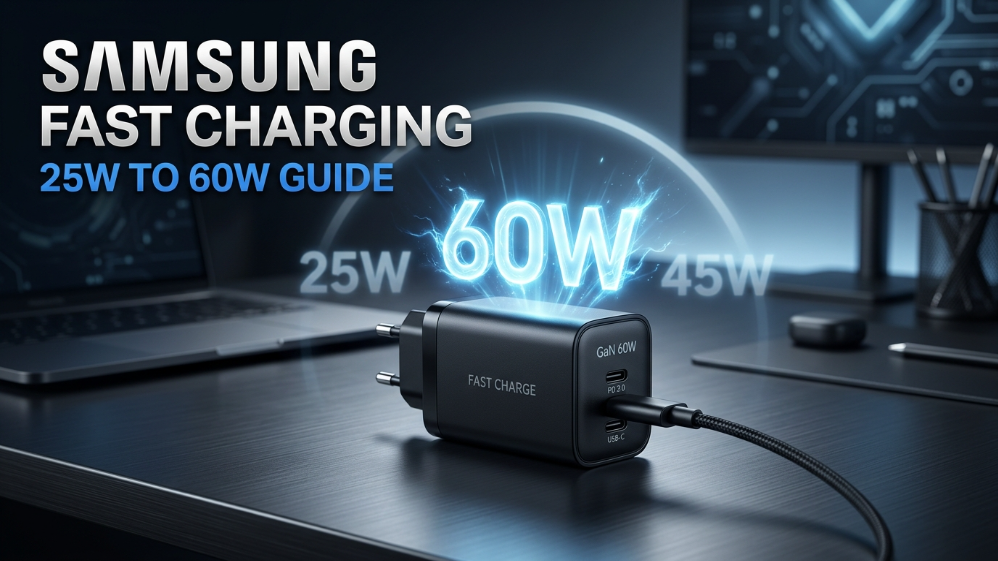
2.Samsung ecosystem (Galaxy series fast charging plugs)
Samsung devices frequently operate near higher current ranges and stress PPS behavior under rated load. AOVOLT optimizes efficiency at the rated output point, achieving ≥ 92% conversion efficiency to limit internal heat buildup. Current stability is tuned to minimize oscillation during PPS adjustment, maintaining fluctuation below 4%, which prevents repeated renegotiation during extended charging.
3.Huawei ecosystem (adaptive charging plugs)
Huawei devices emphasize adaptive charging and long-duration stability. For this category, AOVOLT focuses on thermal margin and component derating. Internal hotspot temperatures are kept ≤ 85 °C during 2-hour rated-load tests, compared with industry averages exceeding 95 °C. This margin allows chargers to maintain output without triggering thermal protection during prolonged use.
By aligning rated-load optimization with real device charging behavior rather than abstract load models, AOVOLT ensures that chargers remain electrically stable and thermally controlled across dominant market ecosystems. This device-oriented approach is a core requirement for a certified charger supplier supporting large-scale, mixed-brand deployment.
Deployment Readiness and Long-Term Use Assurance
Chargers designed for stable rated-load operation reduce downstream costs related to failure rates, warranty claims, and replacement cycles. For regulated deployments, this stability also simplifies safety audits and compliance reviews.
By delivering chargers that remain electrically and thermally stable under continuous rated operation, AOVOLT supports long-term deployment without performance drift. This capability is a key reason buyers select a certified charger supplier rather than a general accessory vendor.
For charger specifications and certified models:
https://www.esccharge.com/products/charger-plug
For OEM sourcing and compliance-driven deployment planning:
https://www.esccharge.com/solution/customized-solution