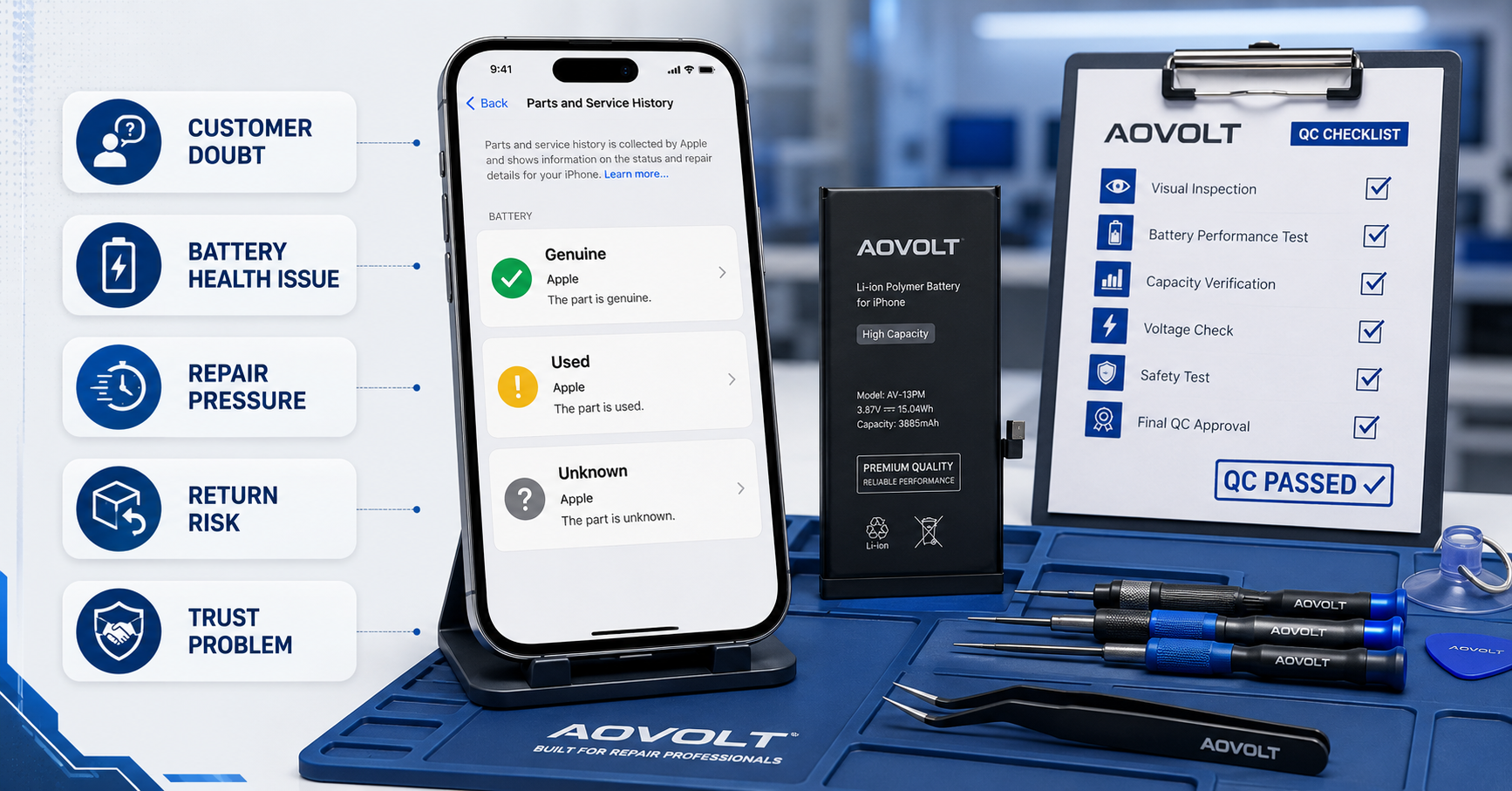

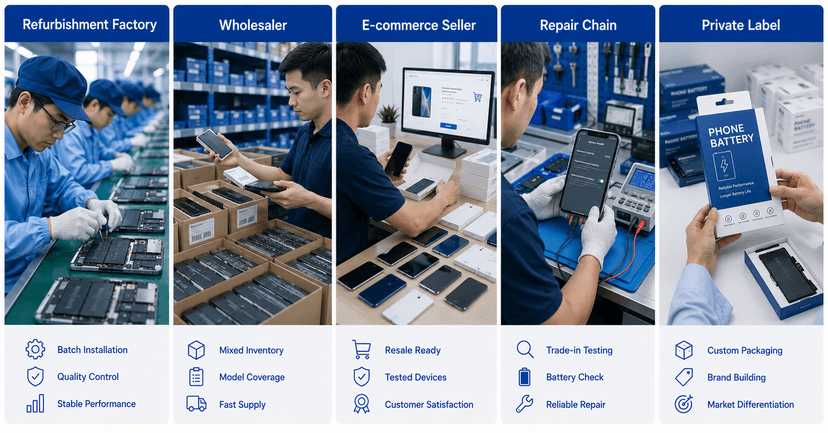
Choosing the right battery for iPhone refurbishment is not the same as buying batteries for single repair jobs. Refurbished phone suppliers usually install hundreds or thousands of batteries across different iPhone models, then resell the phones through wholesalers, online platforms, retail stores or private label channels. If the battery quality is unstable, the problem does not appear as one complaint. It becomes batch returns, resale disputes, warranty pressure, negative reviews and lower buyer confidence.
Product Pain Points: Refurbished iPhones Are Judged by Battery Performance First
In the refurbished phone business, battery condition is one of the first things buyers check.
Customers may inspect Battery Health.
Distributors may check charging behavior.
E-commerce buyers may test runtime.
Retail stores may check whether warning messages appear.
Wholesale buyers may ask for consistent capacity and low return rates.
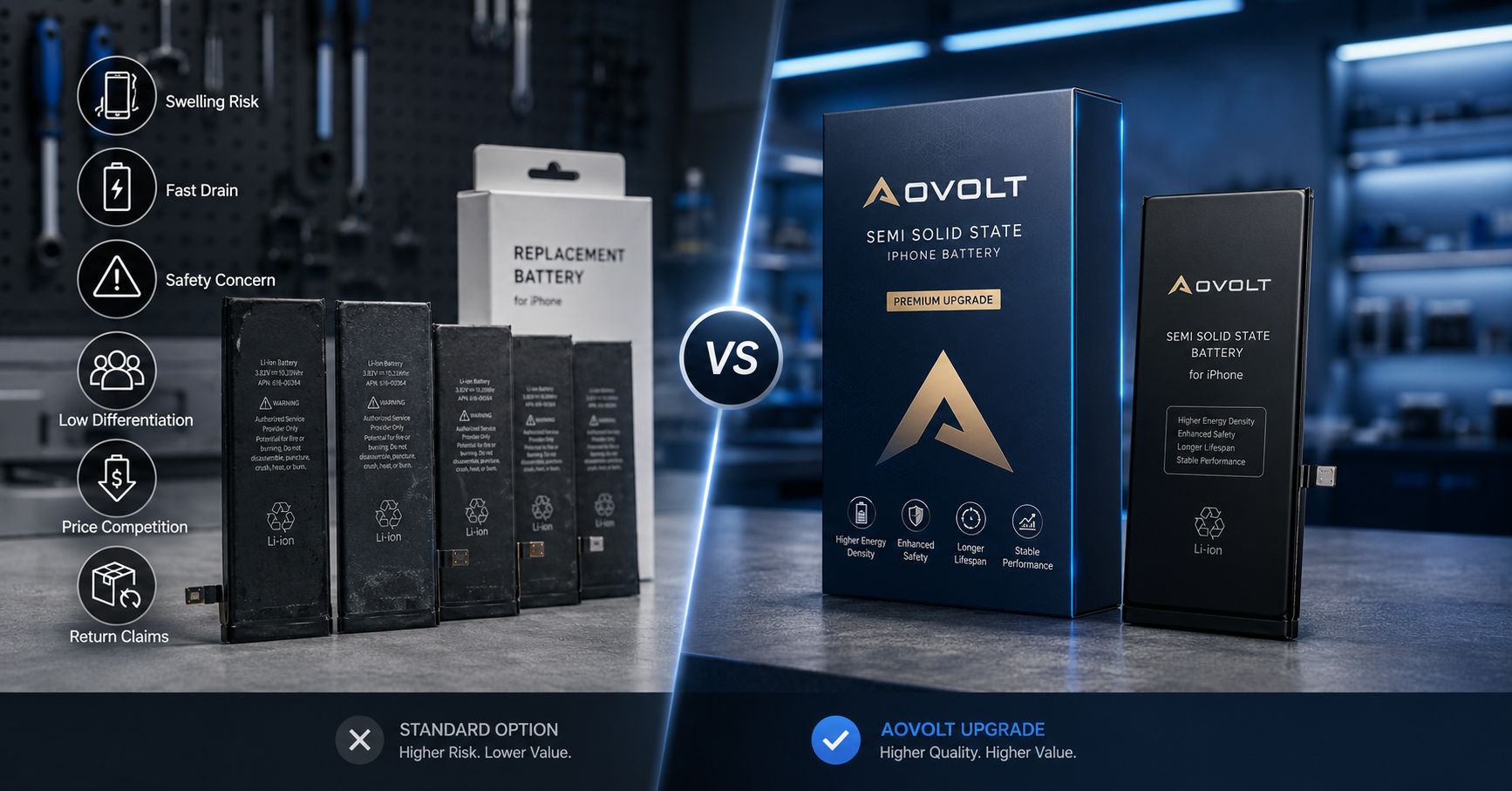
If the replacement battery drains fast, heats, swells, shuts down suddenly or shows unclear battery information, the entire refurbished phone may be judged as low quality.
For refurbished phone factories, the biggest pain point is batch consistency.
One unstable battery batch can affect hundreds of finished phones.
For wholesalers, the biggest pain point is downstream claims.
For e-commerce sellers, the biggest pain point is return rate.
For private label refurbishers, the biggest pain point is reputation damage.
This is why battery for iPhone refurbishment should be evaluated as a production component, not just a repair accessory.
Working Principle: Why Refurbishment Batteries Need More Than Basic Power Function
A refurbished iPhone battery must do more than turn the device on.
It must support stable charging, predictable runtime, safe discharge, correct installation fit and acceptable customer-facing battery information.
A typical iPhone replacement battery includes a lithium-ion polymer cell, PCM protection board, flex cable, connector, insulation structure, adhesive area and model-specific design.
The cell determines stored energy.
The PCM helps manage safety protection.
The flex cable and connector affect fit and communication.
The battery structure affects installation quality.
The software-side display affects customer confidence after resale.
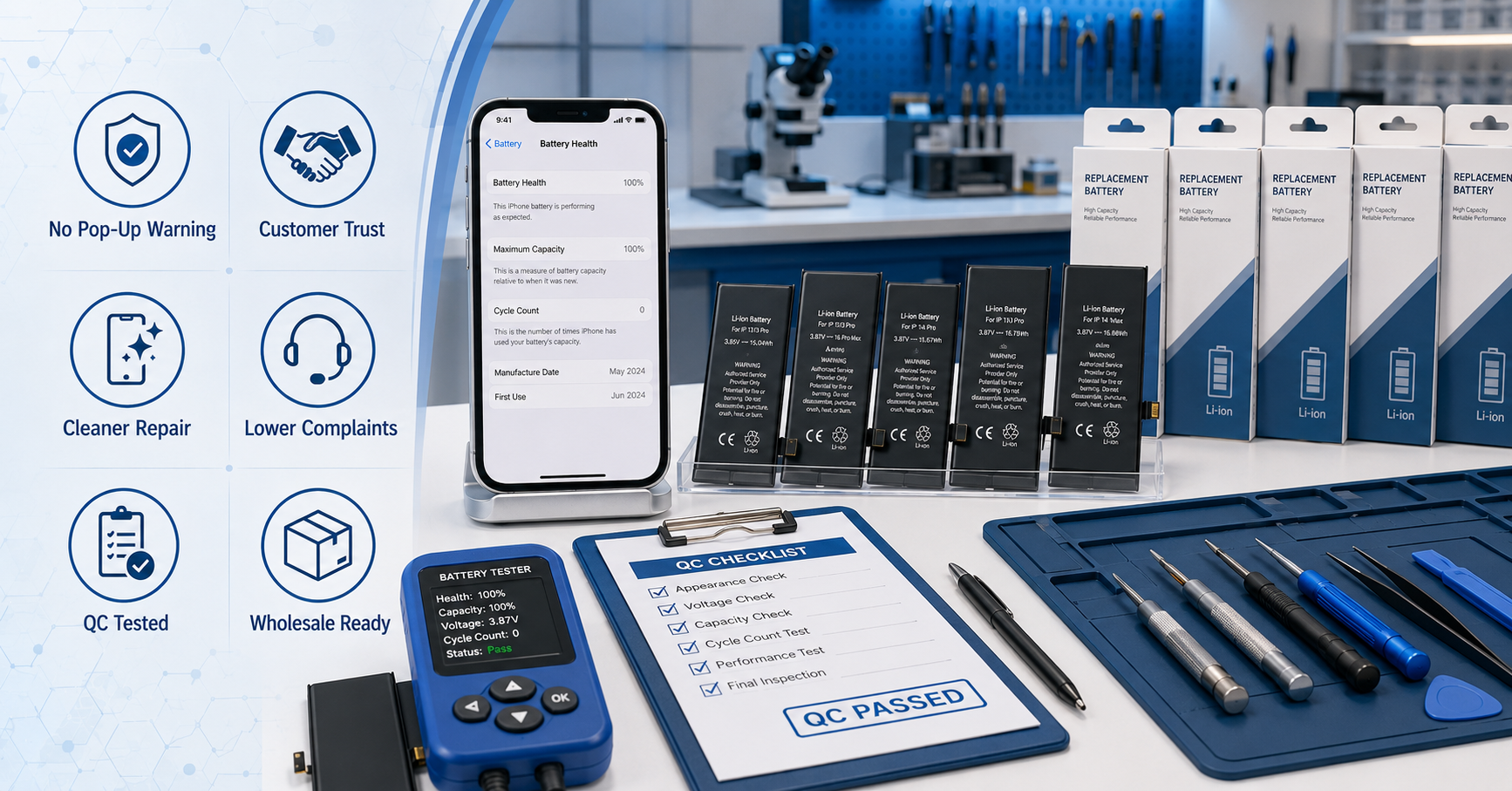
Apple explains that Battery Health includes information about maximum capacity and peak performance capability. In resale and refurbishment scenarios, this visible information becomes commercially important because customers use it to judge battery condition.
For refurbishment factories, the key is repeatability.
Every battery should fit the same way.
Every batch should test within acceptable ranges.
Every finished phone should pass charging, standby, capacity and display-related checks before resale.
Comparison: Repair Battery vs Battery for iPhone Refurbishment
A repair battery is often selected for one device and one customer.
A refurbishment battery is selected for batch production and resale.
The quality logic is different.
Repair Battery
Used for single repair cases
Main focus is immediate repair result
Small quantity purchase
Technician can explain issues one by one
After-sales is handled case by case
Battery for iPhone Refurbishment
Used for batch installation
Main focus is consistency and resale confidence
Large quantity purchase
Every device must pass standardized checks
After-sales risk can multiply quickly
For a repair shop, one battery complaint is a service issue.
For a refurbishment factory, one unstable batch is an inventory risk.
For a wholesaler, one unstable batch can affect many downstream buyers.
For private label refurbishers, unstable batteries can damage the entire brand.
That is why buyers should not choose refurbishment batteries only by price.
They should choose by tested stability, model accuracy, packaging control and supplier response capability.
Solution: How to Build a Reliable iPhone Refurbishment Battery Program
The first step is model planning.
Refurbishment buyers should list the main iPhone models they process monthly and separate them by sales grade, target market and battery requirement.
Some models may use standard capacity batteries.
Some models may need high capacity batteries.
Some resale channels may require Battery Health display options.
Some professional repair channels may require decoded or no-warning-message solutions.
The second step is sample testing.
Test multiple samples from the same batch, not only one piece.
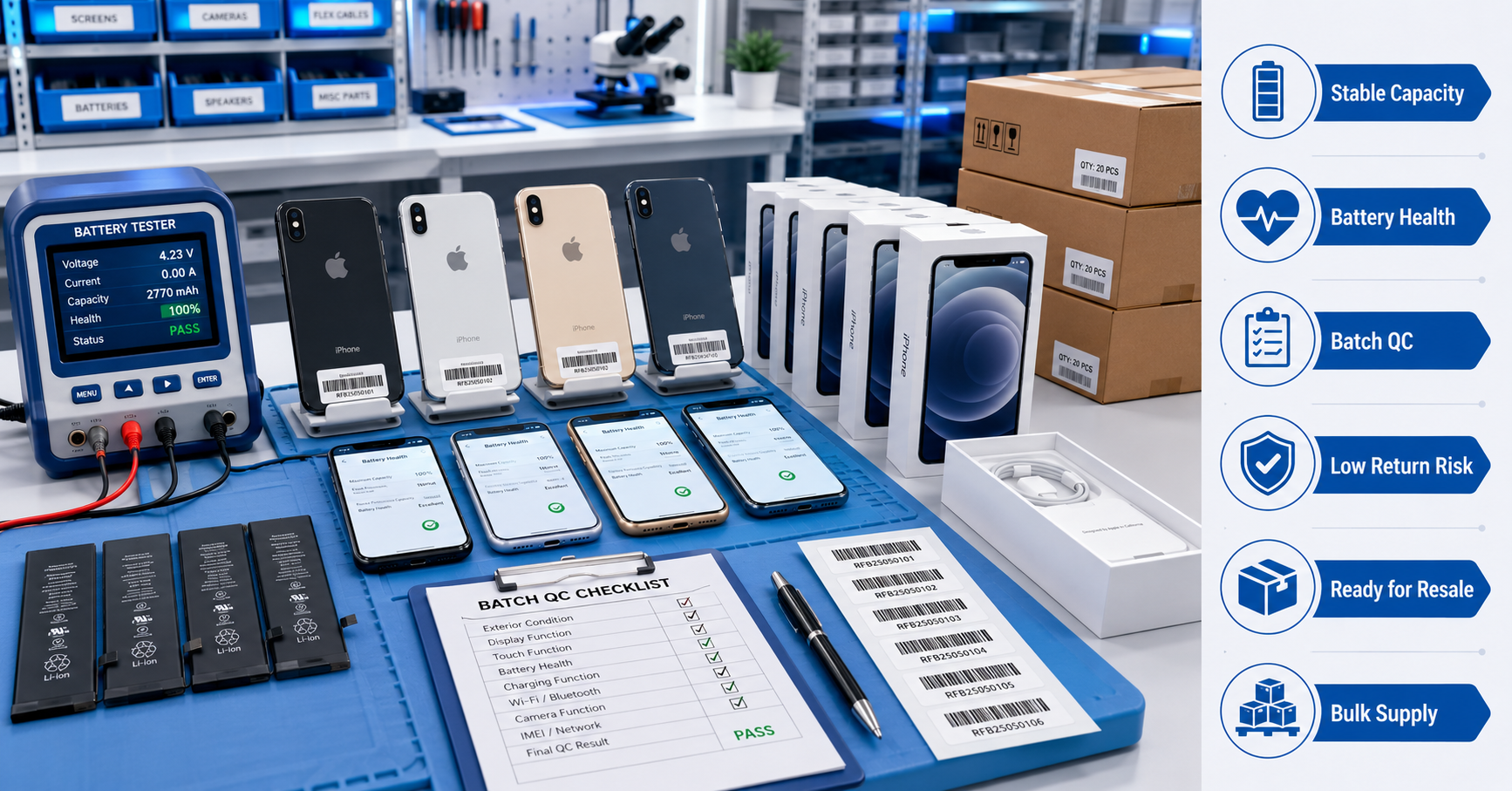
Check voltage, internal resistance, real capacity, charging behavior, discharge curve, heat behavior, installation fit and Battery Health result where applicable.
The third step is batch QC.
Each batch should be checked before installation.
Factories should inspect appearance, flex cable, connector, label, voltage, internal resistance, capacity sampling, packaging and model barcode.
The fourth step is finished-phone testing.
After installation, each refurbished iPhone should go through charging, standby, power-on, screen close, Battery Health check, camera / display function check and final cosmetic inspection.
The fifth step is packaging and traceability.
Battery cartons should have clear model labels, batch numbers, quantity marks and barcode control.
If a complaint happens, the buyer should know which battery batch, which phone model and which shipment caused the issue.
The sixth step is supplier review.
A reliable supplier should support model matching, stable supply, realistic capacity, QC communication, after-sales analysis and private label packaging when needed.
Core Advantages: What Professional Refurbishment Buyers Should Expect
The first advantage is stable capacity.
Refurbished phone buyers expect the device to run normally after resale, not only pass a quick power-on test.
The second advantage is batch consistency.
Factories need batteries that perform consistently across many units, not one good sample and one unstable shipment.
The third advantage is better resale confidence.
Battery Health behavior and runtime performance affect how end buyers judge refurbished iPhones.
The fourth advantage is lower return risk.
Stable batteries reduce fast-drain complaints, sudden shutdown cases, no-charging disputes and refund pressure.
The fifth advantage is faster production flow.
Accurate fit, correct connector alignment and clear model labels help technicians install faster and make fewer mistakes.
The sixth advantage is private label readiness.
For refurbishers building their own brand, battery labels, retail boxes, warranty cards, barcodes and carton marks help create a more professional resale system.
Application Scenarios: Where Refurbishment Batteries Create Business Value
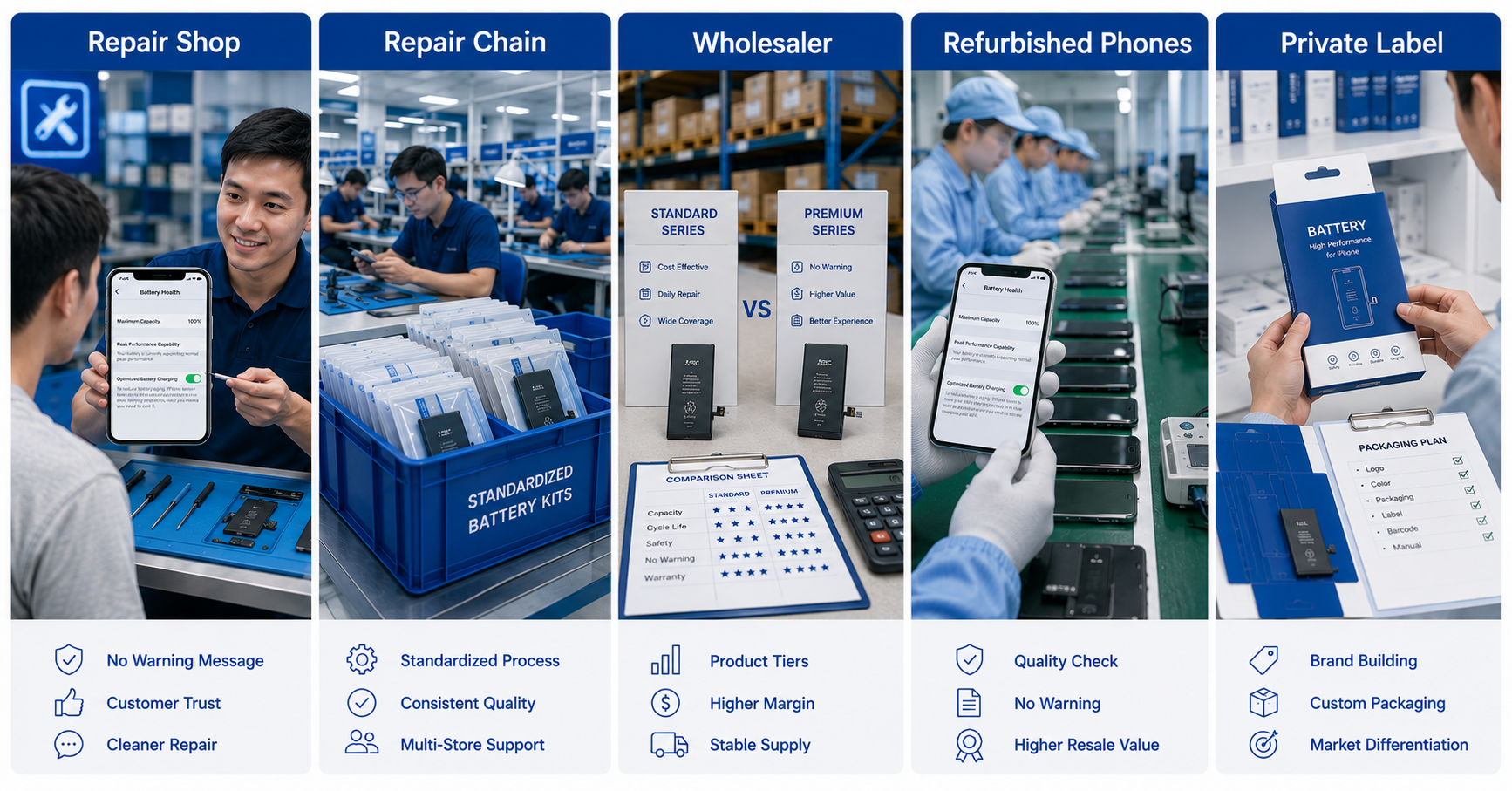
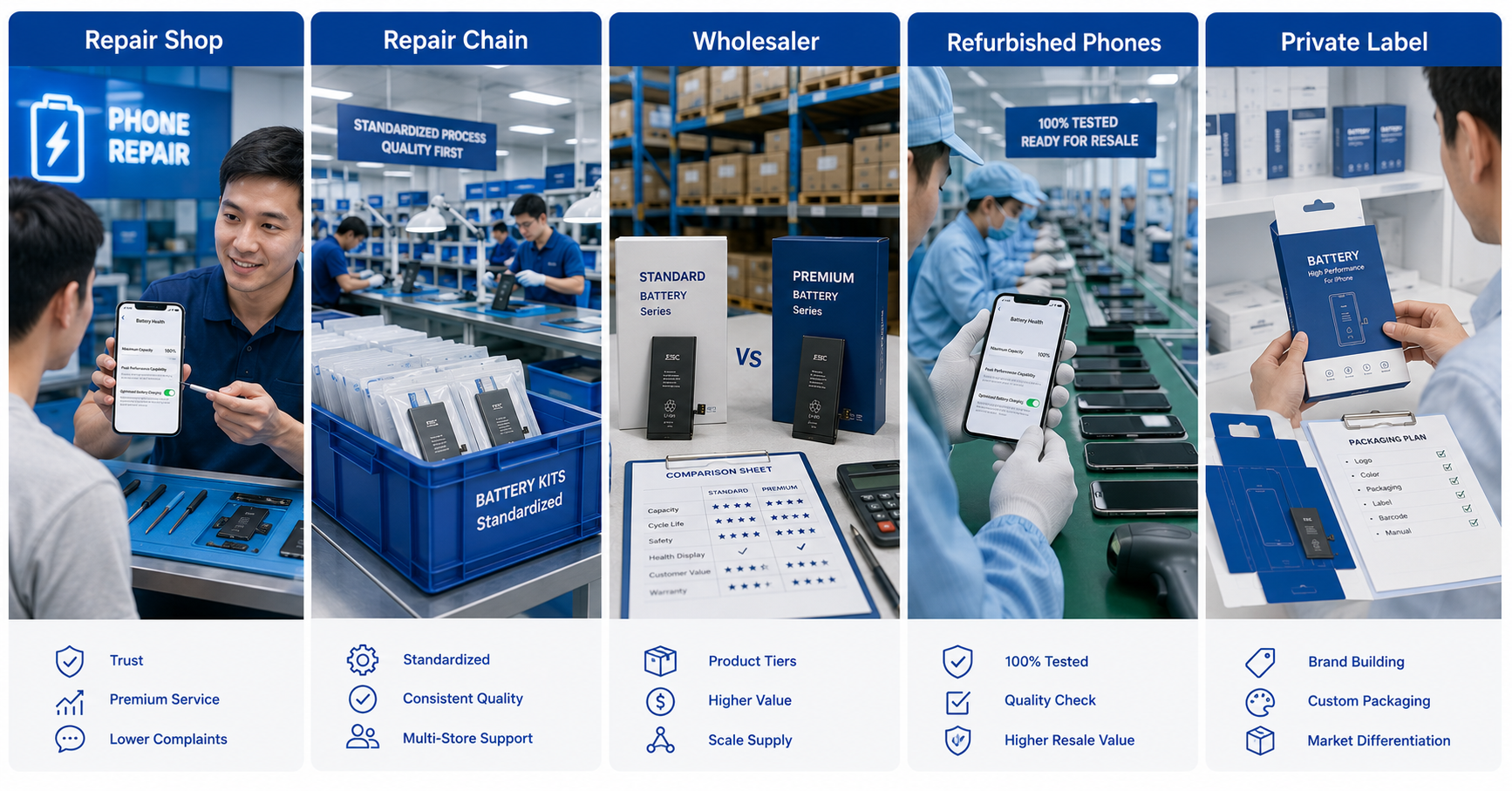
Refurbished phone factories use replacement batteries to rebuild used iPhones before resale.
Wholesale distributors use them to prepare graded inventory for repair stores, retailers and online sellers.
E-commerce refurbishment sellers use them to reduce return rates and improve buyer satisfaction.
Repair chains use them when refurbishing trade-in devices before reselling them locally.
Private label refurbishers use them to build branded refurbished phone programs with consistent battery quality.
Used phone exporters use them to prepare devices for international resale markets where buyers check battery condition carefully.
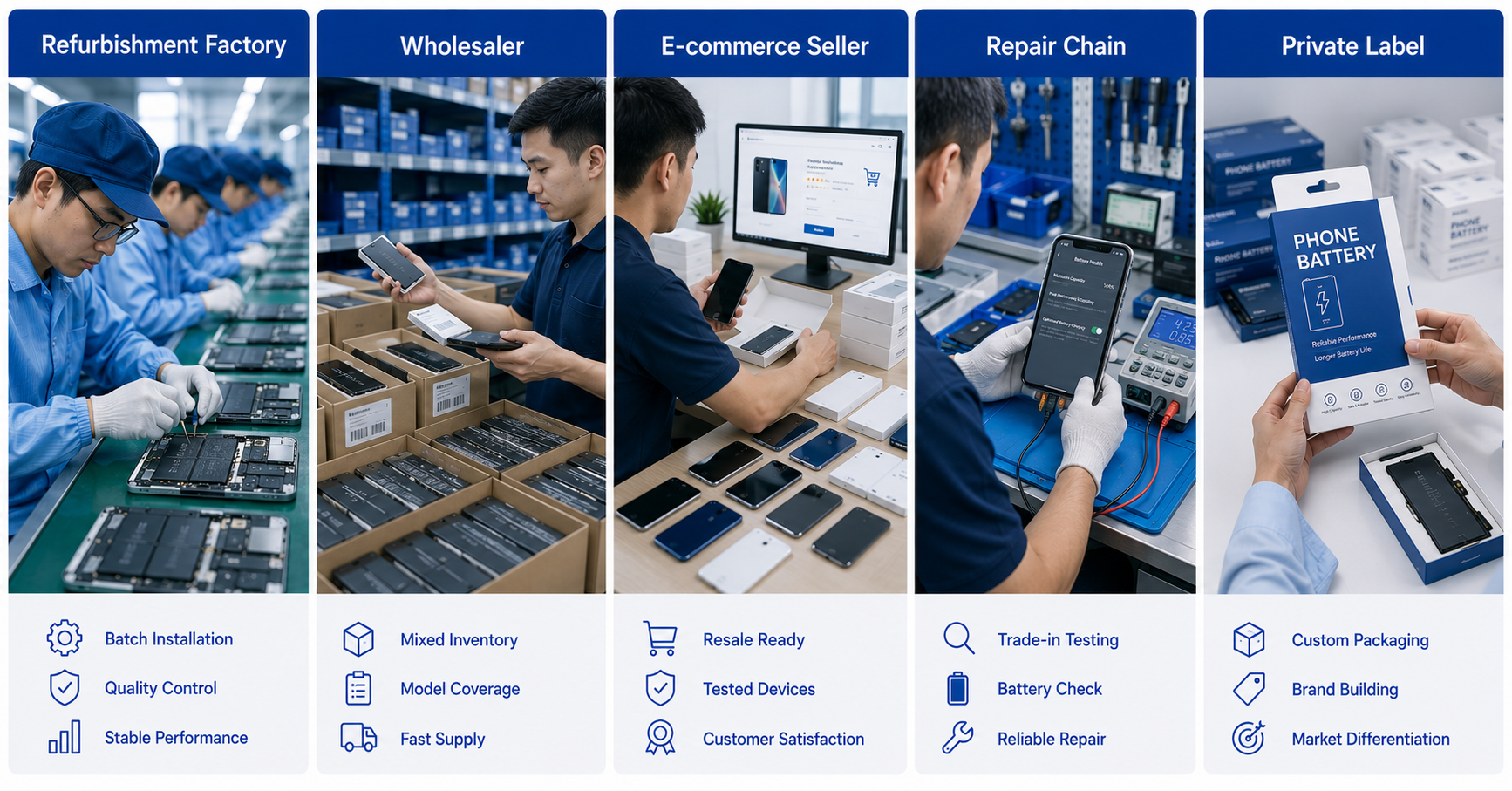
Selection Advice: How Different Buyers Should Choose
Refurbished phone factories should choose batteries based on batch stability, installation efficiency and finished-phone pass rate.
The most important checks are model fit, real capacity, internal resistance, charging behavior, Battery Health behavior and packaging traceability.
Wholesalers should focus on model coverage, mixed-model packing, repeat supply and warranty handling.
They need clear labels and stable inventory, not random battery sourcing.
E-commerce sellers should choose batteries with stable runtime and clear product claims.
A good battery reduces return pressure after the customer receives the phone.
Repair chains should standardize battery models and test procedures across stores.
This helps technicians use the same repair process and explain battery condition consistently.
Private label refurbishers should choose suppliers that can support product series planning, packaging design, barcode control and after-sales records.
Before bulk purchasing any battery for iPhone refurbishment, buyers should test several samples, install them in real devices, check Battery Health result, verify capacity, monitor standby drain and review supplier QC documents.
FAQ
What is the best battery for iPhone refurbishment?
The best battery for iPhone refurbishment should have stable capacity, accurate model fit, consistent internal resistance, reliable PCM protection, safe packaging and clear batch traceability.
Is Battery Health important for refurbished iPhones?
Yes. Many buyers check Battery Health before purchasing a refurbished iPhone. Apple states that Battery Health includes maximum capacity and peak performance capability, so it directly affects resale confidence.
Why do refurbished iPhones sometimes show Unknown Part messages?
Apple explains that Unknown may appear when installation is incomplete, a part was replaced with a nongenuine part, was previously used or installed in another iPhone, or is not functioning as expected.
Should refurbishment factories use standard capacity or high capacity batteries?
Standard capacity batteries are suitable for stable mass refurbishment. High capacity batteries can be used for premium resale grades if the capacity is realistic and supported by test data.
How many samples should buyers test before bulk orders?
Buyers should test multiple samples from the same batch. One good sample cannot prove batch stability, especially for refurbishment projects with large installation volume.
What QC tests are important before installing batteries into refurbished iPhones?
Important checks include appearance, voltage, internal resistance, capacity sampling, connector fit, flex cable condition, charging behavior, heat behavior, standby drain and Battery Health result where applicable.
What packaging is suitable for iPhone refurbishment battery supply?
Packaging should protect the pouch cell, flex cable and connector from pressure, bending, abrasion, short-circuit risk and carton deformation during shipping.
Can Shenshen ESC support iPhone refurbishment battery projects?
Yes. Shenshen ESC can support iPhone refurbishment battery projects with model selection, sample testing, standard and high capacity options, Battery Health display options, decoded solutions, packaging and wholesale supply.
Conclusion
Choosing the right battery for iPhone refurbishment helps buyers control production stability, resale confidence, customer complaints and return risk.
For refurbishment projects, battery quality must be judged by batch consistency, real capacity, installation fit, Battery Health behavior, finished-phone testing and after-sales traceability.
Shenshen ESC supports refurbished phone factories, wholesalers, e-commerce sellers, repair chains and private label buyers with iPhone replacement battery solutions for bulk refurbishment supply.
Contact Shenshen ESC to request iPhone refurbishment battery samples, model recommendations, packaging options and wholesale pricing.