
If you are still looking for a charger manufacturer that simply outputs 45W, your product is destined for disappointing sales on the shelf. The market logic has shifted: consumers now demand multi-protocol compatibility, extreme space efficiency, and “reliability” under long periods of full-load operation while maintaining low temperatures.
As a product manager with 15 years in the industry, I have witnessed the evolution from bulky adapters to high-performance GaN (Gallium Nitride) solutions. For B2B buyers, choosing a 45W dual port charger manufacturer is essentially choosing the upper limit of your brand’s return rate in the market.
Our key conclusion is clear: do not just focus on design aesthetics; pay attention to the underlying architecture for power density management and protocol compatibility. By integrating our proprietary Power-Flow management architecture into core products, we can keep the temperature rise of dual-port outputs below industry thresholds. This is not just simple electronics assembly—it is precise control over power conversion efficiency.
The Rise of 45W Dual Port Chargers: Why Market Demand is Soaring
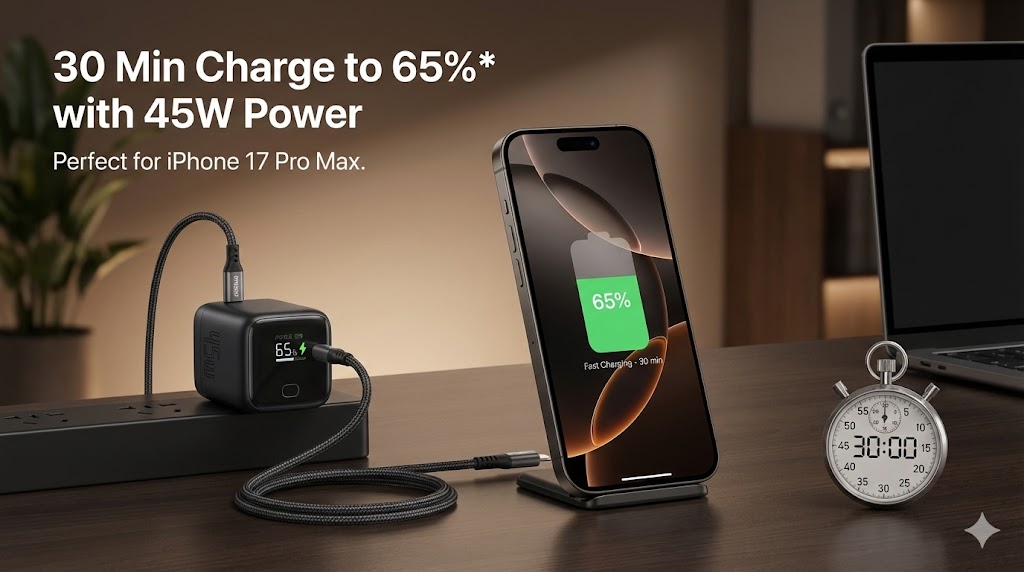
Why 45W Is the Sweet Spot
The choice of 45W is not random. With the convergence of ultrabooks, tablets, and smartphones, 45W has emerged as a “sweet spot”—sufficient to power mainstream ultrabooks while also meeting the ultra-fast charging needs of smartphones.
The Shift Towards Portable and Universal Power Solutions
Consumers are no longer willing to carry two chargers. In 2026, with multi-device mobile work (laptop + phone) becoming standard, single-function chargers are being marginalized. Market research shows that over 70% of professional users prefer smaller adapters with dual-port plug-and-play fast charging.
For distributors, this means fewer SKUs and higher inventory turnover.
Why Consumers Prefer Dual-Port Efficiency
This brings a critical challenge: how to manage complex voltage distribution when both ports are operating simultaneously within a limited volume. Most low-end factories take a blunt “split-the-power” approach, causing frequent disconnections or re-handshakes when a second device is connected—an extremely poor user experience.
The table below highlights the differences between mainstream market solutions and AOVOLT’s high-performance dual-port strategy:
| Evaluation Criteria | Typical OEM Market Solution | AOVOLT High-Performance Solution |
|---|---|---|
| Dual-Port Concurrent Power Strategy | Fixed allocation (20W + 25W) | Smart dynamic allocation (up to 45W + 15W) |
| Device Disconnections | High (frequent handshake resets) | Very low (smooth switching) |
| Full-Load Temperature Rise | 65°C–75°C | 50°C–58°C |
| Protocol Compatibility | Basic PD 3.0 | Full compatibility (PPS/QC5.0/UFCS) |
Technical Standards: What Makes a High-Quality 45W Charger?

When communicating with a potential USB-C PD power adapter manufacturer, don’t just ask “Can you do it?”—ask “How do you do it?”
Understanding GaN Technology and Its Role in Heat Dissipation
The benefits of GaN technology go beyond size reduction—they also include higher switching frequencies. High-frequency switching reduces the size requirements for transformers and magnetic components but introduces severe EMI (electromagnetic interference) and heat dissipation challenges.
Many factories simply “stack” GaN components without optimizing thermal pathways. During our R&D phase, we conduct thermal simulation experiments to ensure that every PCB trace maintains thermal balance under long-term load. Your 65W GaN Charger OEM Guide: Avoid Overheating and Amazon Bans.
Protocol Compatibility: Ensuring Fast Charging for Laptops
The table below outlines the key protocols that determine charger compatibility and global market applicability:
| Key Protocol Type | Core Value | Target Market / Devices |
|---|---|---|
| USB PD 3.1 | Upward compatibility & extended power | High-end laptops, premium peripherals |
| PPS (Programmable Power Supply) | Precise constant current & voltage | Samsung, Android fast-charging devices |
| QC 5.0 | High-voltage fast charging | Qualcomm-based devices |
| UFCS (Unified Fast Charging Standard) | Compliance with Chinese standards | Domestic sales in China |
Safety Features: Over-Voltage, Over-Current, and Temperature Protection
A charger is not just a voltage converter—it is the first line of defense for protecting expensive user devices. Beyond basic OCP (over-current protection) and OVP (over-voltage protection), a mature manufacturer must integrate NTC thermistors and firmware algorithms for real-time monitoring.
Millisecond-level cutoffs in response to FOD (foreign object detection) or short-circuit risks are critical for protecting brand reputation.
Why Quality Control and Certification Define Your Brand’s Reputation
After technical architecture is in place, many B2B buyers fall into the “compliance blind spot.” In an era of increasingly strict global trade regulations, a 45W dual-port charger without proper certification is like a ticking time bomb for your brand.
Compliance is not just a market entry threshold—it also protects smooth customs clearance and e-commerce platform viability.
The Necessity of UL, ETL, CE, and FCC Compliance
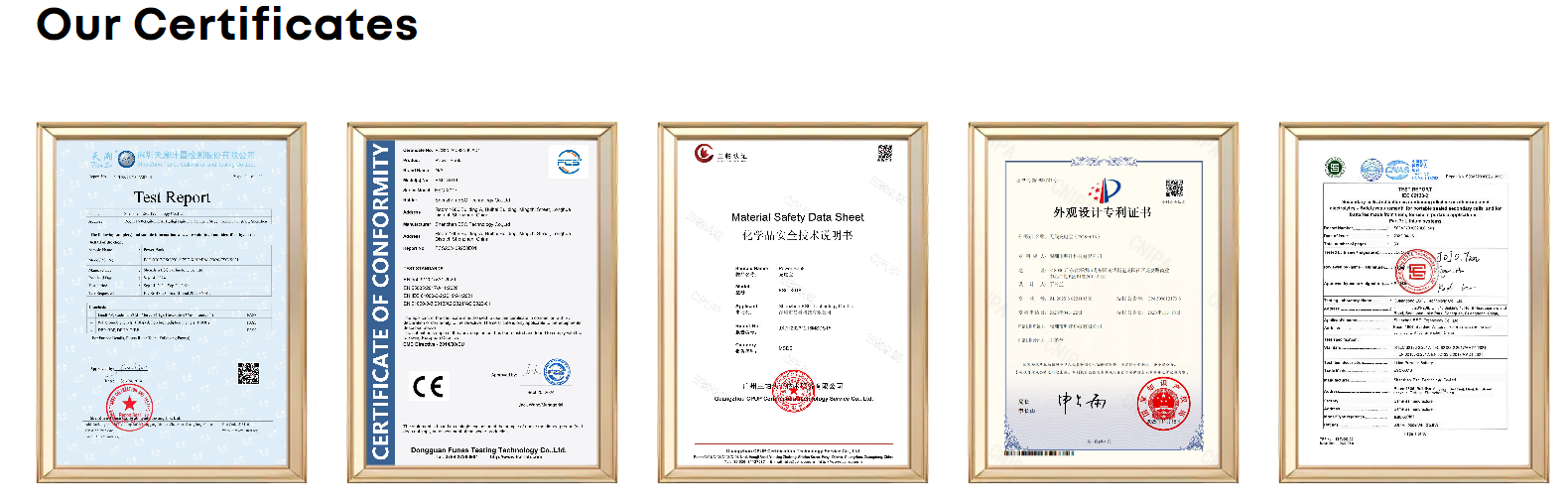
Different safety standards, whether for North America or Europe, dictate not only testing processes but also the stability of your supply chain. For instance, UL or ETL certification for North America requires factories to undergo periodic audits, demanding high production management standards.
Many small factories cut corners by “borrowing” certificates or outsourcing compliance, which risks your brand being removed from compliance lists if quality issues arise.
How Inconsistent Production Impacts Returns and Reviews
The scariest problem in the supply chain isn’t “high cost” but “high variability.” For frequently used electronics like 45W dual-port chargers, batch-to-batch quality fluctuations can cause major headaches.
If the first batch performs well but subsequent production has coil whine or excessive heat, customers leave negative reviews on Amazon or independent sites. Avoid this by evaluating the manufacturer’s closed-loop production processes—from IQC (incoming quality control) to FOT (function testing on the line) and aging tests—any missing step compromises your brand’s future.
Evaluating a 45W Dual Port Charger Manufacturer: The AOVOLT Advantage
When assessing partners, AOVOLT emphasizes turning “manufacturing capability” into “differentiated competitiveness.” We are not just a contract manufacturer but a partner who helps bring your product design to life.
Advanced Manufacturing Capabilities
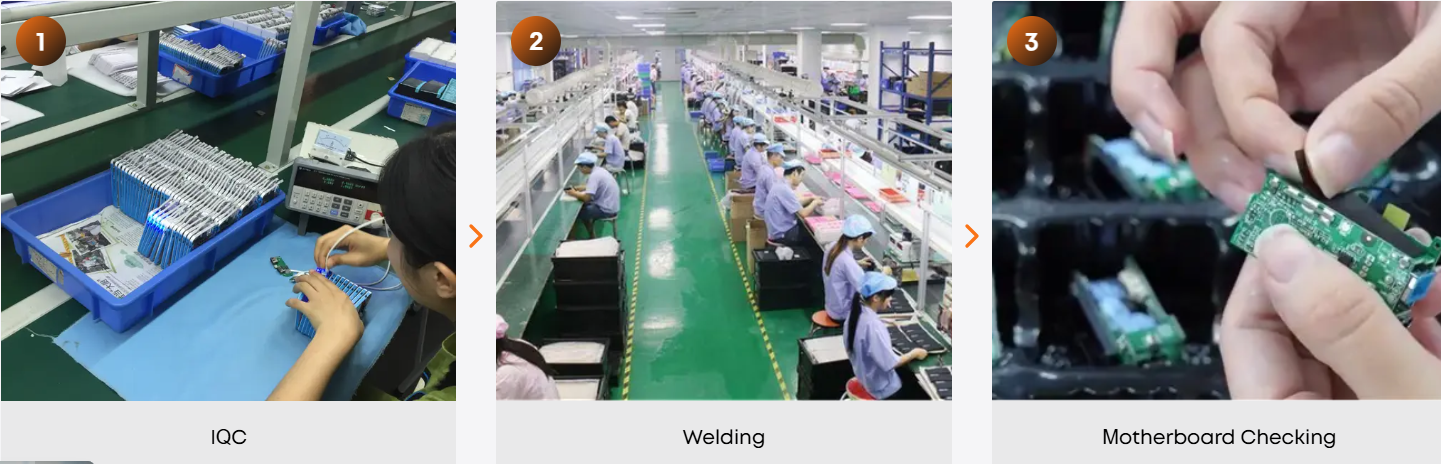
AOVOLT uses fully digitalized automated production lines, from SMT (surface-mount technology) to assembly and testing. Each 45W fast charger undergoes rigorous AOI optical inspection, followed by automated aging tests simulating extreme environmental conditions for several hours of full-load operation.
This manufacturing logic ensures top-tier yield rates across batches.
Rigorous Quality Assurance
Our QA extends beyond the finished product to the PCBA module level. AOVOLT provides not only finished product customization but also high-performance PCBA solutions for brands with assembly capability. By optimizing thermal structures and integrating high-efficiency power management ICs, we minimize circuit redundancy and drastically reduce failure rates.
Flexible ODM/OEM Solutions
We understand brands’ pursuit of uniqueness. From ID mold design to eco-friendly packaging certification, AOVOLT offers modular customization. Whether optimizing for UFCS compliance in a target market or ultra-compact portable designs, our engineering team delivers solutions that meet safety standards while providing the most efficient path to market.
Compliance and Reliability
Choosing AOVOLT means choosing a fully mature compliance system. Our long-term partnerships with international labs shorten your product certification cycle, letting you capture market opportunities quickly.
Frequently Asked Questions (FAQ)
Q1: How do you balance size and heat dissipation for a 45W dual-port charger?
A: The key lies in GaN adoption and PCB layout. Using high thermal conductivity encapsulation and multi-layer stacking, we reduce size by over 30% compared to traditional silicon designs while maintaining safe electrical clearances.
Q2: Why does my product show compatibility issues in real use even if it passes lab tests?
A: Lab tests are often static, while real-world handshake protocols are affected by cable impedance and residual device charge. AOVOLT’s firmware covers over 2,000 mainstream device models to ensure robust compatibility.
Q3: What are AOVOLT’s OEM/ODM minimum order quantities (MOQs)?
A: We support tiered customization: standard modules for startups and deep ODM development for established brands. MOQ depends on the depth of customization—detailed technical requirements yield accurate quotes.
Q4: Can you assist with UL certification for my product?
A: Yes. We provide UL/ETL-compliant design support and help prepare technical documents and test samples, greatly increasing the chance of first-pass approval.
Q5: Can you provide PCBA solutions for self-assembly?
A: Absolutely. We provide fully tested PCBA modules, allowing customers to handle only final enclosure assembly and testing—a cost-efficient solution for emerging brands.
Conclusion: Partnering for Long-Term Growth in the Electronics Market
In today’s highly competitive consumer electronics market, finding a manufacturing partner that understands your brand vision and refuses to compromise on technical details is crucial to project success. A top-tier 45W dual-port charger is not just a power supply tool—it is a reflection of your brand’s quality and technical depth.
As industry standards evolve, suppliers who excel in manufacturing processes, compliance, safety, and market adaptability will be indispensable to your future business strategy. If you seek stable production, rigorous quality control, and agile R&D support, exploring how to turn your concept into a market-leading product demonstrates the real value of our professional services. Through strict manufacturing systems and continuous innovation, we look forward to defining the next generation of charging experiences with you.
References: