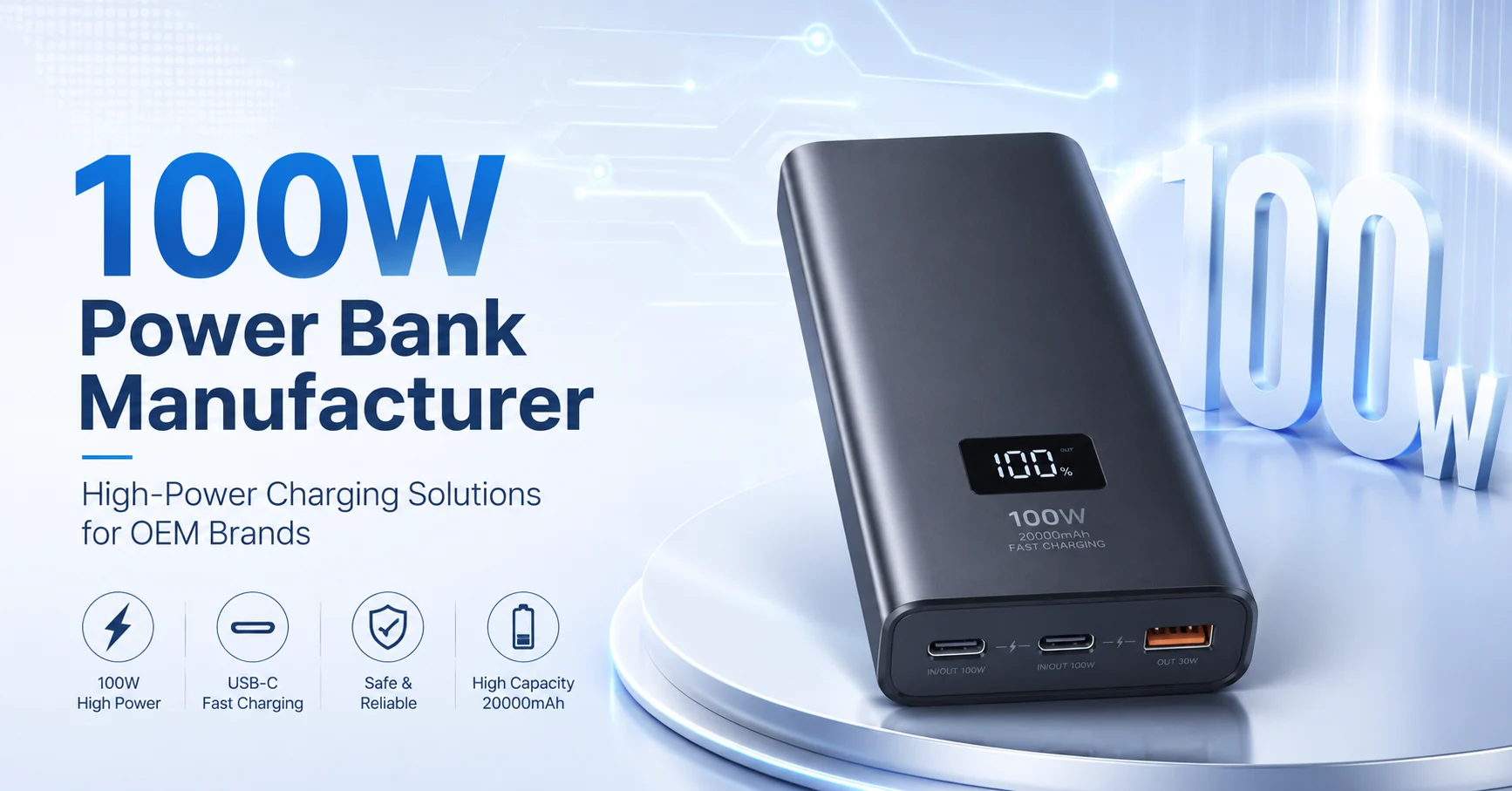

Cross-border sellers and brands looking for a PSE certified power bank factory are essentially trying to address two key challenges:
1. Compliance risk. Without proper PSE certification and METI registration, Japanese platforms like Amazon Japan may immediately delist your product.
2. Quality risk. Many generic power banks experience overheating, unstable charging, or battery swelling in real use, resulting in higher return rates and brand damage.
Key Takeaway
Suppliers capable of consistently supplying power banks for the Japanese market are not simple assembly factories. They must have:
-
In-house PCBA R&D capabilities
-
Fast-charging protocol integration skills
-
A complete manufacturing chain
The reason is simple:
Understanding Japanese PSE Certification
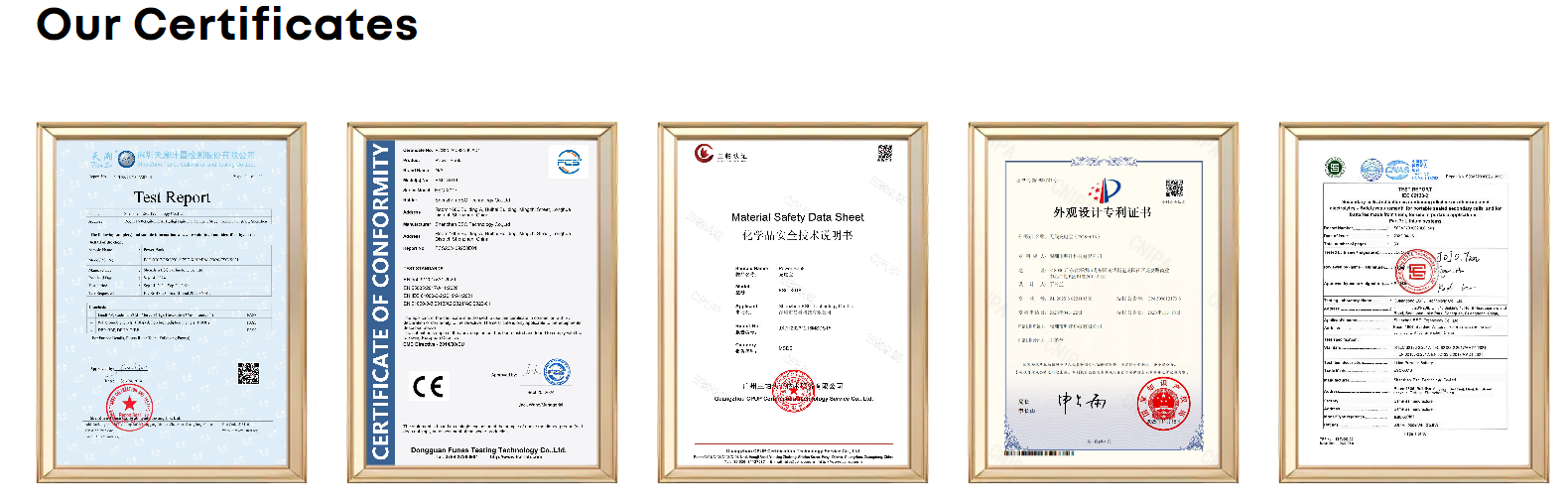
PSE certification is more than just a label.
The process requires submitting:
-
Circuit diagrams
-
PCB designs
-
Lists of safety-critical components
-
Test prototypes
Additionally, the product must meet battery safety standards (e.g., IEC62133).
If a supplier hasn’t participated in circuit design or power solution development, they cannot truly control these critical technical documents.
Recent Industry Trends (2024–2026)

The power bank industry has seen rapid technological changes:
-
100W / 140W USB-C fast charging has become mainstream
-
Laptops increasingly rely on power banks for external power
-
Multi-protocol compatibility is now standard
A high-end, compliant power bank usually needs to support multiple protocols:
| Protocol | Compatible Devices |
|---|---|
| PD3.0 / PPS | MacBook / iPad / Laptop |
| QC3.0 / QC4+ | Android Phones |
| FCP / SCP | Huawei Devices |
| AFC | Samsung Devices |
| Apple 2.4A | iPhone / iPad |
| BC1.2 | Basic USB Devices |
These protocols are typically implemented via multi-protocol fast-charging chips + custom PCBA design. Smart fast charging PCBA for you: Maximize the efficiency and safety of electronic products.
Without strong circuit design capabilities, factories rely on generic modules, which often leads to:
-
Overstated power ratings
-
Low charging efficiency
-
Excessive heat
This is the root cause of many low-cost power bank failures.
Why Brands Prefer Vertically Integrated Power Bank Factories
Many OEM suppliers are trading companies or small assembly plants, lacking control over key technical nodes.
Mature power bank factories usually have three core capabilities:
-
PCBA R&D capability
-
Structural design & mold development
-
Complete production lines
These capabilities directly determine product stability.
Case Study: 140W USB-C Laptop Power Bank Development
Developing a 140W USB-C laptop power bank requires solving:
-
High-power boost circuits
-
Battery protection (BMS)
-
Multi-protocol recognition
-
Thermal management
If a factory only purchases ready-made modules, stable mass production is difficult.
A factory with in-house PCBA handles the process differently:
| Development Stage | Technical Work Required |
|---|---|
| ID Design | Exterior structure, thermal space layout |
| PCBA Design | Boost circuit, protocol chips, MOS selection |
| Firmware Debug | PD3.0 / PPS / QC protocol recognition |
| EVT/DVT Testing | Temperature, efficiency, stability |
| Mass Production | SMT + complete assembly |
This explains why brands often seek true source factories after one failed OEM experience.
Japanese Market Insights: PSE Certification Beyond Test Reports
Many first-time sellers underestimate the complexity of PSE certification.
Under Japan’s regulations, power banks fall under the Electrical Appliance and Material Safety Law (DENAN). Products must complete PSE certification and meet lithium battery safety standards.
A critical step: METI registration.
-
Importers must submit commercial declarations to Japan’s Ministry of Economy, Trade, and Industry
-
Products must carry the PSE mark
-
Manufacturer information must be provided
Incomplete documentation leads to platform rejection. This is why Japanese clients often require:
-
PSE test report
-
METI registration support
-
Circuit diagrams and critical component lists
These can only be provided by factories involved in design.
140W Fast-Charging Power Banks: Heat, Not Power, Is the Real Challenge
From an engineering perspective, the challenge of a 140W power bank is thermal management, not just output power.
Example:
-
20V × 5A = 100W
-
28V × 5A = 140W
Without proper design:
-
MOS transistor temperatures rise quickly
-
Boost circuit efficiency drops
-
Battery cycle life shortens
Mature factories address this at the PCBA architecture level, including:
-
Multi-phase boost architecture – reduces MOS load, improves efficiency
-
High-efficiency synchronous rectification – reduces energy loss
-
BMS multi-protection – OVP, OCP, OTP integrated into chips
How PCBA Design Directly Impacts Safety
Many assume battery safety depends solely on cell quality, but engineers know: PCBA is the first safety line.
A mature PCBA includes:
-
Boost control chip
-
Protocol recognition chip
-
Battery management system (BMS)
-
MOS power transistors
-
Temperature sensors
High-end products use:
-
Multi-layer PCB design
-
Copper foil heat dissipation
-
Intelligent thermal control algorithms
Goal: Full-load output with controlled temperature.
From R&D to Mass Production: The Complete Manufacturing Chain
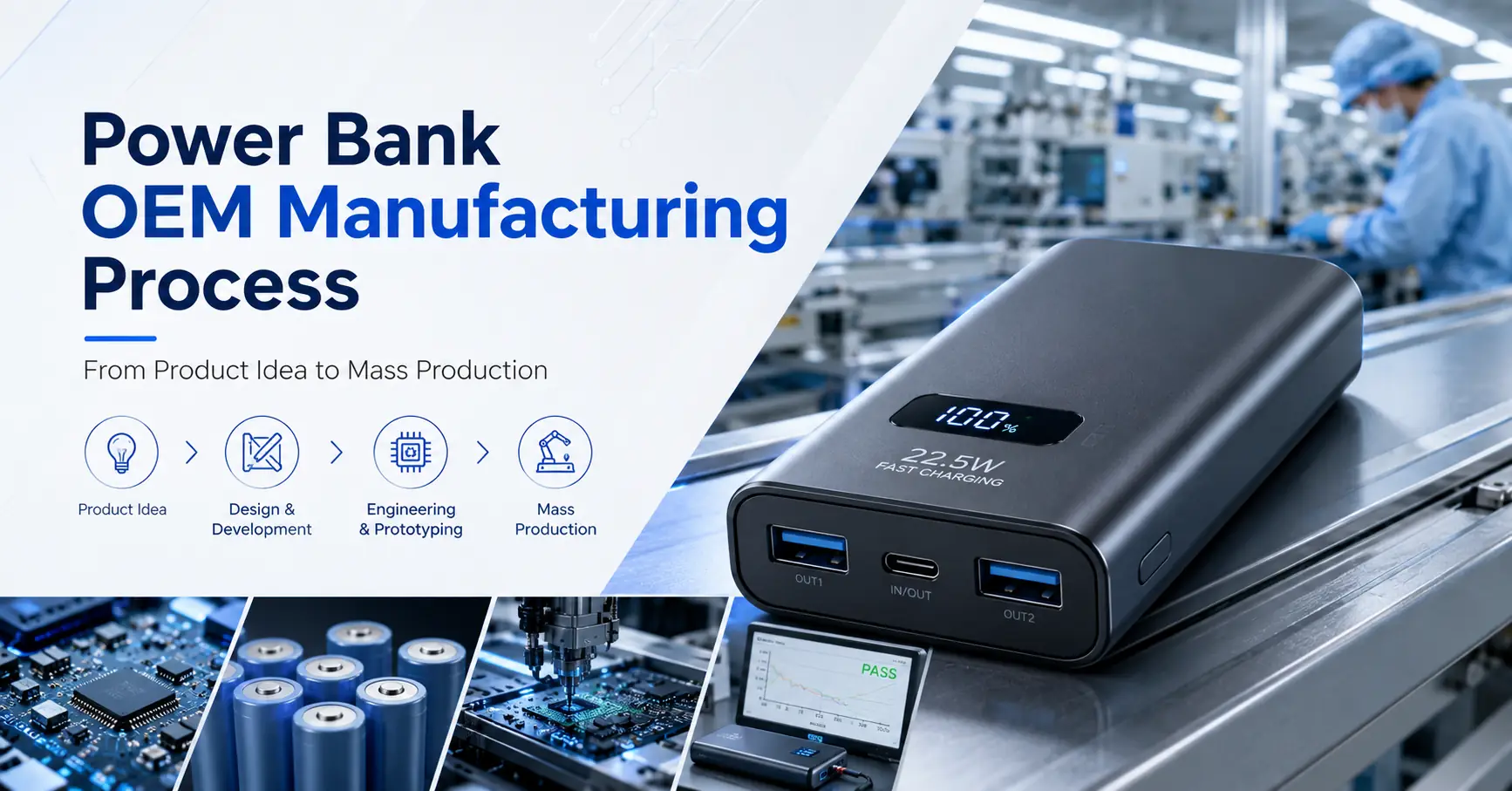
Stable products come from stable manufacturing chains. A mature factory’s workflow is not just “buy parts + assemble”:
Core Process: R&D → Mold Opening → Injection Molding → Hardware Integration
R&D designs the power solution, including:
-
Protocol chip selection
-
Boost circuit structure
-
Battery management system
-
Thermal layout
Structural engineers develop molds in parallel. The casing affects heat dissipation, internal battery layout, and PCB mounting.
Injection molding allows optimization:
-
Adjust casing thickness
-
Improve cooling hole design
-
Increase drop resistance
Finally, hardware assembly includes:
-
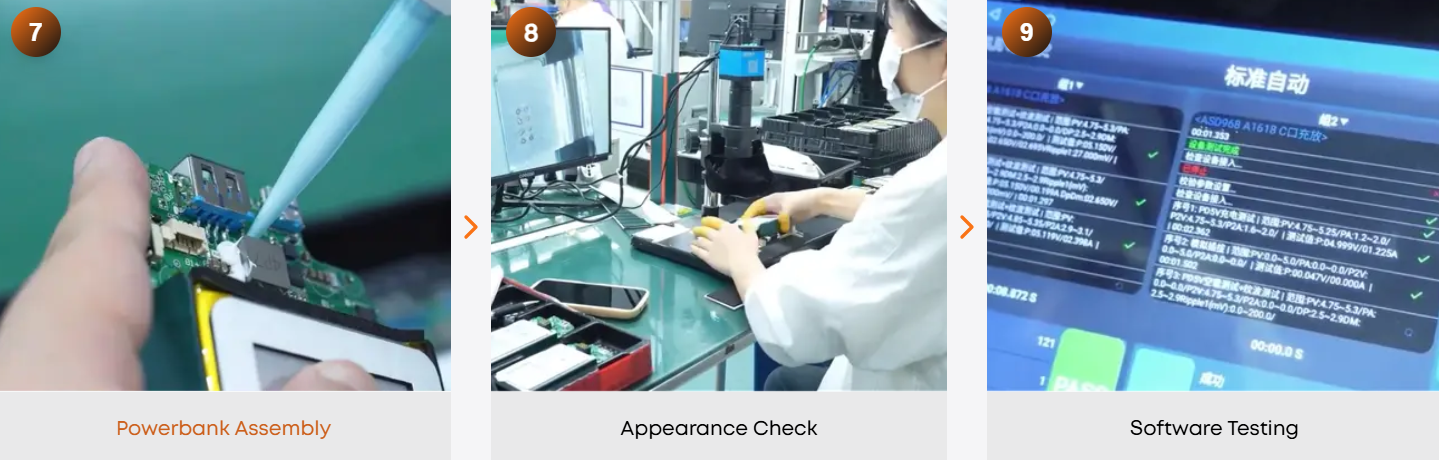
SMT (PCBA production)
-
PCBA functional testing
-
Battery assembly & welding
-
Complete unit assembly
-
Aging test
-
Final functional testing
Details matter: SMT precision, soldering temperature curves, and aging time determine yield. Mature factories maintain high mass production yield, reducing after-sales risk.
Why Dongguan Source Factories Deliver Faster
For B2B clients, lead time often outweighs price.
Problems with fragmented supply chains:
-
Trade companies rely on separate factories for molds, injection, SMT, and assembly
-
Any delay slows overall delivery
Vertically integrated Dongguan factories with:
-
In-house R&D
-
Mold development
-
Injection workshops
-
SMT lines
-
Complete assembly lines
…accelerate project delivery significantly.
| Project Stage | Traditional Supply Chain | Vertically Integrated Factory |
|---|---|---|
| Design | 1–2 weeks | 3–5 days |
| Mold Development | 20–30 days | 15–20 days |
| EVT Prototype | 2 weeks | 7 days |
| Mass Production | 30 days | 20 days |
This results in faster inventory turnover and stable supply for brands.
Unique Exterior Design: Protecting Sellers from Platform IP Risks
Generic mold complaints have become common on platforms like Amazon. Consequences:
-
Listing removal
-
Inventory freeze
-
Account risk
Mature factories provide:
-
Unique exterior designs
-
Structural differentiation
-
Custom molds
Benefits:
-
Safer products
-
More stable stores
-
Brand premium potential
FAQ: Five Common Questions About Purchasing PSE Certified Power Banks
1. Is PSE certification mandatory for Japan?
Yes. Power banks fall under DENAN regulations. PSE certification + METI registration is required.
2. How long does PSE certification take?
-
Mature power solutions: 4–8 weeks
-
New PCBA design: longer
3. Are high-power power banks compatible with all devices?
Yes, multi-protocol support ensures stable charging for phones, tablets, and laptops.
4. Minimum order quantity for OEM power banks?
-
Standard: 500–1000 units
-
ODM with custom molds: 2000+ units
-
Small trial batches are possible in mature supply chains
5. Typical OEM project timeline?
45–60 days for full project: design → mold → PCBA debug → EVT/DVT → mass production
The Value of a Stable Supply Chain: Finding a Long-Term Manufacturing Partner
For electronics brands, long-term supply stability matters more than a single order. Key technical areas include:
-
Fast-charging protocol integration
-
Battery management systems
-
PCBA power design
-
Thermal structure optimization
-
Certification compliance
Factories with complete R&D and manufacturing systems can continually optimize:
-
Charging efficiency
-
Thermal performance
-
Fast-charging protocols
Example:
AOVOLT relies on Shenzhen ESC’s Dongguan manufacturing ecosystem, with 15+ years in power bank and fast-charging technology, delivering:
-
Efficient R&D → mold → injection → assembly → mass production collaboration
-
Stable products, reliable delivery, and continuous technology iteration
For brands entering Japan, a partner with full technical capability and a stable manufacturing system is far more valuable than price alone.
Stable products. Stable delivery. Continuous innovation. That is the true value of long-term collaboration.
References:
METI — Electrical Appliance and Material Safety Law guidance
Japan National Institute of Technology and Evaluation (NITE)