
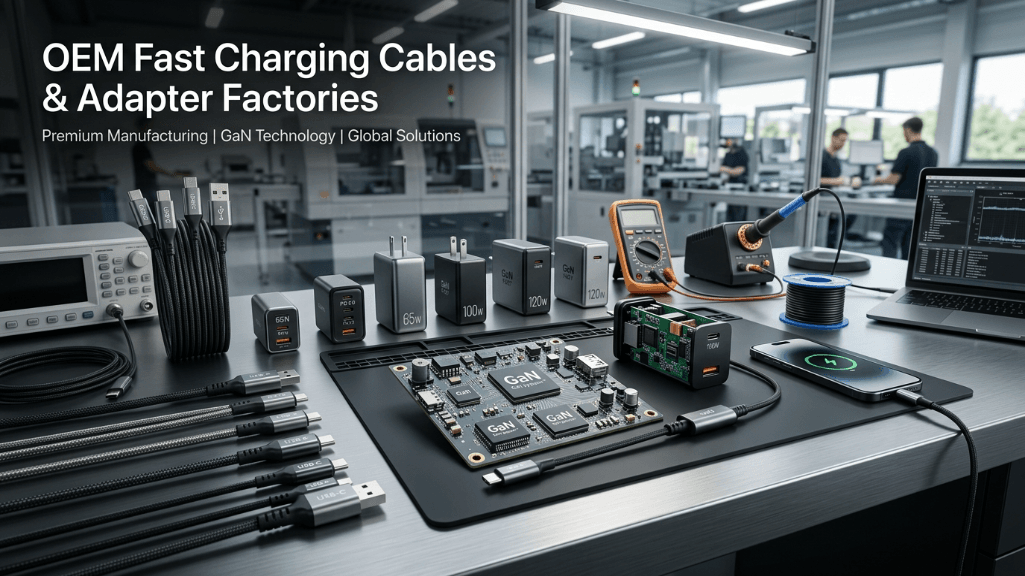
In the deep waters of the consumer electronics supply chain, the logic of finding an OEM fast charging cables and adapters factory has long evolved from a simple “request for quotation” to a meticulous audit of “engineering redundancy” and “depth of vertical integration.” If you still hope to rely on traders in Huaqiangbei to support brand growth, the invisible costs posed by recalls due to non-compliant cable flame ratings or adapter electromagnetic interference (EMI) risks will be unbearable.
Key Conclusion
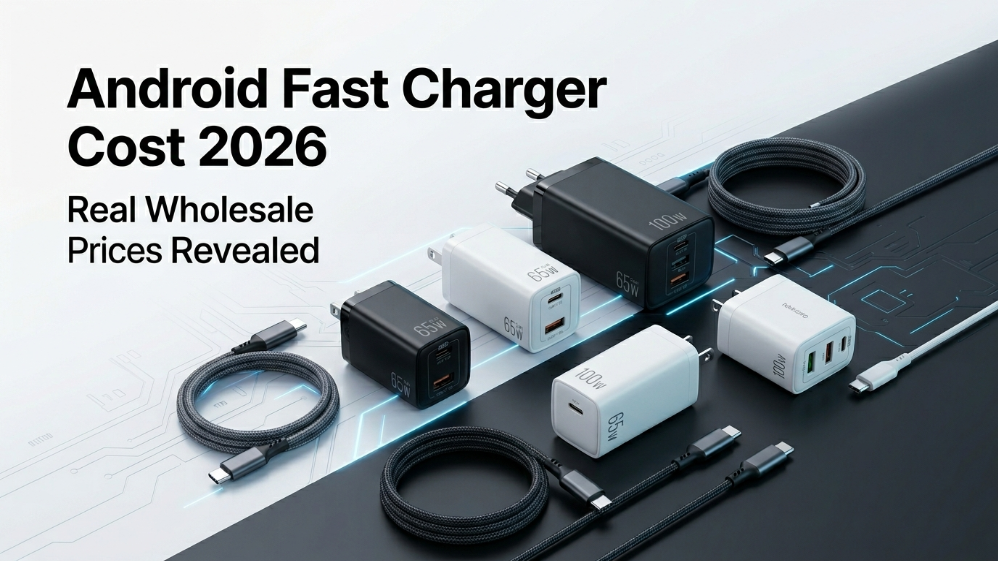
Currently, source factories with GaN (Gallium Nitride) technology R&D capability offer custom logo 65W PD fast charging adapters at wholesale prices typically ranging from $8.2 to $10.5 (based on 3K–5K MOQ). Solutions supporting 100W power output for wholesale USB-C PD chargers fluctuate around $12.8. Prices below these ranges often cut corners on synchronous rectifier (SR) controller brand components or PCB copper foil thickness. For B2B buyers, the real premium should not be paid to intermediaries but invested in factories possessing in-house mold workshops, SMT assembly lines, and automated swing testers within a closed-loop manufacturing system.
Technical Breakdown of a High-Quality Fast Charging Ecosystem
Fast charging is not just an accumulation of power—it is a synergy of material science and microelectronics logic. A qualified OEM solution must achieve industrial-grade precision in both physical connections and electrical protocols.
Cutting-Edge Adapter Manufacturing: Practical Applications of GaN III and IV
Top factories have fully adopted third- and fourth-generation GaN technology. Compared with traditional silicon-based MOSFETs, GaN technology allows switching frequencies above 300 kHz. This enables smaller planar transformers without compromising thermal performance, increasing power density to over 1.5 W/cm³. When evaluating private label charging accessories, ensure that integrated GaN chips with built-in drivers are used internally—they are the hardware cornerstone for reducing standby power and improving conversion efficiency.
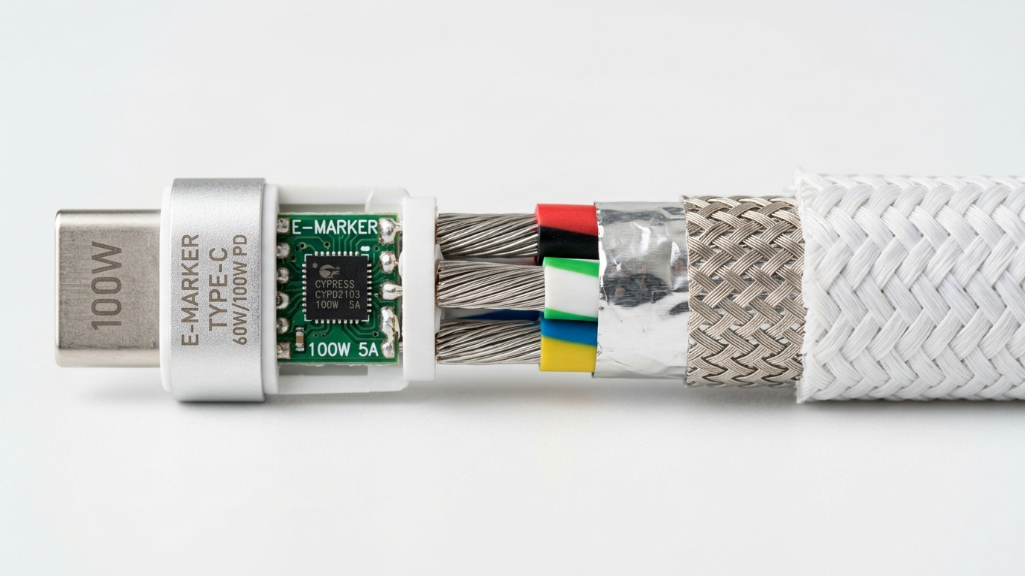
Cable Engineering: From TPE Materials to E-Marker Chip Deep Customization
Do not be fooled by flashy nylon braided exteriors. The core competitiveness of a high-spec fast charging cable lies inside:
- Internal Shielding Layer: Must have high-density braided mesh plus aluminum foil dual shielding to resist EMI during data transmission.
- Low-Resistance Copper Core: For 100W or 240W (PD 3.1) cables, tinned copper conductors must be used, and the wire gauge (AWG) designed with scientific redundancy according to current-carrying capacity.
- E-Marker Chips: For outputs above 3A, high-reliability E-marker chips are required for PD handshake protocol communication with the adapter, ensuring safe voltage stepping.
Core Specification Comparison: Industrial-Grade OEM vs. Market Generic Solutions
| Evaluation Dimension | Market Generic Solution (Budget Grade) | Industrial OEM Solution (Pro Grade) | Engineering Insight |
|---|---|---|---|
| Adapter Core | Traditional silicon / Gen II GaN | GaN III / IV (High-Density) | Determines temperature rise and volume ratio |
| Fast Charging Protocol Support | Only PD 2.0 / QC 3.0 | PD 3.0 / PPS / SuperVOOC / AFC | Handshake speed compatible with flagship devices |
| PCBA Processing | Manual soldering or low-precision SMT | Automated SMT Lines with AOI | Reduces early failure due to cold solder joints |
| Cable Fatigue Resistance | 2,000–3,000 bending tests | 10,000+ bending tests | Mechanical durability for high-frequency usage |
| Safety Protection | Basic OVP / OCP | OVP, OCP, OTP (over-temperature protection), SCP | Quadruple circuit protection is prerequisite for global entry |
| Housing Material | Standard flame-retardant PVC | V0 Grade Fireproof PC (UL94-V0) | Safety baseline under extreme overload |
Why “Heavy-Asset Vertical Integration” is the Ultimate Supply Chain Moat
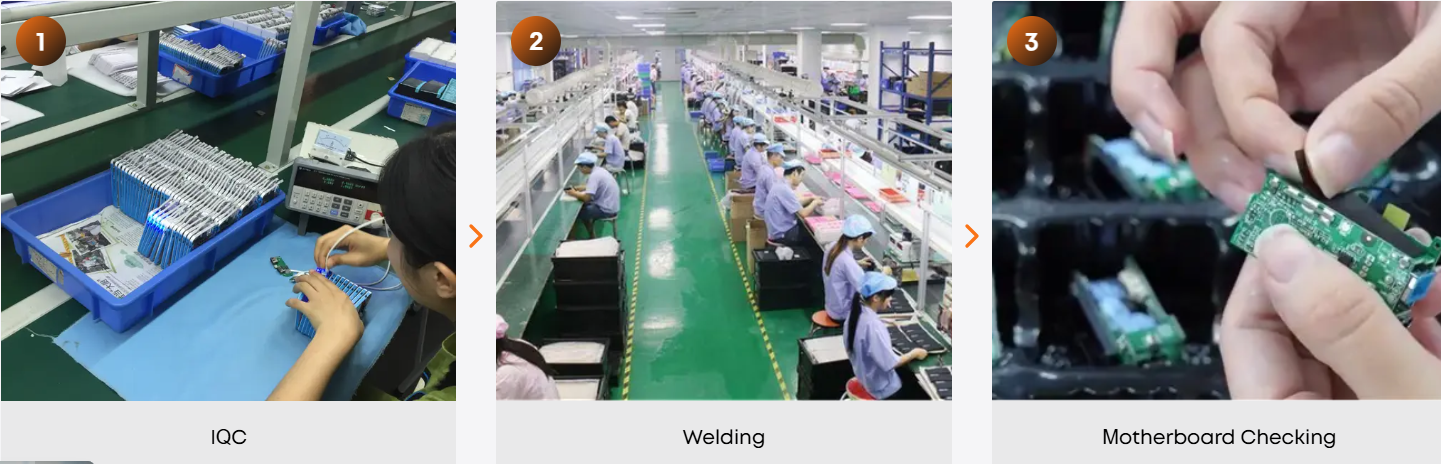
In today’s environment of unpredictable lead times for electronic manufacturing, selecting a factory with vertical integration is essentially buying certainty.
In-House Molds and Injection Molding: Reduce MOQ and Shorten Prototype Cycles
Most factories must outsource mold fabrication when handling custom logo power adapter requests, typically requiring 30–45 days for mold development. A factory with an internal injection molding workshop and mold opening capability can complete the full cycle internally—from 3D structural design to mold sampling.
[Experience] Real-World Case:
A leading European power bank brand required mass production of a 100W three-port charger with special heat dissipation structure in 25 days. Traditional collaborative models would struggle to meet this timeline. Thanks to internal integration of metal stamping, mold finishing, and injection molding, the engineering team produced the first T0 samples within 72 hours of drawing approval. This “ultra-fast lead time” is the strongest support for brands facing sudden market trends.
Automated SMT Lines and PCBA Reliability
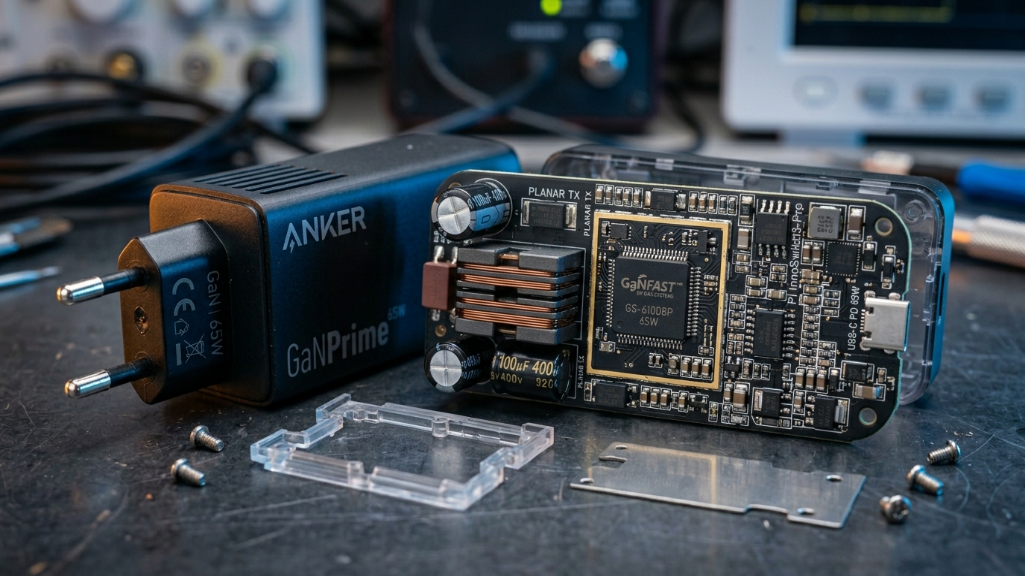
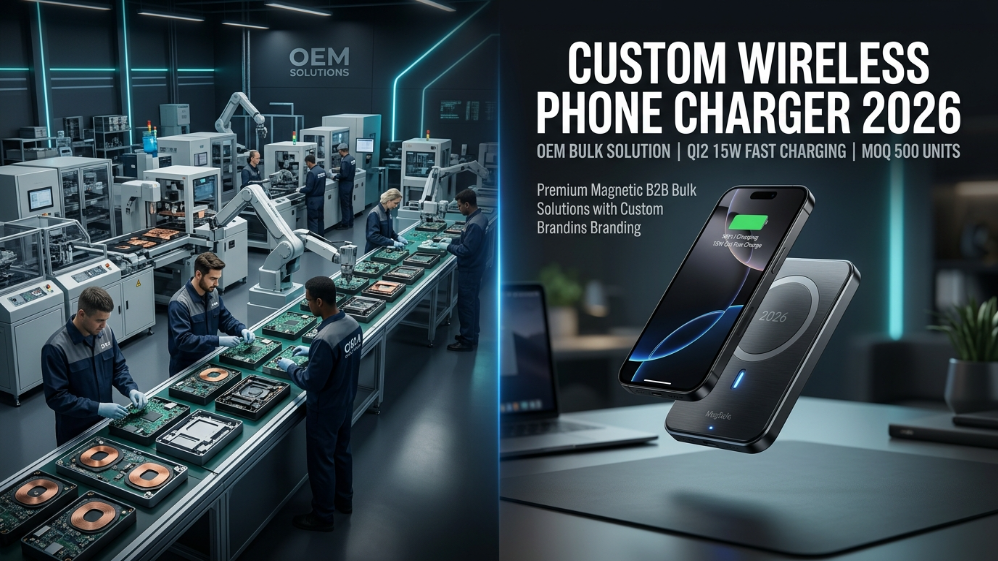
The soul of an adapter lies in its PCBA. In our SMT factory for PCBA, automated pick-and-place machines pursue not only efficiency but consistency. Every board undergoes Automated Optical Inspection (AOI) after reflow soldering. In fast charging scenarios, even slight shifts of an inductor or cold soldering of a capacitor can cause catastrophic breakdown under 20V/5A high current. Such precision is impossible with manual soldering alone.
Strict Quality Control Standards: “Entry Ticket” for Global Export
For bulk charging cables for distributors, consistency in quality outweighs everything.
Electrical Safety: Non-Negotiable Protection System
A qualified adapter must include comprehensive protection logic:
- Over-Voltage Protection (OVP): Prevents grid voltage fluctuations from damaging devices.
- Over-Current Protection (OCP): Monitors output current in real-time.
- Over-Temperature Protection (OTP): Automatically reduces power at critical internal temperatures.
These are not mere schematic symbols—they require IEC 62368-1 safety standard validation through practical testing.
Physical Durability: Simulate Extreme Usage Scenarios
The weak point of fast charging cables is often the SR (tail) connection. 10,000+ bending tests are conducted under 500g load, ±90° reciprocating swings, ensuring the internal copper core remains intact and the outer sheath undamaged. For cross-border trade, metal connectors undergo 24–48 hour salt spray tests to prevent visible rust in high-humidity, high-salinity shipping containers.
Deep Customization & Private Labeling: Building Unique Brand Assets
In the OEM fast charging collaboration model, a simple “logo print” no longer satisfies the sophisticated B2B market. Private label competition has shifted to the intersection of industrial design (ID) and structural innovation.
From Laser Engraving to Full-Chain Customized Packaging
For distributors, brand premium often stems from details. Customization services include laser engraving, silk screening, firmware personalization (e.g., custom startup charging protocol display), and eco-compliant packaging solutions. This full-spectrum branding capability is the physical foundation for standing out on Amazon or local e-commerce platforms.
Power of Collaborative R&D
Top OEM factories act as technical partners, not just executors. For custom logo adapters with unique aesthetics, engineers participate early in ID design, using thermal simulations and structural stacking analysis to ensure slim or semi-transparent designs do not compromise heat dissipation.
Global Trade Compliance: The “Moat” Beyond Market Entry
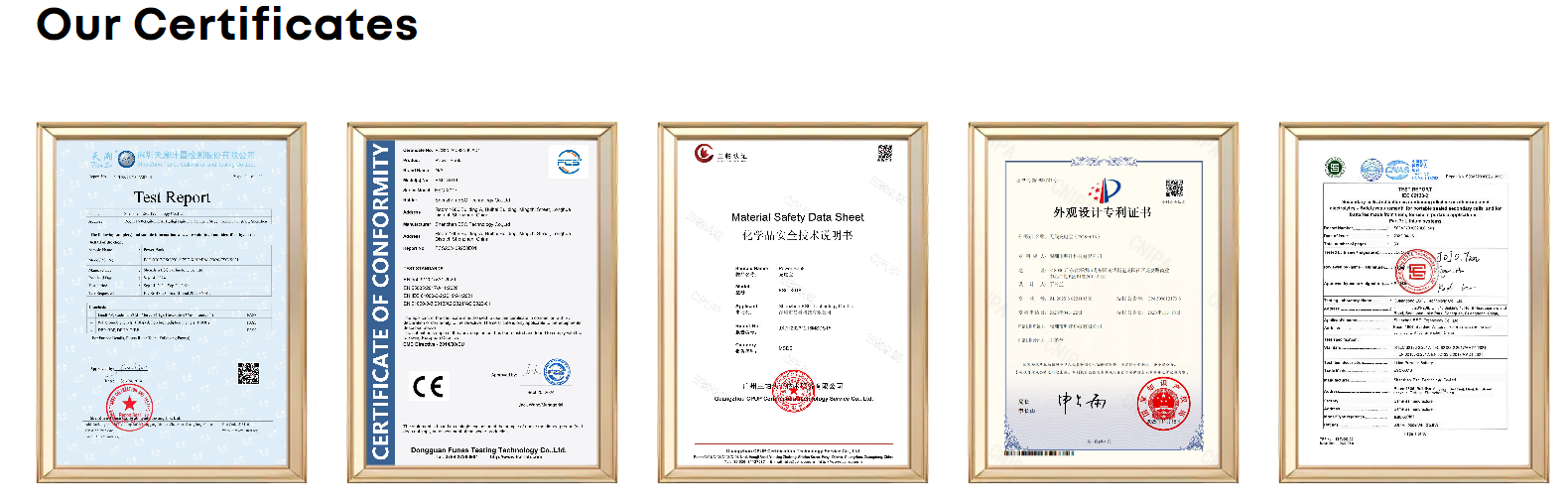
For bulk charging cables for distributors, compliance is essential. A mature factory must have deep global market entry experience and assist clients in efficiently obtaining certifications.
| Target Market | Core Mandatory Certification | Key Technical Focus | Compliance Value |
|---|---|---|---|
| North America (USA/Canada) | UL / FCC / ETL | Physical strength, electrical clearance, fire hazards | Mandatory ticket for offline retail chains |
| Europe (EU) | CE / RoHS / REACH | EMC & environmentally safe chemical components | Avoid customs detention and huge fines |
| Global | USB-IF (PD 3.1) | Protocol handshake consistency & high-current safety | Ensure compatibility with mainstream devices |
| UK | UKCA | Post-Brexit specific regulations | Independent market entry apart from CE |
Core Competence: AOVOLT’s 15-Year Manufacturing Philosophy
When choosing an OEM fast charging factory, AOVOLT, with 15 years in consumer electronics manufacturing, exemplifies the confidence of a heavy-asset factory. Based in Dongguan, China, it is not a simple assembly plant but a highly vertically integrated manufacturing entity.
140W+: Ceiling of Fast Charging Technology
AOVOLT’s technical barrier lies in extreme power mastery. While the industry competes at 65W, their R&D has achieved stable mass production at 140W (PD 3.1) with full protocol compatibility, including PD 3.0/PPS, QC 3.0, FCP, SCP, AFC, Apple 2.4A, BC 1.2. Providing you with Apple 2.4A protocol PCBA: Advanced B2B Procurement and Engineering.
Vertical Integration: Closed-Loop Manufacturing Efficiency
AOVOLT’s “ultra-fast lead time” stems from heavy-asset closed-loop production lines. From circuit design to mold opening, injection molding, and hardware integration, every process occurs within the same industrial park, compressing external coordination and reducing traditional OEM cycles from 45 days to competitive timeframes.
FAQ: 5 In-Depth Questions on OEM Fast Charging Factory Procurement
Q1: Why do some 100W fast charging cables lose power over time?
Usually related to internal cable impedance and temperature control. Low-quality cables generate excessive Joule heat under 5A current. AOVOLT uses high-spec tinned copper and efficient E-marker chips to maintain low impedance even after 10,000+ bending tests, preventing protocol downgrade due to overheating.
Q2: What are the benefits of in-house molds for B2B procurement?
In-house mold opening lowers private mold cost and allows flexible MOQ. It ensures tight coupling of housing and PCBA, improving appearance and thermal paths.
Q3: How do factories balance inventory and cost for different plug standards?
AOVOLT uses “main body + replaceable adapters” or multi-spec housing reuse strategies. Modular molds allow fast production of US, EU, UK specifications, easing distributor inventory management.
Q4: How to verify if an adapter truly uses GaN technology?
Beyond component labels, power density is key. A bulky, hot 65W adapter likely uses high-frequency silicon. AOVOLT’s GaN III/IV reduces transformer size and keeps case temperature industry-leading after 4 hours at full load.
Q5: What factors affect lead time for B2B bulk orders?
Core variables: chip procurement cycle and mold scheduling. AOVOLT’s vertical integration minimizes upstream supply fluctuations, achieving industry-leading fast electronic manufacturing lead time.
Conclusion: Find Your Long-Term Technical Partner
Choosing an OEM fast charging cables and adapters factory is fundamentally choosing a partner capable of weathering market volatility and technological iteration. Behind a seemingly ordinary power bank or fast charger lie complex protocol handshake logic, rigorous physical durability tests, and global compliance certifications. AOVOLT’s 15 years of manufacturing depth transforms heavy-asset vertical integration into industrial aesthetics. Whether pursuing 140W technical peak or distinctive industrial design, they offer not just products, but supply chain certainty.
In future brand competition, only factories that control underlying R&D and closed-loop production can provide a stable technological rear guard in the unpredictable global market. For those seeking a manufacturing partner adhering to “strict standardized quality, ultra-fast lead time, and high-end customized design,” understanding the operational logic of Dongguan source factories is essential for brand upgrading.