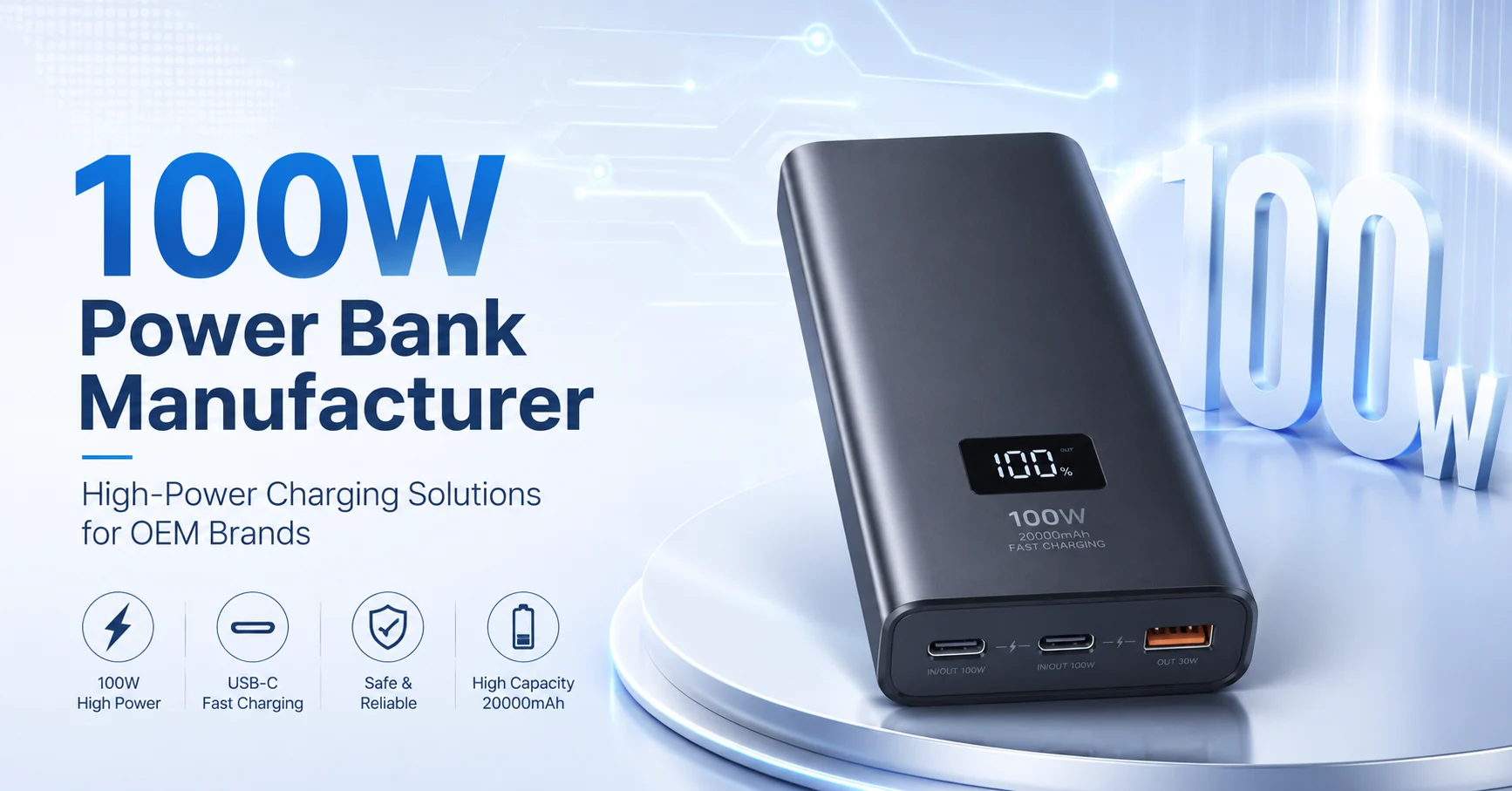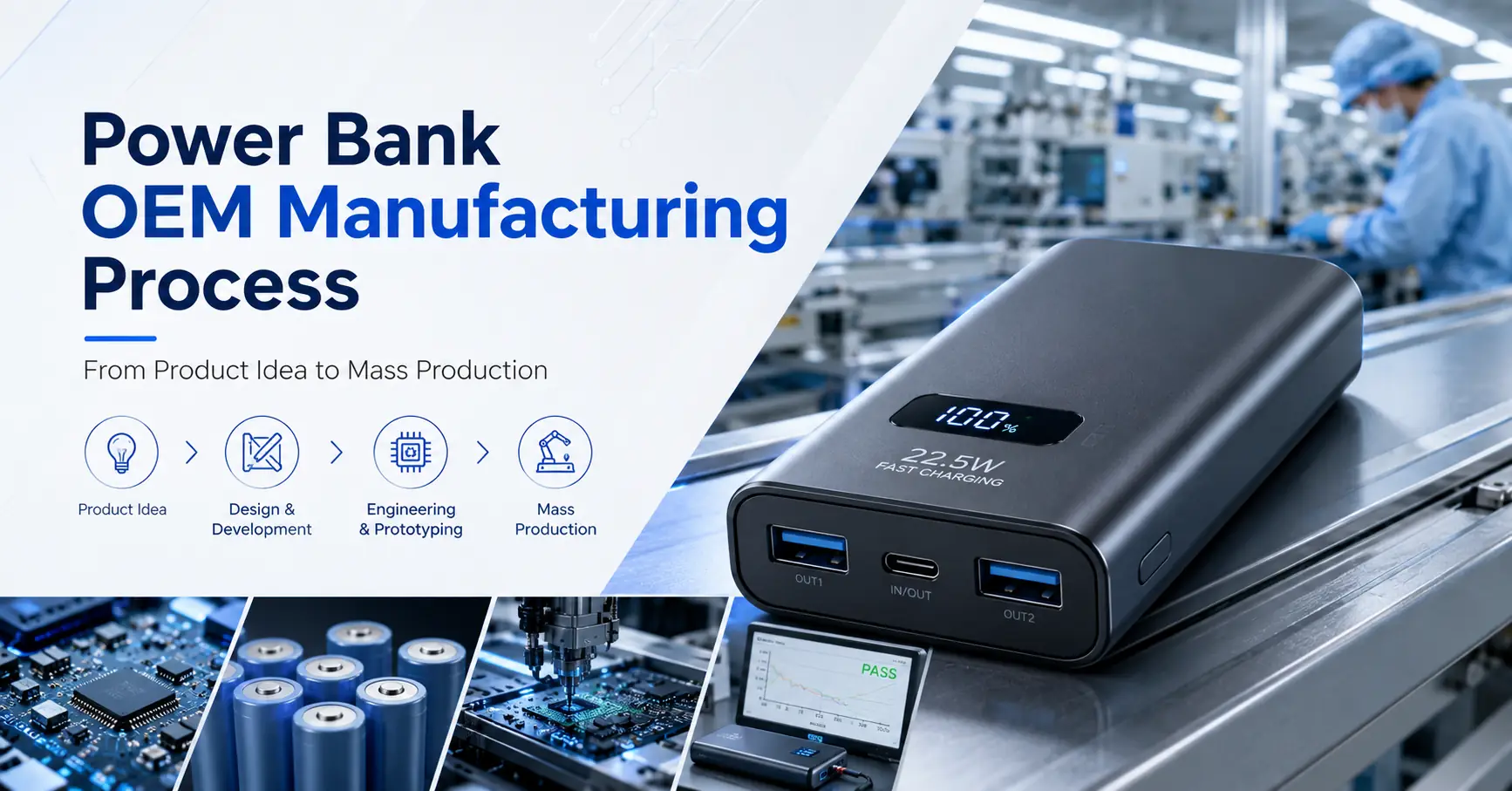


In the portable charging market, the biggest issue is not whether a power bank works—but how long it can maintain stable performance.
Many products perform well during the first few months, but over time users begin to notice:
- faster battery drain
- reduced charging speed
- increased heat during operation
- unexpected shutdowns
From an engineering perspective, these issues are typically caused by:
- limited battery cycle life (often below 400 cycles)
- rising internal resistance over time
- poor thermal management
- unstable power conversion systems
Once these factors combine, product lifespan is often limited to 6–12 months.
This is why more brands are now focusing on long lifecycle power bank OEM solutions. At AOVOLT, lifespan is not treated as a feature—it is engineered through battery systems, circuit design, and production control.

Battery System Solution: The Foundation of Long Lifecycle Performance
The lifespan of a power bank is primarily determined by its battery system.
A reliable long lifecycle power bank OEM solution starts with:
Battery Cell Selection
- Grade-A lithium polymer cells
- cycle life: 600–800+ cycles
- internal resistance: <50mΩ
- capacity deviation: <±2%
Why This Matters
Inconsistent battery cells can lead to:
- uneven charging and discharging
- localized overheating
- faster overall degradation
Battery Management System (BMS)
A complete BMS is essential for long-term stability:
- overcharge protection (OVP)
- over-discharge protection (UVP)
- overcurrent protection (OCP)
- short-circuit protection
- temperature monitoring (NTC)
Key improvements:
- lifespan increased by 30–60%
- failure rate reduced to <1.5%
Thermal Management Solution: Controlling Heat to Extend Lifespan
Heat is one of the most critical factors affecting battery degradation.
When temperatures exceed 50°C, the impact becomes significant:
- accelerated battery aging
- reduced efficiency
- shorter product lifespan
AOVOLT Thermal Design Approach
As a professional long lifecycle power bank OEM, we reduce heat through:
Structural Design
- graphite heat spreaders
- aluminum or copper thermal layers
- optimized internal layout
Electrical Optimization
- high-efficiency DC-DC conversion (>90%)
- reduced I²R losses
- balanced current flow
Results:
- temperature reduced by 20–30%
- operating range maintained at 35–45°C
- lifespan extended by up to 2x
Power Circuit Solution: Maintaining Stable Output Over Time
Long-term performance also depends on circuit stability.
Common issues in low-quality designs include:
- voltage fluctuation (±7% or higher)
- current instability under load
- voltage drop during high output
Optimization Strategy
PCB Design
- multi-layer PCB (2oz copper or above)
- balanced current routing
- reduced voltage drop
Output Control
- voltage stability within ±3%
- ripple voltage <100mV
Benefits:
- consistent charging speed
- better device compatibility
- reduced performance degradation over time
Performance Comparison: Standard vs Long Lifecycle Design
| Parameter | Standard Power Bank | AOVOLT Long Lifecycle Design |
|---|---|---|
| Cycle Life | 300–500 cycles | 600–800 cycles |
| Temperature | 50–60°C | 35–45°C |
| Efficiency | 75–85% | 88–94% |
| Voltage Stability | ±7% | ±3% |
| Failure Rate | 4–7% | <1.5% |
| Lifespan | 6–12 months | 2–3 years |
Mass Production Solution: Ensuring Consistency at Scale
A well-designed product can still fail if production is inconsistent.
AOVOLT’s long lifecycle power bank OEM system includes:
Battery Control
- strict cell matching
- batch consistency control
Production Process
- SMT precision: ±0.05mm
- automated assembly
Testing Systems
- full-load testing
- thermal testing
- aging tests (6–12 hours)
Quality Control
- defect rate below 1%
- consistent batch performance
Case Study: Extending Product Lifespan in a Global Market
A cross-border brand faced issues with:
- rapid battery degradation
- overheating
- return rate above 6%
AOVOLT Solution
- upgraded battery cells
- optimized BMS system
- improved thermal design
- enhanced production control
Results
| Metric | Before | After |
|---|---|---|
| Cycle Life | 400 cycles | 750 cycles |
| Temperature | 52°C | 39°C |
| Failure Rate | 5.5% | 1.3% |
| Return Rate | 6.2% | 1.5% |
Customization Based on Real Usage Scenarios
Daily Use
- stable output
- moderate capacity
Travel
- high capacity (20,000mAh+)
- long runtime
High-Power Devices
- 65W–100W output
- enhanced thermal control
Business Use
- consistent batch quality
- long-term reliability
AOVOLT customizes long lifecycle power bank OEM solutions based on real-world usage conditions.
FAQ
Q1: What defines a long lifecycle power bank?
A: Typically 600+ cycles with stable performance over 2–3 years.
Q2: Why do power banks degrade over time?
A: Heat, battery aging, and unstable circuit design.
Q3: How can brands reduce return rates?
A: By choosing OEM suppliers with strong battery, thermal, and production control systems.
AOVOLT Long Lifecycle Power Bank OEM Solutions
Long lifecycle performance is not achieved by chance—it is engineered.
AOVOLT provides complete long lifecycle power bank OEM solutions, including:
- high-quality battery systems
- optimized circuit design
- advanced thermal management
- stable mass production
If you want to explore our products:
https://www.esccharge.com/products/power-bank
If you are planning an OEM project:
https://www.esccharge.com/solution/customized-solution
AOVOLT helps brands deliver more durable, reliable, and competitive power bank products.