
Why Mini Power Banks Are Dominating the Portable Charging Market
In a world where minimalism meets mobility, the mini power bank has become a must-have accessory. Users want lightweight charging options that fit into a pocket or handbag yet deliver reliable power on demand.
As smartphones, earbuds, and wearables consume energy faster than ever, suppliers must balance size, speed, and safety.
Mini power banks fill that gap perfectly — combining high-density Li-Polymer cells with smart charging ICs to deliver fast energy in the smallest possible footprint.
Inside a Mini Power Bank: Small Size, Smart Engineering
Top mini power bank suppliers use compact but high-efficiency components to keep performance consistent with larger models.
| Component | Specification | Benefit |
|---|---|---|
| Battery Type | High-density Li-Polymer (3.7 V) | Stable capacity in slim form |
| Capacity Range | 3 000 – 10 000 mAh | Ideal for phones & wearables |
| Charging Protocols | PD 3.1 / QC 4.0 / SCP | Fast universal charging |
| Efficiency Rate | 93 – 95 % | Minimal heat loss |
| Cycle Life | ≥ 500 cycles | Long-term reliability |
| Material | Aluminum + ABS blend | Durability & light weight |
These units are typically 8 – 10 cm long and under 200 g, making them true pocket-size chargers that still power modern smartphones at 18 W or 20 W output.
Performance and Endurance: How Mini Becomes Mighty
-
High Energy Density Cells – Grade-A polymer batteries store more energy in less volume.
-
Efficient Power Conversion – GaN charging ICs achieve > 93 % efficiency, reducing waste.
-
Thermal Management System – Graphene film keeps operating temperature below 45 °C.
-
Smart Protection Circuit – Prevents overcharge, short circuit, and over-voltage damage.
-
Quick Recharging – A mini unit can recharge fully in 1.5 hours via PD USB-C input.
As confirmed by Battery University, high-density cells paired with controlled charging can extend battery life by 30–40 %, even in compact designs.
Advantages of Mini Power Banks for OEM Buyers
| Feature | Description | Advantage |
|---|---|---|
| Compact Design | Under 10 cm thickness | Easy to carry, travel-friendly |
| Lightweight Build | 150–200 g | Ideal for daily use and gifting |
| Universal Compatibility | PD/QC protocols | Supports phones, earbuds, smartwatches |
| High Safety Certifications | CE / FCC / RoHS / UN38.3 | Compliant for global export |
| OEM Flexibility | Logo printing / mold customization | Brand differentiation |
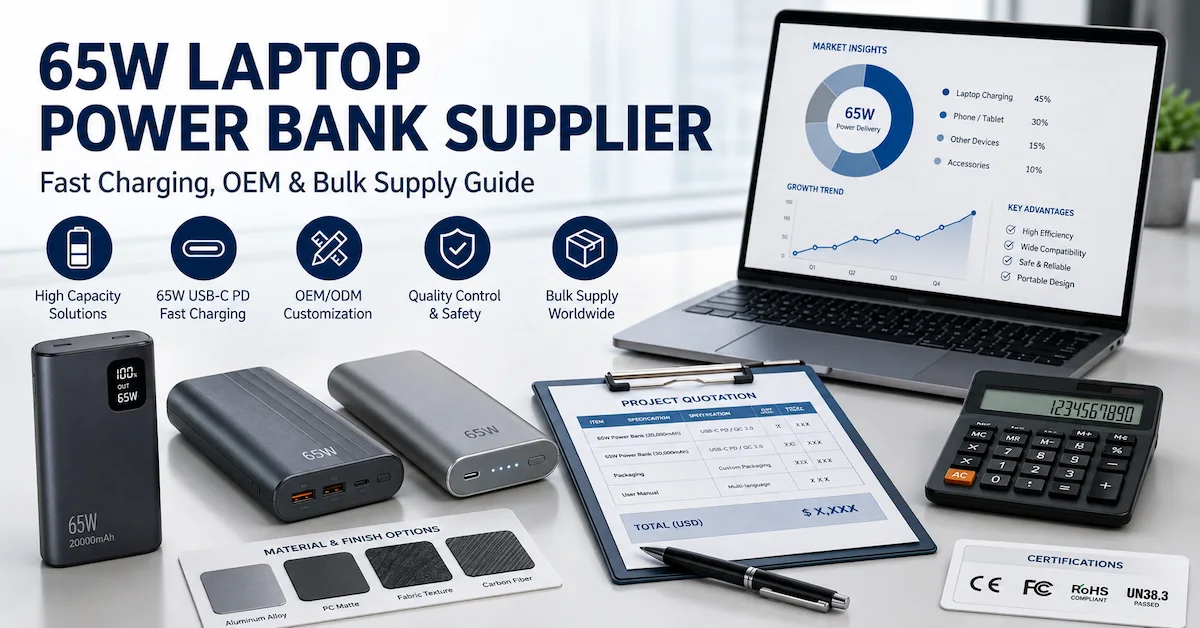
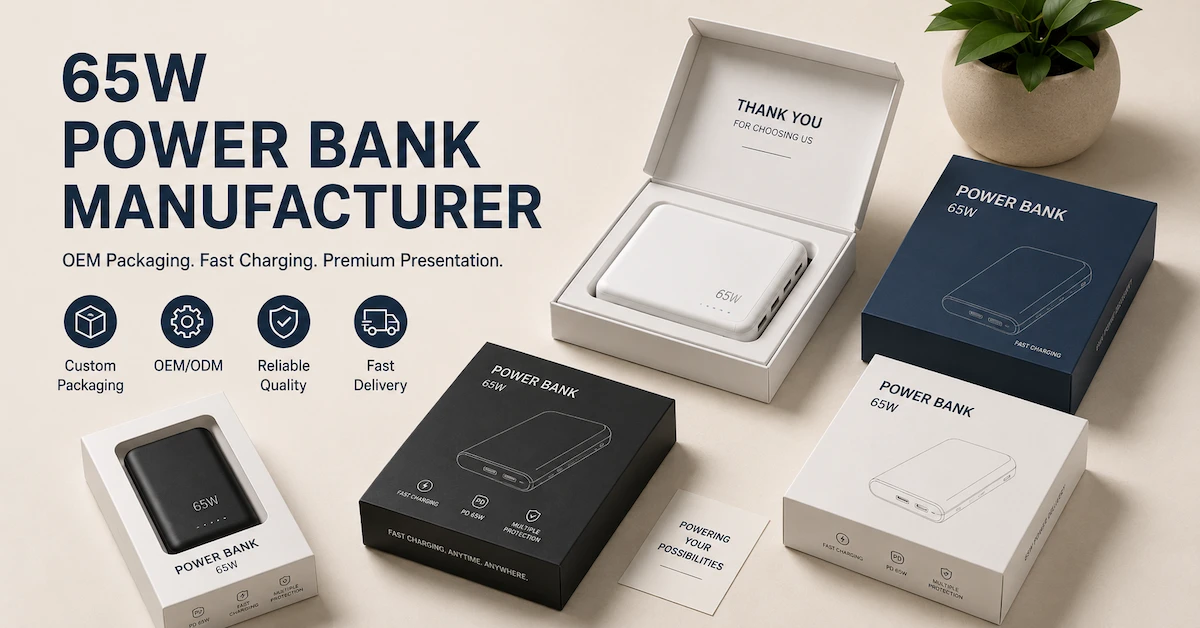
Suppliers like ESCCharge support custom logo engraving, color selection, and packaging design for corporate and retail brands, making mini power banks a high-value product for both tech and lifestyle markets.
Mini vs. Standard Power Banks: A Practical Comparison
| Parameter | Mini Power Bank | Standard Power Bank |
|---|---|---|
| Size | 8 – 10 cm | 12 – 18 cm |
| Weight | 150 – 200 g | 280 – 400 g |
| Charging Speed | PD 18 – 20 W | PD 30 – 45 W |
| Battery Life | ≥ 500 cycles | ≈ 300 cycles |
| Travel Suitability | Airline-safe | Some restrictions |
| OEM Cost Efficiency | Lower MOQ & freight | Higher shipping cost |
Compact models reduce logistics and storage costs for distributors while offering higher sales volume potential in retail and e-commerce channels.
Use Scenarios: When Small Makes Sense
-
Commuting and Business Travel: Keeps phones charged during flights and meetings.
-
Outdoor and Sports: Fits easily into a waist bag or cycling kit.
-
Daily Carry: Light enough for students and office workers.
-
Promotional Gifts: Stylish and practical for corporate branding.
IEEE studies show that compact charging solutions with optimized thermal management achieve up to 20 % higher energy retention during multi-device use — proof that efficiency does not require bulk.
What to Look for in a Reliable Mini Power Bank Supplier
-
Component Traceability: Ensure suppliers use certified Grade-A battery cells.
-
Testing and Inspection: Cycle test ≥ 500 times, drop test ≥ 1 m height.
-
Safety Compliance: Verify CE, UN38.3, MSDS for each batch.
-
Production Capacity: Monthly output ≥ 50 000 pcs for OEM scale.
-
OEM Support: Private mold design, custom color finish, retail box packaging.
Buyers seeking long-term supply partners should prioritize vendors with in-house SMT assembly and aging test facilities — key indicators of quality control and delivery reliability.
Customer Concerns Answered
Q1: Are mini power banks less durable than larger ones?
No. Modern materials and IC management allow equal or greater cycle life.
Q2: Is fast charging safe for compact devices?
Yes. Smart ICs manage current flow and temperature automatically.
Q3: What’s the ideal capacity for daily use?
5 000 – 10 000 mAh is optimal for phones and small electronics.
Q4: Can I customize the shape and surface?
Yes. OEM suppliers offer mold customization, engraved logos, and texture finishes.
Conclusion: Compact Power Built for Efficiency
Mini power banks prove that size isn’t a limitation — it’s an advantage. Combining smart IC protection, high-density cells, and OEM flexibility, they embody the next generation of efficient energy mobility.
For importers and brand owners seeking a trusted mini power bank supplier offering custom solutions and global export support, visit
ESC Charge Official Website to explore partnership opportunities and product catalogs.