
Choosing the right power bank product development supplier is one of the most important decisions for consumer electronics brands, importers, distributors, and e-commerce sellers. A power bank is not just a battery in a plastic housing. It involves cell selection, PCBA design, fast charging protocols, thermal management, safety testing, certification, industrial design, packaging, and production control.
For B2B buyers, the real question is not simply “Which power bank is cheaper?” The better question is: Can this supplier help me develop a reliable, market-ready power bank that fits my target customers, retail channel, safety requirements, and brand positioning?
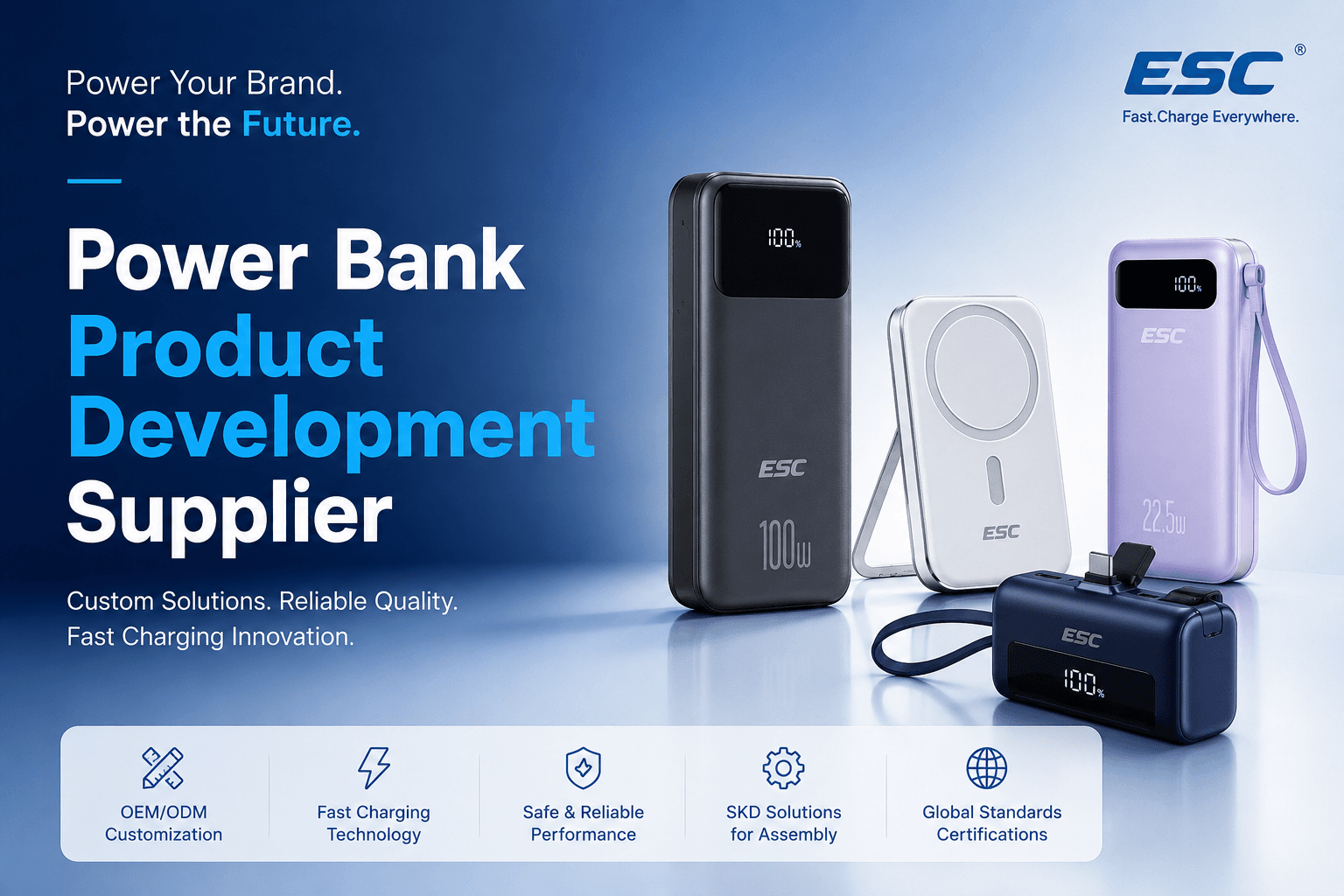
ESC focuses on fast charging power banks, magnetic wireless power banks, GaN chargers, SKD power bank solutions, and OEM/ODM customization. For buyers who need product development support instead of simple product sourcing, ESC can help from product planning to mass production.
This guide explains how to evaluate a power bank product development supplier, what technical details buyers should check, which customization options matter, and how to reduce risks before placing a bulk order.
What Does a Power Bank Product Development Supplier Do?
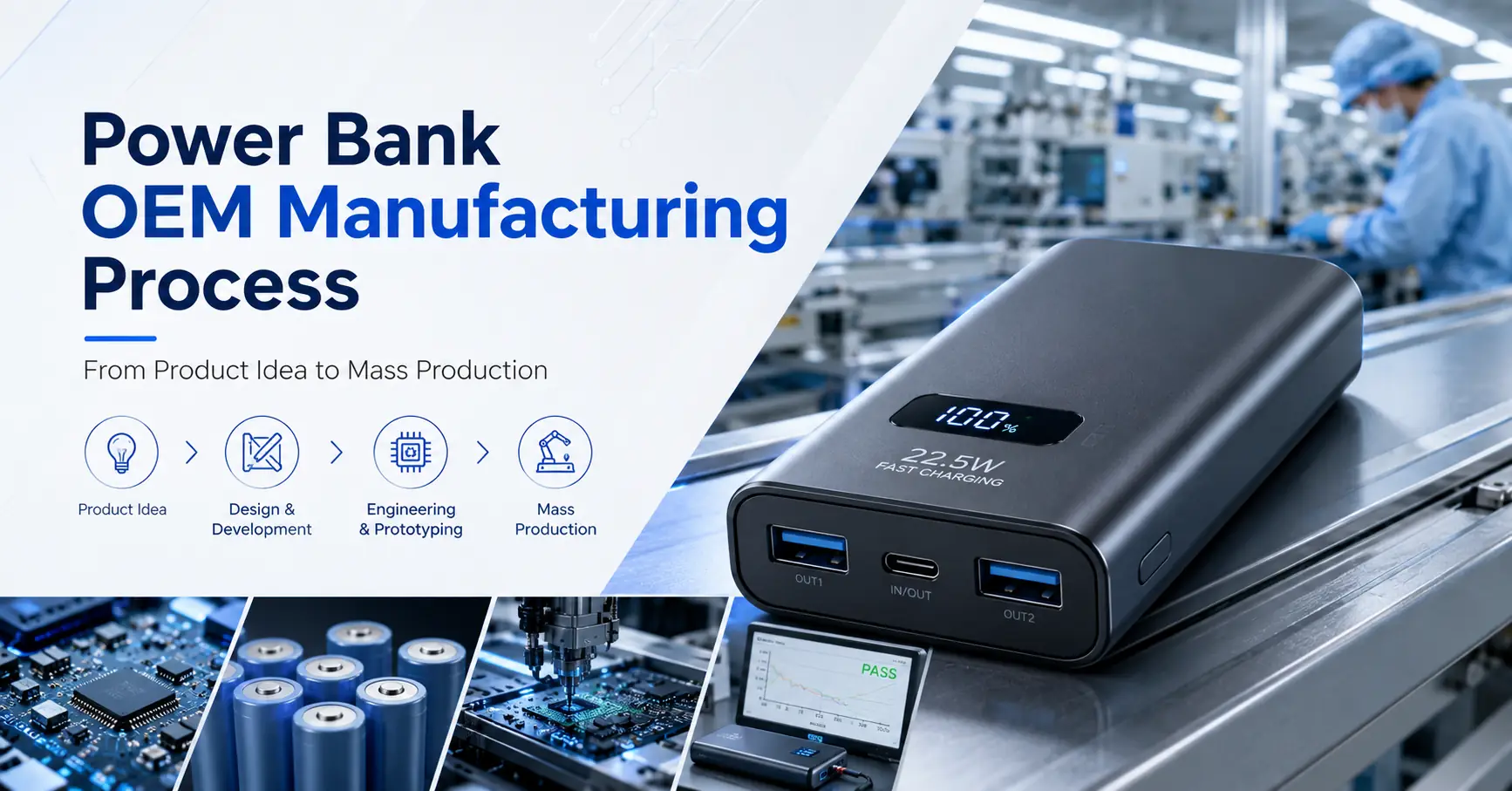
A professional power bank product development supplier does more than provide ready-made products. The supplier should support the full development process from product concept to mass production.
For most OEM/ODM projects, the development work includes:
| Development Stage | What Buyers Should Expect |
|---|---|
| Product positioning | Define target users, retail price range, capacity, power, features, and market segment |
| Industrial design | Housing shape, size, color, texture, surface treatment, display, stand, cables, or magnetic structure |
| Electrical design | PCBA, charging protocol, input/output control, power distribution, battery protection |
| Battery selection | Capacity, cell type, energy density, cycle life, safety level, certification support |
| Prototype testing | Sample confirmation, function testing, heat testing, charging compatibility testing |
| OEM/ODM customization | Logo, packaging, color, mold, protocol, cable, display, and accessory customization |
| Quality control | Incoming inspection, PCBA testing, battery capacity test, aging test, final inspection |
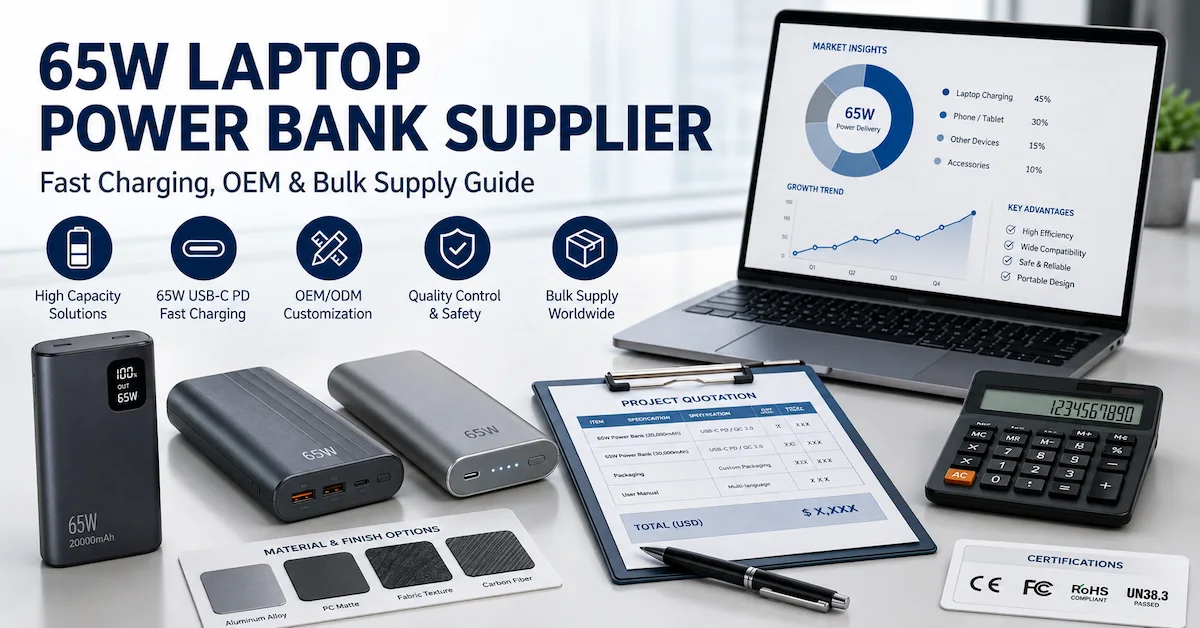
| Compliance support | CE, RoHS, FCC, MSDS, UN38.3, IEC62133, and other market-related documents |
| Mass production | Material preparation, assembly, testing, packaging, shipment |
For brands that want to build customized products, ESC’s custom fast charge solution can support power output, battery capacity, charging protocols, appearance, color, logo, and packaging customization.
A strong supplier helps buyers reduce product development time, avoid technical mistakes, and launch products that are easier to sell in different markets.
Who Needs a Power Bank Product Development Supplier?
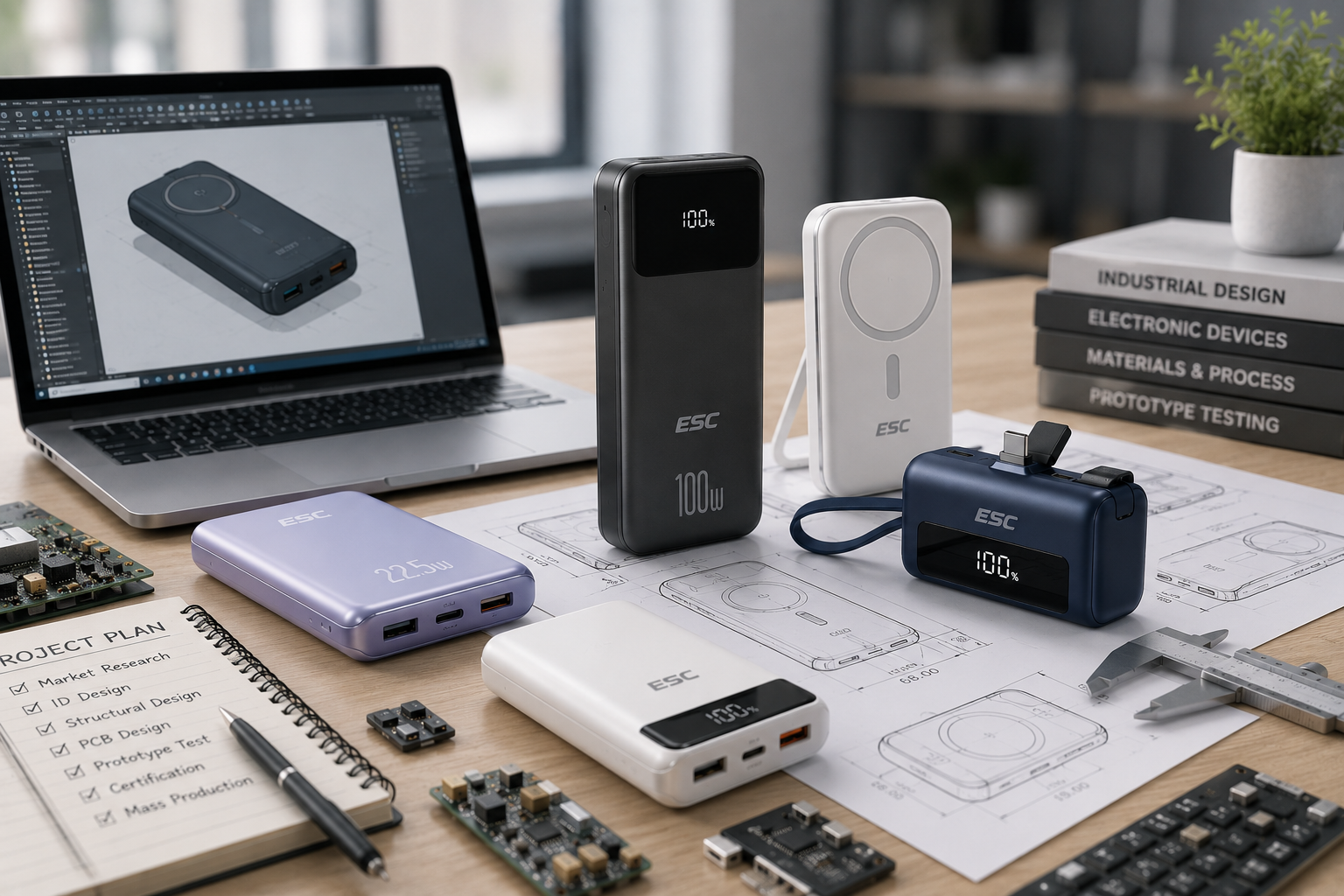
A power bank product development supplier is suitable for buyers who need more than a generic product from a trading company.
Best-fit buyer types
This solution is ideal for:
- Consumer electronics brands building private-label power bank lines
- Importers who need reliable fast charging products for regional distribution
- Amazon, Shopify, and online sellers who want differentiated products
- Gift companies looking for logo and packaging customization
- Travel accessory brands developing compact or global-plug power banks
- Retail chains that need stable quality and repeat supply
- Local assembly factories looking for SKD power bank housing and PCBA solutions
- Distributors who want multiple models from one factory partner
Buyers can also learn more about ESC’s manufacturing background, product categories, quality control, and OEM/ODM capability on the About Us page.
Not suitable for buyers who only want the lowest price
Product development requires sample testing, engineering communication, packaging confirmation, and quality control. Buyers who only compare the lowest unit price may overlook hidden risks such as false capacity, unstable fast charging, weak PCBA design, poor heat control, missing transport documents, or inconsistent production quality.
For battery products, these risks are not small. Power banks contain lithium-ion batteries and must meet transportation and safety requirements. The FAA states that spare lithium batteries and power banks must be carried in carry-on baggage only, and battery terminals must be protected from short circuit. You can refer to the FAA’s official lithium battery guidance here: FAA lithium battery safety information.
This is why battery quality, certifications, and supplier reliability matter in B2B procurement.
Key Application Scenarios for Custom Power Banks
A good power bank product development supplier should help you match product specifications with real use cases. Different markets need different product structures.
| Application Scenario | Recommended Product Direction |
|---|---|
| Daily commuting | 5000mAh–10000mAh, slim size, built-in cable, 22.5W or 27W fast charging |
| Business travel | 10000mAh–20000mAh, 45W/65W output, Type-C cable, TFT display |
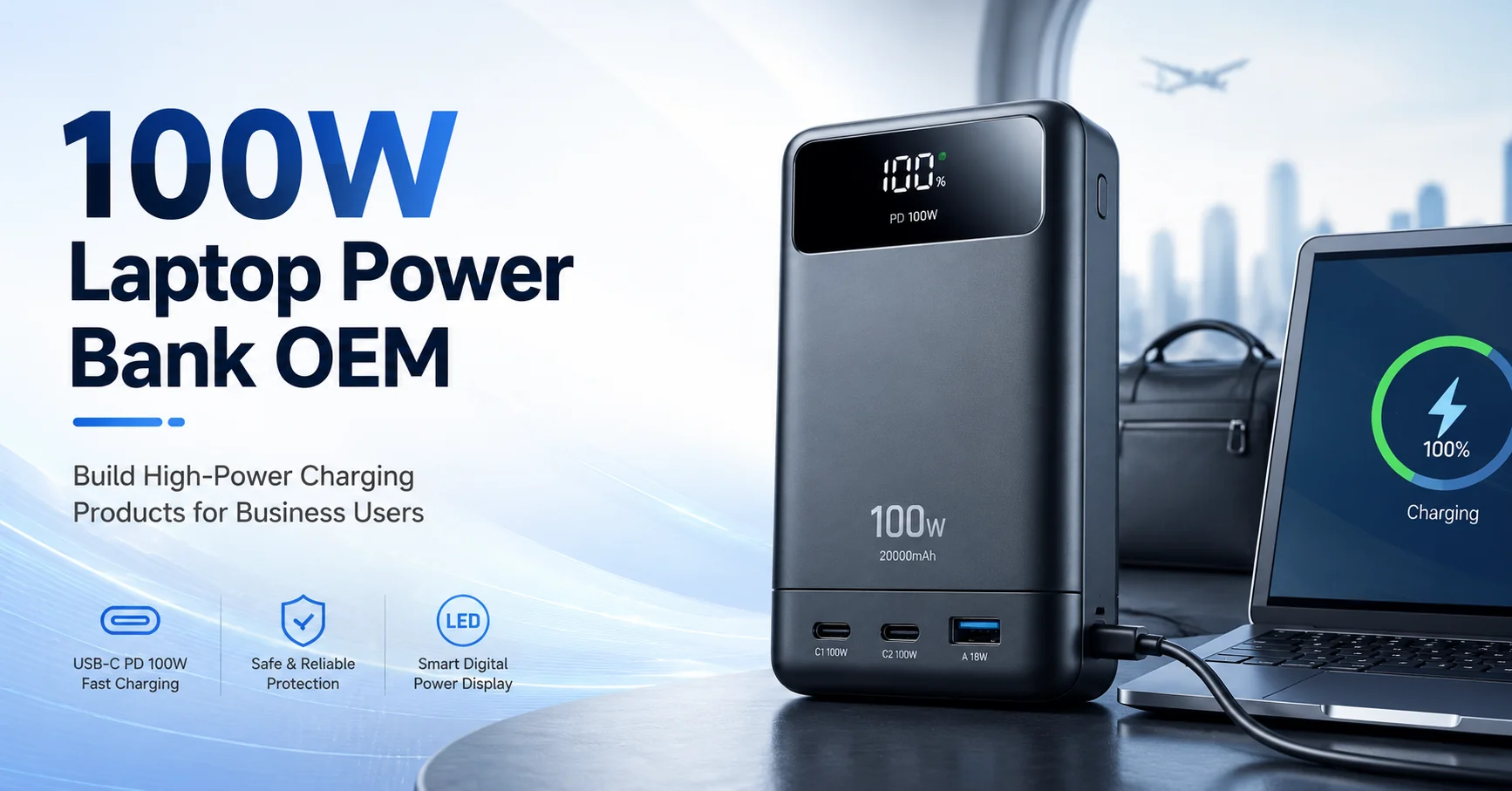
| Laptop charging | 20000mAh–27000mAh, 65W/100W output, PD/PPS support |
| Apple ecosystem | Magnetic wireless power bank, 15W wireless charging, Apple Watch charging |
| Samsung ecosystem | Magnetic or wireless power bank with Samsung-compatible charging |
| Outdoor and content creation | Large capacity, high power output, multi-device charging |
| Retail gift market | 10000mAh, colorful housing, logo customization, compact packaging |
| Local assembly | SKD housing + tested PCBA modules |
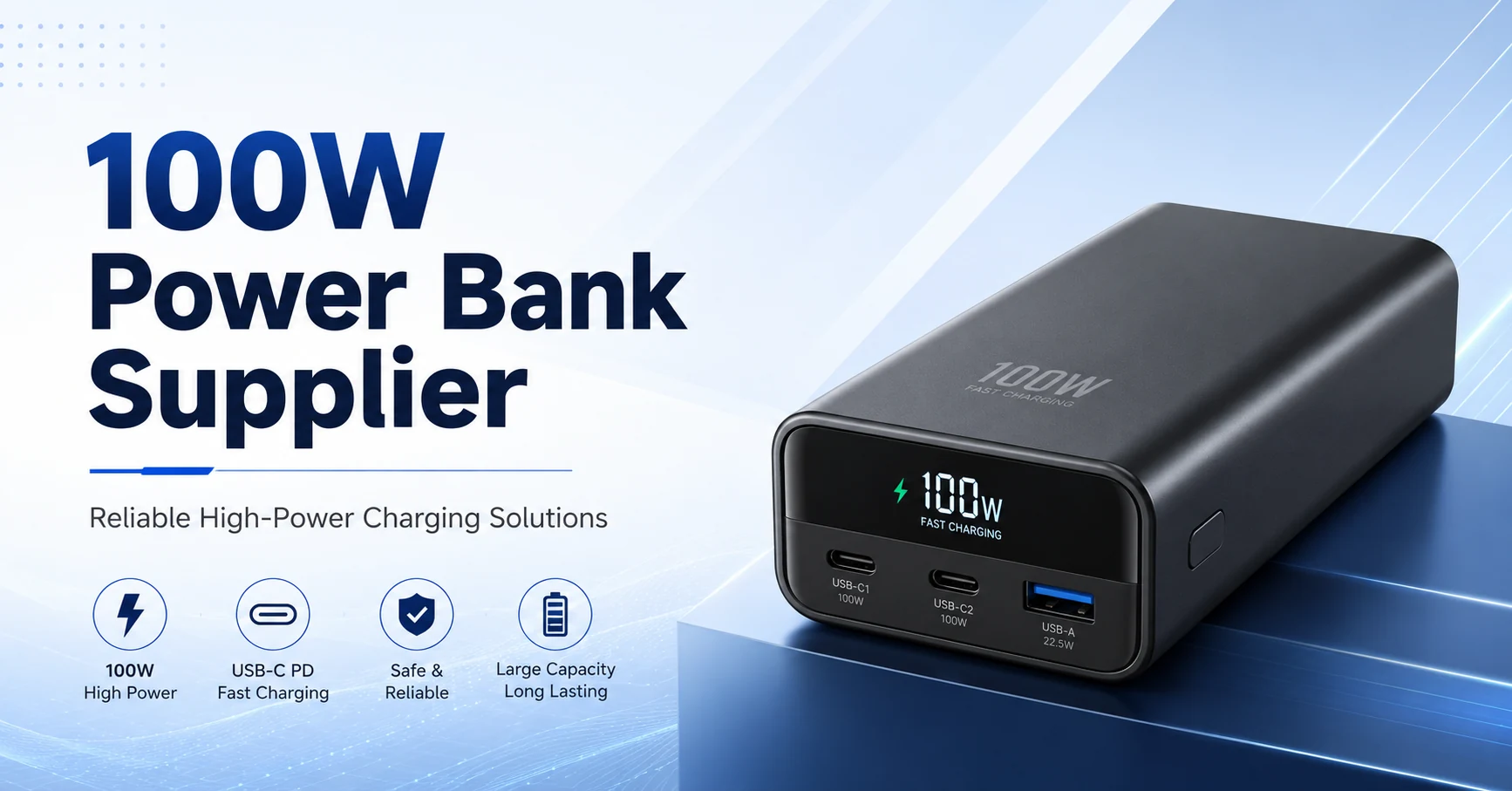
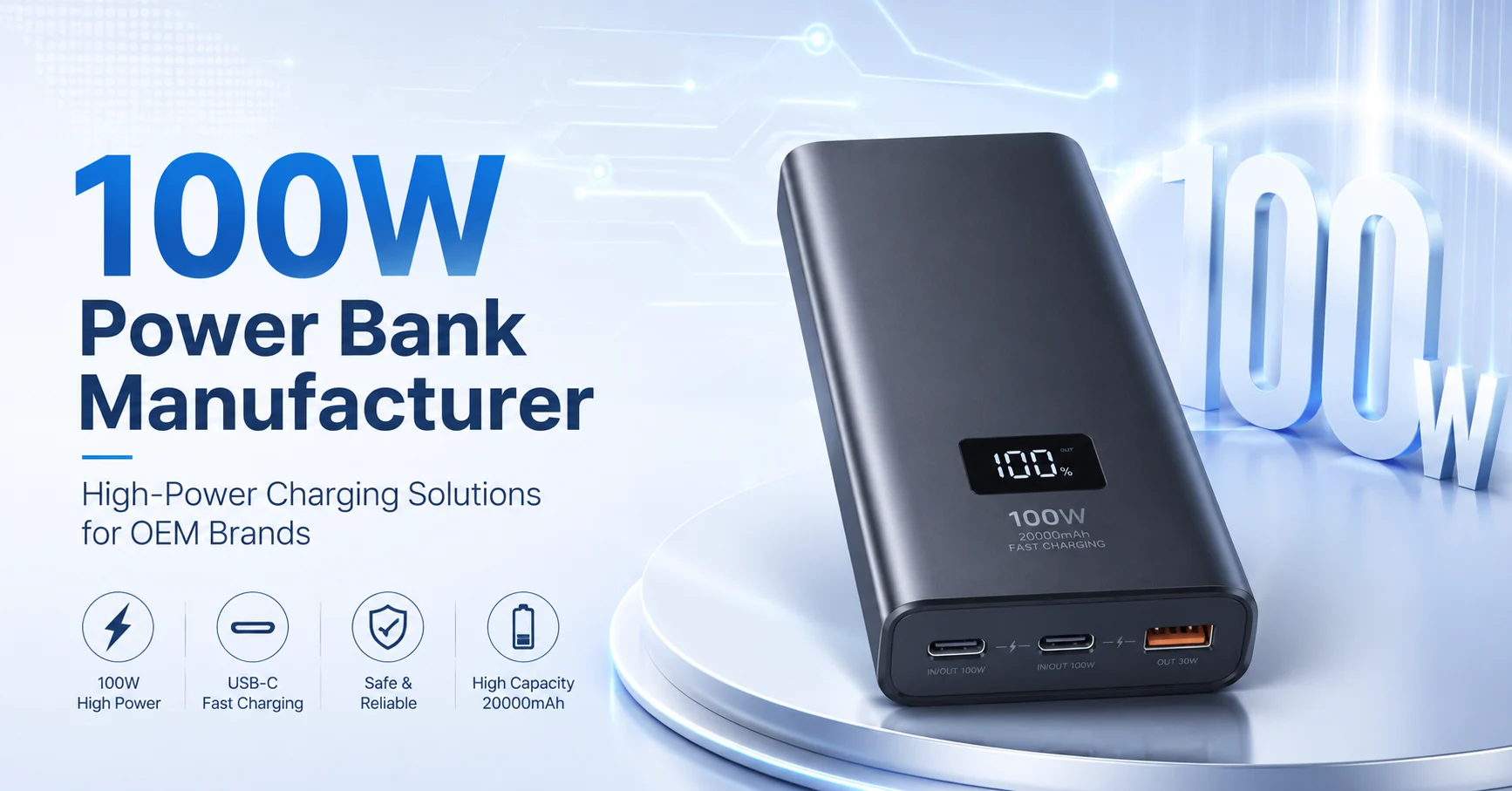
ESC’s power bank product category includes 100W 20000mAh models, 100W 27000mAh models, 27W 10000mAh built-in cable models, 65W 10000mAh 3-in-1 power banks, and 22.5W portable power banks. This product range allows buyers to build entry-level, mid-range, and high-performance product lines from one supplier.
For brands focused on Apple, Samsung, magnetic charging, or wearable device charging, ESC’s wireless charging product category offers magnetic wireless power banks, Qi2-style wireless charging models, and wireless power banks with watch charging functions.
Technical Specifications Buyers Should Check
When comparing any power bank product development supplier, technical specifications should be reviewed carefully. A good-looking product may still fail in the market if its charging speed, compatibility, safety, or battery performance is weak.
| Specification | What to Check |
|---|---|
| Battery capacity | 5000mAh, 10000mAh, 20000mAh, 27000mAh, or customized capacity |
| Output power | 22.5W, 27W, 45W, 55W, 65W, 100W, 140W or higher custom options |
| Input power | Whether the power bank itself supports fast recharging |
| Ports | USB-C, USB-A, Lightning cable, built-in Type-C cable, retractable cable |
| Wireless charging | 7.5W, 10W, 15W, Qi2, MagSafe-compatible, watch wireless charging |
| Protocols | PD3.0, PPS, QC3.0, FCP, SCP, AFC, VOOC, Super VOOC, Apple 2.4A |
| Display | LED, LCD, TFT screen, power display, real-time wattage display |
| Protection | Overcharge, over-discharge, over-current, short circuit, temperature control |
| Certification | CE, RoHS, FCC, MSDS, UN38.3, IEC62133, depending on market |
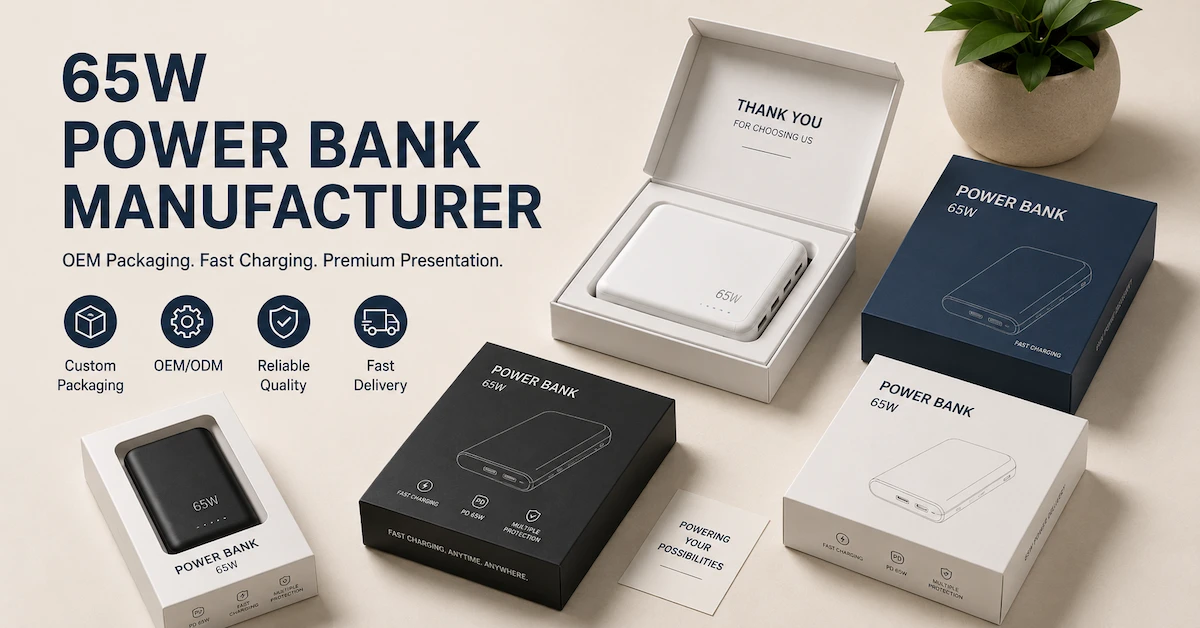
| Packaging | Retail box, e-commerce packaging, gift box, multilingual manual |
USB-IF notes that USB Power Delivery can support increased power levels up to 240W, with higher voltage levels enabling higher charging power. You can refer to USB-IF’s official USB Power Delivery information here: USB Power Delivery.
For power bank development, this means suppliers must understand not only wattage labels, but also cable rating, PCBA design, heat control, protocol negotiation, and device compatibility.
ESC’s customized fast charge solution is suitable for buyers who need different charging power, battery capacity, charging protocols, color, logo, packaging, and product design customization.
Battery, PCBA, Housing, and Workmanship
A reliable power bank product development supplier should be able to explain the product from the inside out.
1. Battery cells
Battery cells affect capacity, safety, cycle life, size, and cost. Buyers should confirm:
- Rated capacity and real usable capacity
- Lithium polymer or lithium-ion cell type
- Cell supplier level
- Cycle life requirement
- Overcharge and over-discharge protection
- Transport documents and safety test support
IEC 62133-2 specifies requirements and tests for the safe operation of portable sealed secondary lithium cells and batteries. You can refer to the IECEE standard page here: IEC 62133-2:2017.
This is why battery compliance is a key part of product development, especially for export markets.
2. PCBA design
The PCBA is the core of the power bank. It controls charging speed, power distribution, protocol compatibility, heat control, and safety protection.
Important PCBA factors include:
- USB-C PD output stability
- PPS support for compatible smartphones
- Multi-port power distribution
- Low heat under high load
- Accurate battery percentage display
- Protection IC and charging IC quality
- Firmware stability
For buyers who need semi-finished modules or local assembly support, ESC’s SKD power bank solution provides SKD housing and PCBA options for different power and capacity requirements.
3. Housing and structural design
Housing is not only about appearance. It affects heat dissipation, drop resistance, cable storage, magnetic alignment, hand feel, and brand perception.
Buyers should check:
- Plastic, aluminum, or mixed material structure
- Surface finish and color stability
- Built-in cable groove design
- Kickstand strength
- Magnetic wireless alignment
- Screen window precision
- Drop test performance
- Logo position and printing method
If your project needs local assembly or semi-finished component supply, the SKD power bank housing and PCBA solution can help reduce product development complexity and shorten launch time.
Quality Control and Certifications
For B2B buyers, quality control should be part of the supplier selection process from the beginning. A product may pass sample approval but fail during mass production if the factory does not have a stable QC process.
A qualified power bank product development supplier should provide a clear quality flow:
- Incoming material inspection
- Battery cell capacity test
- PCBA function test
- Charging protocol test
- Input/output power test
- Temperature rise test
- Aging test
- Drop or structural test
- Appearance inspection
- Final product test before shipment
ESC introduces its product categories, manufacturing ability, quality control, certificates, and OEM/ODM support on the About Us page. For buyers evaluating a new factory partner, this page is a useful place to understand ESC’s background before requesting a sample or quotation.
Certifications depend on target market and shipping method. Common documents include CE, RoHS, FCC, MSDS, UN38.3, IEC62133, and battery transport reports. Buyers should confirm the required documents before mass production, especially for e-commerce, retail, and air shipment.
Model Comparison: Which Power Bank Should You Develop?
Different buyers need different models. The best power bank product development supplier should not recommend the same product to every customer. Product selection should depend on channel, price range, end users, and market positioning.
| Model Direction | Main Features | Best For | Cost Level |
|---|---|---|---|
| 5000mAh slim magnetic power bank | Lightweight, wireless charging, pocket size | Apple users, retail stores, daily commuters | Medium |
| 10000mAh built-in cable power bank | Type-C/Lightning cable, 22.5W or 27W fast charging | Gift market, e-commerce, students, commuters | Low to medium |
| 10000mAh wireless + watch charging | Wireless phone charging, watch charging, stand | Premium mobile accessories, Apple/Samsung users | Medium |
| 10000mAh 65W 3-in-1 power bank | Built-in cable, global plug, wall charger function | Business travel, travel accessory brands | Medium to high |
| 20000mAh 100W power bank | High power, laptop charging, TFT display | Business users, creators, remote workers | High |
| 27000mAh 100W large-capacity power bank | Big capacity, multi-device charging, built-in cables | Outdoor, photography, drones, long trips | High |
| SKD power bank solution | Housing + PCBA modules | Local assembly, importers, regional factories | Flexible |
Buyers can view ESC’s full fast charging power bank products to compare built-in cable models, high-power laptop charging models, large-capacity models, and travel-friendly designs.
For magnetic wireless charging or watch charging products, visit the wireless charging product page.
For GaN wall chargers, retractable cable chargers, and travel charging products, visit the charger plug product page.
Cost and Risk: What Buyers Should Evaluate Before Ordering
Price is important, but the lowest price is not always the lowest cost. A poor product can create returns, bad reviews, transport problems, and brand damage.
Before choosing a power bank product development supplier, buyers should check these common risks:
1. False battery capacity
Some low-cost products use cells that do not match the advertised capacity. This causes poor user experience and negative reviews.
2. Unstable fast charging
A power bank may claim 65W or 100W, but actual output can drop quickly because of heat, weak PCBA design, or poor protocol compatibility.
3. Missing certification documents
Battery products often need transport and safety documents. Missing MSDS, UN38.3, or market certifications can delay shipping or cause customs problems.
4. Poor heat control
High-power charging creates heat. Without proper thermal design, the product may throttle, shut down, or become unsafe.
5. Weak magnetic alignment
For magnetic wireless power banks, poor magnet placement affects charging efficiency and customer satisfaction.
6. Inconsistent mass production
The approved sample may look good, but bulk production can fail if the factory does not control materials, assembly, and testing.
7. Packaging not suitable for sales channel
Retail stores, Amazon, gift clients, and distributors all need different packaging strategies. Good packaging reduces damage, improves display value, and supports brand recognition.
A professional supplier should help buyers evaluate these risks before mass production, not after problems appear. ESC’s customized solution page is especially relevant for buyers who need to adjust power, capacity, protocol, color, logo, packaging, and structure based on different market needs.
OEM/ODM Customization Options
A strong power bank product development supplier should provide flexible customization according to the buyer’s market.
Common OEM/ODM options include:
| Customization Type | Options |
|---|---|
| Logo | Silk printing, laser engraving, UV printing |
| Color | Standard color, Pantone color, multi-color housing |
| Capacity | 5000mAh, 10000mAh, 20000mAh, 27000mAh, custom capacity |
| Power | 22.5W, 27W, 45W, 55W, 65W, 100W, 140W |
| Protocol | PD, PPS, QC, FCP, SCP, AFC, VOOC, Super VOOC |
| Cable | Built-in Type-C, Lightning, retractable cable, dual cable |
| Display | LED indicator, LCD screen, TFT screen |
| Wireless | Magnetic wireless, Qi2, watch wireless charging |
| Housing | Public mold, private mold, SKD housing |
| PCBA | Standard PCBA, custom fast charging PCBA, SKD PCBA |
| Packaging | Retail box, gift box, e-commerce box, multilingual manual |
For private-label brands, ESC’s OEM/ODM customized fast charging solution can support product differentiation in appearance, function, power output, battery capacity, charging protocol, and packaging.
For buyers who want to develop products with semi-finished modules, ESC’s SKD power bank solution can provide housing and PCBA support for local assembly.
SKD Power Bank Development for Local Assembly
For some buyers, finished products are not the best choice. Importers and local assembly factories may prefer SKD power bank solutions to reduce costs, improve local flexibility, or meet regional assembly requirements.
An SKD power bank solution usually includes:
- Power bank housing
- PCBA module
- Battery configuration support
- Cable or connector components
- Display module
- Packaging support
- Assembly guidance
ESC’s SKD power bank solution is suitable for buyers who need semi-finished power bank components, local assembly flexibility, and faster product development without building everything from zero.
For importers, distributors, or local factories, SKD can be a practical middle ground between full in-house manufacturing and finished-product importing.
Why Work with ESC as Your Power Bank Product Development Supplier?
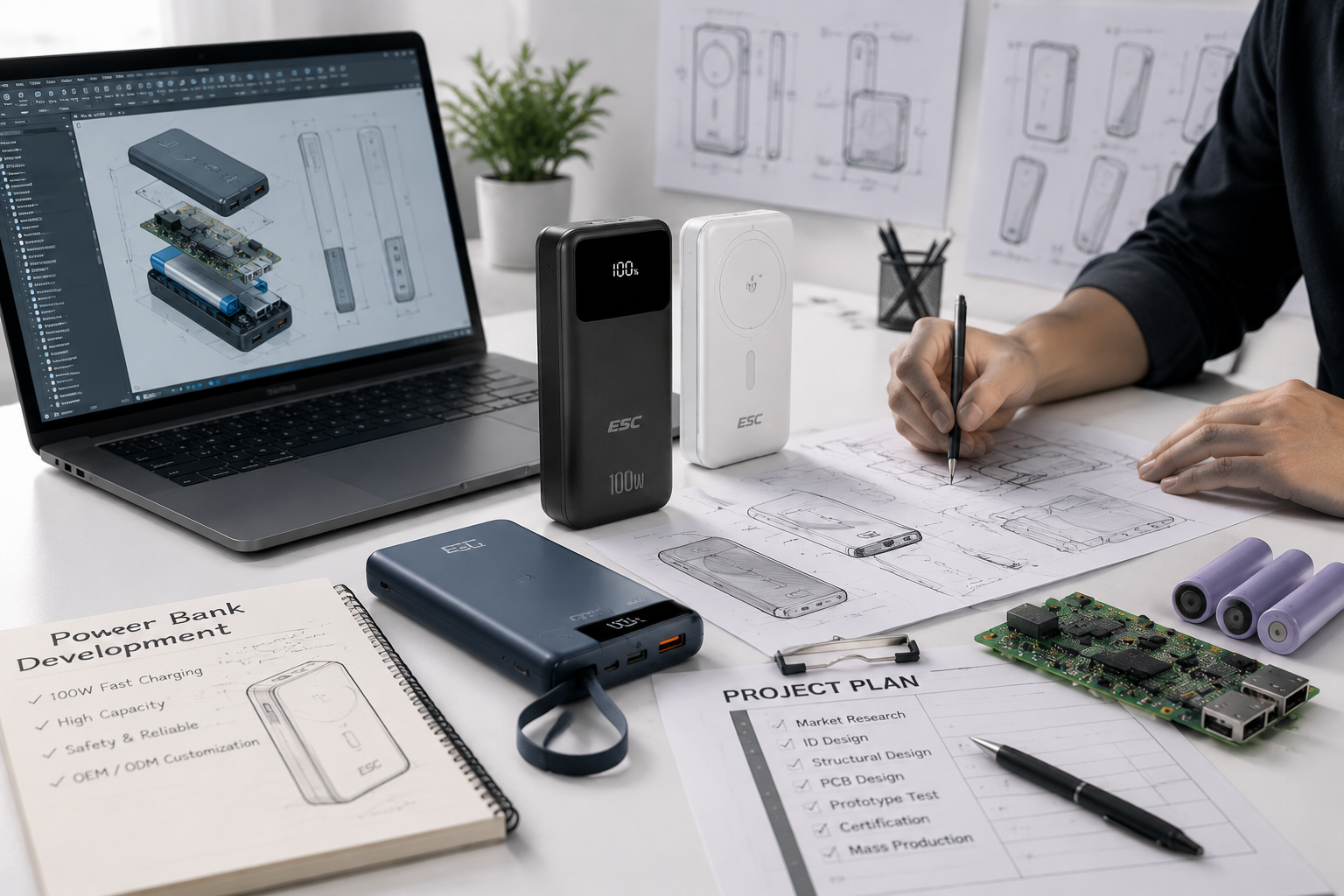
ESC can support buyers who need fast charging products with OEM/ODM and SKD flexibility.
Key strengths include:
- Product categories covering fast charging power banks, wireless charging power banks, magnetic power banks, GaN chargers, and SKD solutions
- OEM/ODM customization for power, capacity, protocol, color, logo, packaging, and product appearance
- SKD housing and PCBA solutions for local assembly customers
- Custom fast charging solutions for different markets and device ecosystems
- Product options for daily use, business travel, laptop charging, wireless charging, Apple/Samsung users, outdoor use, and gift projects
- Company background and manufacturing capability available on the ESC About Us page
For brands and distributors, the value of a power bank product development supplier is not only product supply. The real value is helping you develop safer, more competitive, and more market-ready charging products.
FAQ: Power Bank Product Development Supplier
1. What is a power bank product development supplier?
A power bank product development supplier helps buyers design, customize, test, and manufacture power banks. The supplier usually supports battery selection, PCBA design, fast charging protocol selection, housing design, logo customization, packaging, quality control, and mass production.
2. How is a product development supplier different from a trading company?
A trading company usually sells existing products. A product development supplier can support OEM/ODM work, technical adjustment, sample development, PCBA matching, housing customization, and production control.
3. Can ESC develop private-label power banks?
Yes. ESC supports OEM/ODM customization, including logo, color, packaging, charging power, battery capacity, protocol compatibility, appearance, and selected structural features.
4. What power levels can be customized?
ESC’s customized fast charge solution can support different charging power options depending on product structure, battery configuration, PCBA design, thermal design, and target cost.
5. What capacity should I choose for my market?
For daily users, 5000mAh to 10000mAh is usually suitable. For business travel, 10000mAh to 20000mAh is common. For laptop charging, outdoor use, and long trips, 20000mAh to 27000mAh or higher-capacity solutions may be better.
6. What certifications are important for power bank products?
Common certifications and documents include CE, RoHS, FCC, MSDS, UN38.3, and IEC62133. Requirements depend on destination market, sales channel, and shipping method.
7. Can ESC provide SKD power bank solutions?
Yes. ESC provides SKD power bank housing and PCBA solutions. These are suitable for buyers who want semi-finished components for local assembly.
8. What should I test before mass production?
Buyers should test real capacity, fast charging compatibility, heat performance, wireless charging alignment, cable durability, drop resistance, display accuracy, packaging strength, and charging performance with target devices.
9. Is magnetic wireless power bank development suitable for premium markets?
Yes. Magnetic wireless power banks with 15W wireless output, watch charging, slim housing, kickstand, and high-quality surface finishing are suitable for premium mobile accessory channels. You can view related products on ESC’s wireless charging product page.
10. How do I start a custom power bank project?
Prepare your target capacity, power output, target devices, sales market, preferred design, logo file, packaging requirements, certification needs, and estimated order quantity. Then contact ESC to evaluate suitable models, customization options, sampling, and production planning.
Conclusion
Selecting the right power bank product development supplier can directly affect your product quality, market competitiveness, certification process, customer reviews, and long-term brand reputation.
For importers, distributors, and consumer electronics brands, the best supplier is not only the one with the lowest price. It is the one that understands fast charging protocols, battery safety, PCBA design, housing structure, quality testing, packaging, certifications, and OEM/ODM development.
ESC provides fast charging power banks, wireless charging power banks, magnetic power banks, GaN chargers, customized fast charge solutions, and SKD power bank components.
Whether you need a 10000mAh built-in cable model, a 100W laptop power bank, a magnetic wireless power bank, or an SKD assembly solution, ESC can support product development from idea to mass production.
Contact ESC to discuss your custom power bank project, request a sample, or get an OEM/ODM quotation for your target market.