
Introduction
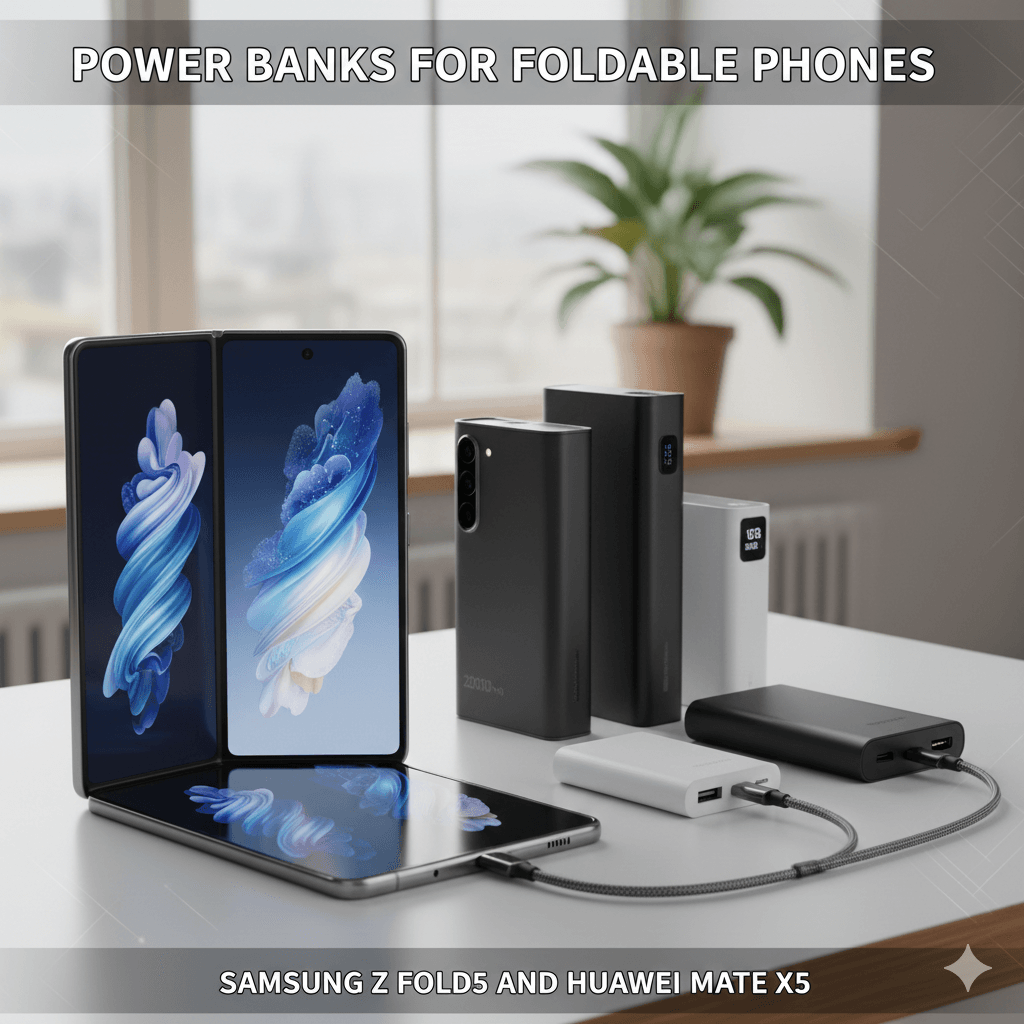
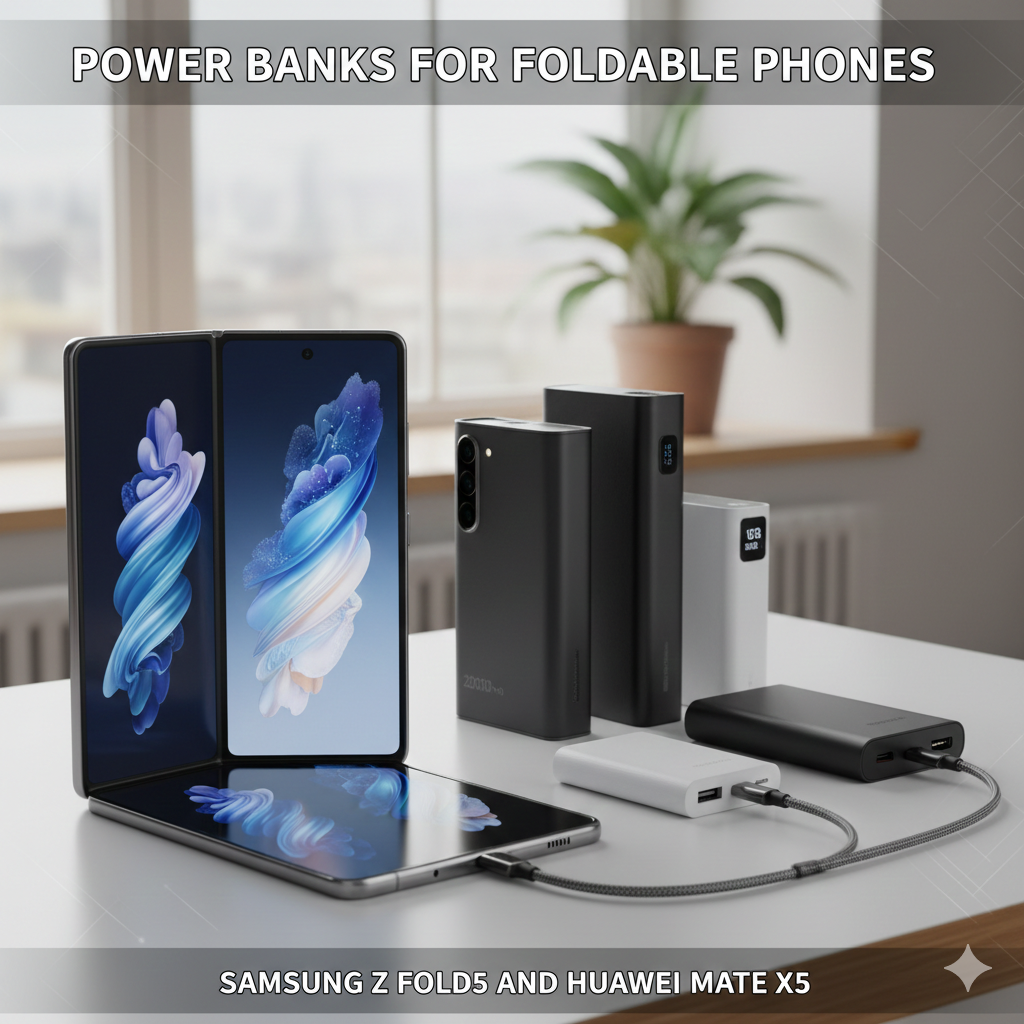
Foldable phones such as the Samsung Z Fold5 and Huawei Mate X5 represent the cutting edge of mobile technology with larger screens, multiple CPUs and GPUs, and higher battery capacities. These benefits come with a downside: increased power consumption, especially during multimedia use, multitasking, and gaming.
Choosing the right power bank for these devices means evaluating not just capacity but also output power, heat management, physical design, and compatibility with the phone’s charging protocols.
This article explains how to select the ideal portable charger for foldable phones, helping users match real-world needs with technical specifications.
Understanding Foldable Phone Power Requirements
Foldable phones typically house large batteries to support expansive displays and powerful internals.
For example:
-
Samsung Z Fold5: Battery capacity around 4,400mAh–4,500mAh
-
Huawei Mate X5: Battery capacity approximately 4,800mAh–5,000mAh
Because these devices draw more power, especially when the screen is unfolded or running multiple apps, a high-capacity power bank is essential for full-day use.
Key Charging Considerations
-
Larger battery size ⇒ More charge cycles needed
-
Power draw during use ⇒ Higher wattage recommended
-
Multiple port use (phone + earbuds + watch) ⇒ Higher output capacity beneficial
Foldable phones are ideally paired with power banks supporting Power Delivery (PD) fast charging at 30W, 45W, or higher.
Capacity vs. Real-World Use Scenarios
A common misunderstanding is that a higher mAh rating automatically means better performance. In practice, conversion inefficiencies (typically 75–85%) reduce usable energy.
Recommended Capacity Guidelines
| Phone Model | Battery | Suggested Power Bank Capacity |
|---|---|---|
| Samsung Z Fold5 | ~4,500mAh | 15,000mAh – 20,000mAh |
| Huawei Mate X5 | ~5,000mAh | 20,000mAh – 30,000mAh |
These recommendations aim to provide 2–3 full recharges while accounting for conversion losses. A 15,000mAh unit might fully recharge a Z Fold5 twice with some leftover, while a 20,000–30,000mAh bank better suits mixed use including tablets and accessories.
Output Power and Charging Protocols
Why Output Wattage Matters More Than Capacity Alone
Battery capacity is just one part of the equation—output power determines charging speed and usability while in use.
For foldable phones, aim for:
-
30W PD for standard fast charging
-
45W – 65W or higher for sustained power while unfolding or gaming
-
Multi-port output if charging additional devices simultaneously
Power Delivery 3.1 (PD 3.1) offers improved voltage scaling (5-48V), enabling faster, more efficient charging for larger batteries. Select power banks with USB-C PD 3.1 compatibility to avoid bottlenecks.
Heat Management and Safety
Large devices and high wattage can generate heat—both in the phone and the power bank itself. Excess heat can throttle performance and degrade battery lifespan.
Essential Thermal Features to Look For
-
GaN (Gallium Nitride) components: These reduce heat generation and improve efficiency compared with silicon chargers.
-
Smart temperature control ICs: These monitor and adjust power delivery in real time to prevent overheating.
-
Aluminum alloy or composite shells: These materials help dissipate heat more effectively than simple plastic cases.
Reliable thermal management prevents lag and ensures that prolonged use (gaming or video streaming) doesn’t lead to thermal throttling or safety cutoffs.
Portability and Form Factor
Foldable phones are prized for their form factor—and users often want portable power that reflects that same design ethos.
Portability Considerations
-
Size vs. capacity: Larger capacity often means bigger size; balance everyday carry needs with travel use.
-
Weight: 20,000–30,000mAh banks tend to weigh 350–550g, so consider what you’re willing to carry.
-
Design: Rounded edges and matte finishes improve grip, especially when charging while on the move.
For commuters and travelers, lean toward 15,000–20,000mAh options that fit easily in a bag while still delivering strong performance.
Multi-Device Charging
Foldable phone owners often use multiple accessories (wireless earbuds, smartwatches). A power bank with multiple ports (e.g., dual USB-C + USB-A) allows simultaneous charging without sacrificing speed.
Typical Setup
-
Port 1: High-wattage USB-C PD for the phone
-
Port 2: USB-C or USB-A for earbuds or tablet
-
Wireless charging option: For accessories or secondary phones
This flexibility makes multi-port power banks especially valuable for foldable phone users who need seamless power for all devices.
USB-C vs. USB-A in Foldable Phone Charging
Most foldable phones now use USB-C PD for charging. USB-A ports, while useful, are secondary and do not support the fastest protocols.
PD vs. QC vs. PPS
-
PD (Power Delivery): Universal fast charging standard favored by Samsung and most foldable phones.
-
QC (Quick Charge): Developed by Qualcomm, still used in many devices.
-
PPS (Programmable Power Supply): A flexible subset of PD offering refined voltage scaling for improved efficiency.
For the Samsung Z Fold5 and Huawei Mate X5, USB-C PD with PPS support ensures the highest compatible output and battery efficiency.
Practical Buying Checklist
Before selecting a power bank for a foldable phone, consider the following:
Capacity
-
15,000mAh → 1.5–2 charges
-
20,000mAh → 2–3 charges
-
25,000–30,000mAh → extended trips
Output
-
Minimum 30W PD for fast top-ups
-
45W–65W for sustained performance
Safety
-
Over-heat / over-current / over-voltage protection
-
Smart thermal control
-
Certified cells (e.g., UL, CE, FCC)
Ports
-
Dual-USB-C with PD support
-
Optional wireless charging pad for accessories
Conclusion
Choosing the right power bank for foldable phones like the Samsung Z Fold5 and Huawei Mate X5 requires balancing capacity, output power, and thermal management. Rather than simply looking at mAh numbers, focus on effective output wattage, charging protocols, and safety features to ensure a stable, fast, and reliable charging experience.
For brand owners and OEM buyers looking for customizable, high-performance charging solutions designed for foldable devices and modern mobile workflows, explore the range of certified options available at ESCCharge Official Website—where innovation and portability meet.