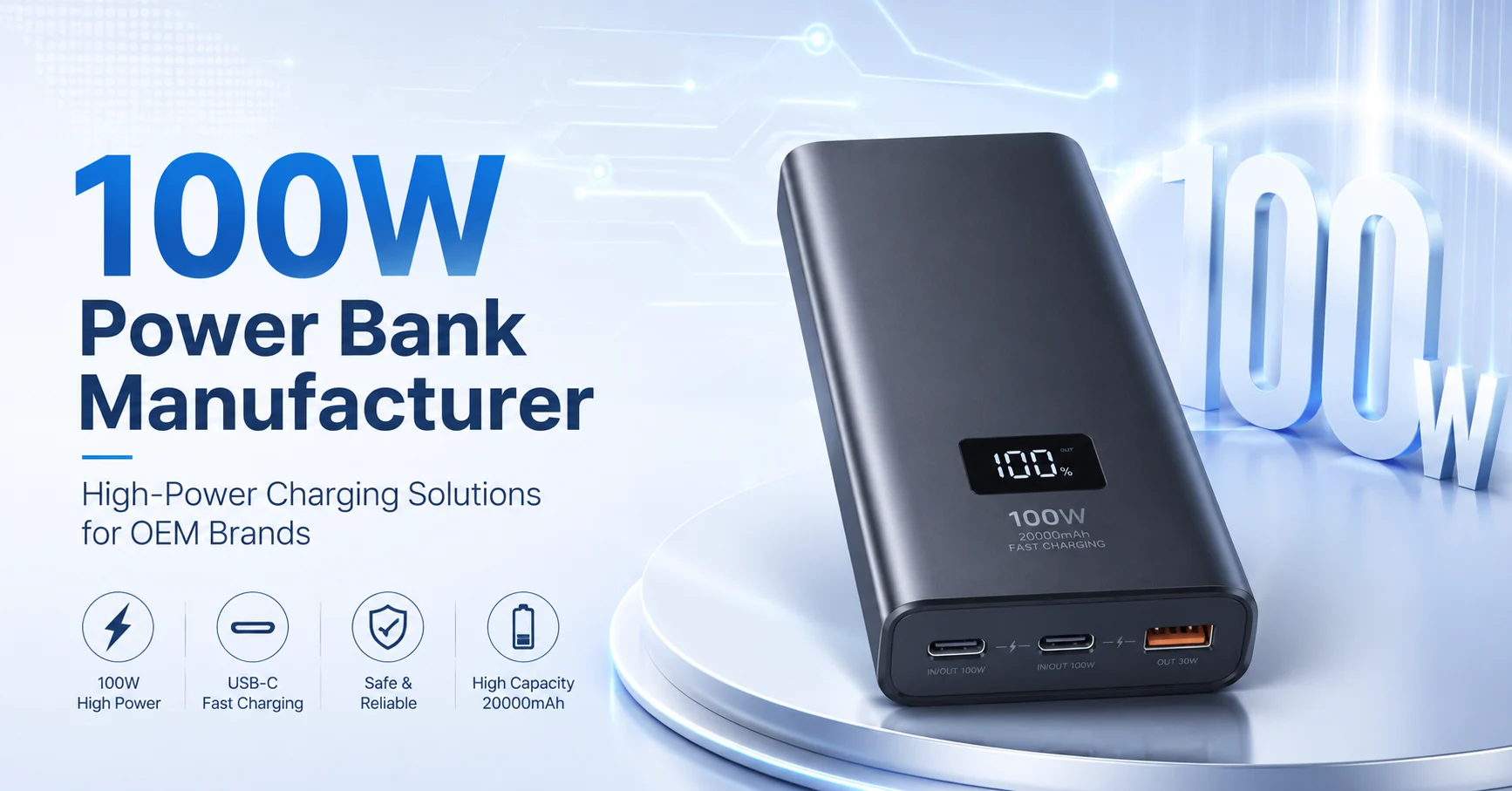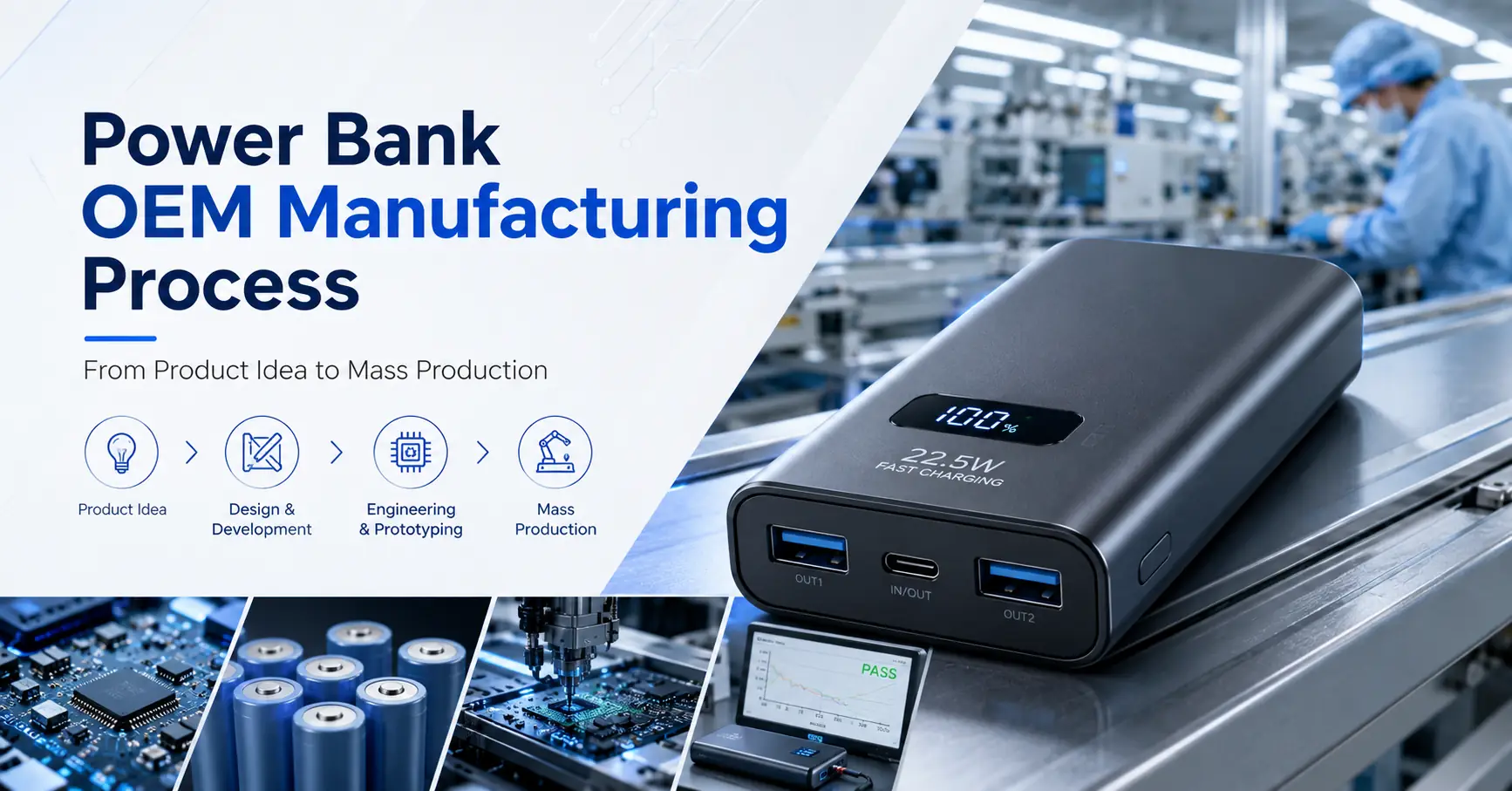


In the 2026 global consumer electronics market, an FCC logo printed on a device is no longer sufficient to sustain a brand. With U.S. customs routinely scrutinizing cross-border energy storage products and Amazon’s A9 algorithm enforcing a “zero tolerance” policy for safety complaints, finding a truly compliant FCC power bank manufacturer has evolved from a cost issue into a survival imperative.
The industry reality is stark: 70% of so-called 140W fast-charging standard products throttle down after 15 minutes of full-load operation due to thermal control failure. As the Strategic Officer of AOVOLT, my conclusion is simple — in the PD 3.1 era, compliance is no longer a piece of paper; it is the hard capability of a GaN power bank factory-level architecture.
Piercing the FCC Compliance Illusion: More Than a Certificate
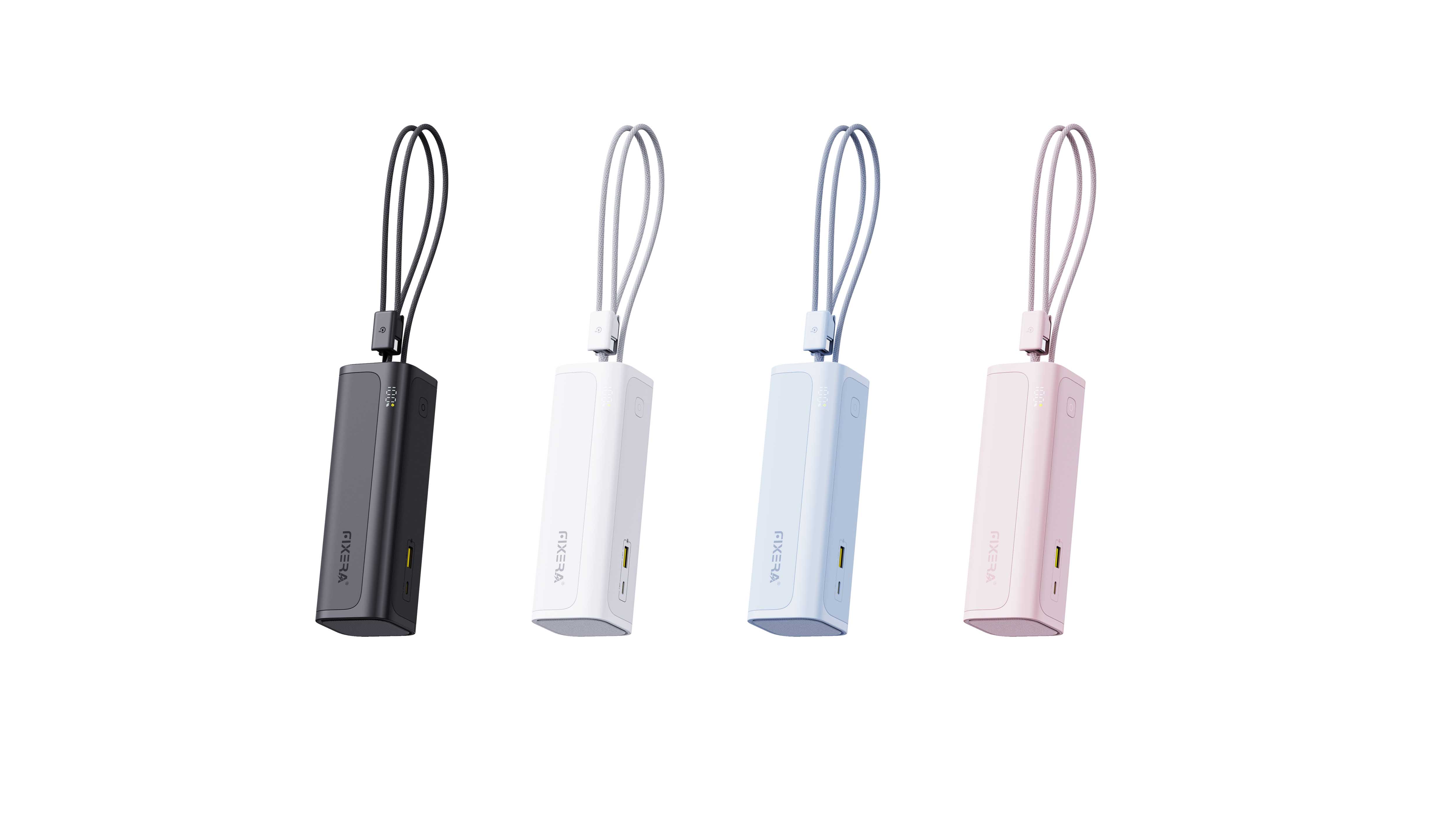
Many buyers seeking OEM/ODM external battery partners only examine PDF scans of FCC certificates. But in 2026, compliance goes much deeper.
A legitimate FCC certification must cover the rigorous Part 15B electromagnetic compatibility (EMC) testing, especially for high-frequency switching current radiation.
At AOVOLT and our parent company Shenzhen ESC, every product carries a traceable FCC ID. Many low-cost factories cut corners on PCBA design for chargers, omitting necessary shielding and filtering circuits. This not only causes signal interference between devices but also creates fire hazards under high-voltage fast charging.
For brands seeking long-term success, partnering with a factory with 15 years of experience provides not just certificates but a global shipping pass compliant with UN38.3 and minimizes customs inspection risks.
Rejecting Generic Designs: Vertical Integration and Private Molds as a Competitive Moat
The Pitfall of Homogenization
Why does your brand struggle in the North American market? Appearance homogenization is the culprit. In Dongguan’s manufacturing jungle, “shell-sharing” generic designs are everywhere. This leads to consumer fatigue and exposes brands to patent infringement risks.
Strategic Value of Private Mold Power Banks
As a 15-year veteran R&D consultant in energy storage, I emphasize the strategic value of private molds. AOVOLT’s advantage lies in full vertical integration from industrial design to mold development and injection molding.
We don’t merely assemble components — in our controlled factory environment, we ensure housings use V0-rated fireproof PC+ABS materials. Vertical control allows unique industrial design without worrying about dozens of lookalike competitors on Amazon. This source-level quality control is beyond the reach of typical trading companies.
Thermal Management in the 140W Era: Deep GaN and NTC Integration
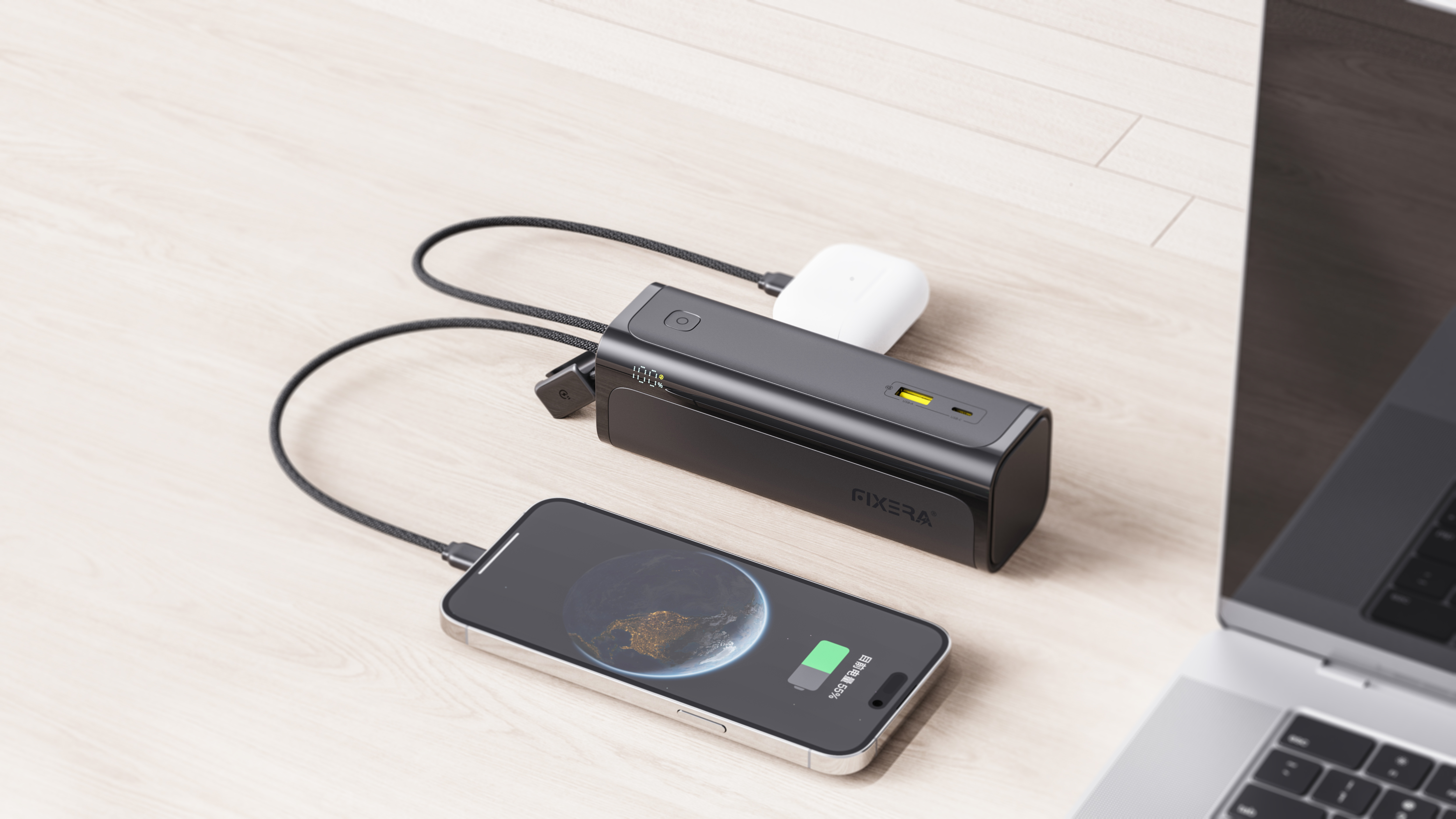
As the industry reaches PD 3.1 140W power banks, heat becomes a “technical Berlin Wall” for all manufacturers. Many so-called fast chargers hit 65°C at high output — breaching UL2054 safety limits and shortening battery lifespan.
Millisecond-Level Monitoring and GaN Efficiency
At AOVOLT’s lab, NTC temperature arrays and proprietary PPS fast-charging firmware monitor battery cells and power components in milliseconds. With GaN (gallium nitride) third-generation semiconductors, energy conversion efficiency exceeds 90%.
Our multi-port power allocation algorithm ensures MacBooks and iPhones charging simultaneously receive factory-level speeds while keeping surface temperature around 45°C, well within comfort limits. Obsessive thermal management is the reason we can confidently promise “Always On.”
Ending “Capacity Inflation”: Why 27,000mAh is the Gold Standard

In B2B procurement, capacity exaggeration is almost an open secret. Many suppliers claim 30,000mAh, but actual conversion rates can fall below 50%. Let’s take you to know about 20000mAh mobile power supply: detailed explanation of high-speed fast charging.
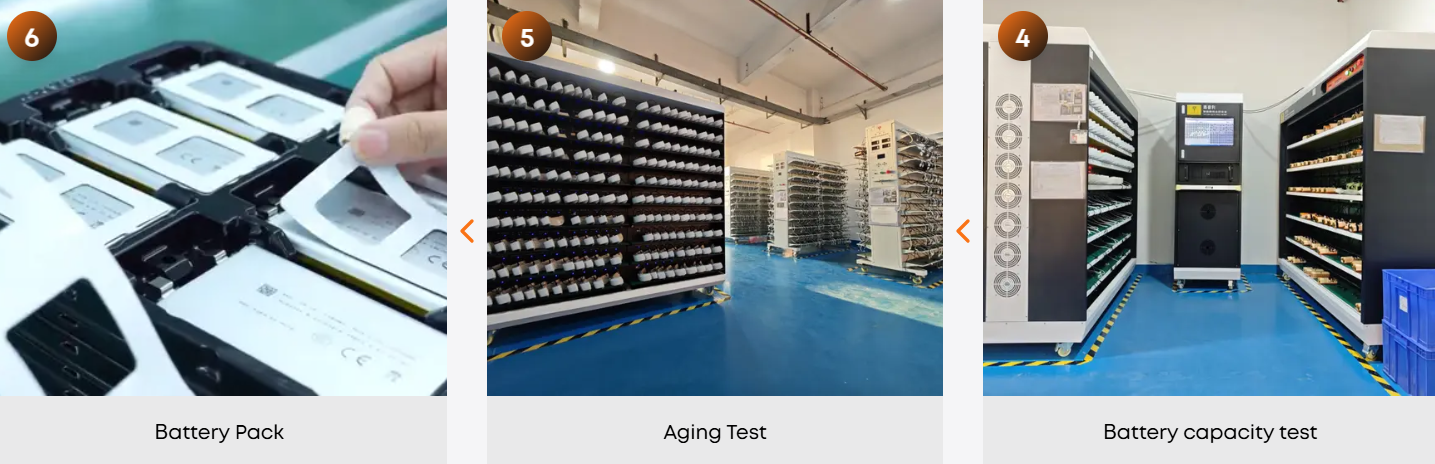
AOVOLT uses Tier 1 battery cells and enforces strict cycle life testing before shipment. For high-end 100W laptop power banks, we employ high-density lithium polymer cells, achieving compact form factors and maintaining 80% health after 500 cycles.
Every milliamp-hour counts when a user charges a MacBook Pro mid-flight. AOVOLT provides trust backed by real performance data, not inflated numbers.
Deep Cross-Device Compatibility: From MagSafe to 140W Protocols
A top FCC power bank manufacturer must resolve the conflict between charging capability and charging speed. AOVOLT’s R&D team conducts tens of thousands of compatibility tests across mainstream devices.
Whether PD 3.0 laptops, PPS-enabled Samsung flagship phones, or wireless MagSafe chargers, our PCBA design ensures instant handshake.
Firmware-Level Control Advantage
Unlike factories that use generic chipsets, Shenzhen ESC’s senior R&D team customizes current allocation strategies per client requirements. Users experience native charging speeds, indistinguishable from original chargers.
Supply Chain Certainty: Strategic Value of AOVOLT/Shenzhen ESC
In 2026, lead time for bulk orders determines whether brands capture promotional opportunities. Our 15-year-old Dongguan factory provides robust resource allocation.
From custom logo power bank prototypes to bulk container shipments to the USA, we offer full-service support.
Risk-Mitigation Through Quality Control
We understand B2B concerns: minimum order quantity, logistics security, and after-sales rate. AOVOLT exceeds industry standards: every unit features fireproof PC+ABS housing and comes with a complete UN38.3 shipping report. Choosing us means partnering with a technical ally experienced in risk mitigation for 15 years.
FAQ: Common Questions About FCC Power Bank Manufacturers
| Question | Answer |
|---|---|
| How to verify FCC certification is valid? | A compliant manufacturer provides a 14-digit FCC ID. Check the FCC database to confirm the grantee code matches the factory or parent company. AOVOLT products for North America support public traceability. |
| Difference between FCC and UL certification? | FCC ensures EMC compliance (no communication interference). UL (e.g., UL2054) certifies battery safety (fire/explosion risk). FCC is legally required; UL is a commercial passport for mainstream retailers like BestBuy or Target. |
| Can 140W PD 3.1 power banks be carried on planes? | Per FAA/IATA, batteries ≤100Wh are allowed. AOVOLT’s 27,000mAh (99.9Wh) units maximize capacity within legal limits. |
| Why do high-power fast chargers get hot? | Heat comes from energy conversion losses. AOVOLT integrates GaN components and dual NTC sensors to maintain industry-leading safe operating temperatures. |
| What matters most when choosing a Chinese OEM besides price? | Vertical integration. Factories capable of PCBA design, mold development, and injection molding (like Shenzhen ESC) ensure consistent quality and predictable delivery — beyond trading companies’ reach. |
Conclusion: Choosing AOVOLT to Redefine High-Performance Fast Charging
In an era of rapid fast-charging innovation, selecting an FCC power bank manufacturer is not just ticking a supplier box. It’s choosing a technical guide to grow your brand.
With Shenzhen ESC’s 15 years of experience, AOVOLT embeds factory-level speed and low-temperature safety into every PCBA. We don’t just manufacture power banks; we optimize users’ time value.
Always On. Value of Limitless Time. This is not just our motto — it’s a solemn commitment to global partners. In the 2026 competitive landscape, let AOVOLT’s compliance and performance excellence propel your brand to unlimited possibilities.
References:
FCC Official Website – Equipment Authorization & ID Database