
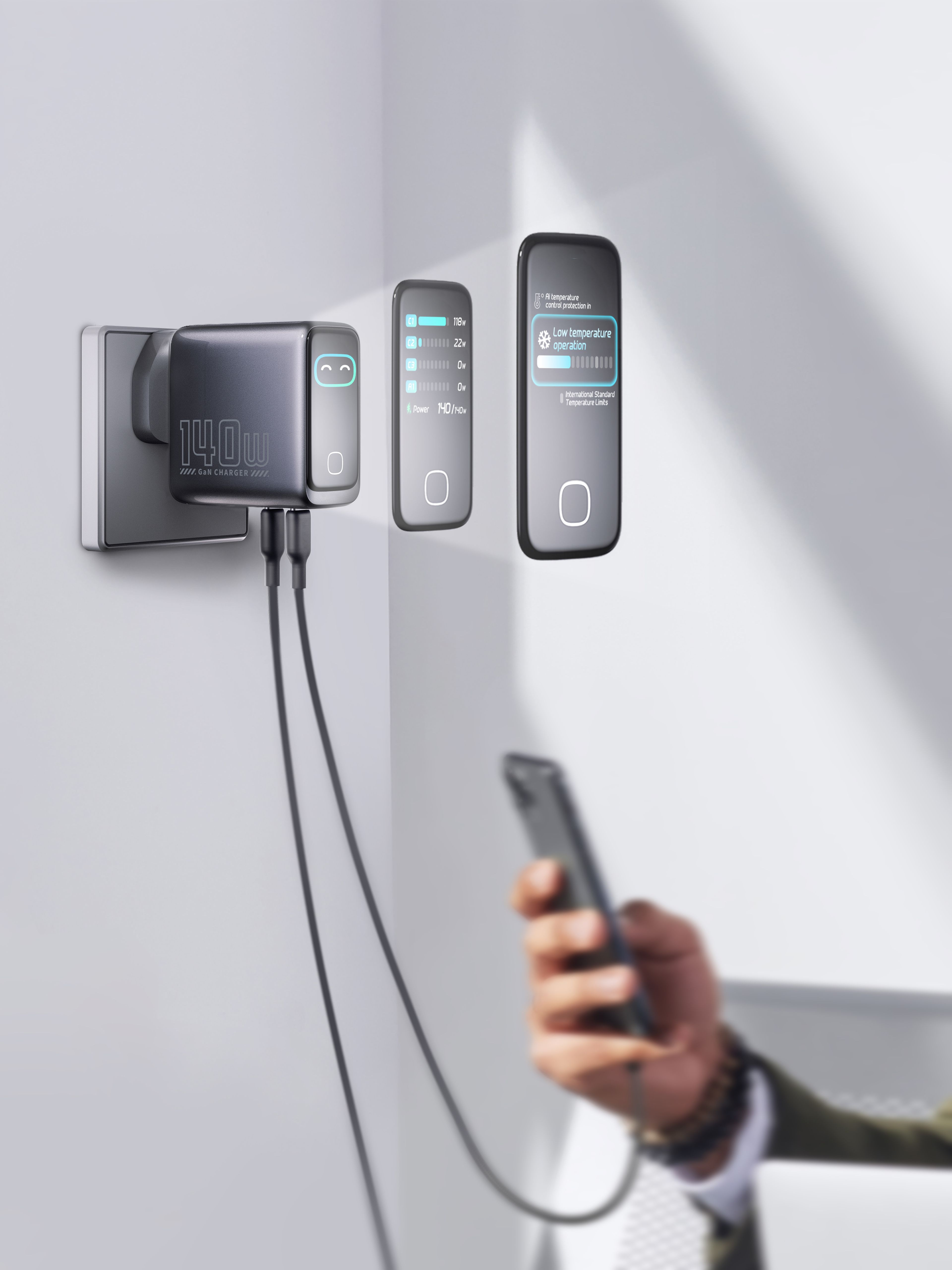
When Fast Charging Becomes a Risk Instead of an Advantage
Fast charging is no longer a premium feature—it is an expectation. Consumers now assume that devices will charge quickly, whether it’s a smartphone, tablet, or laptop. However, behind this expectation lies a growing issue: not all fast charging solutions are engineered for real-world stability.
In many cases, chargers marketed as “fast” struggle under continuous load:
- temperature rises above 60°C during extended use
- charging speed drops after initial bursts
- devices disconnect or switch charging modes
- long-term reliability decreases
These issues are often overlooked during product development but become visible after mass distribution.
This is where the role of a professional fast charging plug OEM becomes critical. At AOVOLT, fast charging is not defined by peak wattage alone—it is defined by how consistently that power can be delivered over time without compromising safety.
According to USB Implementers Forum, stable power negotiation and protocol compliance are essential to maintaining safe fast charging performance.
https://usb.org
The Real Engineering Behind Fast Charging Performance
Fast charging is not simply about increasing wattage—it is about managing energy flow efficiently.
A high-performance fast charging plug typically includes:
- USB-C PD 3.0 / PD 3.1 protocol chips
- dynamic voltage regulation (5V / 9V / 12V / 20V)
- high-frequency switching components
- intelligent current control systems
- thermal monitoring circuits
The challenge lies in maintaining stability across different devices.
For example:
- smartphones may require 20W–30W
- tablets may require 30W–45W
- laptops often require 65W–100W+
Without proper power distribution, chargers may overload or throttle performance.
Research shows that inefficient power conversion can lead to 10–20% energy loss, directly increasing heat generation and reducing charging efficiency.
Why Fast Charging Fails in Poor OEM Designs
Many fast charging products perform well in short bursts but fail under continuous usage.
The root causes usually include:
1. Thermal Bottlenecks
- inadequate heat dissipation materials
- poor internal airflow
- compact designs without thermal optimization
2. Unstable Power Conversion
- inefficient switching components
- inconsistent voltage output (±8% or higher deviation)
3. Protocol Incompatibility
- limited support for PD, QC, or PPS
- poor device recognition
4. Component Degradation
- low-grade capacitors
- overheating leading to faster aging
These factors explain why return rates for low-quality fast chargers often exceed 4–6%.
A reliable fast charging plug OEM must address all these issues at the design stage—not after production.
Performance Comparison: Generic Fast Chargers vs Engineered OEM Solutions
| Parameter | Generic Fast Charger | AOVOLT OEM Fast Charging Plug |
|---|---|---|
| Peak Output | Advertised high | True stable output |
| Efficiency | 80–85% | 90–94% |
| Temperature | 55–65°C | 40–50°C |
| Voltage Stability | ±8% | ±3% |
| Continuous Performance | Drops after load | Stable over time |
| Failure Rate | 4–6% | <1.5% |
These differences highlight why OEM engineering directly affects product performance.
How AOVOLT Designs Fast Charging for Real-World Conditions
At AOVOLT, fast charging plug development focuses on maintaining performance under realistic usage—not just lab testing.
Key engineering strategies include:
High-Efficiency Power Conversion
- advanced GaN or MOSFET switching
- reduced energy loss (up to 30% lower heat generation)
Intelligent Power Allocation
- automatic power distribution across multiple ports
- stable charging for simultaneous devices
Thermal Optimization
- internal heat spreading layers
- optimized component layout
- temperature reduction of 20–30%
Long-Term Reliability Testing
- continuous load testing (8–12 hours)
- high-temperature stress testing
- voltage fluctuation monitoring
These systems ensure that fast charging performance remains stable across extended usage.
Case Study: Solving Overheating in a 65W Fast Charger Project
A consumer electronics brand approached AOVOLT after receiving complaints about overheating chargers.
Issues identified:
- temperature exceeding 62°C
- unstable charging during laptop use
- reduced charging speed over time
AOVOLT implemented:
- redesigned PCB layout for balanced current flow
- upgraded switching components
- added thermal dissipation layers
- optimized PD protocol management
Results:
| Metric | Before | After AOVOLT Optimization |
|---|---|---|
| Temperature | 62°C | 45°C |
| Efficiency | 84% | 92% |
| Voltage Stability | ±7% | ±3% |
| Failure Rate | 5.4% | 1.2% |
The product achieved stable performance and improved customer feedback.
Fast Charging Across Different Usage Scenarios
Fast charging performance is not defined by maximum wattage alone—it is highly dependent on how the charger behaves across different real-world usage scenarios. Each scenario introduces unique electrical loads, thermal conditions, and protocol negotiation requirements.
A professional fast charging plug OEM must design products that adapt dynamically to these conditions rather than delivering a fixed output profile.
Smartphone Fast Charging: Dynamic Voltage and Protocol Precision
In smartphone charging, fast charging relies heavily on dynamic voltage negotiation through protocols such as:
- USB Power Delivery (PD 3.0 / PD 3.1)
- Qualcomm Quick Charge (QC 3.0 / QC 4+)
- PPS (Programmable Power Supply)
Typical output profiles:
- 5V / 3A (15W)
- 9V / 2A (18W)
- 11V / 3A (33W PPS)
Key engineering challenges include:
- real-time voltage switching within milliseconds
- maintaining voltage stability within ±3% tolerance
- minimizing ripple voltage (<100mV)
Poor designs often result in:
- unstable charging speeds
- device fallback to slow charging mode
- excessive heat due to inefficient conversion
AOVOLT optimizes smartphone charging through adaptive voltage scaling and low-loss power conversion, improving efficiency by up to 10–15% compared to standard designs.
Laptop and High-Power Devices: Sustained High-Load Stability
Laptop charging represents one of the most demanding scenarios, requiring continuous high-power output.
Typical requirements:
- 65W (20V / 3.25A)
- 100W (20V / 5A)
- up to 140W (PD 3.1 extended power range)
Unlike smartphones, laptops require:
- sustained output over 1–3 hours continuous load
- stable current delivery without voltage drop
- efficient thermal management under high power
Key engineering factors:
- multi-layer PCB with balanced current routing
- high-efficiency DC-DC conversion (>92%)
- thermal control systems maintaining temperature below 50°C
Without proper design, chargers may:
- overheat and throttle output
- trigger safety shutdown
- reduce charging speed after initial boost
AOVOLT’s OEM solutions focus on maintaining stable output under full-load conditions, ensuring consistent performance across extended usage cycles.
Multi-Device Charging: Intelligent Power Distribution
Modern users often charge multiple devices simultaneously—phones, tablets, earbuds, and laptops.
This creates complex power allocation challenges.
Typical multi-port configurations:
- USB-C + USB-C
- USB-C + USB-A
- dual USB-C with dynamic sharing
Key technical requirements:
- intelligent power allocation algorithms
- automatic current redistribution
- independent voltage regulation per port
Example scenario:
- single device: 65W output
- dual devices: 45W + 20W split
- triple devices: 30W + 18W + 12W
Poor OEM designs often result in:
- uneven power distribution
- unstable charging across devices
- overheating due to overload
AOVOLT integrates smart power management ICs that dynamically adjust output in real time, ensuring stable charging without exceeding thermal limits.
Frequently Asked Questions
Q: Why do some fast chargers slow down after a few minutes?
A: Poor thermal management or unstable power conversion causes performance throttling.
Q: Is higher wattage always better?
A: No, stable and efficient output is more important than peak wattage.
Q: How to choose a reliable fast charging plug OEM?
A: Evaluate engineering capability, thermal design, and testing systems—not just specifications.
AOVOLT Fast Charging Plug OEM Solutions
Fast charging is no longer about speed alone—it is about delivering stable, efficient power under real-world conditions.
AOVOLT provides advanced fast charging plug OEM solutions designed for performance, safety, and long-term reliability. Our chargers support multi-device compatibility, optimized thermal control, and scalable OEM production.
If you want to explore our charger products:
https://www.esccharge.com/products/charger-plug
If you are planning a fast charging OEM project:
https://www.esccharge.com/solution/customized-solution
With strong engineering expertise and reliable manufacturing systems, AOVOLT helps brands deliver fast charging products that perform consistently in real-world environments.