
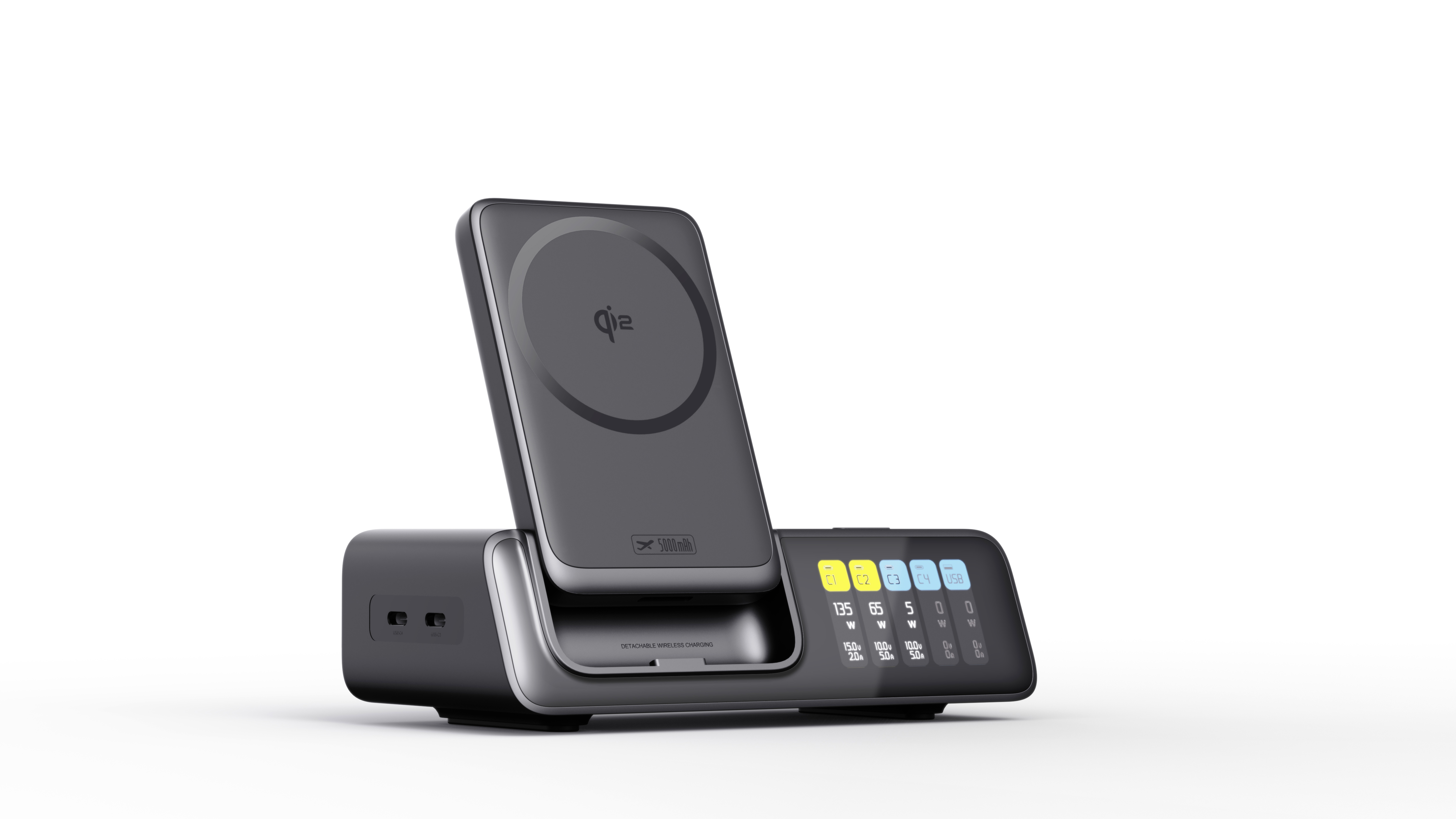
In 2026, simply making a battery “stick” isn’t enough to satisfy global cross-border brands. With the iPhone 17 series and later models imposing tighter thermal protocols, and the widespread adoption of USB-C PD 3.1 on mobile devices, magnetic pads alone have become synonymous with cheap alternatives. The real industry divide lies in who can, within a 12mm form factor, simultaneously manage N52 magnetic core shielding, 140W instantaneous heat, and precise PPS protocol handshakes.
If you’re still chasing low-cost off-the-shelf designs, expect skyrocketing return rates and damaged brand reputation. High-conversion B2B sourcing decisions must be built on deep research into “asset-heavy, vertically integrated” factories—only by working directly with factories that control the full chain from mold development to injection molding and self-developed PCBA can you secure truly differentiated products in the all-protocol compatibility race.
Choosing a MagSafe-Compatible Battery Factory in 2026: Why Direct-Connect Is Irreplaceable
The Technical Gap Trading Companies Can’t Cross
Many sourcing managers fall into the “image trap” when requesting quotes. On platforms like 1688 or Alibaba International, batteries may look identical, but their internal design can be worlds apart. Trading companies are essentially resource shippers—they cannot modify internal stacking designs.
When the Apple 2.4A protocol conflicts with the latest PD 3.0, or when users attempt 140W emergency charging on a MacBook Pro, off-the-shelf products often show intermittent handshake failures. The root cause is third-party PCBAs failing to finely tune PPS voltage steps. At AOVOLT’s Dongguan R&D lab, we discovered through tens of thousands of simulations that even a 20mV fluctuation can trigger a device’s internal thermal protection, dropping wireless charging power to 5W. This is why direct factory R&D capability is a brand’s moat. Your guide to 15W Magnetic Wireless Chargers: Maximum Performance and Safety.
Hidden Costs of a Disconnected Supply Chain
In B2B orders, lead time is critical. The table below shows the essential difference in responsiveness between source factories and traditional trading models:
| Key Process | Dedicated B2B Source Factory (e.g., AOVOLT) | Traditional Trading/OEM Intermediary | Brand Pain Points |
|---|---|---|---|
| Industrial Design & Mold Development | Internal team, prototype ready in 15 days | Outsourced to mold factory, 30–45 days | Missed market opportunities, high product similarity |
| Protocol Compatibility Debug | In-house PCBA, supports 140W full protocol | Generic PCB, blind spots in compatibility | High return rate, frequent complaints |
| Injection Molding & Casing | Own machines, real-time quality monitoring | External sourcing, color differences & burrs hard to control | Cheap feel, inconsistent appearance |
| Issue Resolution | Engineers directly accessible, 24h solution | Multi-layer communication, high cost & delays | Order delays, lost customers |
Deep Dive: Core Technical Standards for High-Performance MagSafe Batteries
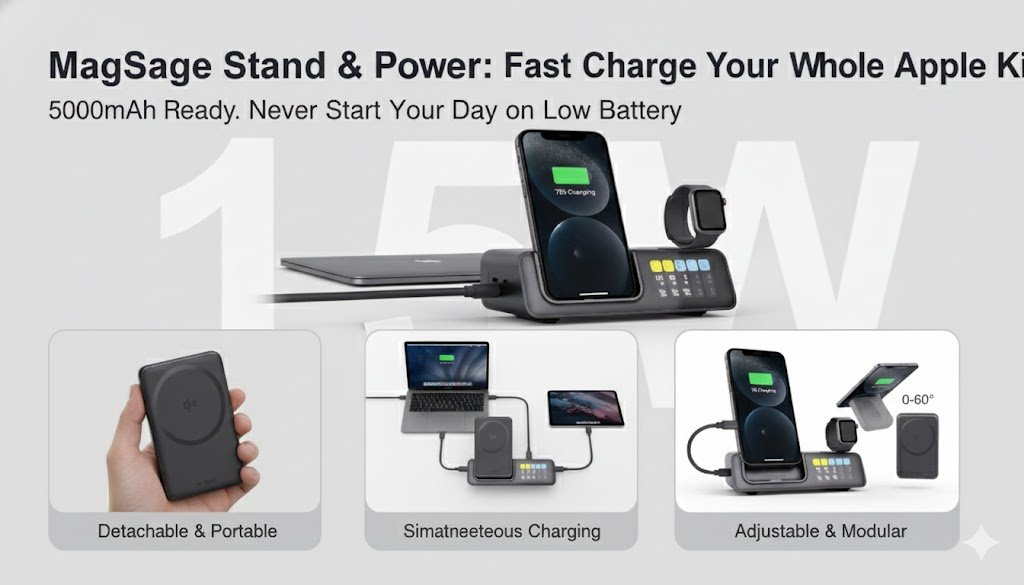
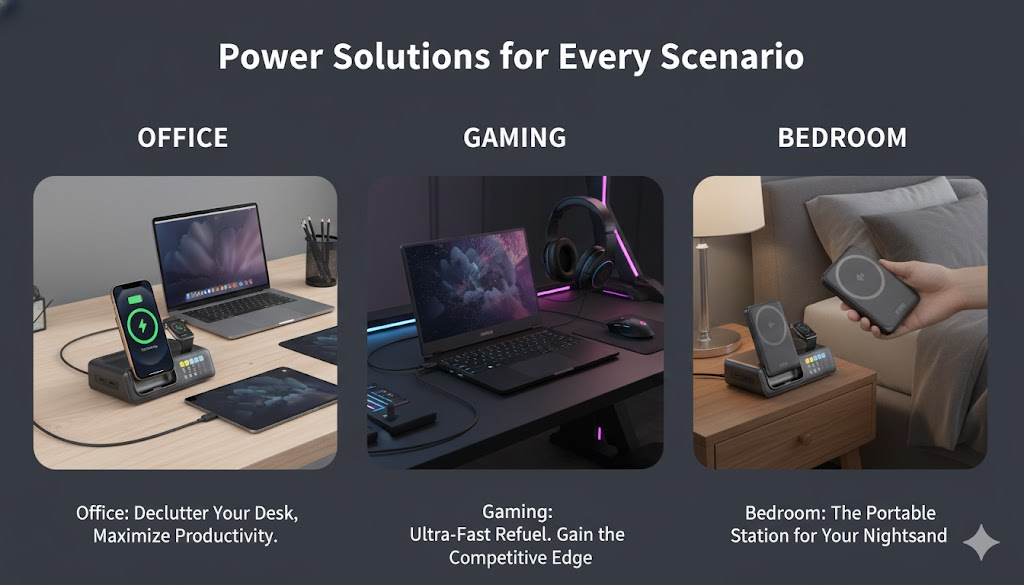
Magnetic Alignment Precision & N52 Magnet Arrays
More magnets do not necessarily mean better performance—a common misconception.
At AOVOLT, manufacturing standards focus not just on pull strength but also on EMI interference with the wireless charging coil. Custom N52 NdFeB magnets are arranged in a Halbach Array to concentrate magnetic flux toward the device, while nanocrystalline soft magnetic materials on the PCBA side provide electromagnetic shielding.
Without an in-house mold and injection workshop, magnet positioning can deviate by over 0.5mm—enough to reduce wireless charging efficiency by 15% and generate heat that shortens lithium polymer cell life.
140W All-Protocol Compatibility: More Than Just Numbers
In 2026, premium custom power banks must be versatile. MagSafe alone is insufficient; B2B buyers now expect PD3.0, PPS, QC3.0, FCP, SCP, AFC, and legacy Apple 2.4A support.
The main challenge isn’t current size but handshake frequency. Under PPS mode, the battery must communicate with the device in microseconds. Weak IC firmware can cause resets when multiple outputs are used.
“A true source factory programs protocol algorithms into the chip’s core, rather than assembling ready-made modules. This is AOVOLT’s 15-year accumulated technology asset.”
Vertically Integrated Manufacturing: The Moat of Asset-Heavy Factories
Closed Loop from Design to Hardware Integration
Why maintain a large vertical production line in Dongguan? In consumer electronics, a closed loop ensures absolute control over cost and quality.
For rapid-turnaround custom designs, processes run in parallel: ID design output coincides with mold parameter evaluation, while the hardware integration workshop prepares support structures.
-
Mold Opening: Determines first-hand feel—matte coating or soft-touch injection?
-
Injection Molding: Standardized QC ensures color difference \Delta E < 1.
-
PCBA Assembly: SMT in cleanrooms ensures electrical stability under 140W high power.
Though asset-heavy, this model offers global brands certainty: what you see in the sample is what you get in bulk.
Quality Control Granularity: Standardization as a Brand Premium
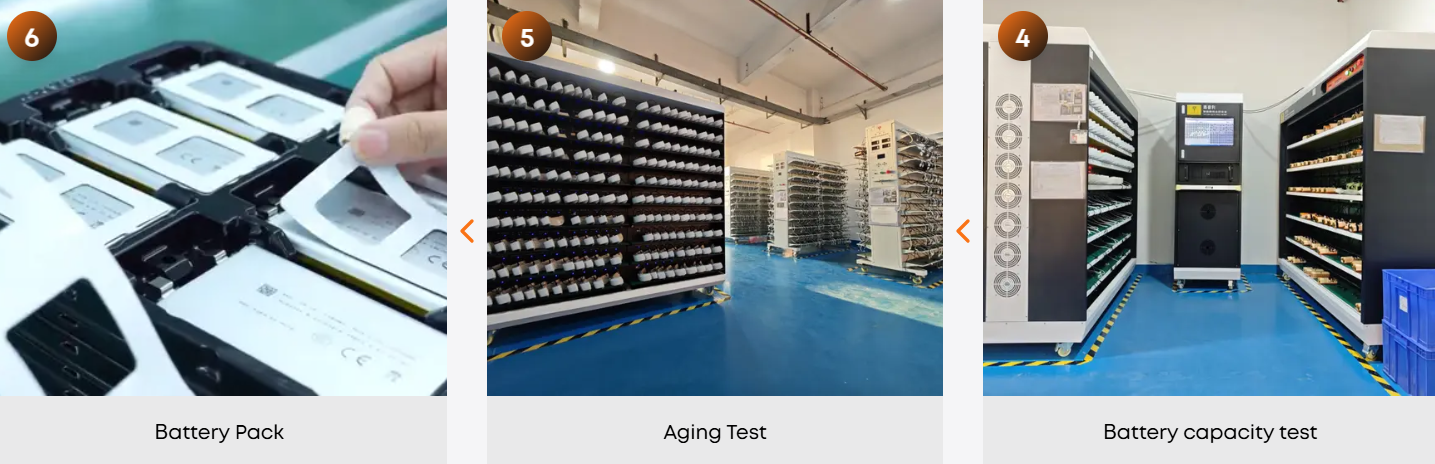
At AOVOLT, every MagSafe battery undergoes a rigorous standardized QC process. Small factories often skip burn-in tests, leading to casing peeling or cell swelling in North America or Europe.
For 140W products, we developed multi-channel parallel testing. PCBA boards go through AOI inspection to ensure PPS handshake components are flawless, followed by 4-hour full-load cycling to simulate real-world use.
“We trust a closed loop, not luck. Every casing and hardware clip finished in one facility enables full traceability.”
Global Compliance: Clearing Cross-Border Entry Barriers
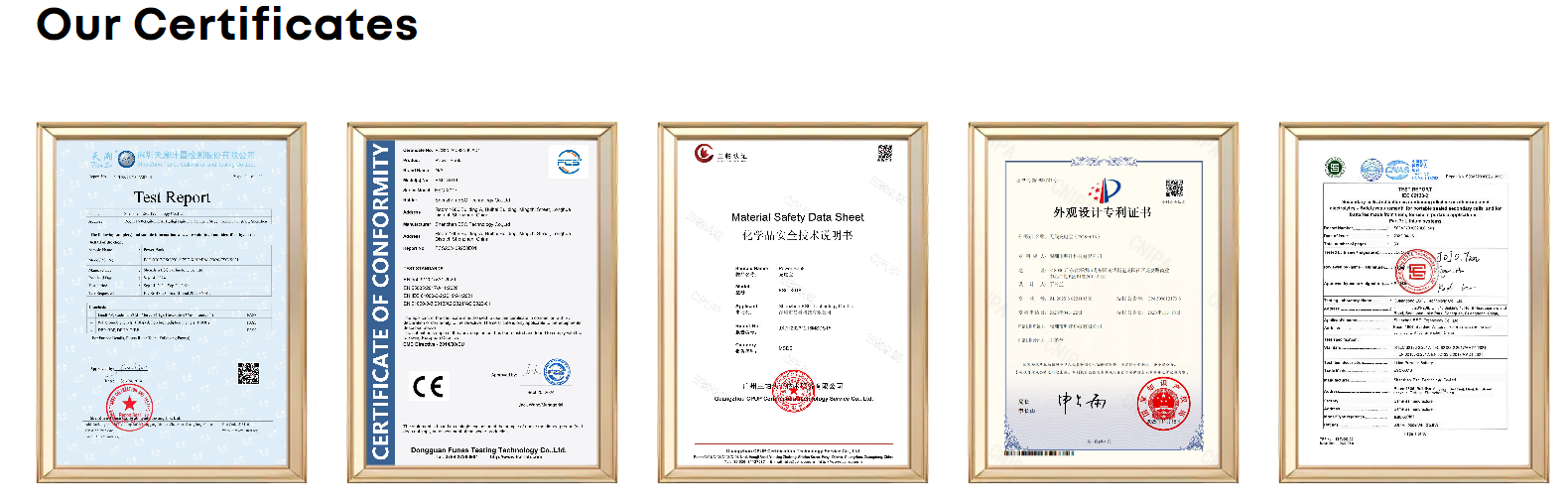
For global expansion, certifications aren’t bonuses—they’re entry tickets. A mature MagSafe battery factory must manage CE, FCC, RoHS, UN38.3 for lithium transport, and UL2054 for North America.
We embed compliance in ID design from R&D. For UL fire rating tests, injection molding uses V0-grade flame-retardant PC/ABS. This Design for Compliance saves thousands in repeated prototyping and shortens product launch cycles by 30%+.
Expert FAQ: Common Questions About MagSafe-Compatible Factories
Q1: Must MagSafe batteries have Apple MFM certification?
Not necessarily. High-precision magnet arrays and self-developed protocol chips can achieve official-like charging. Our molds maintain magnet positioning within ±0.05mm, ensuring safe and efficient charging without MFM certification.
Q2: How do you resolve protocol conflicts while supporting 140W fast charging?
The solution lies in handshake logic. USB-C 140W output uses Dynamic Power Allocation with dual independent control, keeping wireless and wired fast charging modules fully compatible with PD3.0, PPS, etc.
Q3: What is your OEM/ODM MOQ?
For standard logo/packaging modifications, MOQ is low. High-end projects requiring ID redesign and new mold opening typically start at 2,000–3,000 units to balance mold costs and maintain competitive pricing.
Q4: How to ensure large order lead times aren’t delayed?
Delays usually occur in outsourced steps. AOVOLT’s full in-house chain—from design to assembly—responds 25% faster than traditional trade factories.
Q5: How do you balance battery energy density with magnetic pull?
ID design is critical: too large = heavy, weak magnet; too small = insufficient runtime. We combine ultra-thin high-density lithium polymer cells with N52 magnet arrays for up to 10N vertical pull while maintaining a slim feel.
The Ultimate Supply Chain Choice: From “Manufacture” to “Intelligent Manufacture”
In 2026, simple assembly factories are being left behind. Fast charging protocols are evolving, and B2B buyers need strategic partners who provide PCBA-level technical support.
Such partnerships allow your factory to respond within a week to new fast charging protocols or Apple MagSafe updates via firmware upgrades—this is the value of AOVOLT’s 15-year self-developed PCBA expertise.
Every branded battery carries end-user trust, built on precise magnetic alignment and stable 140W output.
Conclusion: Define Your Magnetic Power Standard
In the competition of efficiency, design, and supply chain depth, choosing a Dongguan source factory with asset-heavy vertical integration is the optimal way to reduce long-term operational risks. Whether you need rapid-turnaround OEM orders or highly recognizable ODM customization, AOVOLT leverages 15 years of manufacturing experience to provide end-to-end support from design to shipment.
Understanding the hidden technical details—PPS handshake tuning, injection molding temperature control—is the starting point to break away from generic off-the-shelf products and build a competitive charging ecosystem. Our engineering team is ready to provide in-depth consulting for brands seeking long-term MagSafe-compatible battery solutions or 140W high-performance PCBA technical validation.