
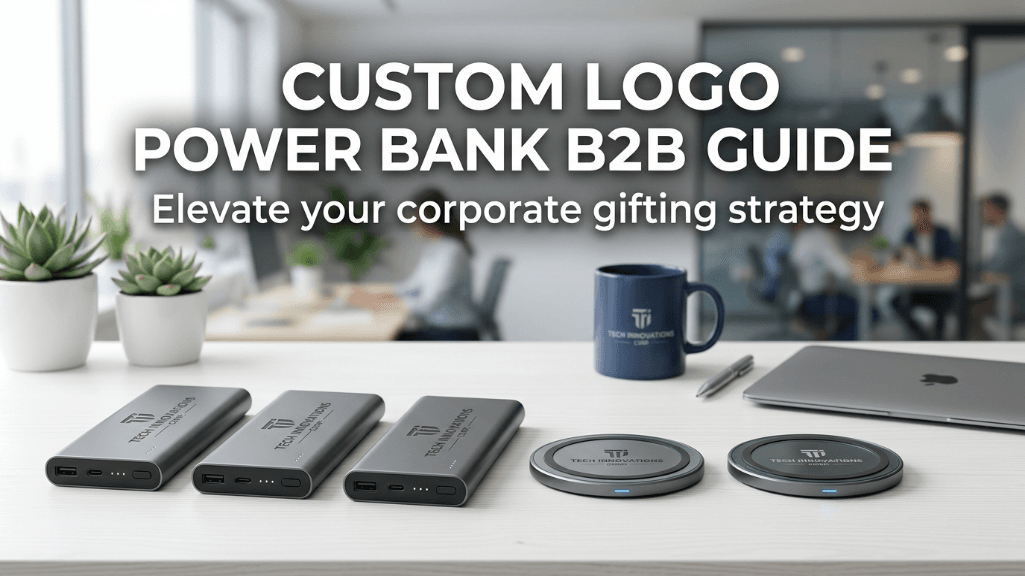
If you need to complete the procurement of 500 custom power banks within six weeks, with laser-engraved logos, CE/FCC certification compliance, and a unit price controlled under $8—this guide will tell you exactly what to do step by step, and which pitfalls to avoid.
B2B procurement of custom power banks is not complicated, but it is very easy to go wrong due to information asymmetry. Choose the wrong printing process, and the logo will wear off within three months; ignore UN38.3 lithium battery air transport certification, and the entire shipment may be held at customs; order from platform intermediaries instead of direct factories, and costs may quietly increase by 30% to 50%.
This article systematically breaks down every decision node—from product selection, customization processes, and certification compliance to supplier screening.
Why Custom Power Banks Have the Highest ROI Among Corporate Gifts

Let the data speak.
According to industry tracking from ASI (Advertising Specialty Institute), a single custom power bank generates an average of over 870 brand impressions over its lifecycle, with each impression costing less than $0.01—far lower than the CPM average of digital advertising.
More importantly, 40% of consumers who receive promotional products are more likely to engage in subsequent business with that brand.
Power banks stand out among all product categories for very concrete reasons: they are used daily—in offices, airports, and meeting rooms—keeping the logo continuously visible; they are practical and rarely thrown away after events; and their unit cost can be diluted through scale, with tiered pricing starting from 500 units, making them suitable for SME gift budgets.
Entering 2026, a new variable has emerged in the market. Apple’s iOS 18.3 update officially opened higher-power protocols for third-party MagSafe accessories, significantly increasing the value of custom wireless power banks. A MagSafe-supported branded power bank can now serve as a primary charging device for iPhone users rather than just a backup. This technological window is being rapidly filled by leading corporate gift suppliers.
Product Selection: Power Bank vs Wireless Power Bank vs 2-in-1 Solution
Selection is not guesswork. It depends on your audience profile, usage scenario, and budget ceiling. The table below provides a multi-dimensional comparison of three mainstream product types:
| Product Type | Capacity Range | Typical Unit Price (500 pcs) | Brand Exposure Frequency | Suitable Scenarios | Core Technical Requirements |
|---|---|---|---|---|---|
| Standard Wired Power Bank | 5000–10000mAh | $4–8 | High (daily carry) | Trade show gifts, employee benefits | USB-C PD output, UN38.3 certification |
| Custom Wireless Power Bank (Qi) | 8000–15000mAh | $10–18 | Very high (desk presence) | VIP gifts, executive gifts | Qi standard certification, 10W+ fast charging |
| 2-in-1 Wireless Power Bank | 10000–20000mAh | $16–28 | Very high | Luxury gift sets, brand anniversaries | GaN chip, MagSafe compatibility |
| Embedded Wireless Charging Module | N/A (ODM pricing) | ODM quotation based | Continuous (fixed scenarios) | Hotel rooms, meeting room desktops | ODM customization, embedded furniture solutions |
For most procurement managers, the 5000mAh–10000mAh USB-C PD fast charging model is the sweet spot—enough to fully charge an iPhone from 20% to 100%, weighs under 150g, and sits within a reasonable price range.
If your audience is high-net-worth clients in finance, law, or real estate, directly move to versions supporting 15W Qi wireless charging—the perceived value difference is immediate.
One important technical note: Qi and Qi2 are not fully compatible across all devices. Qi2, introduced in 2023, adds magnetic alignment (similar to MagSafe) and higher efficiency, but requires device-side support. When selecting products, confirm the audience’s mainstream devices before deciding whether the premium is justified. Blindly chasing the latest spec is not always optimal.
Logo Customization Processes: One Wrong Choice Can Cost More Than Budget
The quality of logo presentation directly determines perceived product grade. Four mainstream processes each have different boundaries—there is no absolute best, only scenario fit.
| Process | Available Colors | Durability | Material Compatibility | MOQ | Cost Level | Best Use Case |
|---|---|---|---|---|---|---|
| Laser Engraving | Single (metal color) | ★★★★★ | Aluminum, stainless steel | 100 pcs | High | VIP gifts, premium commemoratives |
| UV Printing | Full color | ★★★☆☆ | ABS plastic, rubber | 50 pcs | Medium | Brand campaigns, full-color logos |
| Silk Screen Printing | 1–4 colors | ★★★★☆ | Plastic, leather-like casing | 500 pcs | Low | Large-scale exhibition giveaways |
| 3D Embossed Molding | Single color | ★★★★★ | Dedicated molds (ODM) | 2000 pcs | Very high | Flagship products, exclusive customization |
The core logic for choosing laser engraving: permanence. As long as the product is used, the logo remains. However, it requires a key condition—your logo must be a clean vector graphic. Fine lines and small fonts may lose detail on metal surfaces.
Submitting AI or EPS source files is the basic requirement for all processes. If you only have a JPG, convert it to vector format first, otherwise the sample outcome will likely disappoint you.
UV printing is suitable for full-color brand visuals, but one thing must be specified in the contract: require anti-UV aging test reports to ensure no obvious fading after 6 months of regular use. This is especially important for wireless chargers, where surface friction is higher.
MOQ, Pricing, and Lead Time: Three Things Procurement Managers Must Know Before Reporting Upward
Many B2B buyers see a unit price first and immediately start budgeting—this is the most common mistake. True procurement cost consists of five parts: unit price, mold fee (if ODM), packaging customization fee, third-party certification fees, and full logistics cost including duties. Missing any of these will distort your budget.
Below are typical MOQ and pricing ranges based on 2025 quotations from major factories in Shenzhen and Dongguan:
| Product Type | MOQ | Ex-Factory Unit Price (Reference) | Sample Time | Mass Production Time | Notes |
|---|---|---|---|---|---|
| Basic 5000mAh Power Bank (logo print) | 50–100 pcs | $3.5–6 | 5–7 days | 7–10 days | Fast replenishment, low-budget validation |
| 10000mAh USB-C PD Fast Charging | 100–300 pcs | $6–10 | 5–7 days | 10–12 days | Mainstream B2B selection |
| Qi Wireless Power Bank (10W+) | 200–500 pcs | $10–18 | 7–10 days | 12–15 days | Requires Qi certification verification |
| Magnetic MagSafe-Compatible Power Bank | 300–500 pcs | $14–22 | 7–10 days | 12–15 days | High-growth category in 2026 |
| Fully Custom ODM (exclusive design) | 1000+ pcs | BOM-based pricing | 25–30 days | 30–45 days | Includes mold fee, one-time investment |
Regarding lead time, one point must be emphasized: sample approval time is not controlled by the supplier—it is on your side. Many delays are not caused by factories, but by internal approval delays of logo designs.
If there is a fixed exhibition deadline, internal decision cycles must be included in the timeline rather than starting from the “order date.”
Compliance & Certification: A Checklist That Satisfies Both Legal and Procurement Teams
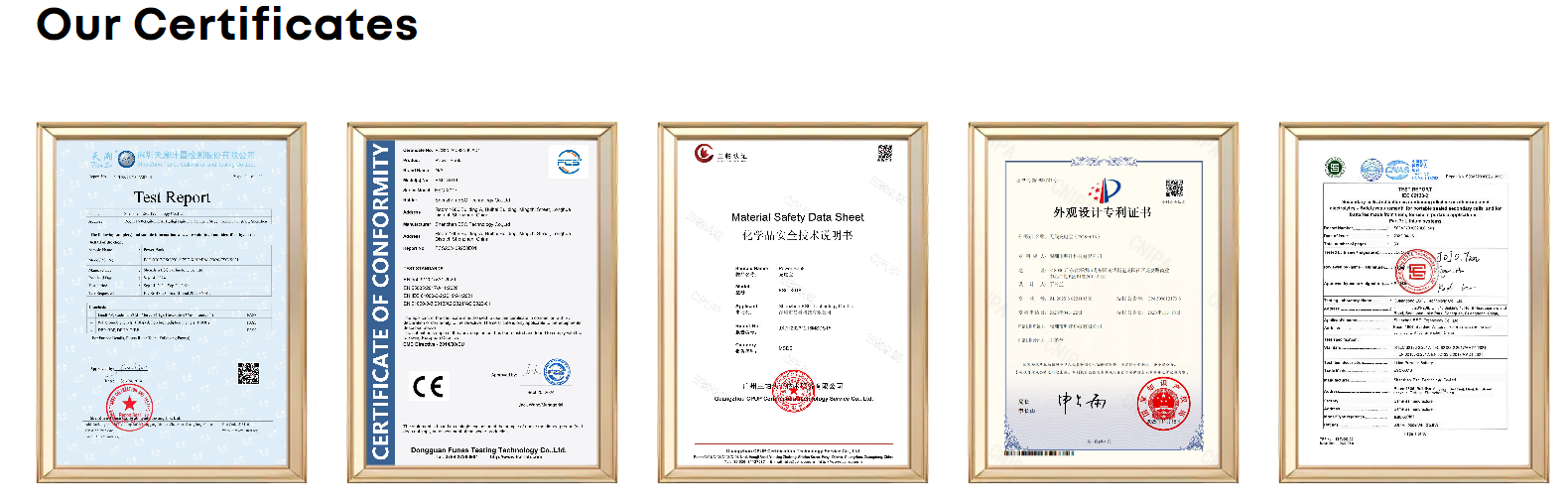
Cross-border gift procurement compliance is often overlooked until cargo is held at port.
Different markets have significantly different mandatory certification requirements:
UN38.3 lithium battery air transport certification is almost essential for all cross-border custom power banks—regardless of destination. If the product is shipped by air, this certification is required.
Additionally, the EU market has enforced stricter battery regulations since 2024 (EU Battery Regulation), requiring suppliers to provide carbon footprint declarations and recyclable material ratios—many legacy suppliers have not yet updated their documentation systems to cover this gap.
The most direct way to verify certification authenticity: request SGS, BV, or TÜV test reports and check whether the report number can be verified on the official website. Self-issued “certificates of compliance” have no legal validity in customs clearance.
Why More B2B Buyers Choose AOVOLT as Their Custom Partner
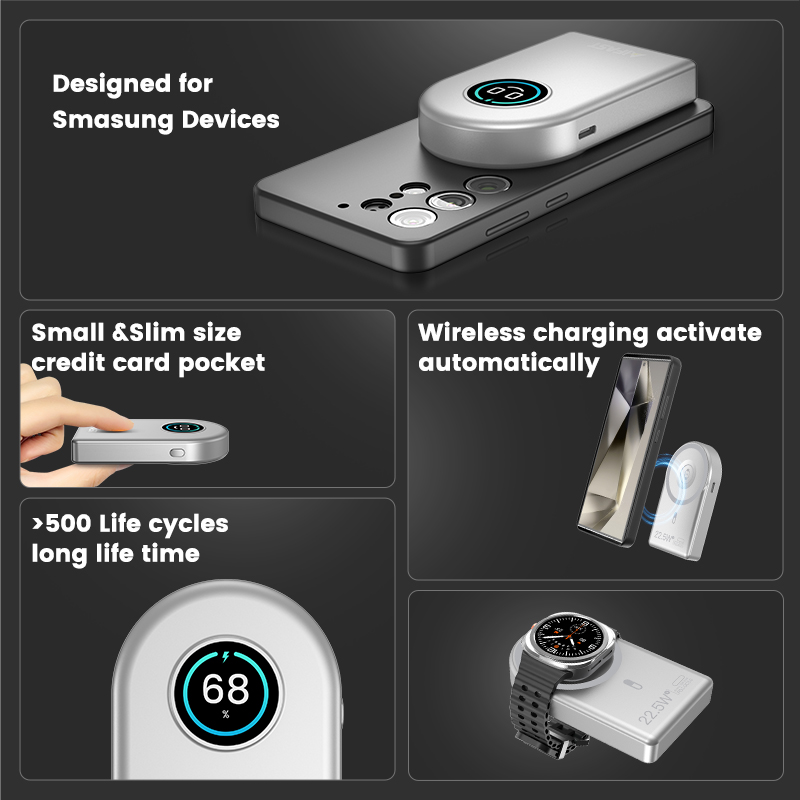
After all the selection, process, and compliance breakdown above, the core procurement question becomes: can you find a supplier that does everything well?
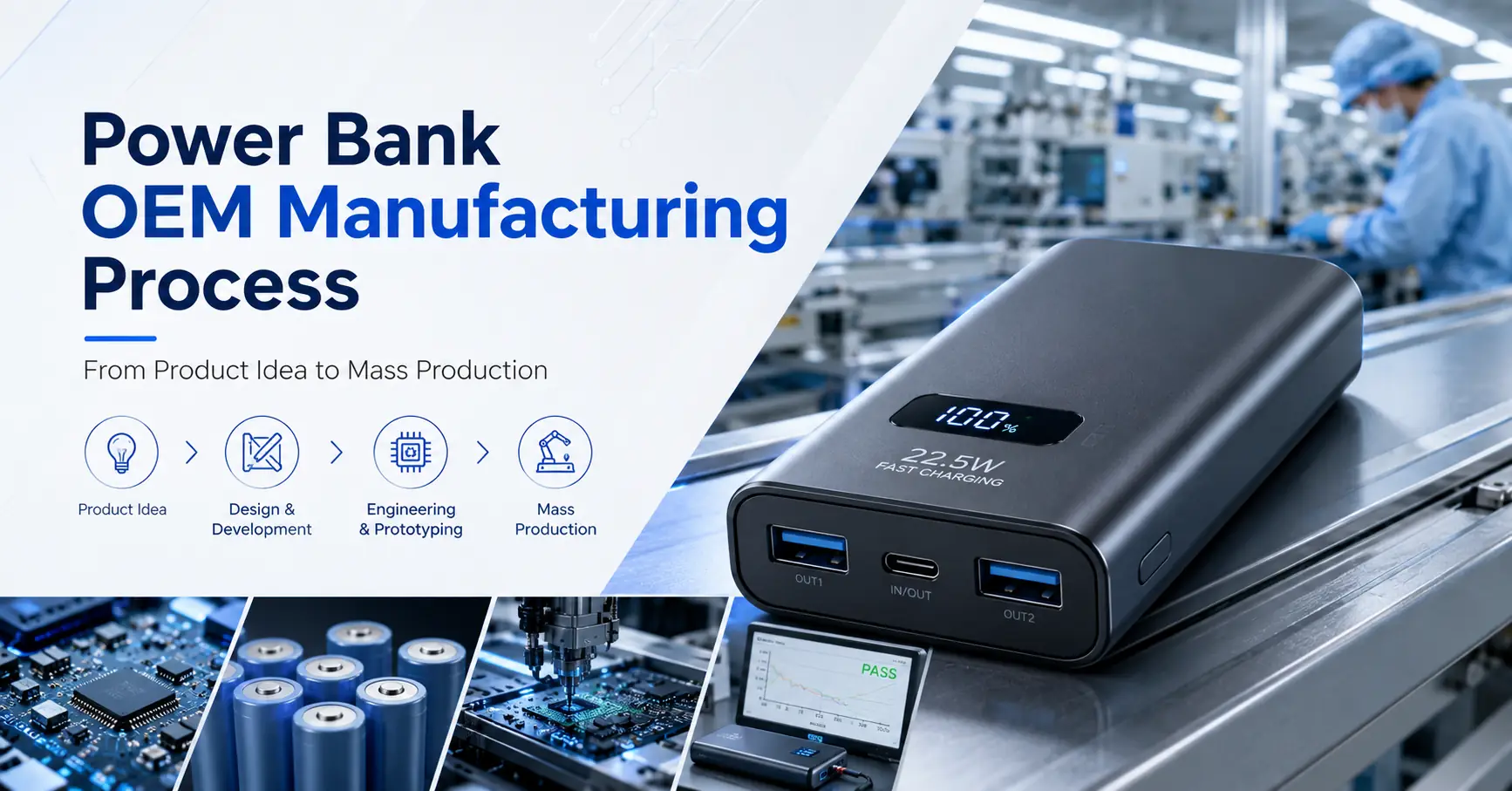
AOVOLT is a consumer electronics manufacturer with over 15 years of experience, headquartered in Dongguan, Guangdong. Its core product lines cover custom power banks, magnetic power banks, and fast chargers. Unlike most trading companies, AOVOLT operates a fully vertical supply chain—from industrial design, R&D, mold making, injection molding to metal structure integration—completing the entire lifecycle in-house with no outsourcing or intermediary markups, ensuring structural consistency in quality.
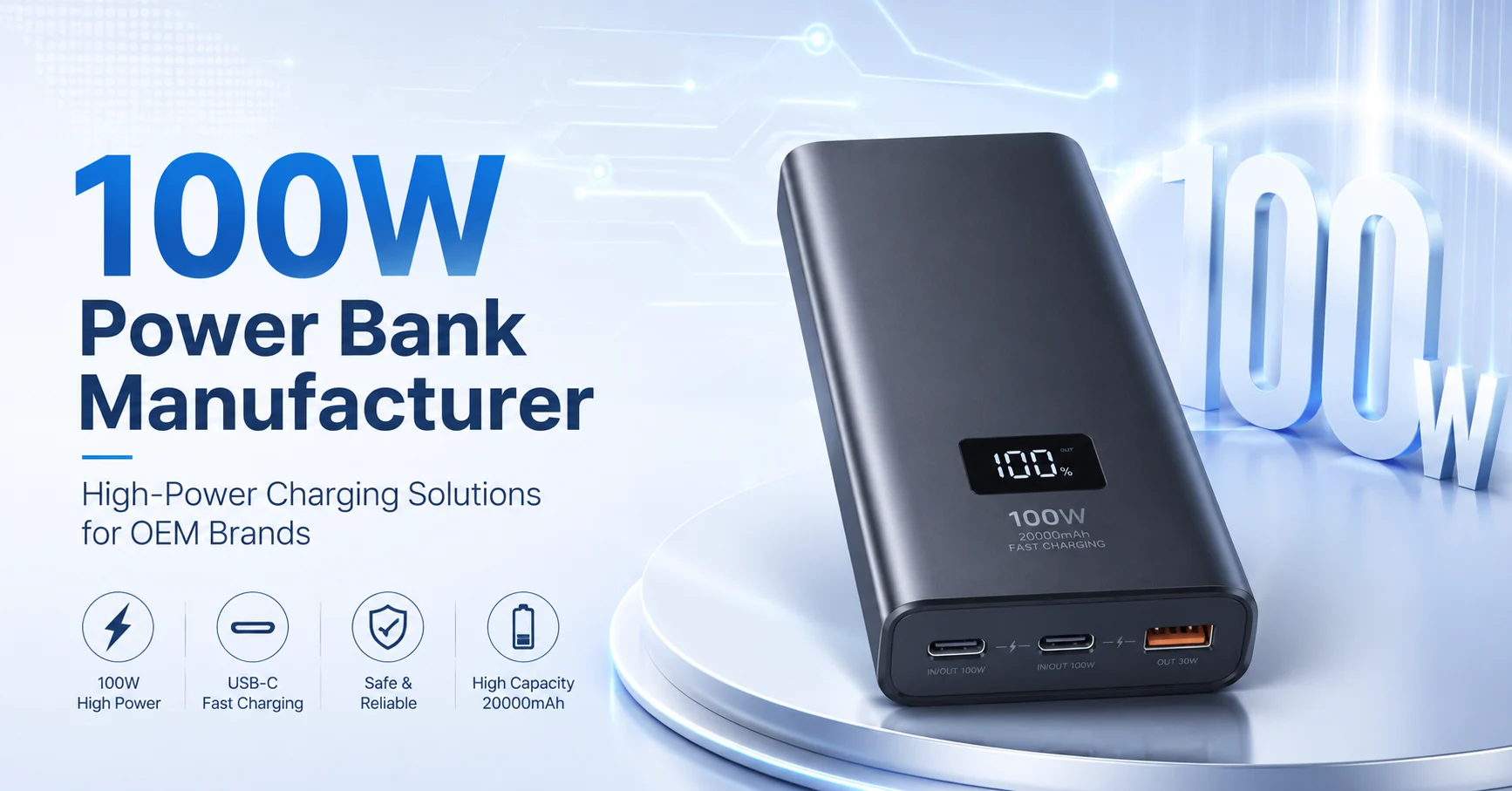
Technically, AOVOLT’s fast charging solutions support up to 140W output, with full protocol compatibility including PD3.0, PPS, QC3.0, FCP, SCP, AFC, Apple 2.4A, and BC1.2. This ensures optimal fast charging across iPhone, Huawei, Samsung, Xiaomi, Lenovo, and other mainstream devices without requiring users to change cables or adapters. Lightweight 20000mAh Power Bank for You: 2026 OEM Sourcing and Profit Guide.
For corporate gifting, “plug-and-play compatibility” is more important than raw specifications.
Industrial design is another key differentiator. AOVOLT has an independent design team capable of delivering exclusive product aesthetics beyond standard market models—transforming gifts from “logo printing” into “custom product design,” a qualitative upgrade for premium brand positioning.
FAQ
Q1: What is the minimum order quantity for custom logo power banks?
It depends on process and product type. Standard UV printing can start from 50 units; laser engraving typically starts from 100 units; fully custom ODM designs usually require 1000+ units. Sample runs of 3–5 pieces are often available before mass production.
Q2: Can I use a JPG logo for customization?
Yes, but it is not recommended. Raster images may appear jagged or blurry in engraving or large-area printing. The correct approach is converting the logo into vector format (AI/EPS/SVG) before submission.
Q3: Can lithium battery power banks be shipped by air?
Yes, but only with UN38.3 certification and compliance with airline and destination country watt-hour limits (typically under 100Wh). Reputable suppliers provide certification proactively.
Q4: How long does the full procurement cycle take?
Typical process: submit logo/specs → virtual sample (1–2 days) → confirmation → physical sample (5–10 days) → mass production (7–15 days depending on quantity) → shipping (3–25 days depending on destination). For exhibitions, start at least 8 weeks in advance.
Q5: How to identify whether a supplier is a factory or trading company?
Three checks: request factory video verification; ask for export declaration samples (factory shipments list manufacturer); and request mold fee quotations—trading companies usually cannot provide specific mold costs.
Conclusion
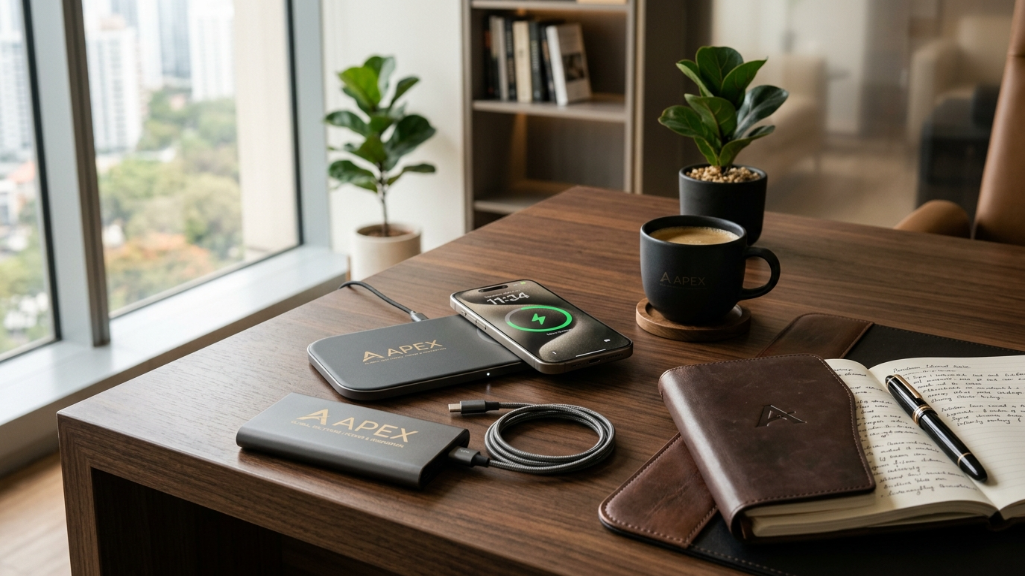
Procurement of custom logo power banks or wireless chargers with company logo is fundamentally a brand asset investment decision, not a simple price comparison exercise.
Choosing the wrong supplier leads to blurred logos, missing certifications, and delayed delivery—resulting in not just budget loss, but also a missed opportunity to strengthen brand recognition.
Suppliers capable of handling precision manufacturing, compliance, delivery stability, and design innovation simultaneously are rare.
With over 15 years of manufacturing experience in Dongguan, full in-house production, 140W full-protocol fast charging technology, and exclusive design capabilities, AOVOLT is positioned as a strong partner for OEM/ODM customization.
If you are preparing corporate gifts for the next quarter or developing customized products for specific markets, instead of spending time filtering inconsistent suppliers on platforms, you may directly contact the AOVOLT team for a tailored quotation based on your actual requirements.
References: