
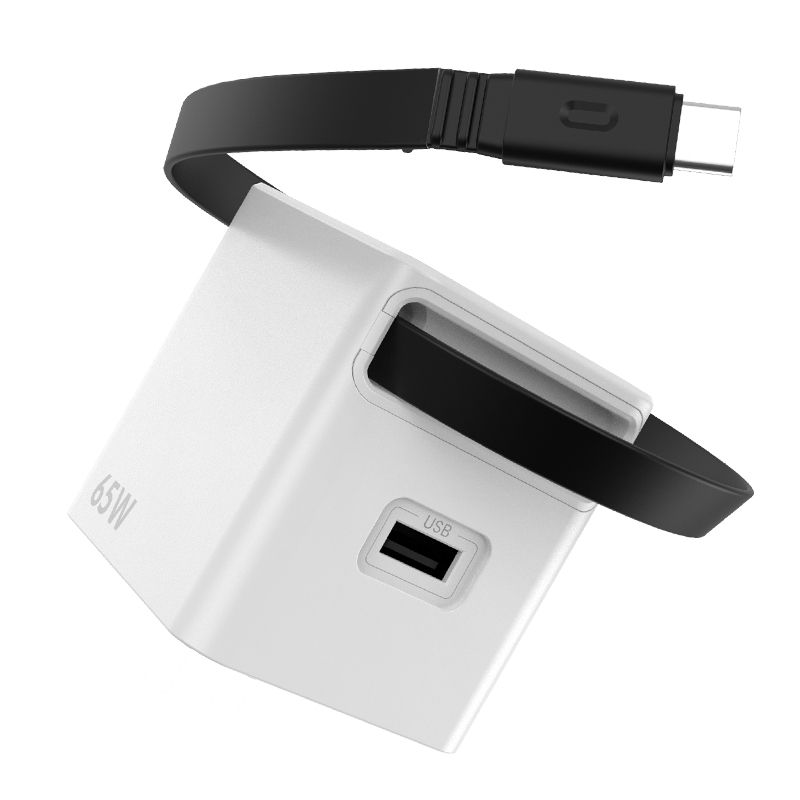
Customized PCBA (Printed Circuit Board Assembly) design is the foundation of energy conversion efficiency, thermal management, and protocol compatibility in intelligent fast-charging products.
In high-power charging applications, an efficient power management architecture does more than shorten charging time. It directly reduces thermal stress, improves long-term stability, and extends overall product lifespan. For brands aiming to stand out in a crowded market, deep PCBA customization is no longer optional—it is the most practical way to achieve “OEM-level speed” and precision thermal control while building a defensible competitive moat.
Are you currently facing overheating under high-wattage output? Protocol instability causing customer complaints? Or compliance risks due to a lack of original engineering design?
AOVOLT integrates smartphone-grade power management precision into custom PCBA services. Backed by an R&D team with experience from leading mobile brands such as Xiaomi, OPPO, and Vivo, we deliver vertically integrated solutions—from proprietary firmware to patented industrial design—ensuring your product leads in performance, safety, and compliance.
Why Generic PCBA Solutions No Longer Meet the 2026 Fast-Charging Market
In today’s fast-charge ecosystem, stacking parameters on a generic reference board is outdated. Continuing to rely on low-cost, off-the-shelf PCBA solutions exposes B2B buyers to three critical risks.
The “Universal Board” Trap: Thermal Runaway and Efficiency Loss
Generic PCBA layouts are often compromised to fit multiple enclosure types. That flexibility comes at a cost:
-
Heat accumulation near transformers and synchronous rectifier MOSFETs
-
Poor thermal dissipation under sustained 65W, 100W, or higher loads
-
Thermal throttling that slows charging speed
-
Accelerated electrolytic capacitor aging
-
Increased long-term safety risks
Over time, these weaknesses surface as higher RMA rates and brand damage.
Protocol Compatibility Breakdown: The Hidden UX Disaster
Many solutions claim support for PD 3.1 or QC 5.0. In practice, incomplete firmware protocol stacks lead to:
-
Handshake failures
-
Random disconnects
-
Inability to trigger maximum rated power
-
PPS instability across laptops, tablets, and smartphones
With thousands of device models in circulation, shallow protocol implementation is no longer acceptable. Deep protocol simulation and validation are essential—especially for advanced PPS (Programmable Power Supply) requirements. Let you know about B2B patented power bank: OEM R&D & fast charging advantages.
Compliance Risk and Platform Delisting
Global marketplaces such as Amazon and Rakuten enforce increasingly strict product compliance standards.
Generic PCBAs lacking safety-oriented design often struggle to pass:
-
UL 2056
-
IEC 62368-1
A failed audit can result in listing removal, forced recalls, and severe financial loss.
Core Technologies Behind High-Performance Fast-Charging PCBA
Achieving “low-temperature fast charging” and compact form factors requires deep coupling between hardware architecture and firmware algorithms.
Below are three key technical pillars.
Deep Integration of Gallium Nitride (GaN)
AOVOLT extensively deploys third-generation semiconductor GaN technology in custom PCBAs.
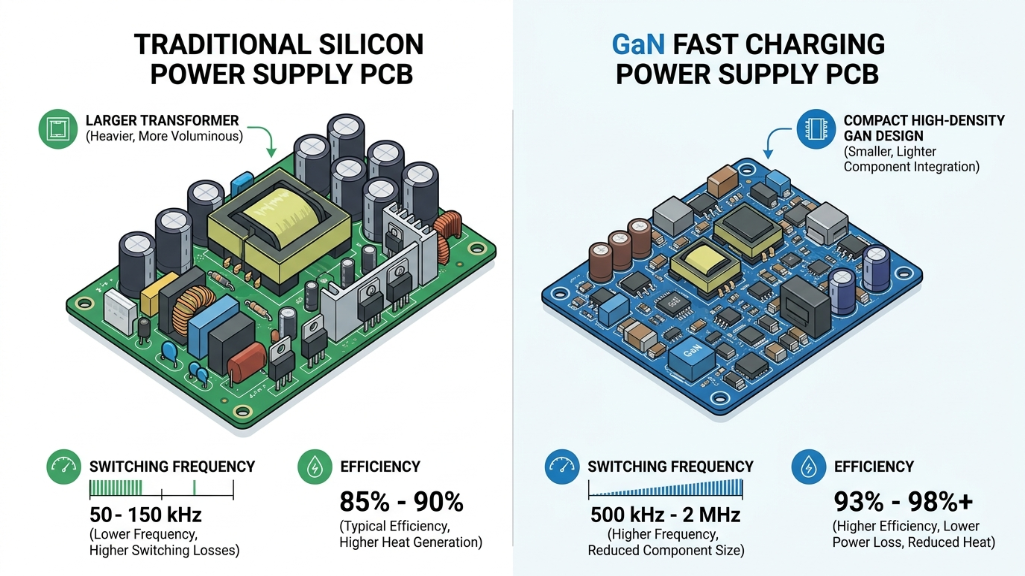
Compared with traditional silicon (Si) solutions, GaN enables higher switching frequency and lower conduction loss.
| Technical Metric | Traditional Silicon (Si) | AOVOLT GaN Custom Solution | Core Advantage |
|---|---|---|---|
| Switching Frequency | 50kHz – 100kHz | 300kHz – 1MHz | Smaller inductors and transformers |
| Conversion Efficiency | 85% – 88% | 92% – 95% | Reduced thermal loss, improved temperature control |
| Power Density | Low | Extremely High | Over 2× output power in the same volume |
Higher frequency directly translates to smaller magnetics, higher power density, and better thermal behavior.
Thermal Engineering: Beyond Heat Sinks
Thermal design is not an afterthought—it begins at PCB layout.
Our engineering approach includes:
Multi-Layer Heavy Copper Planes
Internal PCB copper layers are optimized to distribute and dissipate heat efficiently.
High-Density Thermal Vias
Thermal vias are placed directly under heat sources to transfer heat rapidly to the PCB backside.
Component Spacing Optimization
Sensitive components such as electrolytic capacitors are positioned away from inductive heat sources to extend overall lifespan.
Thermal management is engineered, not improvised.
Intelligent Power Allocation and Custom Firmware
Multi-port chargers (e.g., 2C1A desktop configurations) require dynamic power management.
Through proprietary firmware development, the system can:
-
Detect connected devices in real time
-
Dynamically allocate total output power
-
Prioritize primary devices intelligently
For example, when a laptop and tablet are connected simultaneously, a 140W system can intelligently allocate 100W + 30W instead of splitting power evenly—preserving true fast-charge performance for the primary device.
OEM-Level R&D Strength: Rebuilding Fast Charging from the Ground Up
In B2B partnerships, engineering depth defines product ceilings.
AOVOLT operates as a technology-driven solution provider—not merely a contract manufacturer.
Smartphone-Grade Engineering DNA
Our core R&D team includes former power management specialists from leading mobile brands.
This translates into:
-
Millisecond-level handshake response
-
Ripple suppression optimized for battery health
-
Superior transient response performance
Fast charging is not just about wattage. It is about precision.
Vertical Integration: PCBA + Industrial Design Co-Optimization
Traditional OEM workflows often design the enclosure first and fit electronics afterward. This limits thermal efficiency and space utilization.
AOVOLT implements a “chip–circuit–structure” integrated design methodology:
-
Patent-aware PCBA development during early design stages
-
Graphene thermal interface materials combined with advanced potting techniques
-
Balanced heat distribution for sustained high-load operation
The result: high power output with controlled surface temperature and improved durability.
Global Market Access: Embedded Compliance Strategy

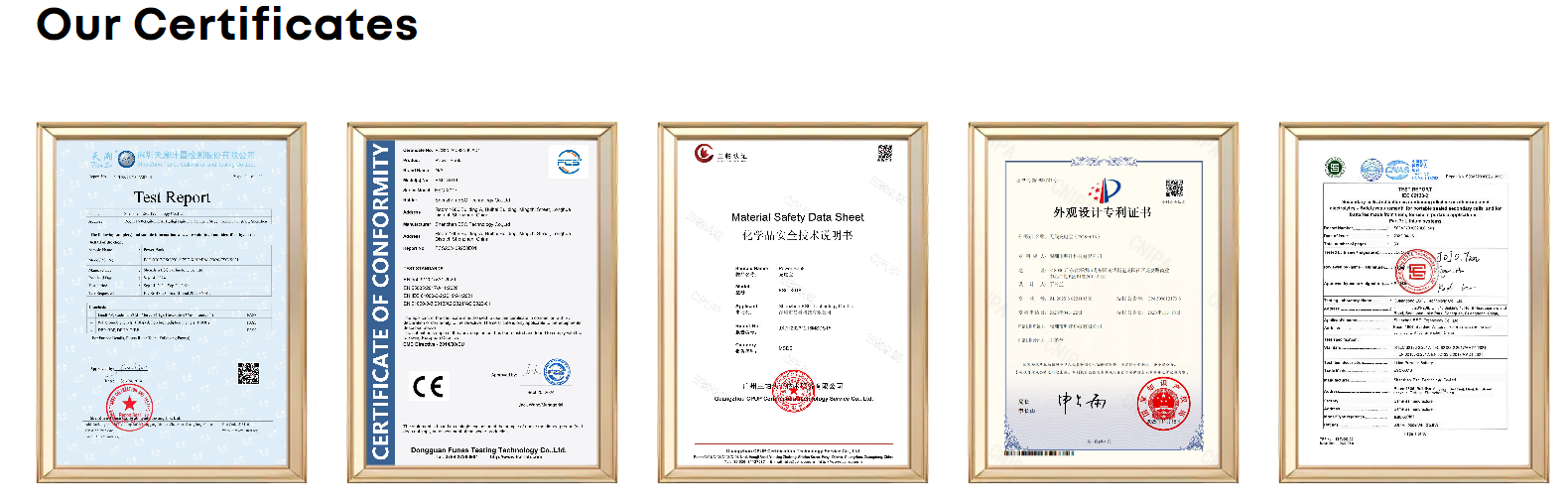
For cross-border sellers and global distributors, certification is both a legal safeguard and a market entry requirement.
Our PCBA designs embed compliance into the engineering phase.
| Region / Market | Core Certifications | Design-Level Countermeasures |
|---|---|---|
| North America (USA/Canada) | UL 2056, FCC SDoC | Reinforced EMI shielding; UL-rated flame-retardant PCB materials |
| European Union | CE-LVD, CE-EMC, RoHS | Lead-free & halogen-free component sourcing; strict temperature rise testing aligned with IEC 62368-1 |
| Global Safety | IEC 62133, CB Scheme | 12-layer BMS protection against overcharge and thermal runaway |
| Transportation | UN38.3, MSDS | Physical isolation design ensuring safe air and sea shipment |
Compliance is engineered—not patched at the last minute.
How B2B Buyers Should Evaluate ROI in Custom PCBA Projects
Unit price alone is a misleading metric. The correct benchmark is total lifecycle cost.
Reduced Return Rates
A single overheating incident or compatibility-related return often costs more than marginal PCBA savings.
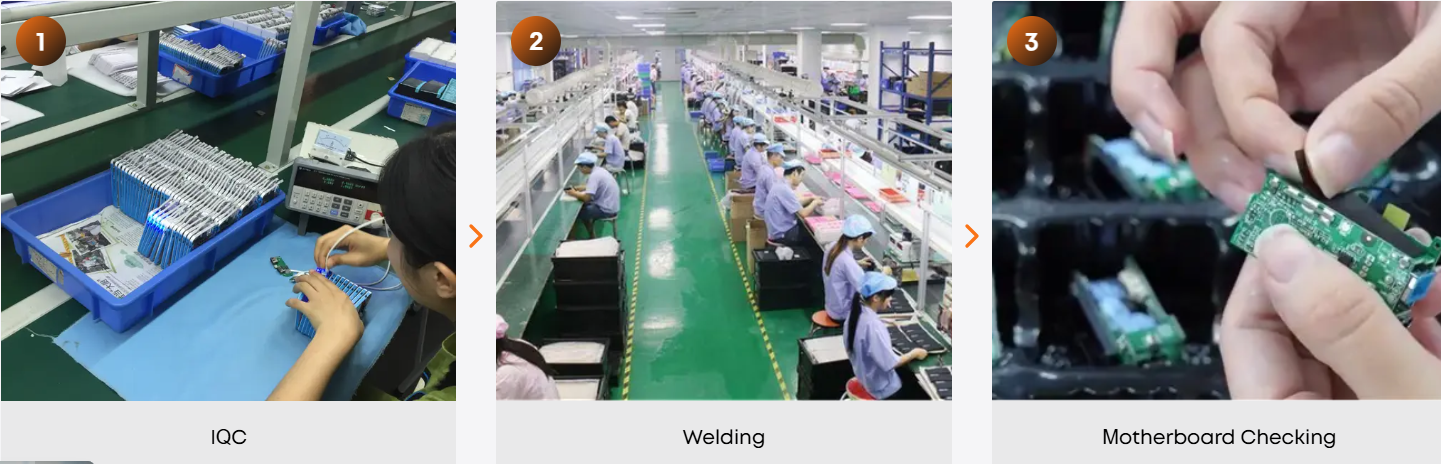
With 100% online aging tests and strict FQC inspection, RMA rates can be controlled below 0.3%.
Intellectual Property and Premium Positioning
Through patented industrial design support, your product gains:
-
Distinct visual identity
-
Reduced infringement disputes on major platforms
-
Stronger pricing power in retail channels
Originality is not cosmetic—it is strategic protection.
Agile OEM/ODM Execution
Time-to-market defines competitive success.
-
Functional prototypes delivered within 7–10 days after requirements confirmation
-
Modular architecture adaptable from 20W to 240W platforms
Speed without sacrificing engineering integrity.
Conclusion: Engineering Precision as a Brand Growth Engine
Custom PCBA is no longer a hidden internal component—it is the heart and brain of intelligent fast-charging products.
By partnering with a technology-driven engineering team that understands global compliance and performance optimization at a deep level, brands can focus on market expansion while entrusting technical stability to proven expertise.
In the highly competitive 2026 electronics accessory market, only professionalism and differentiation endure.
AOVOLT stands ready to redefine OEM-level fast-charging performance with global partners—powered by precision engineering and built for the future.
References:
UL 2056 – Standard for Power Banks
FCC SDoC Documentation – FCC Supplier’s Declaration of Conformity