How to Select the Best Wireless Charging Pad for Multi-Device Use
The Challenge: Too Many Devices, Not Enough Outlets
Modern users own multiple wireless devices — phones, earbuds, smartwatches, even styluses. Managing their charging needs on a single desk or nightstand often creates cable clutter and inconsistent charging speeds.
That’s why multi-device wireless charging pads have become a global trend, offering one simple surface that powers all devices simultaneously.
According to Statista, the wireless charger market is projected to exceed USD 30 billion by 2030, with multi-device charging solutions leading growth among both consumer and corporate sectors.
How Multi-Device Wireless Charging Works
Wireless charging pads rely on inductive coupling — transferring energy via electromagnetic fields between the charger’s coil and each device’s receiving coil.
In a multi-device setup, several charging modules operate in parallel, each optimized for specific wattages:
| Device Type | Recommended Output | Charging Standard |
|---|---|---|
| Smartphone | 15 W | Qi / Qi2 Fast Charging |
| Smartwatch | 2.5 – 5 W | Proprietary / Qi variant |
| Earbuds / Case | 3 – 5 W | Qi-Certified |
| Tablet | 20 W + (wired assist) | PD 3.1 / QC 4.0 |
To maintain stability and prevent interference, the system includes independent control ICs and thermal balancing modules.
Modern designs, especially those certified under Wireless Power Consortium (WPC), integrate FOD (Foreign Object Detection) and temperature protection as standard.
Comparing Multi-Device vs. Single-Device Wireless Pads
| Criteria | Multi-Device Pad | Single-Device Pad |
|---|---|---|
| Supported Devices | Phone + Watch + Earbuds | One device |
| Power Output | 15 W × 3 modules | 5 – 15 W total |
| Charging Efficiency | 80 – 88 % (Qi2) | 75 % (Qi 1.3) |
| Safety System | Multi-IC + Thermal Control | Basic protection |
| Use Case | Home / Office / Hotel | Personal use |
| Design Options | Foldable, Stand, Flat | Flat pad only |
For B2B buyers, multi-device models mean higher average order value (AOV) and stronger appeal in corporate gift or smart-workspace markets.
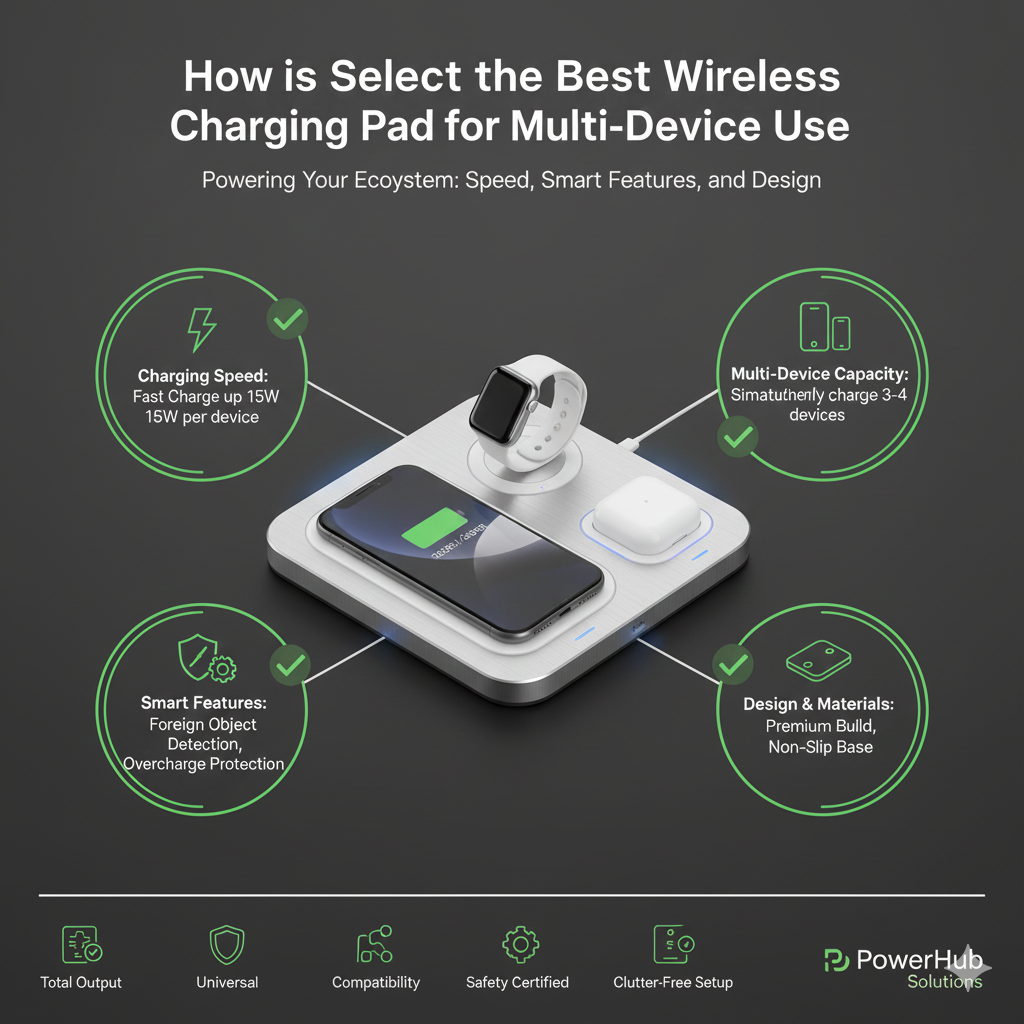
Key Factors When Choosing a Wireless Charging Pad
1. Charging Standard and Certification
Always verify Qi or Qi2 certification, ensuring compatibility across devices.
Qi2 introduces magnetic alignment and improved power efficiency, making it ideal for OEM buyers targeting premium markets.
2. Power Output and Smart Control
Look for chargers supporting adaptive wattage (5 – 20 W per device).
Integrated smart ICs dynamically allocate current, avoiding overload and maximizing efficiency.
3. Material and Heat Management
High-end models use aluminum alloy or graphene layers to dissipate heat faster than plastic models.
Efficient cooling extends both device battery life and charger durability.
4. Design and Ergonomics
Options include:
-
Flat pads for minimal setups
-
Foldable stands for desks and travel
-
3-in-1 stands for phones, watches, and earbuds
-
Magnetic modules for MagSafe-compatible devices
5. Safety Certifications
Check for CE, FCC, RoHS, UL, and Energy Star compliance.
These ensure voltage stability, material safety, and eco-efficiency — essential for export and retail.
6. OEM Customization
Reliable suppliers offer:
-
Logo engraving or printing
-
Custom color options
-
Branded packaging and instructions
-
Dual branding for promotional use
Typical Buyer Questions
Q1: Will it charge devices with protective cases?
Yes, most Qi2 chargers support ≤ 3 mm cases (non-metal).
Q2: Can I charge different brands together (Apple, Samsung, Xiaomi)?
Yes. Qi2 ensures cross-brand compatibility and dynamic power negotiation.
Q3: What about heat during multi-device charging?
Premium designs use multi-IC load balancing and aluminum casings to maintain < 45 °C.
Q4: What’s the MOQ for OEM production?
Typically 500 units for standard shells; 1 000 + for custom molds.
Q5: Are these suitable for commercial installations (hotels, offices)?
Absolutely. Many models integrate anti-slip bases, over-current protection, and fast recharging via PD 60 W input.
Selecting the Right Model for Your Business
| Target Market | Recommended Type | Key Selling Points |
|---|---|---|
| Retail & E-Commerce | Foldable 3-in-1 Charging Pad | Compact design, multi-brand use |
| Corporate Gifts | Custom Logo Pad | Premium finish, brand visibility |
| Hospitality & Workspace | Integrated Desk Charger | Safety + durability |
| Travel Accessories | Magnetic Fold Stand | Lightweight, dual output |
| Tech Retail Chains | Qi2-Certified Multi Pad | Future-proof standard |
When evaluating OEM partners, request sample validation reports, including coil alignment diagrams and material specifications — this ensures technical compliance and consistent quality.
Sustainability and Future-Proof Design
Eco-friendly chargers are now a procurement priority.
Suppliers adopting recycled aluminum, low-standby ICs, and modular repairability align with global ESG initiatives and meet upcoming EU energy directives.
Such investments strengthen your brand’s environmental credibility.
Powering Simplicity Through Smart Design
Choosing the best wireless charging pad for multi-device use isn’t about wattage alone — it’s about balance: efficiency, safety, design, and future readiness.
By partnering with certified OEM suppliers, businesses can deliver products that reflect both technological excellence and everyday practicality.
To explore OEM and wholesale opportunities for Qi2 wireless charging pads, visit
ESCCharge Official Website
and discover how innovation meets efficiency in every surface.