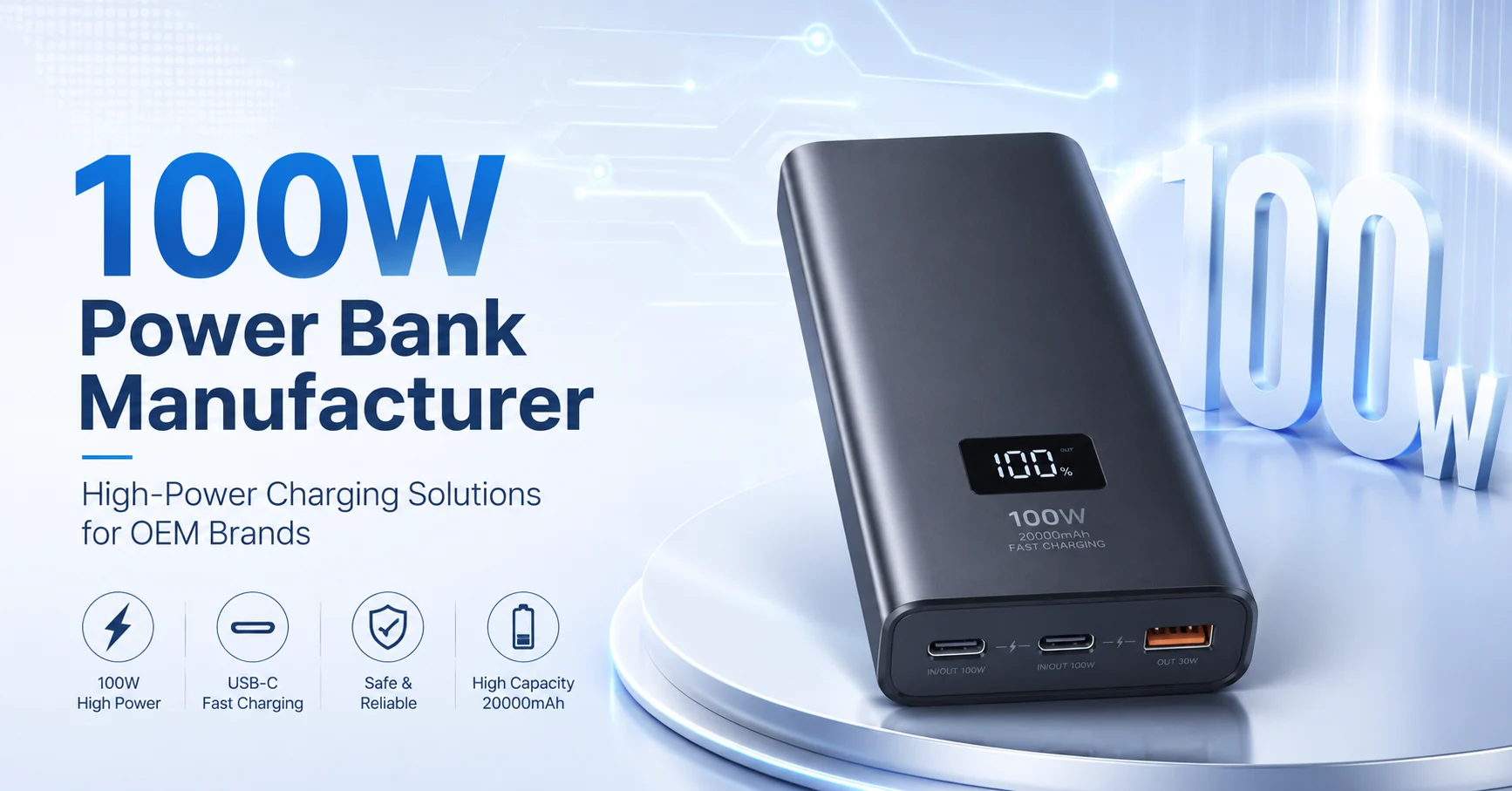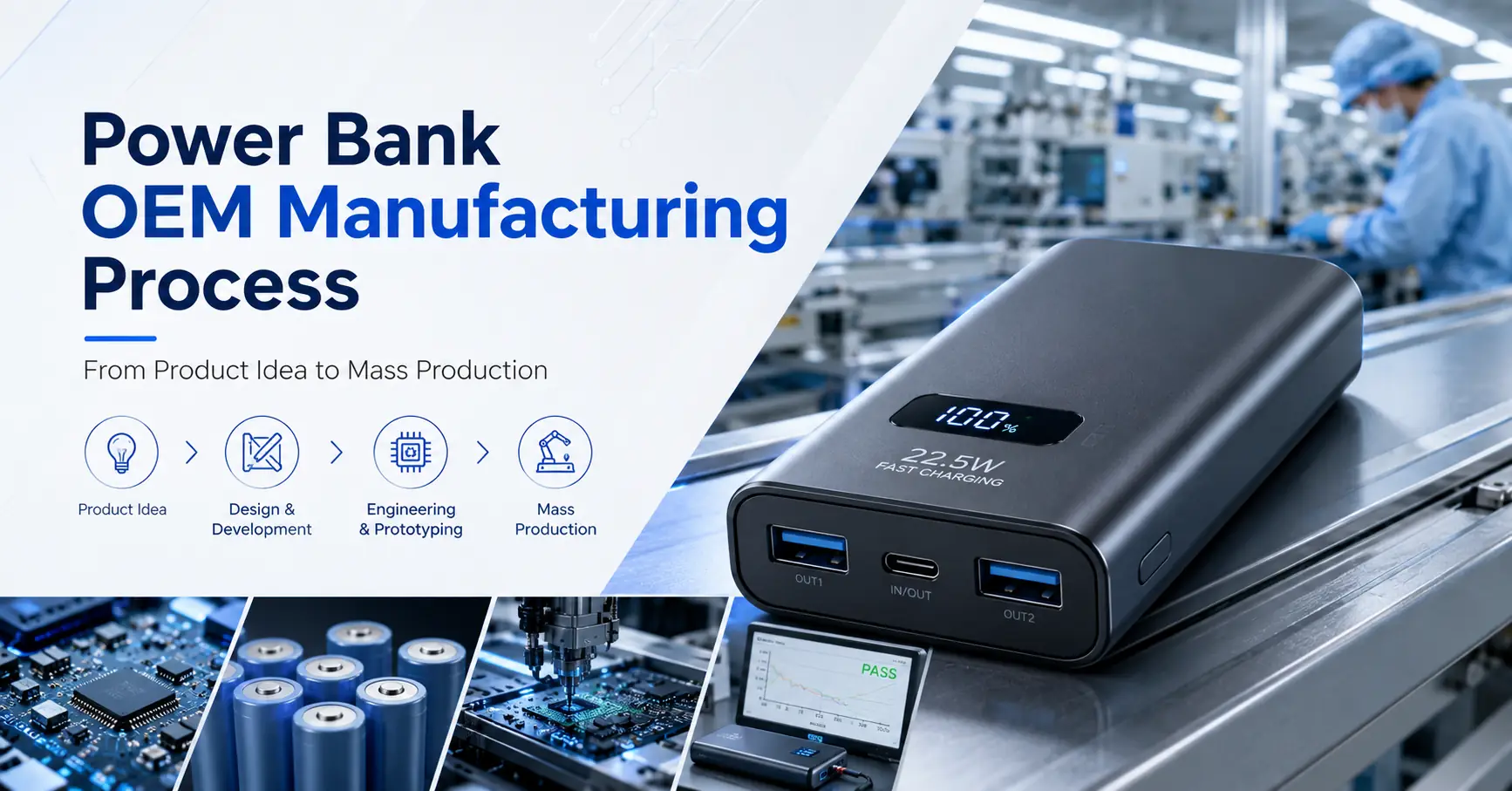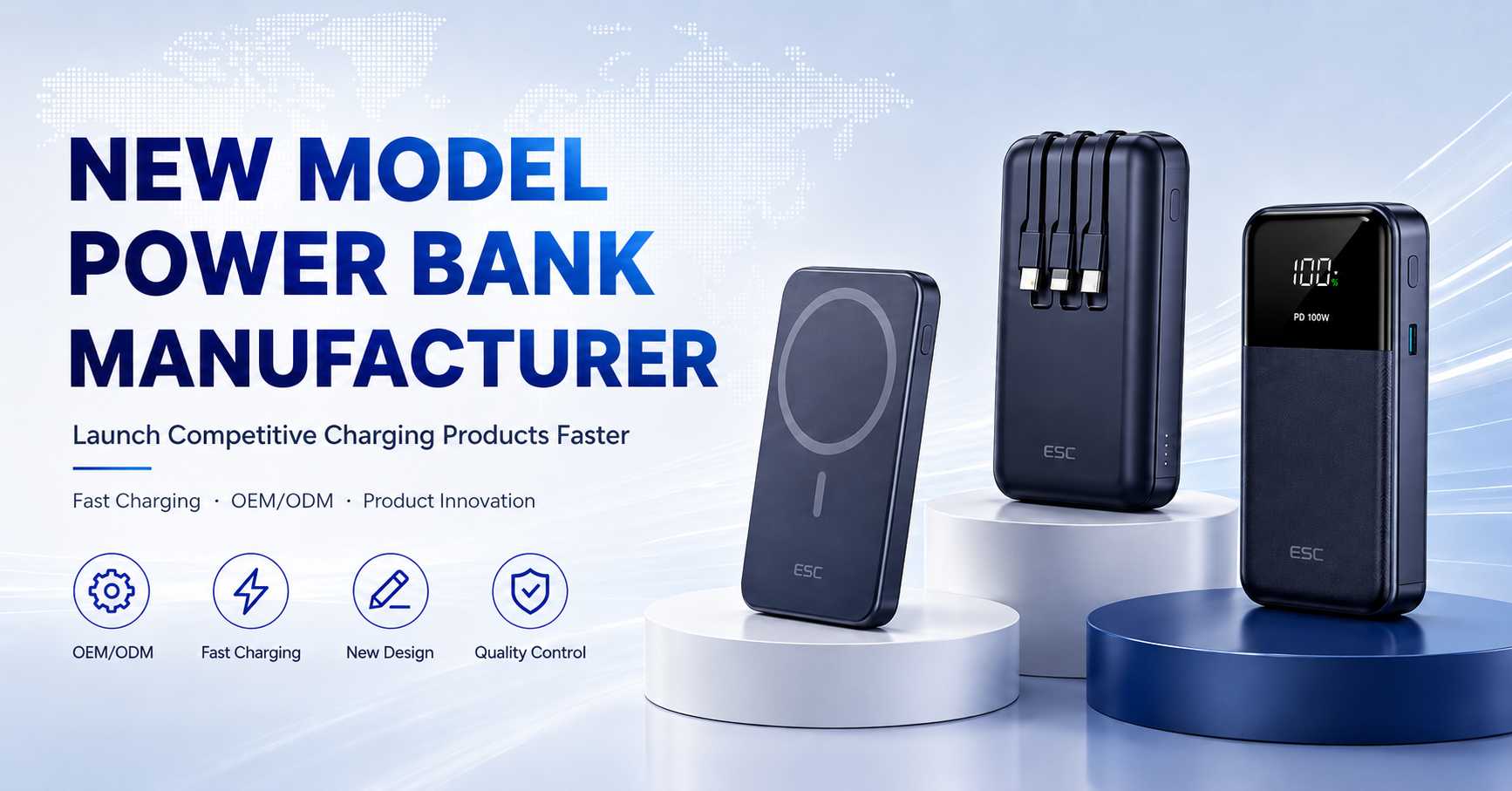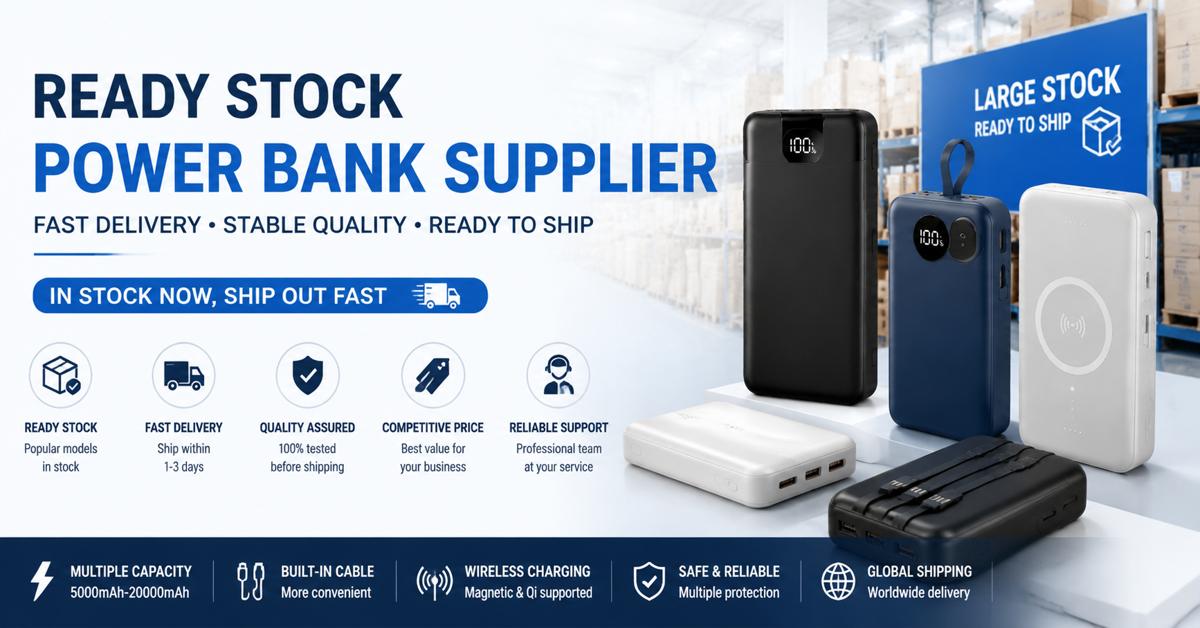

In the global consumer electronics market of 2026, competition in the ultra-thin power bank segment has long moved beyond a simple “thickness race.” The core challenge now lies in balancing high energy density with extreme thermal stability within a minimal footprint.
A commercial-grade ultra-thin power bank must maintain a thickness below 10mm while achieving “factory-level” fast charging efficiency through customized PCBA logic and high-rate battery cells. This directly impacts brand return rates and user satisfaction.
For cross-border e-commerce giants and global electronics wholesalers, market pain points are clear: generic products lead to homogenized price competition, high-power designs risk hot surfaces, and a lack of design patents can result in platform bans.
AOVOLT’s core R&D team, with experience from top smartphone brands like Xiaomi, OPPO, and Vivo, leverages deep in-house fast-charging chip and PCBA expertise. Through vertical integration of the supply chain, we provide global partners with ultra-thin fast-charging solutions that combine “factory-level speed” with “low-temperature safety.”
Breaking the “Ultra-Thin” Paradox: Why Thickness Isn’t the Only Standard
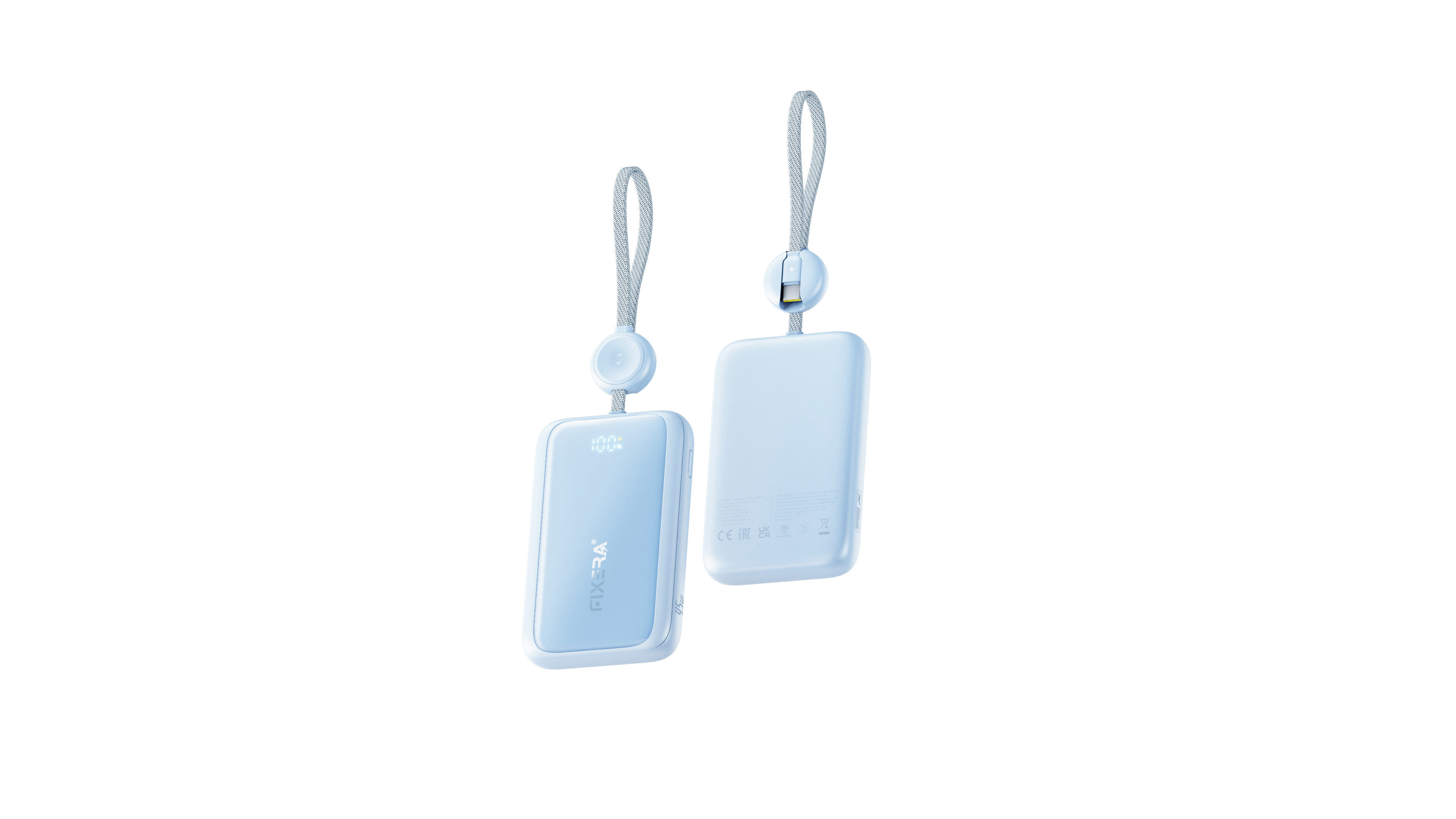
In power bank manufacturing, the pursuit of extreme thinness often challenges the laws of physics. B2B buyers who focus solely on millimeter-level specifications risk ending up with underperforming products.
Energy Density vs. Thermal Safety
Ultra-thin power banks generally use lithium polymer (Li-Polymer) cells. By 2026, industry standards require energy density of at least 750 Wh/L. High density, however, concentrates heat during charge and discharge cycles.
Poor Approach: Simply compressing internal space without proper thermal layers can result in surface temperatures exceeding 122°F (50°C) under high-power output, causing battery swelling.
AOVOLT Approach: We use high-thermal-conductivity graphene heat sinks combined with patented aluminum alloy casings to ensure that surface temperature remains below 104°F (40°C) even at full-speed 22.5W or 30W fast charging.
Why “Thin” Often Means “Slow Charging”
Most manufacturers cut high-power fast-charging protocols to simplify ultra-thin product development, supporting only basic 5V/2A output.
Technical Bottleneck: High-power charging requires complex inductors and protection circuits, which are typically bulky.
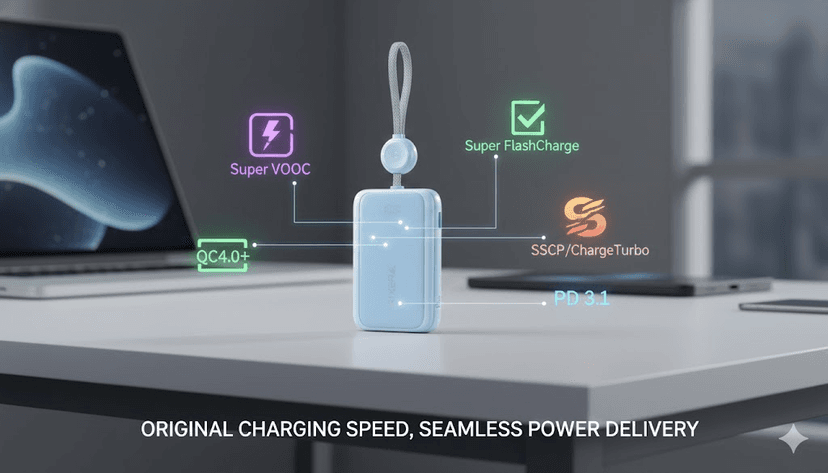
AOVOLT Breakthrough: Our self-developed integrated PCBA design deeply integrates power management chips and protection ICs. Without increasing thickness, our design fully supports PD 3.1 and PPS protocols for iPhone 17/18 series and Android flagships, achieving true “factory-level speed.”
Core Technical Metrics: Three Dimensions Every B2B Buyer Must Test
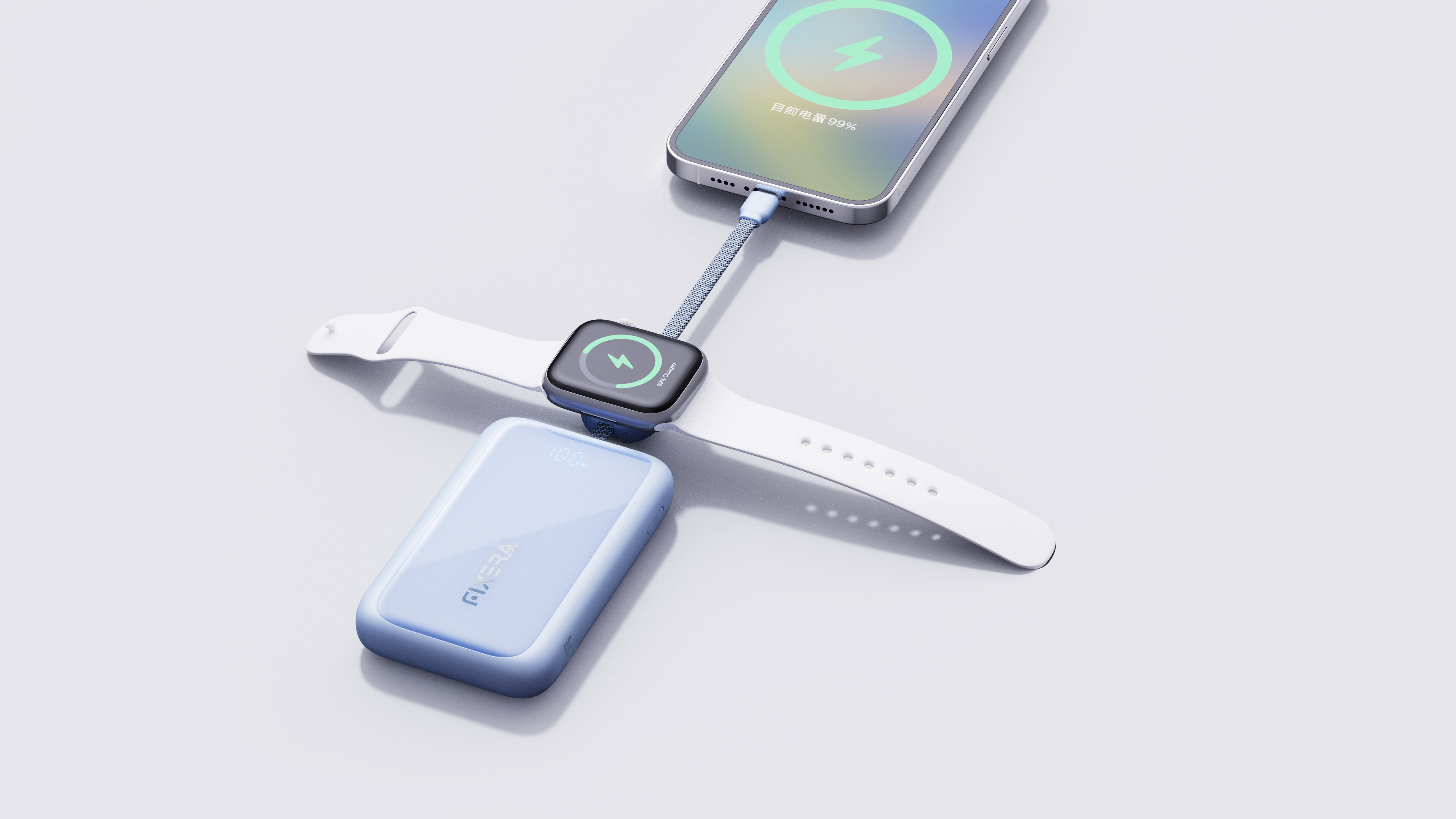
A professional procurement contract should not only specify capacity—it should quantify the following key technical indicators.
Table 1: 2026 Ultra-Thin Power Bank Technical Benchmark Comparison
| Technical Metric | Industry Average (Generic Mold) | AOVOLT Standard (Factory-Level) | B2B Impact |
|---|---|---|---|
| PCBA Efficiency | 75% - 80% | 92% - 95% | Higher efficiency means more effective capacity and lower heat |
| Protocol Compatibility | Supports PD 2.0 / QC 3.0 | PD 3.1 (PPS) / SCP / VOOC | Determines compatibility with the latest smartphones |
| Thermal Control Logic | Simple fuse protection | NTC real-time millisecond monitoring | Prevents mass returns and safety incidents |
| Casing Process | Plastic generic mold (no patent) | Custom aluminum alloy / carbon fiber (patented) | Avoids platform IP infringement and suspension risks |
PCBA Efficiency: The Hidden Tech Behind Product Lifespan
Every 1% increase in efficiency allows approximately 50–100 mAh more usable capacity at the same rated capacity. Most energy loss converts to heat. AOVOLT’s proprietary synchronous rectification technology reduces internal resistance, raising efficiency to around 95%, addressing the chronic heat issues of ultra-thin power banks.
Protocol Compatibility: From “Can Charge” to “Fast Charge”
By 2026, consumers are extremely sensitive to charging speed. Many products labeled “fast charge” fail to negotiate high-speed protocols with connected devices.
AOVOLT Advantage: Leveraging the core team’s experience in smartphone OEM R&D, our PCBA features a dynamic voltage regulation algorithm. It precisely matches the voltage steps of the PPS protocol (20 mV increments), ensuring charging curves identical to the original smartphone charger.
NTC Temperature Sensors: Invisible Fuses
In spaces under 10 mm, AOVOLT mandates at least two NTC thermistors: one for cell temperature, one for port temperature. When abnormal heat is detected, AI algorithms dynamically adjust output power instead of abruptly cutting power. This ensures safety while enhancing user experience.
“Patent Traps”: Why Private Mold Design Protects Your Brand
In the 2026 global e-commerce landscape (Amazon, TikTok Shop, Mercado Libre), appearance patent infringement is the top reason for product delisting and frozen funds.
Risks of Public Mold Products
Many small factories share the same mold to cut costs, resulting in serious product homogenization and hidden compliance risks:
-
IP Liability: If the original mold designer files a patent complaint, all sellers using that mold risk account suspension.
-
Structural Flaws: Generic molds often ignore thermal requirements for PCBA and lack internal structural support, leading to poor drop resistance.
AOVOLT Patented Design: Ergonomics Meets Brand Identity
AOVOLT follows a “private mold + patent layout” strategy. Our ultra-thin series features unique streamlined industrial design and multiple structural patents:
-
Anti-misplug ports: Optimized port layout reduces PCB connector wear.
-
Differentiated materials: Aerospace-grade aluminum alloy with anti-slip coatings adds premium value over generic plastic.
Deep Supplier Evaluation: Beyond ISO9001
ISO9001 certification is just an entry threshold. Long-term brand growth requires examining the supplier’s underlying R&D pedigree.
R&D Pedigree: Smartphone-Grade Standards
AOVOLT’s core team comes from Xiaomi, OPPO, and other top brands, enforcing rigorous smartphone-grade supply chain standards:
-
Six Sigma Quality Management: Ensures consistency in mass production.
-
EVT/DVT/PVT Full-Cycle Testing: Every ultra-thin power bank undergoes over 50 reliability tests before launch.
Global Market Compliance: Depth and Breadth of Certifications
B2B buyers must assess not only the presence of certificates but their authenticity and coverage.
Table 2: AOVOLT Global Certifications and Safety Approvals
| Target Market | Required Certification | AOVOLT Compliance | Core Test Items |
|---|---|---|---|
| North America (US/Canada) | FCC, UL2054, BC | Fully Covered | EMC, drop resistance, overcharge tests |
| Europe (EU) | CE, RoHS, ERP | Fully Covered | Environmental material control, low-voltage safety |
| International Air Transport | UN38.3, MSDS | Mandatory for all products | 1.2m drop, high-altitude pressure simulation |
| Special Markets (KR/JP) | KC, PSE | Custom applications supported | Electrical safety adaptation for local standards |
Vertical Integration: Why In-House PCBA Matters
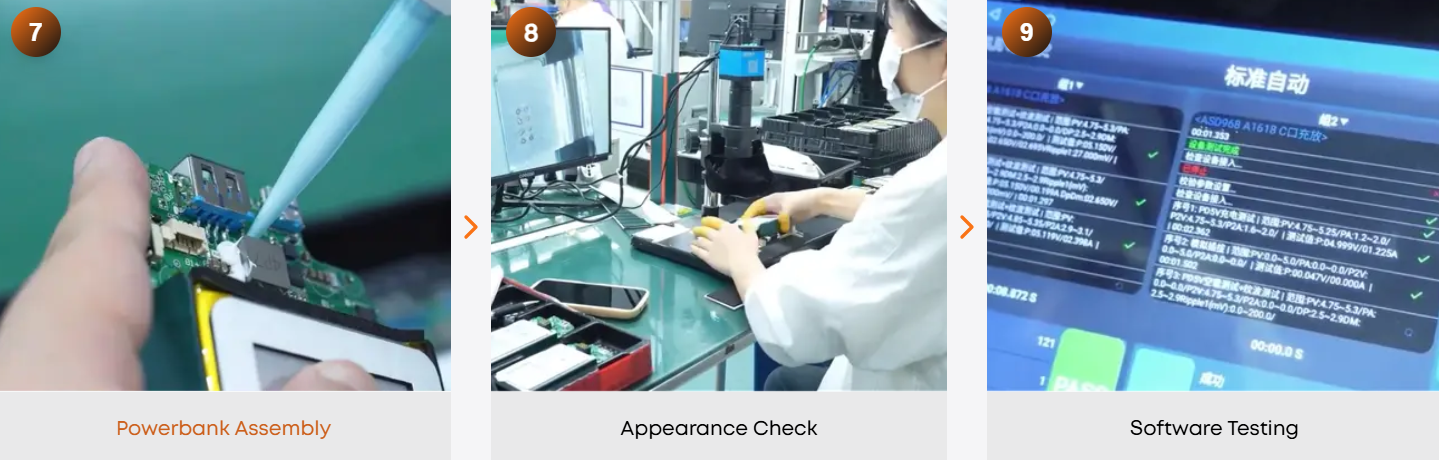
Most “assembly factories” use outsourced PCBA, limiting control over software-level charge/discharge curves. AOVOLT manages the full chain from chip programming to PCB prototyping to final assembly. This allows firmware adjustments for specific protocols within 3–5 business days—a speed traditional OEMs cannot match.
Partner Value: How AOVOLT Empowers Global Buyers
Choosing AOVOLT is not just buying a product—it’s gaining a stable technology platform.
Exceptional Delivery: Factory-Level Speed with Low-Temperature Safety
Each ultra-thin power bank features “Three Highs, One Low”: high efficiency, high protocol compatibility, high cycle life, and low operating temperature. This directly translates into minimal after-sales costs for partners.
Flexible OEM/ODM Custom Solutions
AOVOLT offers deep cooperation models for B2B clients:
-
Brand Customization (OEM): Quick logo and packaging customization based on our patented private mold.
-
Advanced Development (ODM): Industry-specific module development, such as Qi2 wireless fast charging or ultra-thin digital display modules.
Conclusion: Locking in “Stability” in the Ultra-Thin Market
By 2026, mediocrity has no place in the power bank market. For B2B decision-makers, selecting a manufacturer with smartphone-grade R&D experience, mastery of core PCBA technology, and a patent moat is the most effective strategy to protect market share from homogenized competition.
References: