
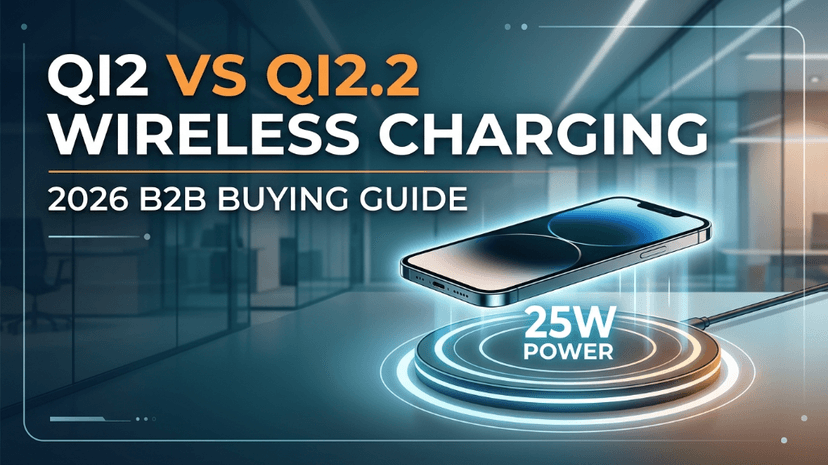
If you are making procurement decisions for your 2026 wireless charging product line, the answer is clear: the existing device installed base determines what stock you should hold now, while your customers’ device upgrade cycle dictates when to switch to Qi2.2. The Qi2 standard currently covers over 1.5 billion active devices worldwide, while Qi2.2 (officially labeled Qi2 25W, version v2.2.1) was officially released by the Wireless Power Consortium (WPC) in July 2025 and had its large-scale commercial debut at CES 2026. Both standards will coexist from 2026 to 2027—this is not a technical choice, but an inventory allocation decision.
However, there is a more pressing market risk: many suppliers are conflating “Qi2.2 compatible” with “Qi2.2 certified.” The gap between these two can directly result in your product failing to deliver the promised 25W output to end customers, leading to returns and brand damage.
Why the 2026 Comparison Is More Complex Than Ever
Three years ago, purchasing a wireless charger was simple—look at power, check interfaces, ask for the price. Not anymore.
The introduction of Qi2.2 is more than just an increase in power from 15W to 25W. It redefines the communication protocol between charger and device, introducing Adaptive Power Control (APC), which allows the charger and the phone OS to negotiate optimal power output in real time. At the same time, the upgraded Magnetic Power Profile 2.0 (MPP 2.0) uses a stronger neodymium magnet array to ensure precise alignment during high-power transmission. This means that even “magnetic chargers” have structural differences between Qi2 and Qi2.2.
More importantly, when Samsung Galaxy S26 series launched in early 2026, it explicitly supported Qi2.2.1 25W fast wireless charging, but the Galaxy S26 itself does not have a built-in magnetic alignment ring. This creates a confusing scenario for buyers: a “Qi2.2 certified” charger may not deliver 25W on the S26. The reason is not the charger, but the device lacking magnetic alignment, which makes stable 25W output difficult. These nuances are rarely explained in top-10 competitor articles.
Qi2 vs Qi2.2: Core Specifications Full Comparison
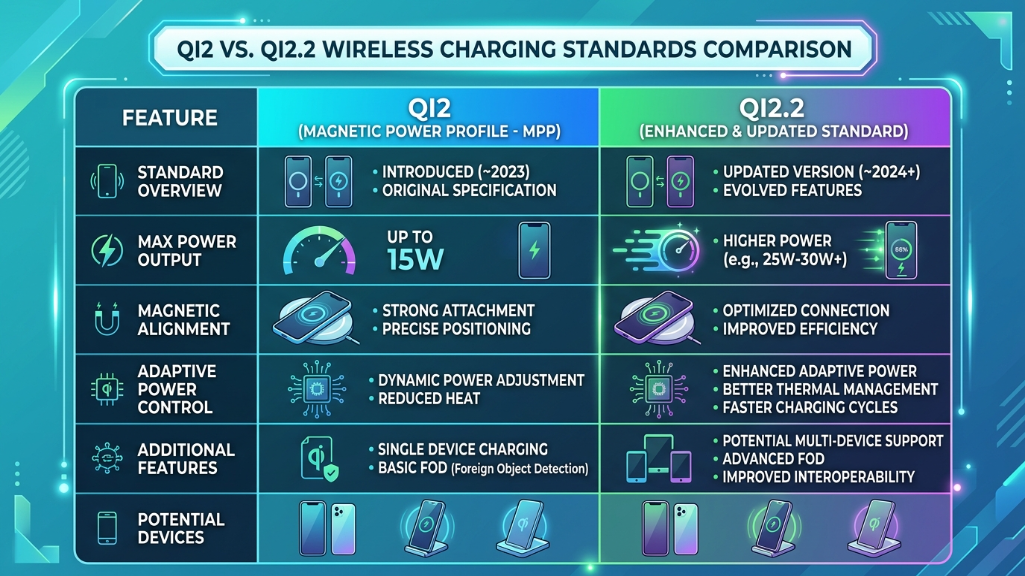
The table below is based on WPC official technical specifications and 2026 market test data:
| Comparison Aspect | Qi (Original) | Qi2 (v2.0) | Qi2.2 (v2.2.1 / Qi2 25W) | MagSafe (Apple Proprietary) |
|---|---|---|---|---|
| Max Wireless Power | 5–15W (device dependent) | 15W | 25W | 25W (iPhone 17 only) |
| Magnetic Alignment | None | MPP 1.0 | MPP 2.0 (stronger neodymium magnets) | Apple proprietary magnetic ring |
| Adaptive Thermal Management | None | Basic FOD detection | APC real-time power negotiation | Partial support |
| Open Ecosystem | ✅ All brands | ✅ All brands | ✅ All brands | ❌ Apple only |
| Certification Body | WPC | WPC | WPC independent labs | Apple MFi program |
| Backward Compatibility | — | ✅ Compatible with Qi devices | ✅ Compatible with Qi2 and Qi devices | ❌ Not compatible with Android |
| Peak Temperature Performance | Baseline | ~10% lower than Qi 15W | ~15% lower than Qi2 15W | Comparable to Qi2 |
| Official Release | 2010 | 2023 | July 2025 | 2020 (iPhone 12) |
| Charge Time 0→50% | ~60–90 min | ~50–60 min | ~30 min | ~35 min (iPhone 17) |
Data Sources: Wireless Power Consortium official technical whitepaper, UGREEN 2026 real-world tests
Device Compatibility: Which Standard Does Your Customers’ Phone Support?
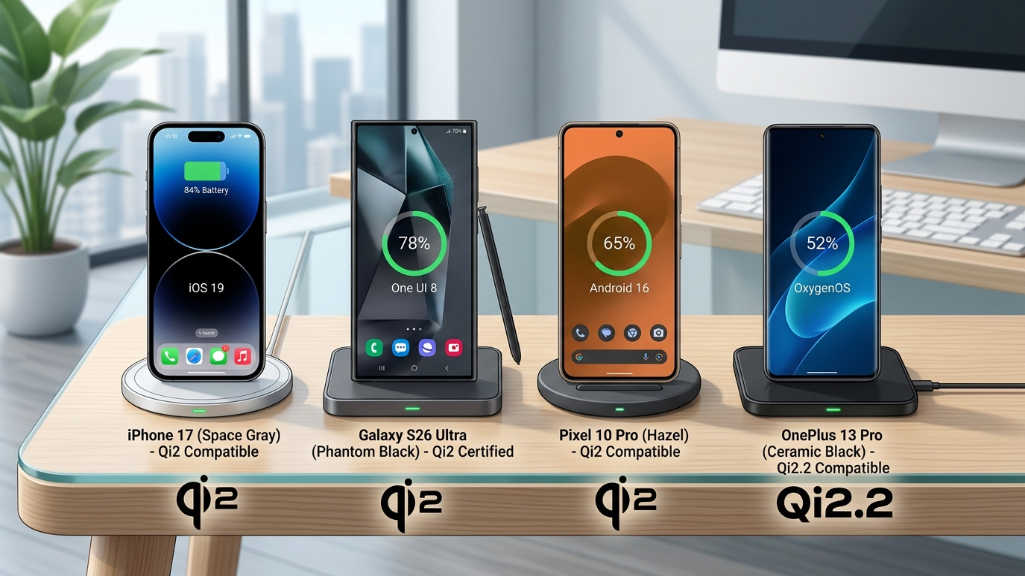
This is the most common procurement pitfall. Supporting a Qi2.2 charger does not mean the device can actually reach 25W output—these are two separate issues.
| Device Model | Max Wireless Charging | Supports Qi2.2 25W | Magnetic Alignment Method | Notes |
|---|---|---|---|---|
| iPhone 17 / 17 Pro | 25W | ✅ Fully supported | Built-in MagSafe ring | Must use Qi2.2 certified charger |
| iPhone 16 / 16 Pro | 25W (MagSafe) / 15W (Qi2) | ⚠️ Partial support | Built-in MagSafe ring | Non-Apple certified chargers capped at 15W |
| iPhone 15 Series | 15W | ❌ Not 25W | Built-in MagSafe ring | Qi2.2 charger throttles to 15W |
| Samsung Galaxy S25 | 15W (Qi2) | ❌ Not 25W | Wireless; no magnetic alignment ring | Requires magnetic case |
| Samsung Galaxy S26 | 25W (Qi2.2.1) | ✅ Protocol supported | ⚠️ No built-in magnetic ring | Stability drops without magnetic case |
| Google Pixel 9 Pro | 15W (Qi2) | ❌ Not certified | Requires magnetic case | Firmware update possible Q3 2026 |
| Mainstream Bluetooth earbuds / watches | <5W | ❌ Not applicable | No magnetic alignment | Qi2.2 charger throttles |
Procurement insight: If your end customer devices are mostly iPhone 16 and below or Android, Qi2 is sufficient and Qi2.2 premium cannot yet be justified. However, if customers are in a device upgrade cycle or your contract spans 2026–2027, Qi2.2 should be prioritized. Your guide to 15W Magnetic Wireless Chargers: Maximum Performance and Safety.
Certification Verification: The Most Overlooked Procurement Red Line

A public secret in wireless charging: “Qi2.2 compatible” and “Qi2.2 certified” may look identical on product pages but mean very different things.
True Qi2.2 certified products must pass safety, interoperability, and thermal management tests at WPC-authorized independent labs, and have a Qi ID retrievable in the WPC database. Only then can manufacturers use the official Qi2 or Qi2 25W logo on packaging.
“Qi2.2 compatible” has no legal binding—it may only indicate physical compatibility with Qi2.2 devices, without verified power output, thermal protocol, or FOD detection. WPC warns that non-certified products carry high-temperature risks, potentially causing third-degree burns—direct product liability risk for corporate buyers.
Verification Steps: Request the full Qi ID from the supplier sample and check it in the WPC certified product database. If the Qi ID is missing or cannot be found, all certification claims are unreliable.
Vertical Scenario Selection: Standard Choice Logic for Different B2B Deployments
Technical specs answer “can it work?”; scenario adaptation answers “is it worth buying?”
Hotels & Hospitality: Bedside charging does not require extreme power—guests typically charge overnight, making 15W Qi2 sufficient. Durability and multi-device compatibility are key. Qi2’s backward compatibility is an advantage; Qi2.2 premium offers minimal tangible benefit here.
Enterprise Offices & Hot-Desking: This is Qi2.2’s most convincing B2B use case. Employee device cycles align with corporate IT procurement. Once iPhone 17 or 25W-capable Android flagship phones become standard, Qi2.2 charging stations deliver full value. Desktop integrated charger upgrades are costly; selecting Qi2.2 once avoids redo costs 18 months later.
Retail Counters & POS Displays: Quick top-up matters more than deep charging. Customers spend 10–15 minutes at counters; Qi2.2 25W can recharge ~20% in that time, while Qi2 reaches ~12%. This affects user experience feedback and makes retail chains ideal Qi2.2 targets.
Inventory Strategy: Qi2 vs Qi2.2 Stock Allocation for 2026
| Procurement Scenario | Suggested Qi2 Allocation | Suggested Qi2.2 Allocation | Core Rationale |
|---|---|---|---|
| Hotels / B&B (installed base) | 70% | 30% | Mixed device types; prioritize compatibility |
| Enterprise IT (2026 upgrade cycle) | 40% | 60% | Rising iPhone 17 / Galaxy S26 penetration |
| Retail Counters / Experience Stores | 30% | 70% | Quick top-up is the main selling point |
| Promotional / Gifting (short-term) | 80% | 20% | Cost-sensitive; Qi2 price advantage |
| Long-term ODM Contracts (>18 months) | 20% | 80% | Mitigate obsolescence from standard iteration |
| Magnetic Power Banks (mobile) | 50% | 50% | Strong demand across both generations |
WPC disclosed at CES 2026 that global Qi2 devices exceed 1.5 billion, while Qi2.2 adoption is expected to accelerate only in Q3–Q4 2026. Betting fully on Qi2.2 now is aggressive; sticking only to Qi2 is conservative but may cause slow sales. A phased, small-batch approach is recommended.
Total Cost of Ownership: Is Qi2.2 Price Premium Worth It?
Qi2.2 certified products currently carry a 15–25% price premium over equivalent Qi2. This gap will narrow as more certified products enter the market, potentially falling below 10% by early 2027.
Procurement cost is not everything. Non-certified chargers carry post-sale risks, device damage liability, and compliance requirements—hidden costs that appear after contracts are signed. Choosing WPC certified products keeps liability within the standard framework rather than transferring it to your end customers.
Over the long term, APC’s adaptive power control benefits battery health. UGREEN 2026 tests show Qi2.2 peak thermal control is ~15% lower than 15W Qi, meaning enterprise-deployed devices lose battery capacity more slowly over 24 months—a measurable TCO optimization for corporate clients.
Why Factory Choice Determines Certification Reliability
Certification is not just a certificate—it is a full chain from R&D, mold development, to production line consistency. Some buyers find certified products deviate from samples due to outsourced modules instead of in-house design.
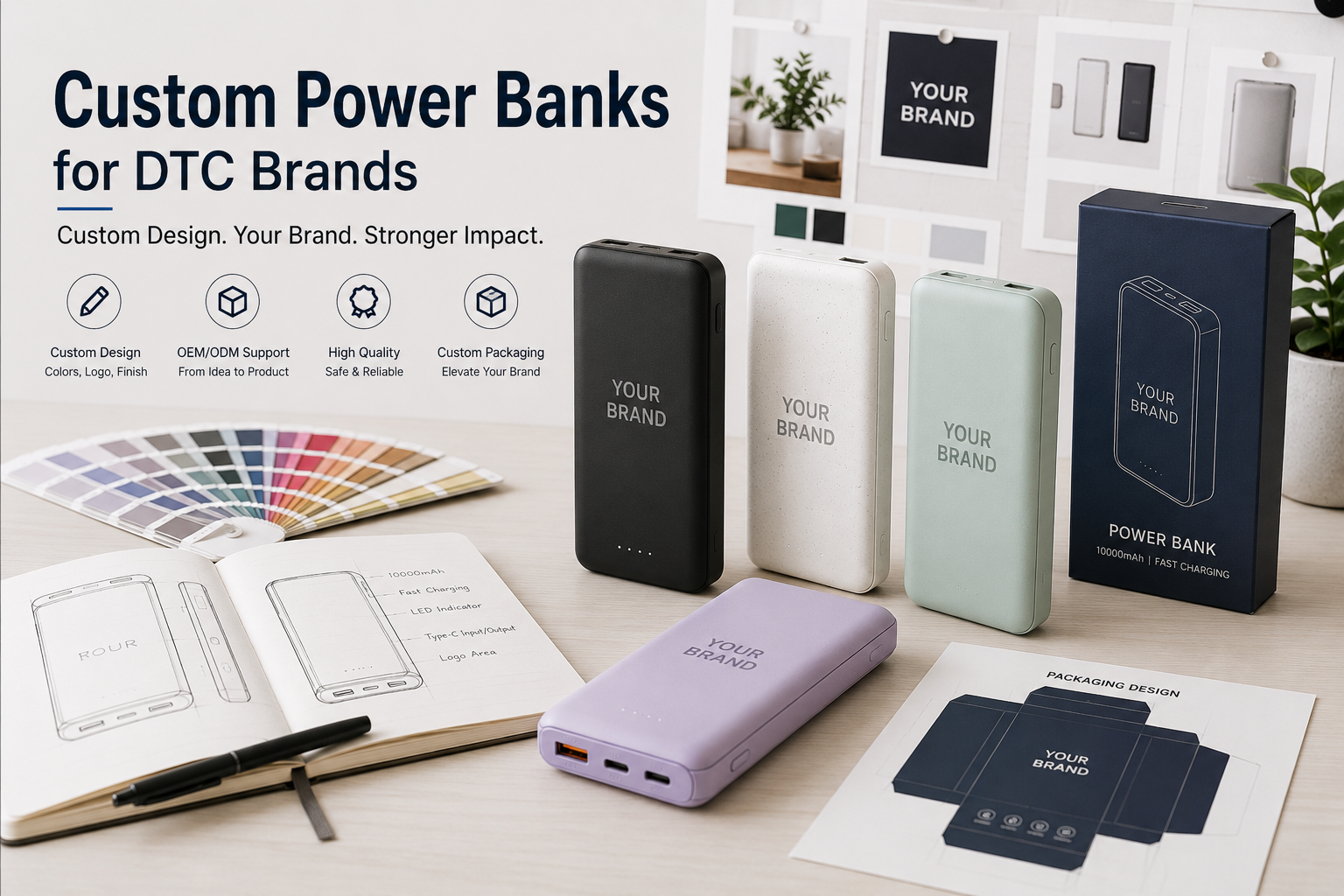
Deep vertical integration factories offer core value. For example, AOVOLT in Dongguan has over 15 years of consumer electronics experience, covering R&D, mold development, injection molding, and hardware integration. Magnetic power banks and fast chargers are its core lines, supporting up to 140W output and full protocol compatibility (PD3.0, PPS, QC3.0, FCP, SCP, AFC, Apple 2.4A, BC1.2). A single product can serve iOS, Android, and Windows fast charging protocols without modification.
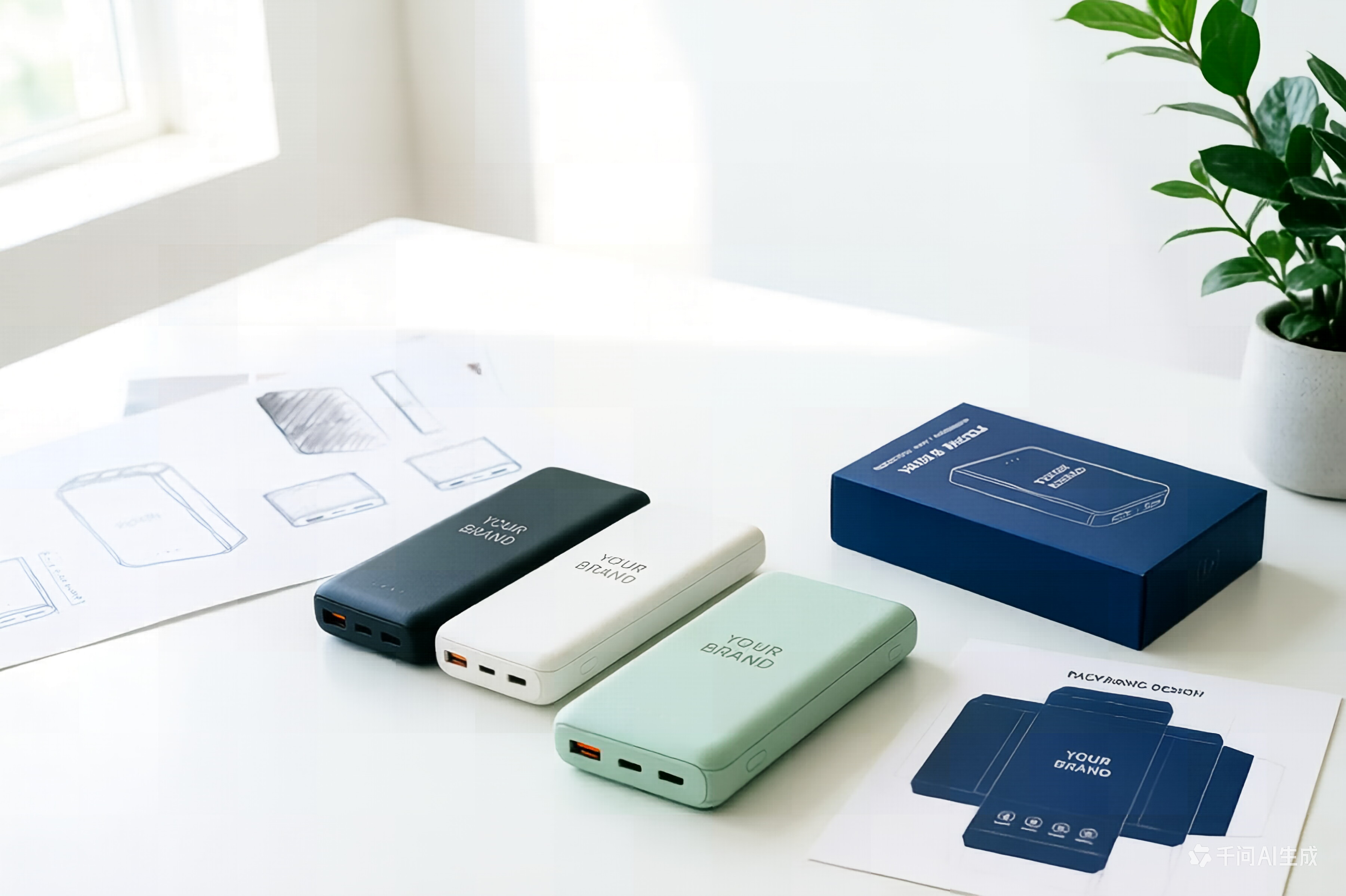
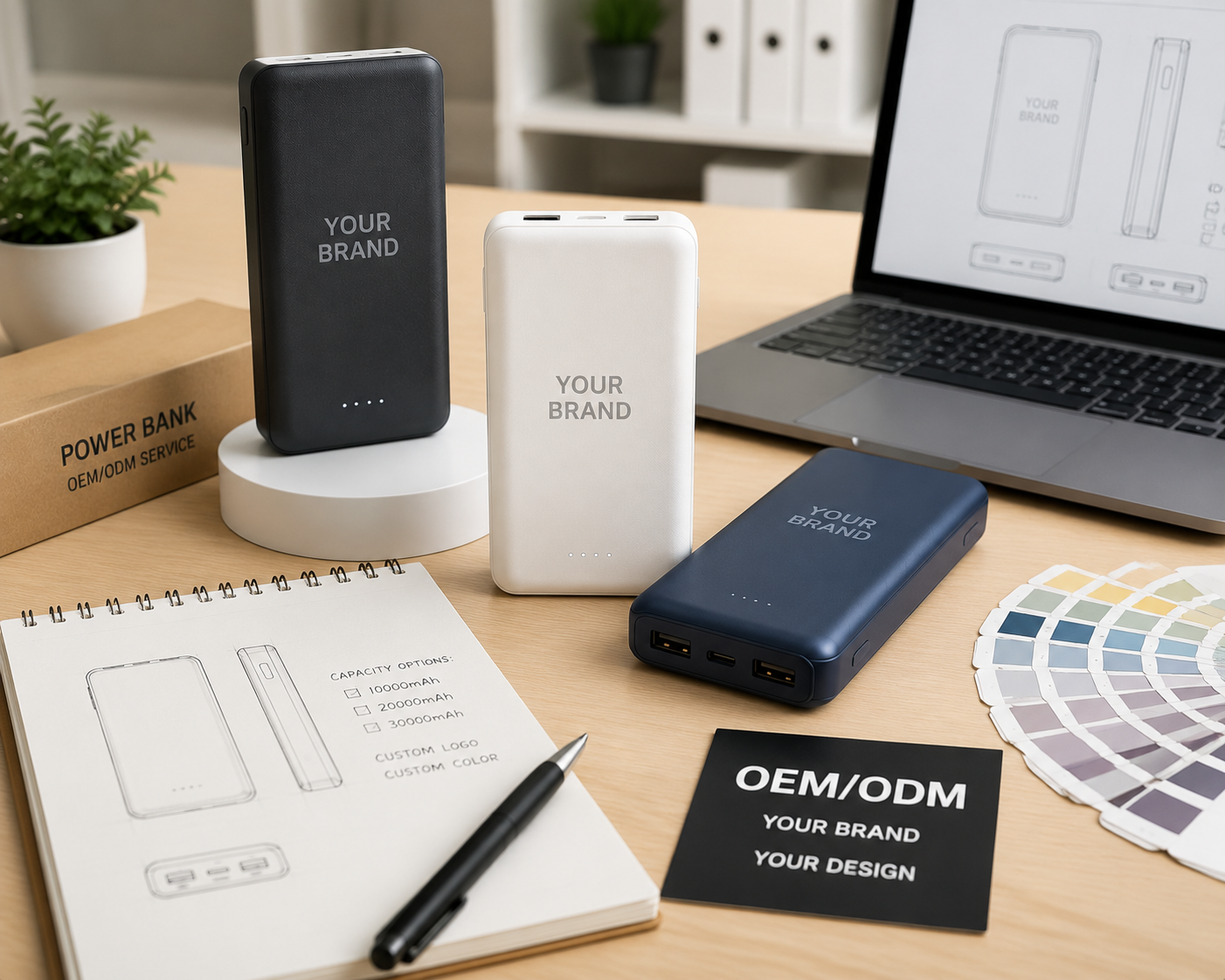
For B2B buyers, AOVOLT’s in-house mold capability provides cost advantage and freedom for customized appearance. In a commoditized market, distinctive design is a fast way for distributors to build channel barriers. AOVOLT has an independent industrial design team that can customize appearance on certified platforms, shortening time-to-market and avoiding duplicate certification costs.
FAQ
Q1: Can Qi2.2 chargers charge older phones that only support Qi?
Yes, but charging speed will revert to the device’s max Qi power. Qi2.2 chargers are downward compatible and will negotiate optimal power automatically without risk of damage, but cannot trigger 25W output.
Q2: How to verify supplier certification for bulk Qi2.2 purchases?
Visit WPC certified product search, input the supplier-provided Qi ID or brand/model, and check that the certification status is “Active” and dated after July 2025. If no result is found, request the original WPC test report.
Q3: Can Android phones without magnetic rings reach 25W with Qi2.2 chargers?
Most likely not stable. 25W output depends on MPP 2.0 magnetic alignment. Without it, APC reduces power to control heat. Recommend using a magnetic case or planning procurement for Qi2 15W.
Q4: MOQ and certification cost for OEM Qi2.2 power banks?
Typical ODM MOQ is 500–2000 pcs depending on appearance customization. If using an existing certified platform with appearance changes, certification cost is shared by the factory. For structural changes, WPC lab certification takes 6–10 weeks, with cost sharing negotiated.
Q5: Are there travel restrictions for Qi2 vs Qi2.2 magnetic power banks?
Air travel restrictions depend on battery capacity (Wh), not wireless standard. Both follow the same rules: under 100Wh carry-on allowed, 100–160Wh airline approval needed, over 160Wh cabin carry generally prohibited. Recommended capacity for travel: ≤20,000mAh (~74Wh).
Conclusion: Standard Selection Is Essentially a Timing Decision
Qi2.2 will not replace Qi2 in 2026, but it is redefining high-end wireless charging benchmarks. Similar to USB-C replacing Micro-USB, the transition will not wait for everyone to be ready.
For B2B buyers, the key actions now are: understand your customers’ device mix, establish a dual-standard inventory model, and partner with a manufacturer that offers full-chain support from certification traceability to appearance customization. The technical standard window is 18–24 months. Capturing product positioning within this window turns competitor switching costs into your channel barrier. For your next wireless charging product batch, AOVOLT’s technical platform and customizable production line are worth shortlisting.
References:
Wireless Power Consortium – Qi Wireless Charging Standards Overview