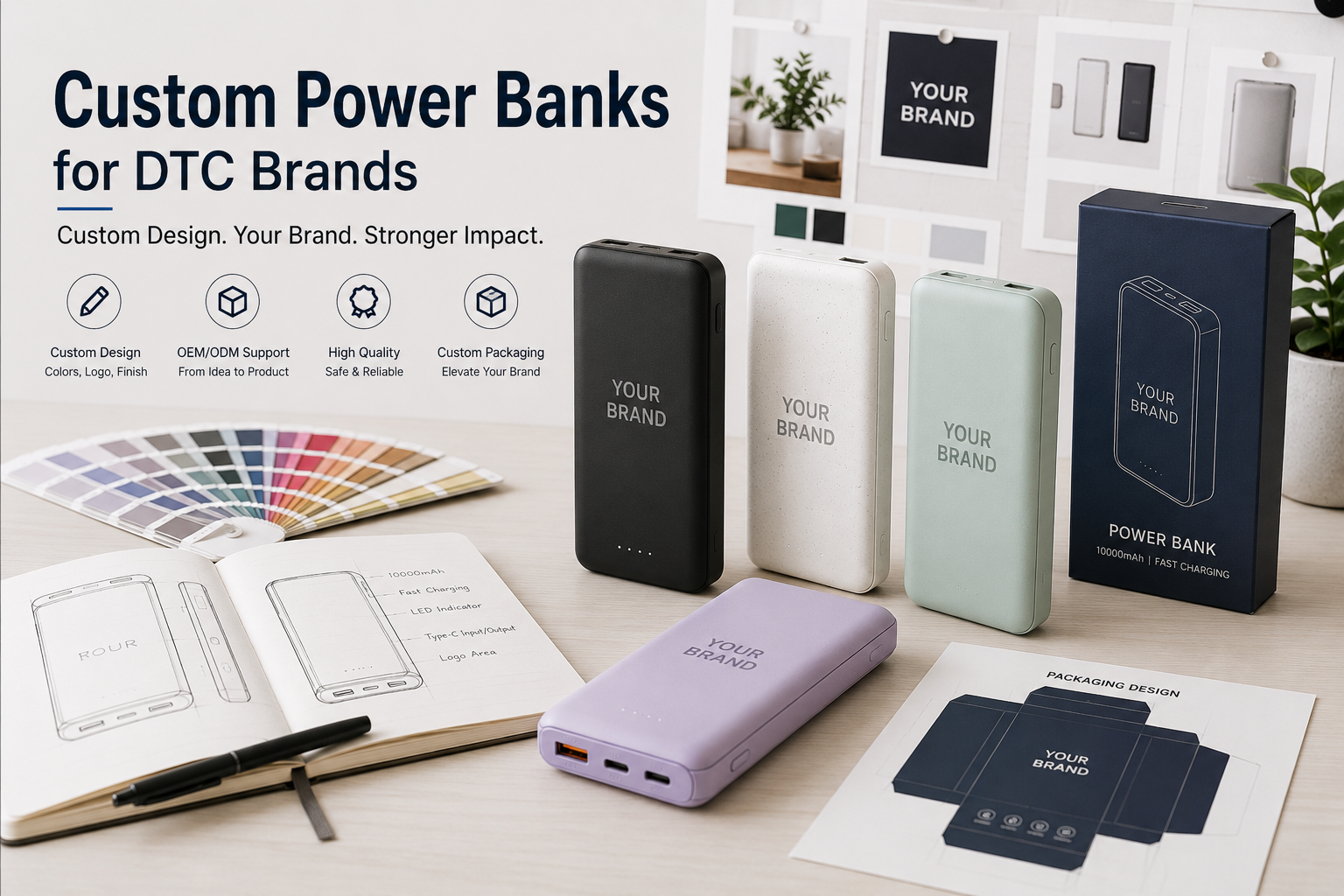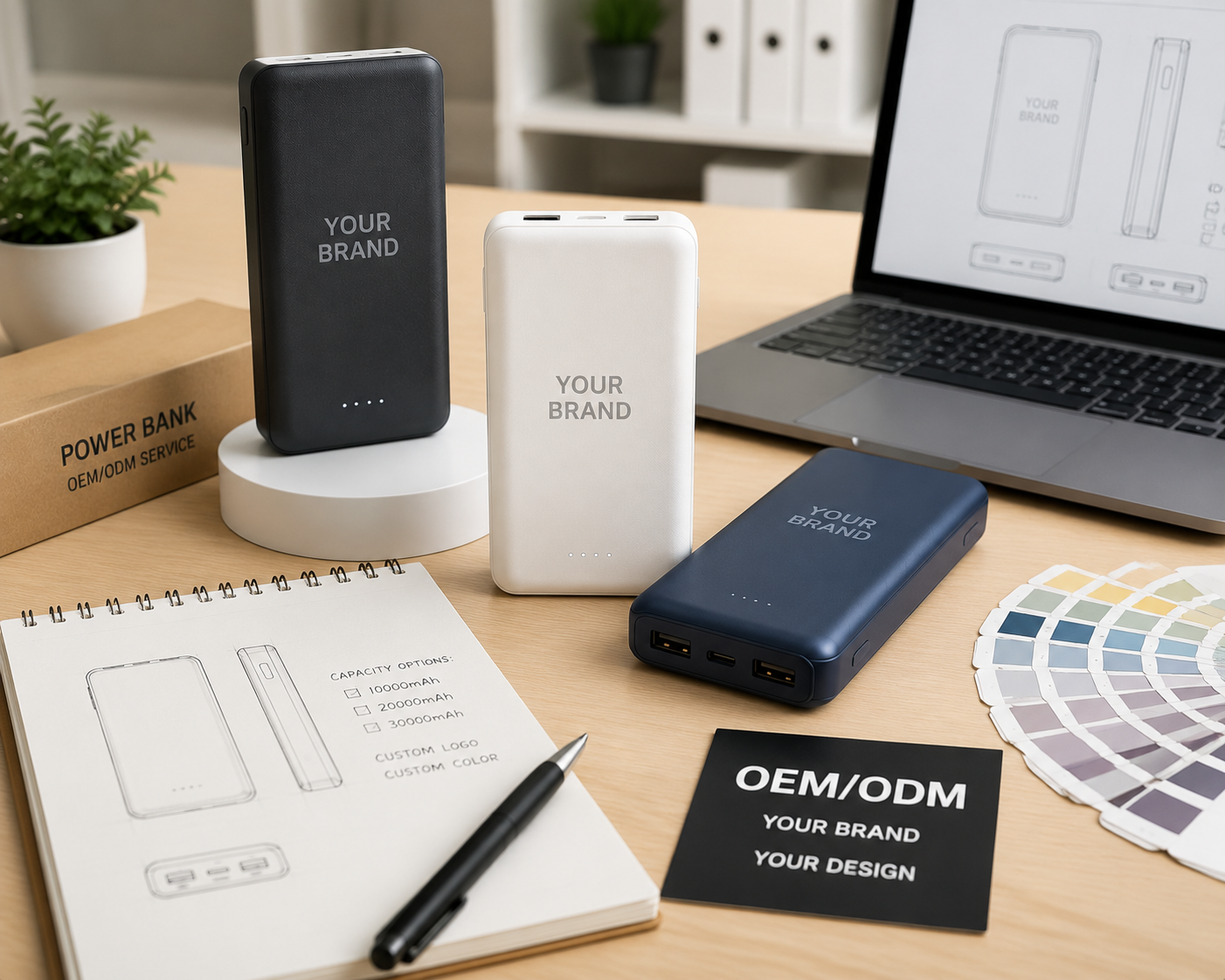

Many buyers rush into mass production without fully validating their product. The result? Unexpected defects, mismatched specifications, or packaging issues that cost both time and money.
This is exactly why power bank OEM sample development plays a decisive role. It allows brands to test performance, verify design details, and align expectations with manufacturers before committing to large-scale orders.
If you're unsure about a supplier’s real capabilities, reviewing their About Us page can help you understand factory experience, production capacity, and technical background before starting the sampling process.
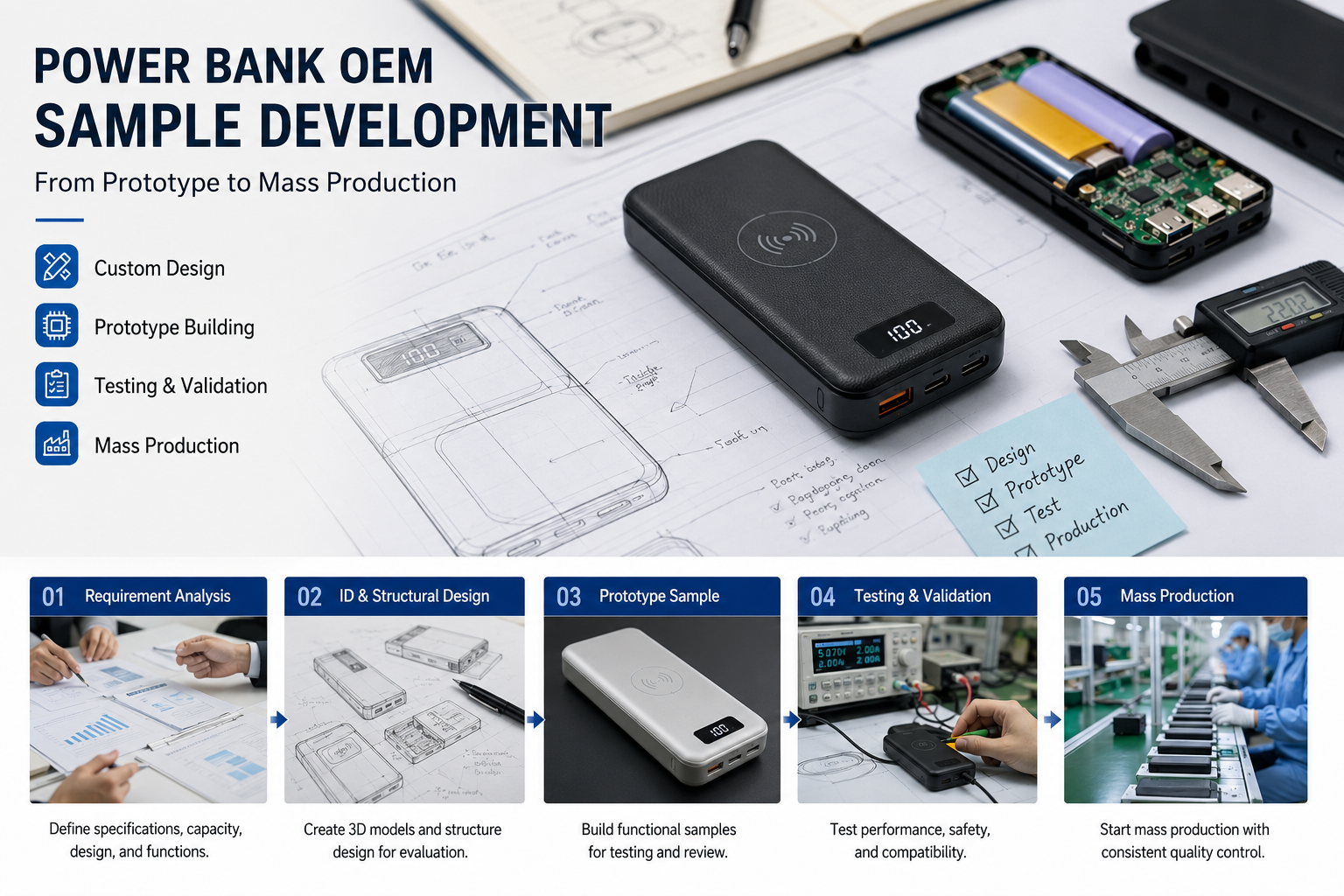
What Happens During OEM Sample Development
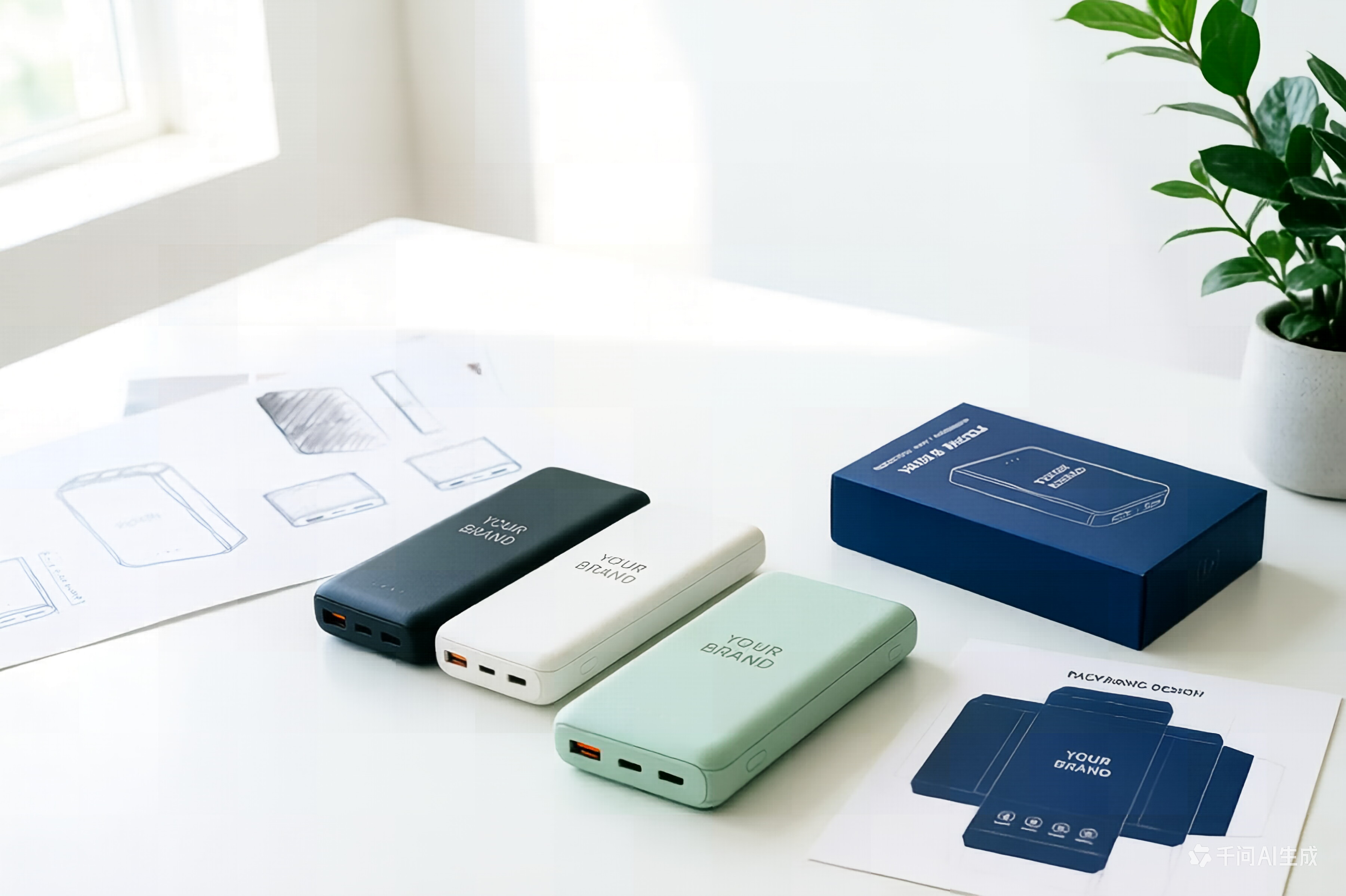
The power bank OEM sample development process is not just about producing a prototype. It involves multiple stages, each affecting final product quality and consistency.
1. Requirement Definition
- Capacity (5,000mAh – 30,000mAh)
- Output power (10W – 100W+)
- Port configuration (USB-A, USB-C, wireless)
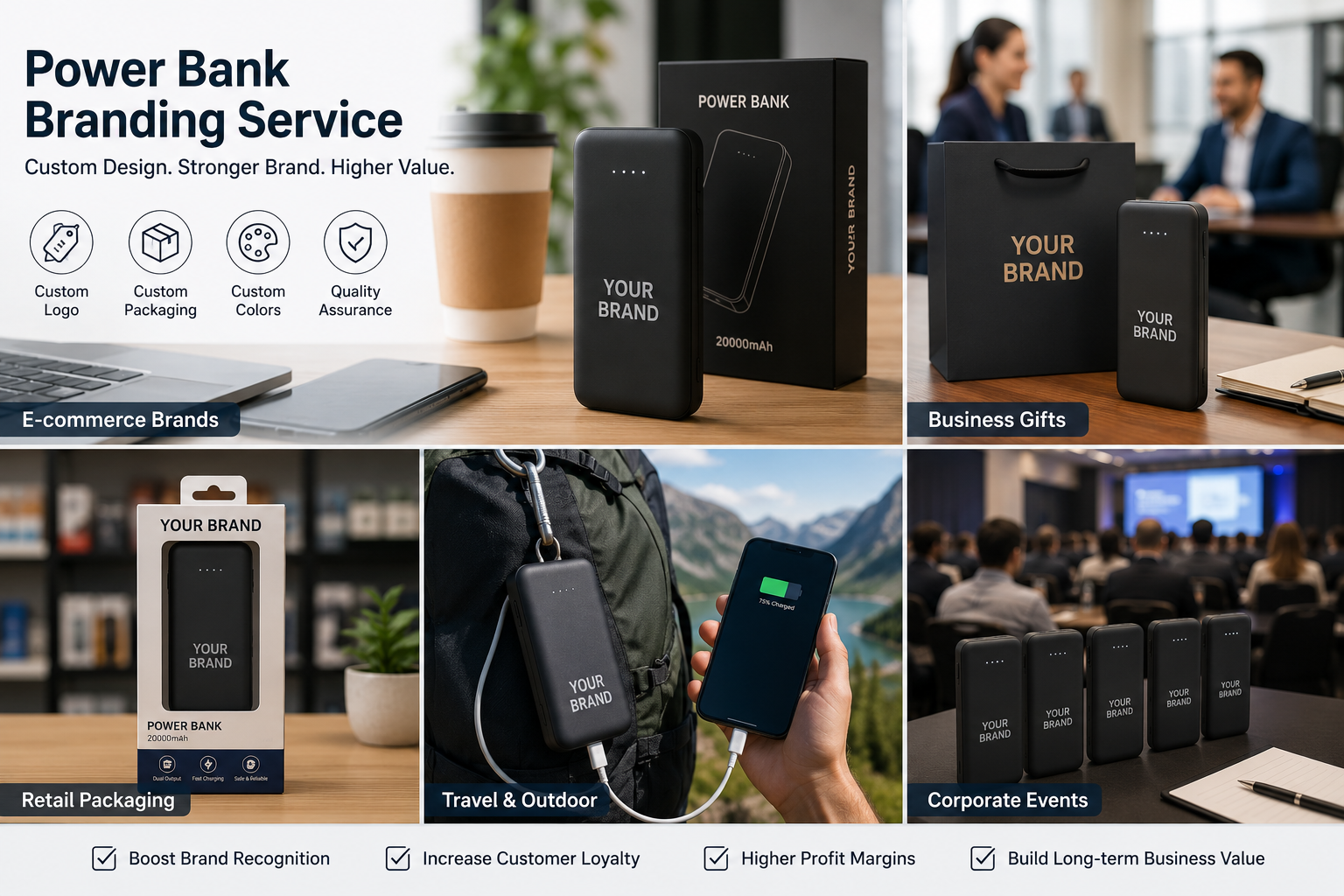
- Branding requirements (logo, color, packaging)
To match your requirements with real models, it’s useful to explore the product page and compare specifications before confirming sample details.
2. Engineering & Design
At this stage, manufacturers create:
- Internal PCBA layout
- Battery configuration
- Housing design
- Heat dissipation structure
Small structural differences can significantly impact charging efficiency and long-term stability.
3. Prototype Production
The first physical result of power bank OEM sample development is the prototype.
This sample is used to verify:
- charging performance
- build quality
- interface compatibility
- physical dimensions
4. Testing & Validation
| Test Type | Purpose | Typical Result |
|---|---|---|
| Output Test | Voltage stability | ±5% variation |
| Cycle Test | Battery lifespan | 500–800 cycles |
| Thermal Test | Overheating control | <45°C |
| Drop Test | Physical durability | No structural damage |
If you want to understand more about testing standards and product usage concerns, checking the FAQs page can provide additional practical insights.
Common Issues Found During Sample Development
Even experienced buyers encounter problems during sampling:
Inconsistent Output
- caused by unstable PCBA design
- low-quality battery cells
Overheating
- poor internal layout
- insufficient heat management
Design Mismatch
- incorrect dimensions
- packaging not aligned with product
These issues are exactly why skipping power bank OEM sample development is risky.
How Long Does Sample Development Take?
Typical timeline:
- Design confirmation: 2–3 days
- Prototype production: 5–10 days
- Testing & revision: 3–7 days
Total: 10–20 days
Cost Structure of OEM Samples
Sample cost varies depending on customization level:
| Level | Cost Range | Description |
|---|---|---|
| Standard Sample | Low | Existing model with logo |
| Semi-Custom | Medium | Minor structural changes |
| Full Custom | High | New design + packaging |
Real-World Application Scenarios
Brand Owners
- validate product before launching
- ensure branding consistency
E-commerce Sellers
- test market demand
- optimize product listings
Distributors
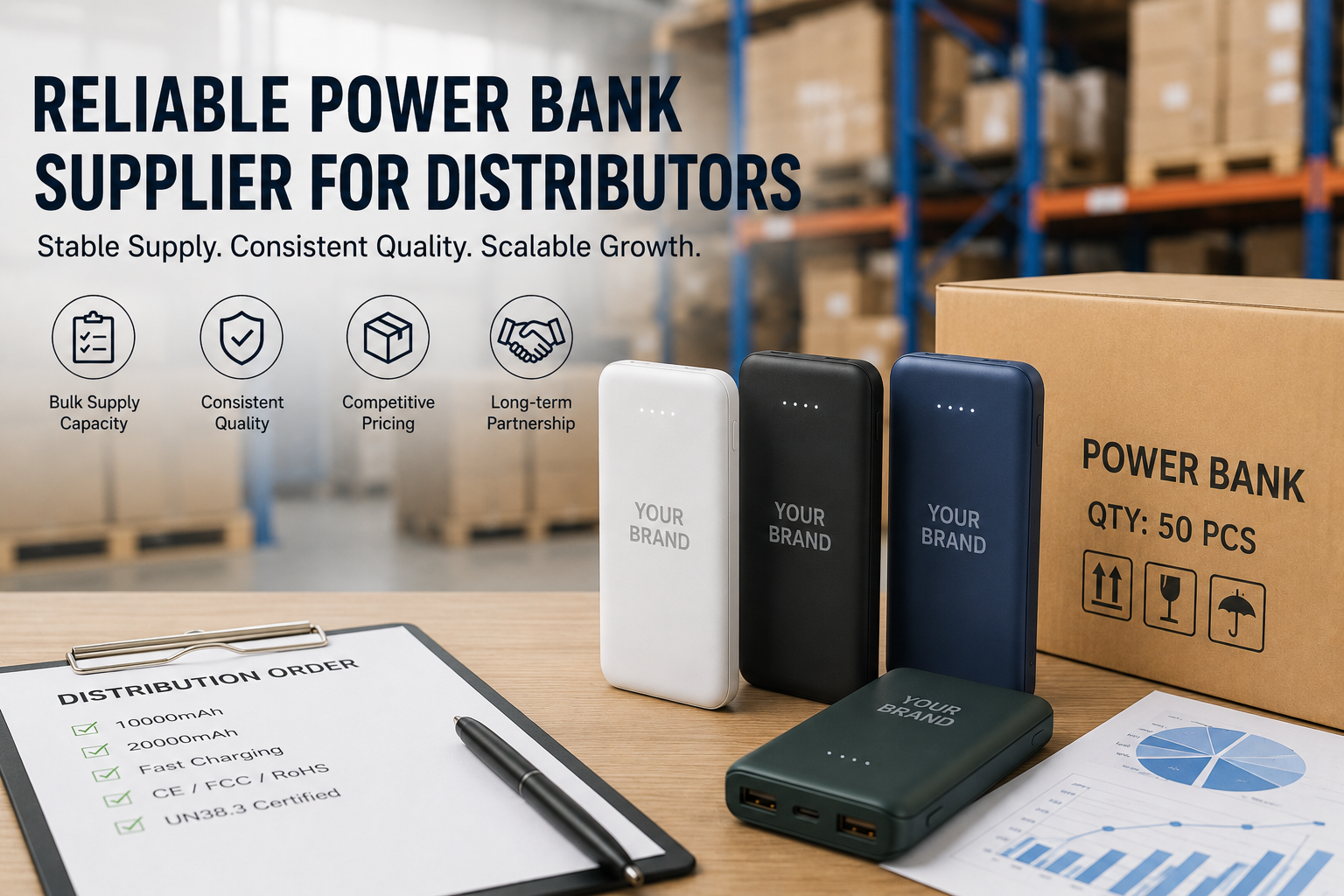
- confirm quality before bulk purchase
Corporate Buyers
- verify gift packaging and product performance
Each of these relies on power bank OEM sample development to reduce risk.
How to Evaluate a Supplier During Sampling
When working with a supplier, pay attention to:
- response speed
- ability to revise samples
- test reports provided
- communication clarity
A professional supplier treats power bank OEM sample development as a structured process—not a one-time task.
Practical Tips for Buyers
- Always request at least 2–3 sample iterations
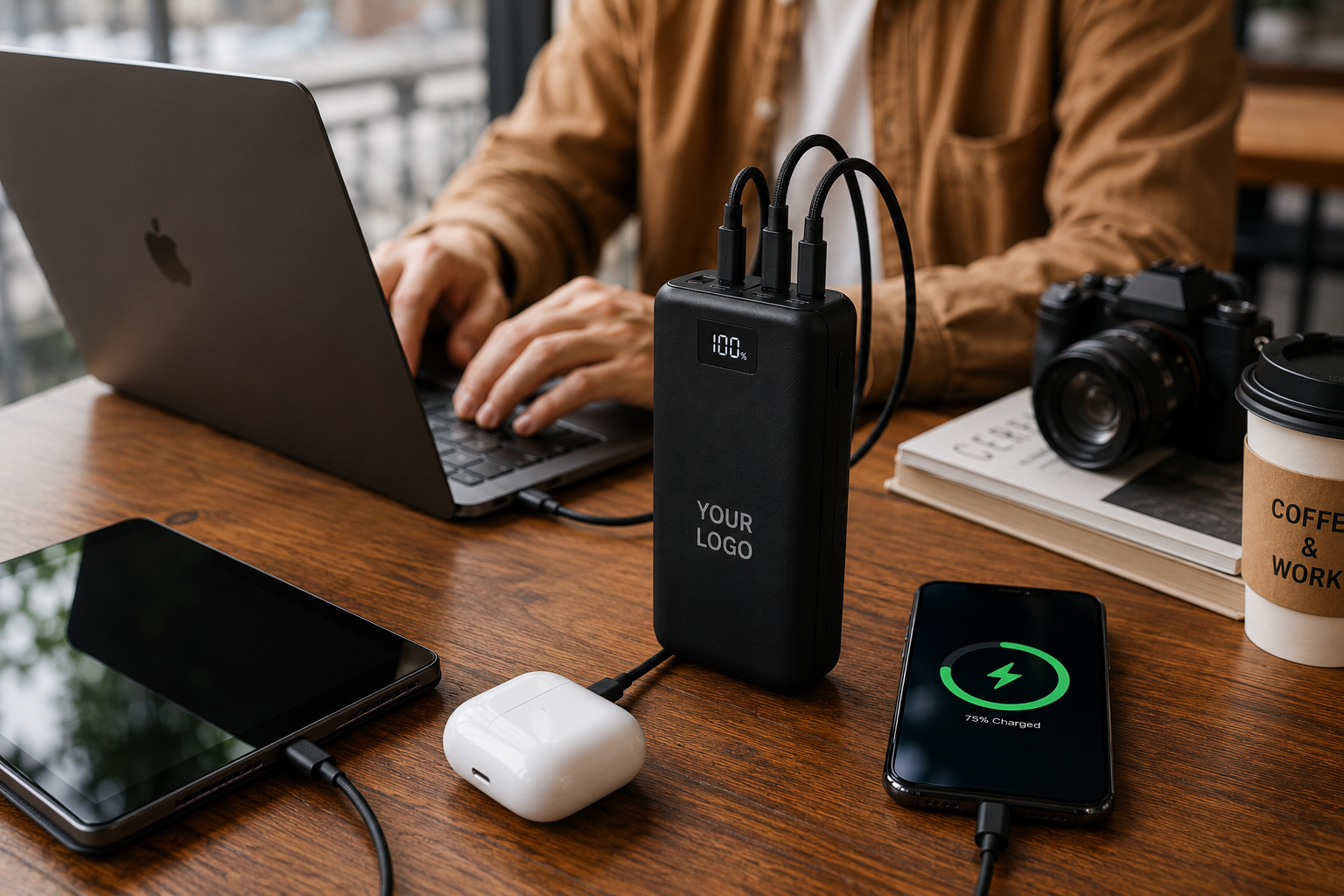
- Test with real devices (phones, tablets, laptops)
- Verify certifications (CE, FCC, UN38.3)
- Check packaging fit and durability
If you are ready to move forward after sampling, you can directly contact the team to discuss bulk production timelines and pricing details.
FAQ
Q1: Can I skip sample development to save time?
No. Skipping power bank OEM sample development increases risk of defects and delays.
Q2: How many sample revisions are needed?
Typically 1–3 rounds depending on complexity.
Q3: Are samples identical to mass production units?
Yes, if standardized production is followed.
Q4: Can packaging be tested during sampling?
Yes, and it should be verified before mass production.
Final Thoughts
A successful product launch rarely happens by chance. It is the result of careful validation, testing, and iteration.
Power bank OEM sample development is not optional—it ensures reliability, consistency, and scalability.
Before moving into mass production, take the time to evaluate suppliers, verify samples, and confirm every detail. This step often determines whether your product succeeds—or fails—in the market.