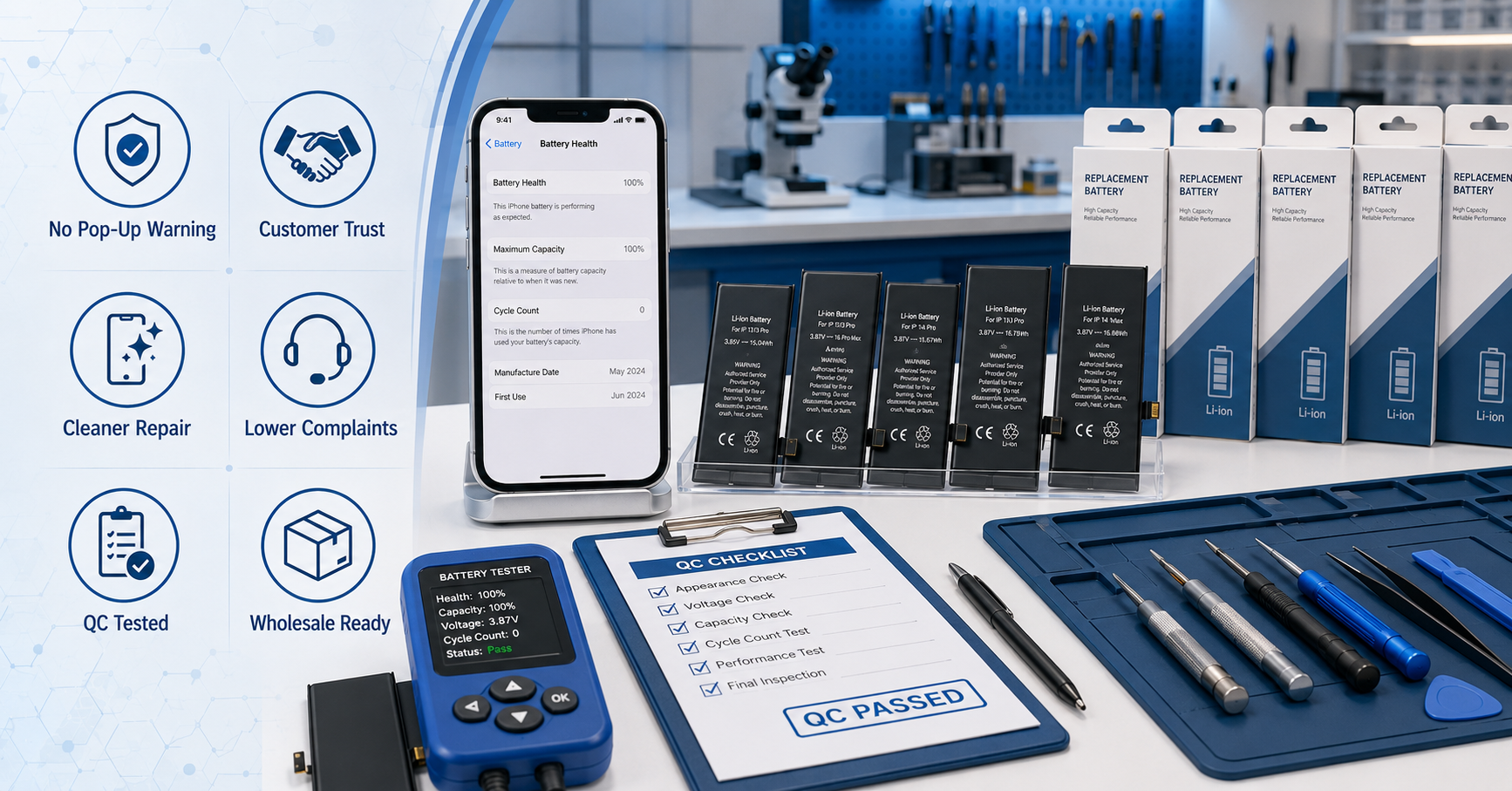

For repair shops and refurbishers, searching for an iPhone no pop up battery supplier is not only about finding a battery that fits the phone. The real goal is reducing after-repair friction. A replacement battery that triggers warning messages, unclear Battery Health information or service-history confusion can turn a simple repair into a customer support problem. This is especially important for newer iPhone models, where customers expect the device to look and behave as close to factory condition as possible after service.
Why No Pop-Up Batteries Matter in iPhone Repair
The real buying question is not simply: “Does this battery fit?”
A better question is:
Will this replacement battery help the phone present itself properly after service?
Will it reduce customer questions after installation?
Will it be practical to stock, install and resell?
Will it lower the risk of returns, complaints and warranty claims?
That is the lens most sourcing managers, refurbishers and repair-shop owners use when evaluating lithium-ion replacement batteries for iPhone service work.
A battery may physically fit the phone and still create problems after installation if the customer sees warning prompts, Battery Health uncertainty or service-history alerts.
For repair shops, that means extra explanation time.
For refurbishers, that means resale risk.
For wholesalers, that means downstream complaints.
For e-commerce sellers, that means negative reviews and return pressure.
What Does “No Pop Up” Mean in the Repair Market?
The phrase no pop up is workshop language, not a formal engineering specification.
In practical repair use, buyers usually mean a replacement iPhone battery designed to reduce or avoid visible battery-related warning prompts after installation.
However, buyers should be careful.
A no pop-up battery is not automatically the same as an original Apple part.
The final result can depend on the iPhone model, iOS version, installation method, battery management design and device condition.
This is why professional buyers should avoid suppliers that promise a universal result for every phone.
In real repair work, no pop-up performance is usually conditional, not absolute.
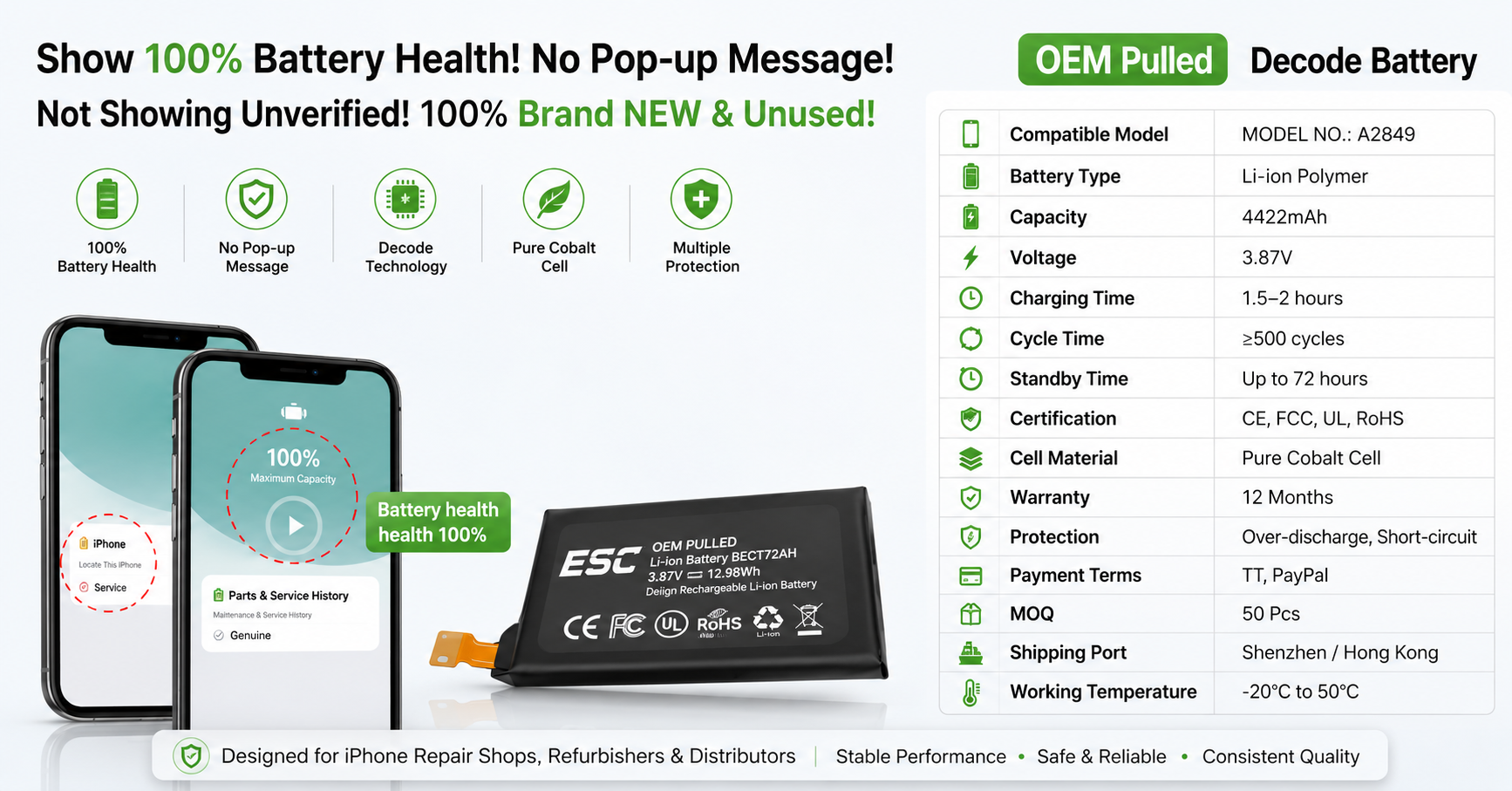
The same caution applies to phrases such as 100% Battery Health, Show 100%, OEM pulled and genuine battery display.
These can be useful selling points, but they should be verified through real-device testing before bulk ordering.
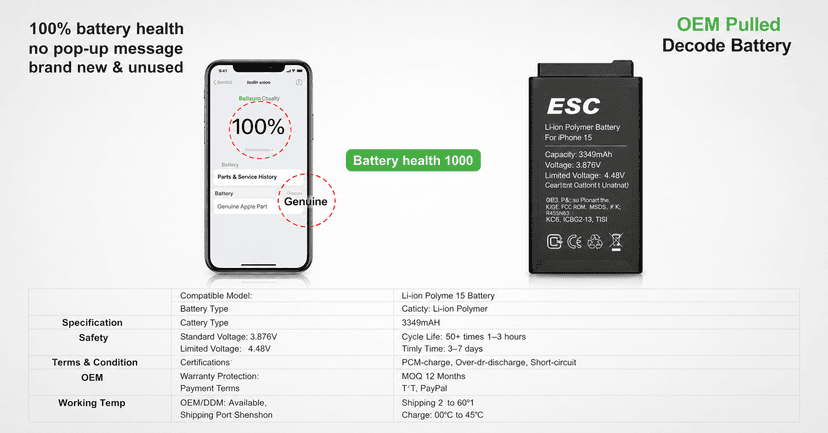
Product Example: What Buyers Can Learn from a DJ-IPH15 Battery Specification
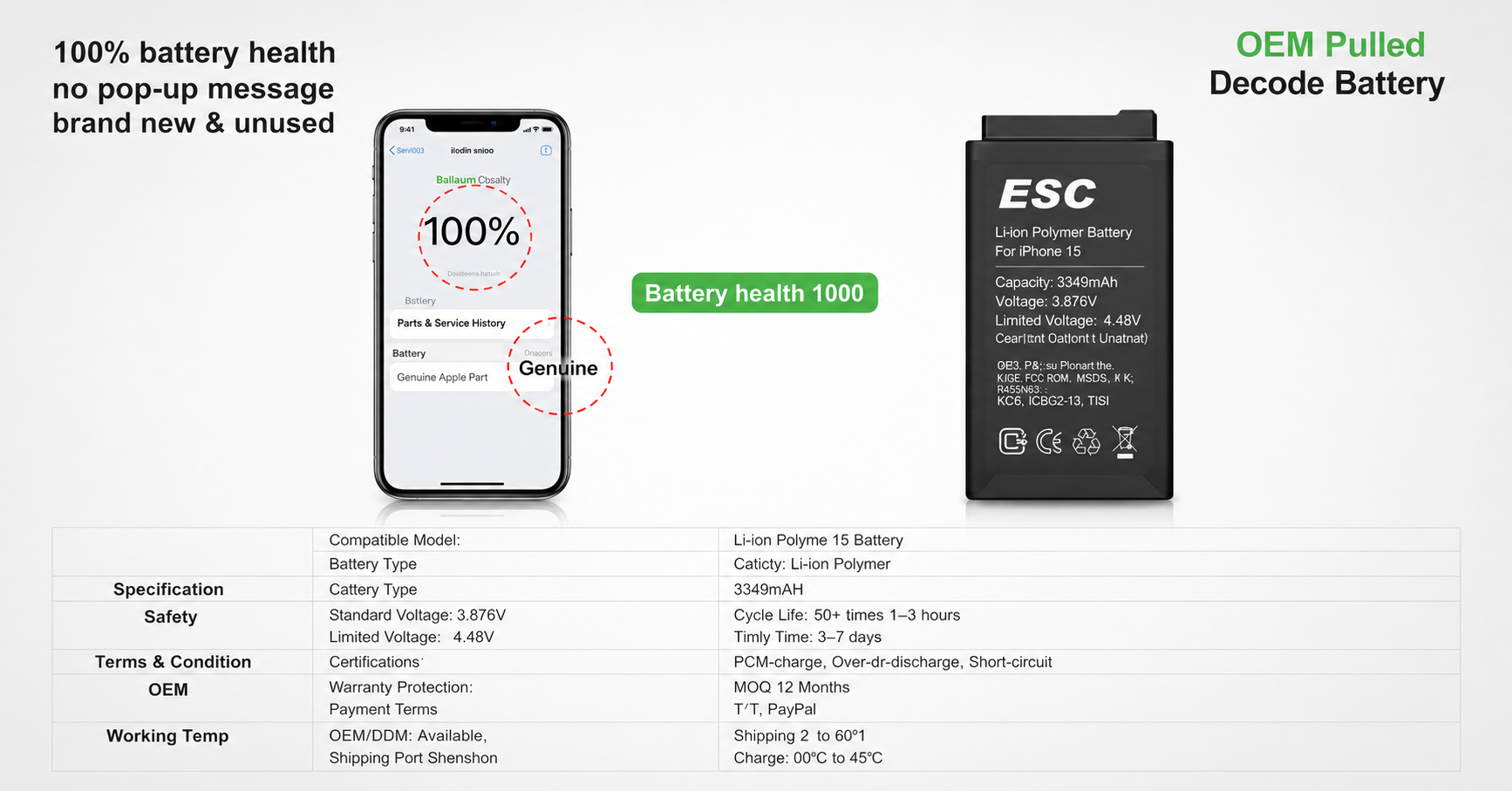
The product data points to a DEJI-marked replacement battery, model ESC-IPH15, with a printed capacity of 3349 mAh and a standard voltage of 3.876 V.
The packaging and phone-screen images suggest that this product is positioned for iPhone repair, refurbishing and parts resale, rather than casual end-user replacement.
Visible specifications include:
Battery type: Li-ion
Model: ESC-IPH15
Printed capacity: 3349 mAh
Standard voltage: 3.876 V
Charge limit voltage: 4.48 V
Reference standard: GB31241-2014
Additional visible marking: TIS.2217-2548
These details give buyers a starting point, but they should not be treated as the whole quality picture.
Actual runtime can vary depending on software load, screen brightness, signal strength, charging behavior, motherboard condition and user habits.
Key Buyer Goals for iPhone No Pop-Up Batteries
When buyers compare replacement batteries for iPhone repair, the practical goals are usually clear.
Restore usable battery capacity after the original battery has degraded.
Reduce warning-message complaints after installation.
Improve the customer-facing repair experience.
Keep stock management simple for repair counters and refurbishing lines.
Reduce returns caused by fast drain, Battery Health complaints or service-history confusion.
Support repeatable installation results across multiple devices.
A good iPhone no pop up battery supplier should help buyers solve these operational problems, not only provide a battery with an attractive capacity label.
Why Specifications Alone Are Not Enough
Printed battery data is useful, but it does not prove real repair performance.
A battery can show a good capacity figure on the label and still cause problems if the connector fit is weak, the protection board is unstable, the battery data behavior is inconsistent or the pack fails under real use.
Important checks include:
Capacity consistency
Internal resistance
Charging behavior
Discharge stability
Standby drain
Connector fit
Flex cable quality
Protection board design
Battery Health display behavior
Warning-message behavior after installation
A serious repair-shop battery should be tested both electrically and inside real iPhones.
Bench testing alone is not enough.
Where This Type of Battery Fits in the Supply Chain
This kind of battery is mainly suitable for B2B service channels.
Typical buyers include:
Repair shops that need dependable replacement batteries for daily iPhone service.
Refurbishers restoring used phones before resale.
Parts distributors supplying downstream technicians.
Regional resellers who need consistent model labeling and stable repeat orders.
E-commerce sellers selling repair kits or replacement batteries.
Private label buyers building their own battery product line.
The MOQ mentioned in the supplied data is 20 pieces, which suggests a small wholesale order size.
For independent repair shops, this is practical.
It allows buyers to test and stock the product without tying up too much cash in one battery line.
How to Evaluate an iPhone Diagnostic Battery Supplier
Many suppliers can describe themselves as an iPhone diagnostic battery supplier, iPhone no pop up battery supplier or iPhone Show 100% battery factory.
The useful question is what happens after the battery is installed.
Buyers should evaluate suppliers from the repair workflow, not only from the product photo.
Model Clarity
The label DJ-IPH15 suggests iPhone 15 use, but buyers should still confirm the exact compatible model range.
Do not assume compatibility only from the product name.
Ask for supported model numbers before placing an order.
Packaging Consistency
Repair shops and distributors need clear packaging.
Each battery should have stable model labels, barcode information, batch control and easy identification.
Poor labeling creates technician mistakes and inventory confusion.
Safety Documentation
Certification logos are not enough.
Buyers should request actual documentation when needed, especially for regulated markets or export channels.
Relevant documents may include CE, FCC, RoHS, MSDS, UN38.3, PSE, KC, IEC62133 or TISI, depending on market requirements.
Installation Behavior
This is one of the most important checks.
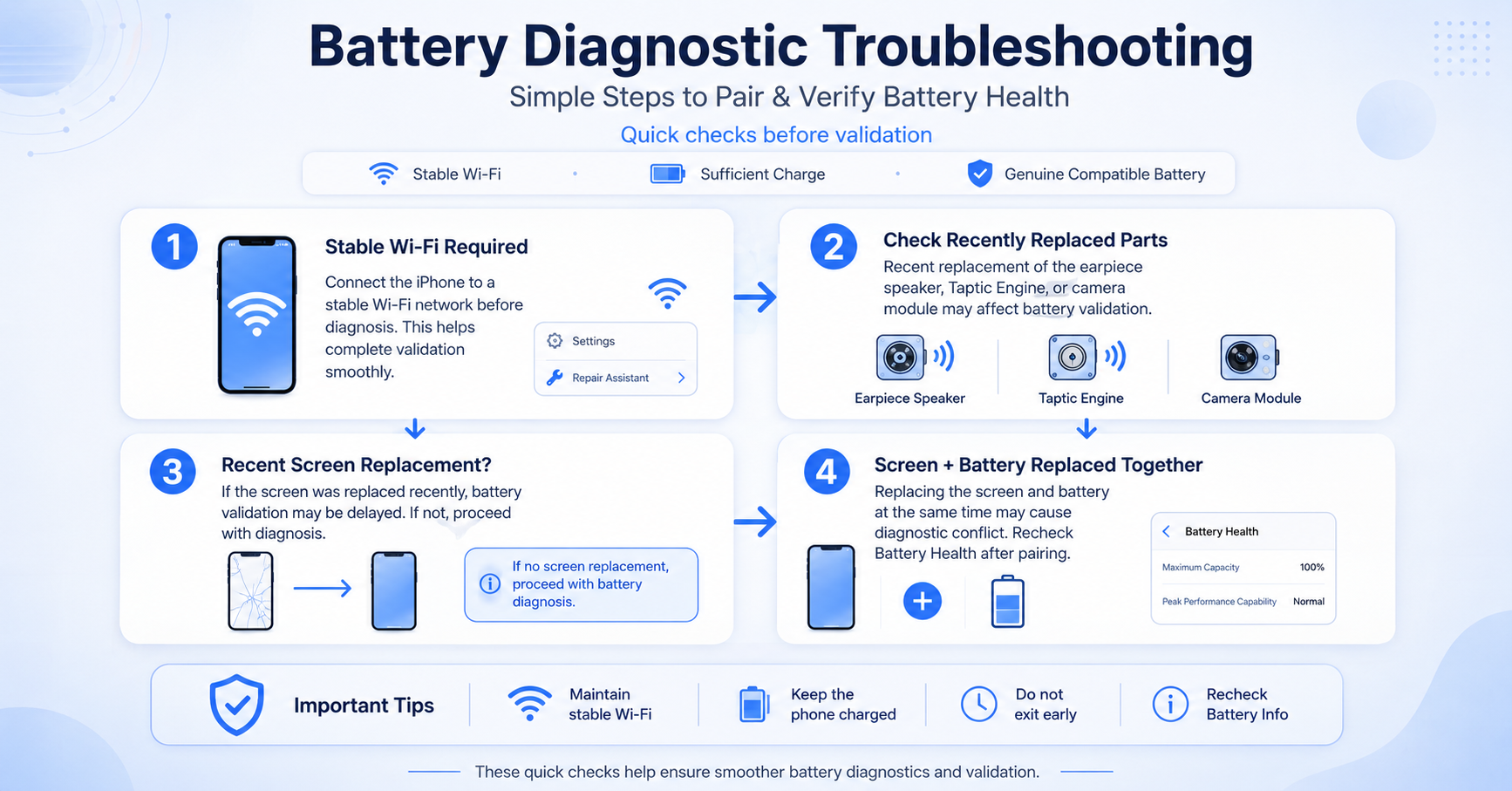
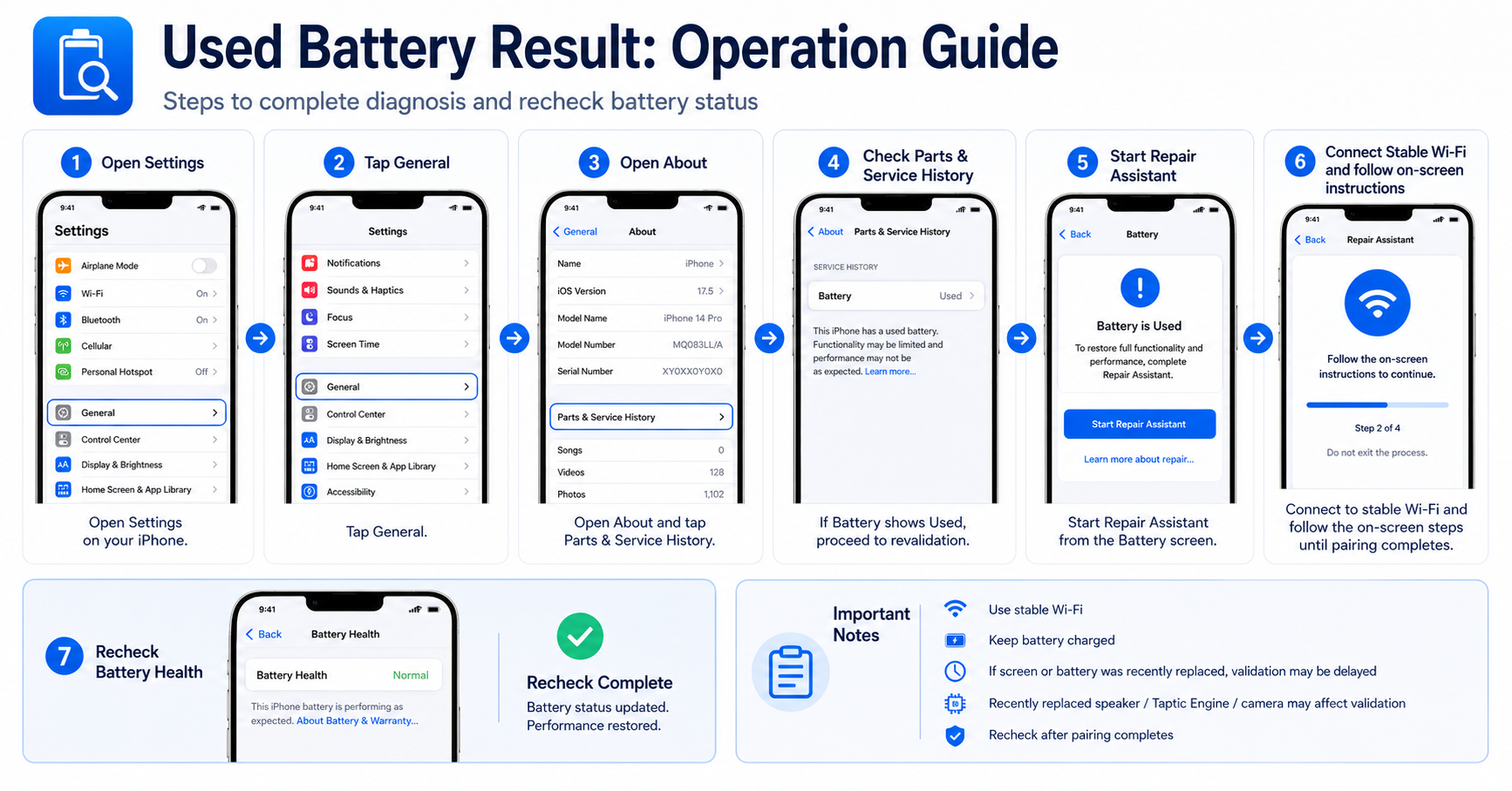
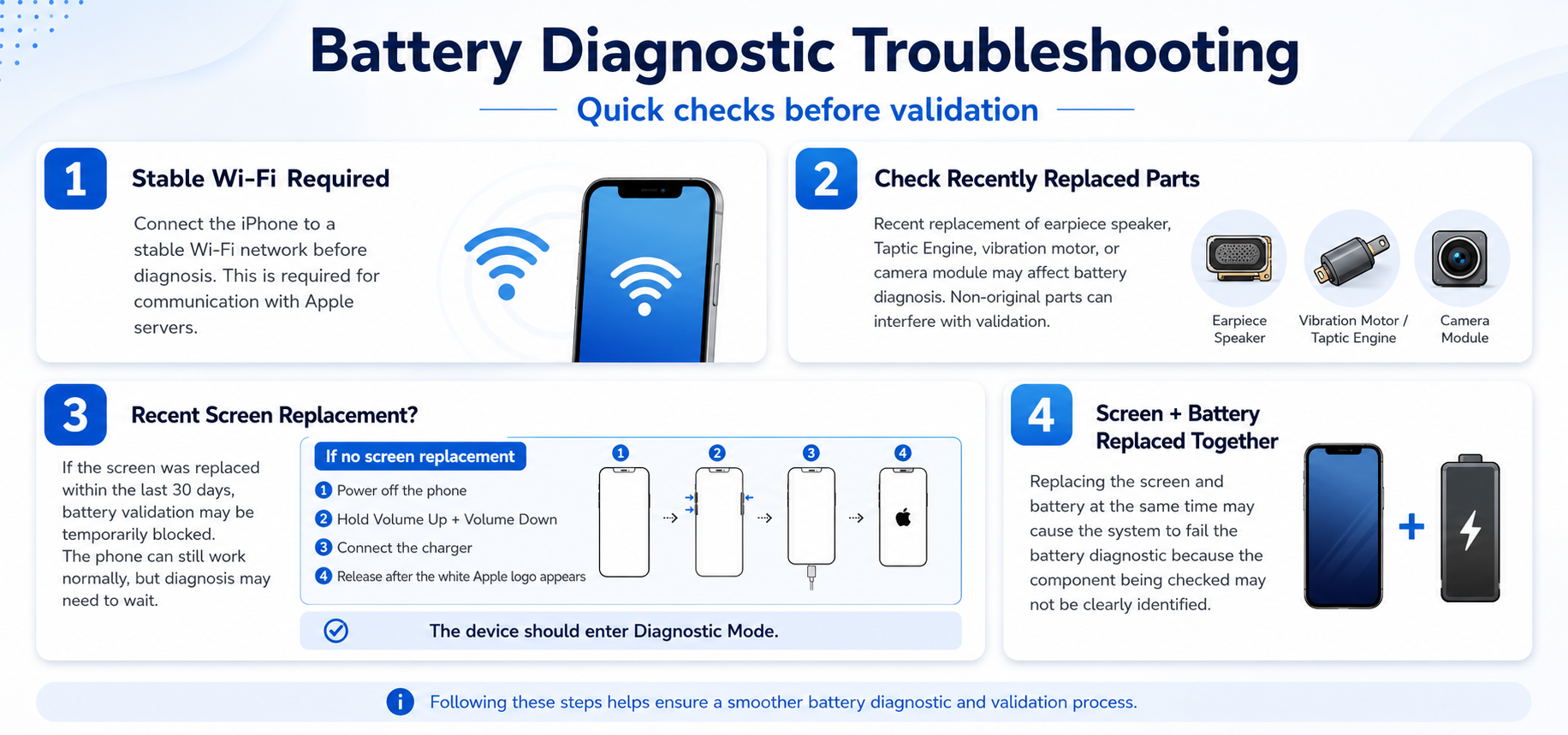
After installation, does the battery behave predictably?
Does the phone charge normally?
Does Battery Health display as expected?
Does the phone show warning prompts?
Does the battery percentage jump?
Does the customer experience feel clean?
After-Sales Support
A 12-month warranty sounds good, but the handling process matters more than the headline.
Buyers should ask how claims are handled, what evidence is required and how defective items are replaced or credited.
A battery with decent specifications but weak supplier support can become expensive very quickly.
Common Mistakes Buyers Make with “No Pop-Up” or “OEM Pulled” Batteries
One common mistake is assuming that OEM pulled always means original Apple-origin cells.
That may not be safe.
The term can mean different things in different supply chains.
Buyers should ask whether the battery is a replacement part, a reworked original, a pulled battery, a decoded solution or a newly manufactured equivalent.
Another mistake is buying based only on a screenshot.
A single image showing 100% Battery Health is useful as a marketing cue, but it does not prove batch reliability.
Procurement teams should test several samples from the same batch.
A third mistake is ignoring physical build quality.
A battery may show clean UI behavior but still have poor pouch finishing, weak connector quality, bad flex cable alignment or unstable PCM protection.
The UI result is important, but it should not replace physical inspection and electrical testing.
What to Ask Before Placing a Wholesale Order
Before ordering from an iPhone no pop up battery supplier, buyers should ask direct questions.
Which exact iPhone model or model family is supported?
Is this battery sold as a replacement part, reworked original, OEM pulled battery or newly manufactured equivalent?
What safety and transport documents are available?
Are no-pop-up and 100% Battery Health claims tied to specific device or software conditions?
What is the MOQ?
What is the warranty period?
How does the supplier handle early failure claims?
Can the supplier support private label packaging?
Can the supplier provide batch labels and carton marks?
Can samples be tested before larger orders?
These questions are not unnecessary bureaucracy.
They help separate a stable service part from a marketing-led listing.
Technical and Handling Cautions for Repair Shops
Replacement smartphone batteries are small, but they store meaningful energy in a tight package.
Repair counters should handle them carefully.
Avoid high temperature storage.
Avoid direct sunlight.
Avoid damp warehouse conditions.
Avoid bending the pouch cell.
Avoid pressure on the connector and flex cable.
Avoid sharp tools near the battery body.
Avoid mixing models without clear labels.
The supplied operating range of -10°C to 50°C is useful, but shops should still avoid leaving batteries in hot vehicles, humid areas or poorly controlled storage spaces.
Charging claims such as 1–3 hours and standby claims such as 3–7 days should be treated as indicative, not guaranteed.
Real-world performance depends on the phone, software, battery conditioning and user behavior.
Best Practice: Test Before Scaling
For repair shops and refurbishers, the safest buying process is simple.
Order a small sample batch.
Install the batteries in target iPhone models.
Check Battery Health display.
Check warning-message behavior.
Run charging and discharge checks.
Observe standby drain.
Check customer-facing service screens.
Record the result by model and iOS version.
Only after that should buyers move to repeat orders.
A battery line should be judged by repeatability, not slogans.
FAQ
Is this battery only for iPhone 15?
The visible model label is DJ-IPH15, which strongly suggests iPhone 15 use. Buyers should still verify exact compatibility before ordering.
Will it always show no pop up?
No buyer should assume that. No-pop-up performance can depend on battery design, device condition, iOS version and installation method.
Is 3349 mAh the real usable capacity?
It is the printed capacity. Actual usable performance should be verified through sample testing and real-device use.
Is this suitable for repair shops?
Yes. Based on the supplied product data and positioning, repair shops are one of the clearest target use cases.
What is the MOQ?
The supplied data mentions 20 pieces, which is suitable for small wholesale testing and repair-shop stocking.
Should I trust certification logos on the product sheet?
Use them as a starting point, not final proof. Ask for the actual supporting documents if certification matters for your market.
What is the biggest risk when buying no-pop-up batteries?
The biggest risk is assuming every phone will behave the same way. Buyers should test samples on their target models and iOS versions before bulk ordering.
How should refurbishers evaluate this type of battery?
Refurbishers should test batch consistency, Battery Health display, standby drain, charging behavior, customer-facing warnings and resale readiness.
Conclusion
Choosing an iPhone no pop up battery supplier should be based on repeatability, not marketing slogans.
The ESC-IPH15 battery data suggests a service-oriented iPhone replacement battery with visible capacity, voltage, protection-board claims and B2B repair positioning.
For sourcing teams, the next step is clear: confirm compatibility, request documents, test samples and verify real installation behavior before wider rollout.
A good iPhone replacement battery should help the repair bench move faster, reduce customer questions and lower after-sales pressure.
If you are building a repair or refurbishment supply list, start with a sample order, test the battery on your target devices and decide whether it belongs in your core stock or only as a secondary option for specific jobs.