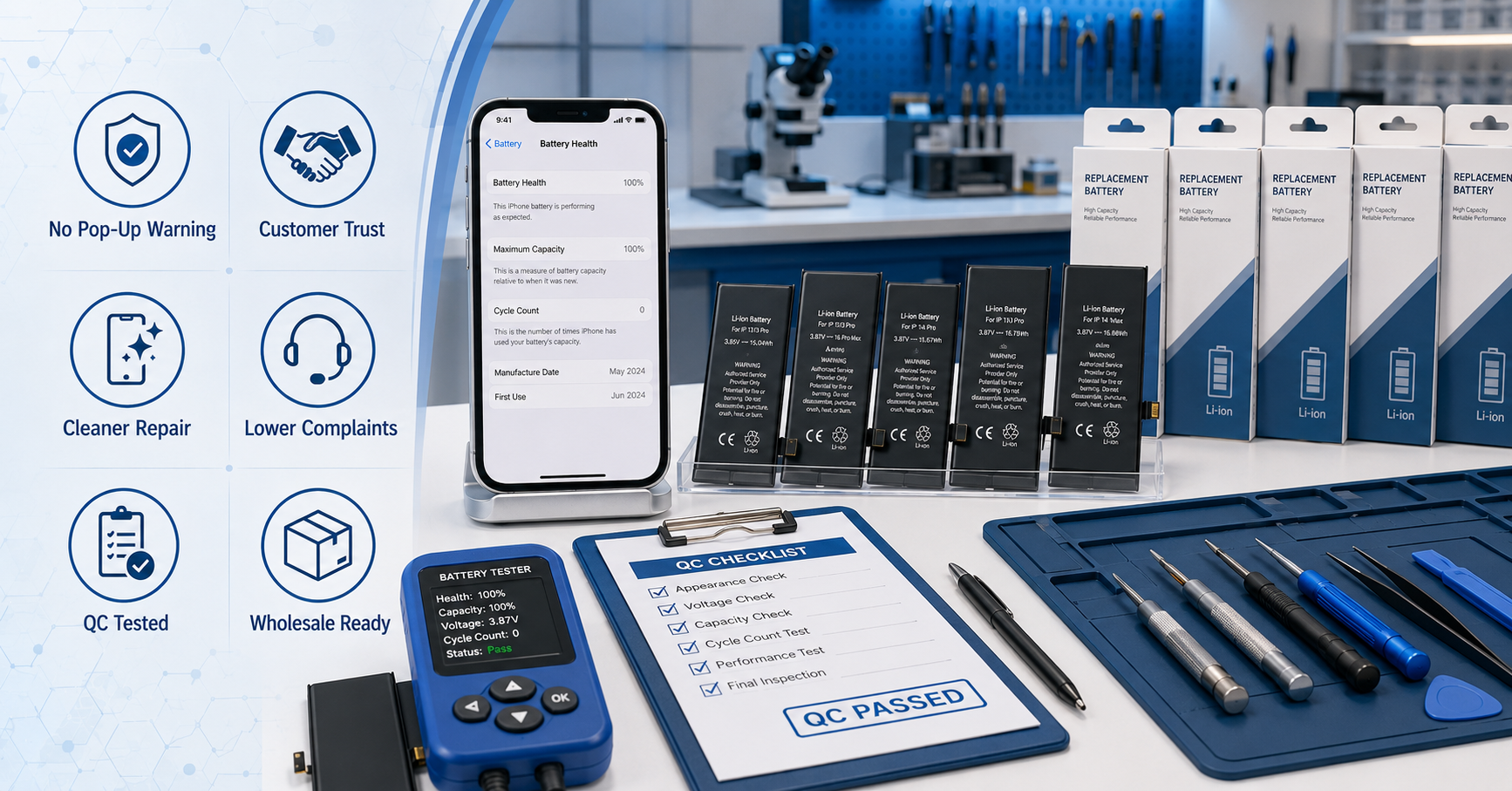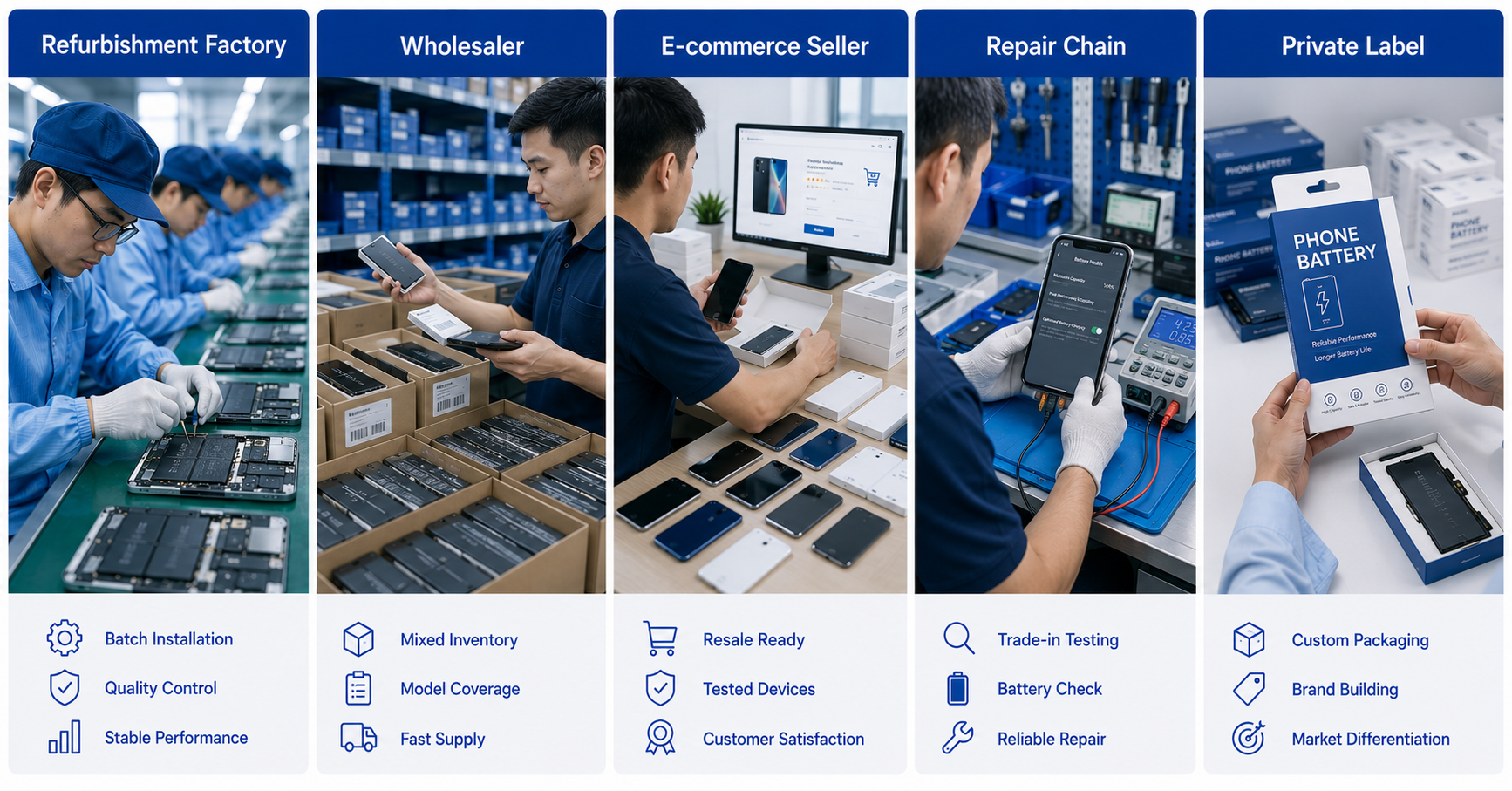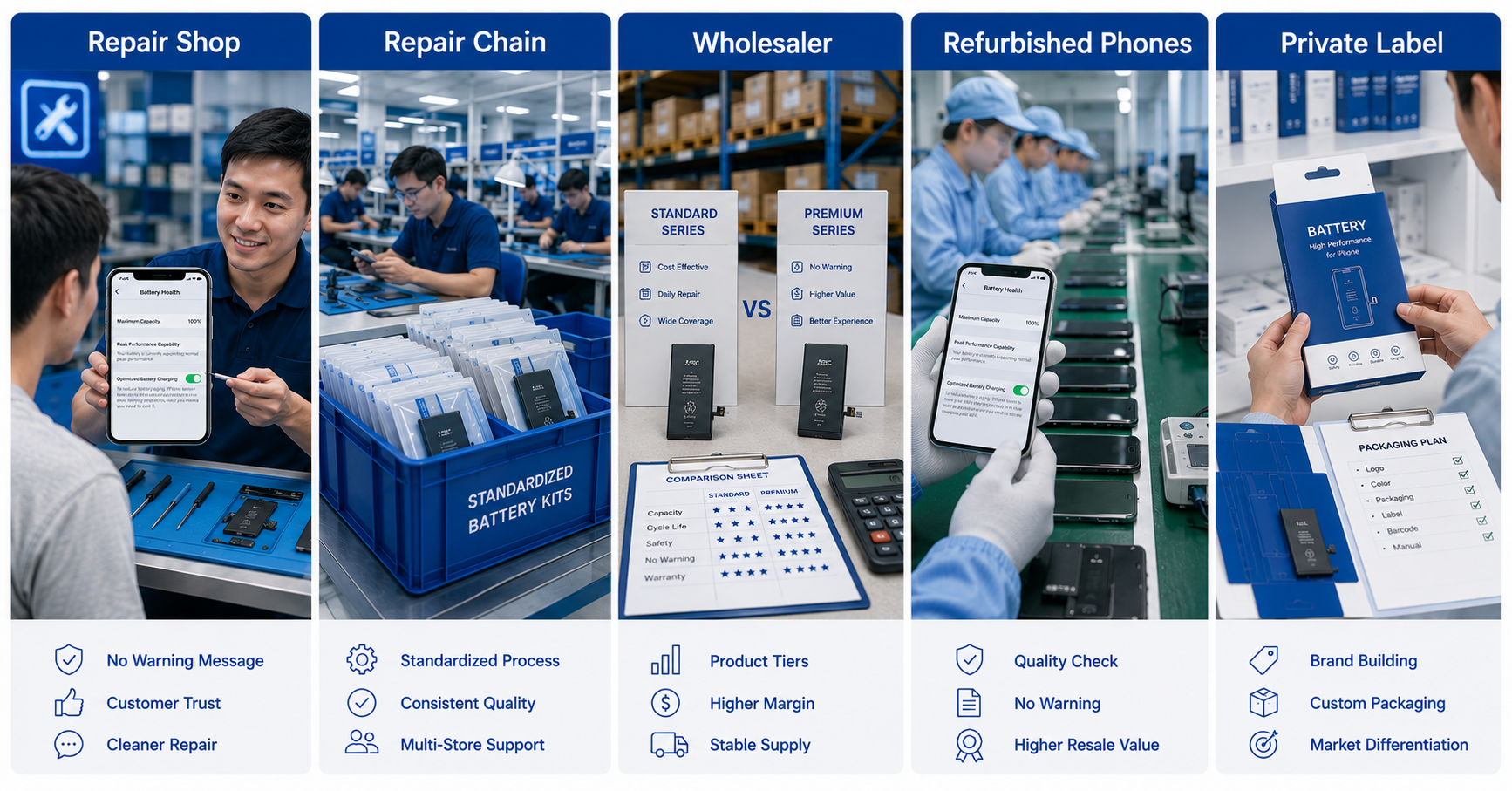

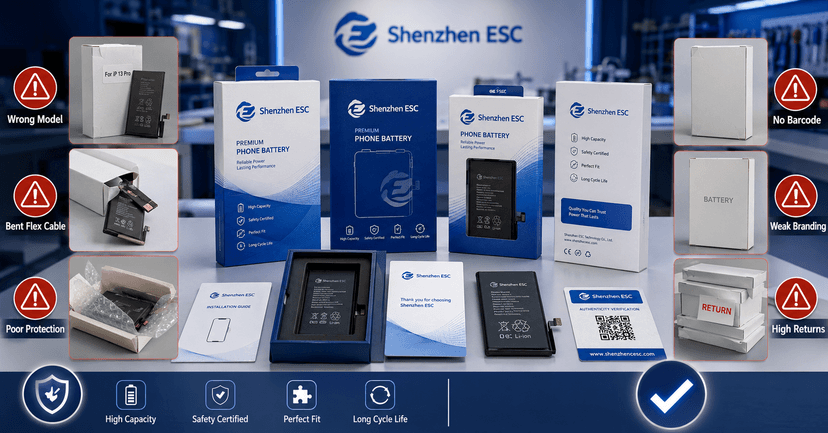
Knowing how to customize phone battery packaging is important for repair shops, mobile parts distributors, e-commerce sellers, refurbished phone suppliers and private label battery brands. Packaging is not only a box outside the battery. For replacement phone batteries, packaging affects model identification, shipping protection, warehouse management, customer trust, retail presentation, warranty communication and brand positioning. A well-designed phone battery package should protect the battery, reduce wrong-model complaints, support barcode management and make the product easier to sell in repair and wholesale channels.
Product Pain Points: Why Poor Phone Battery Packaging Creates After-Sales Risk
Many B2B buyers think battery packaging is only a visual design issue.
That is a mistake.
For replacement phone batteries, poor packaging can create real business losses.
If the model label is unclear, the warehouse may ship the wrong battery.
If the battery is not protected well, the flex cable may bend during transport.
If the connector is not protected, installation failure may happen later.
If the packaging does not show compatible models clearly, e-commerce buyers may order the wrong item.
If the box looks cheap, private label brands may lose customer trust before the battery is even tested.
If barcode and carton labels are missing, distributors may struggle with inventory control.
For repair shops, unclear packaging slows down technician work.
For wholesalers, packaging errors create customer disputes.
For e-commerce sellers, poor packaging increases returns.
For private label brands, weak packaging damages brand value.
This is why buyers asking how to customize phone battery packaging should not start from color design first.
They should start from product risk, sales channel and customer use case.

Packaging Principle: What Phone Battery Packaging Must Do
Phone battery packaging has three core jobs.
It must protect the battery.
It must identify the model.
It must support the buyer’s business model.
Protection means the battery pouch, flex cable, connector and label should not be damaged during storage, handling and shipping.
Identification means the package should clearly show the phone model, battery model code, capacity, voltage, barcode, batch code and warning information.
Business support means the packaging should match the channel.
Repair shops need simple and clear model identification.
Distributors need barcode labels, carton marks and batch tracking.
E-commerce sellers need retail-ready packaging with compatibility information.
Private label brands need logo, product series design, warranty card and brand consistency.
Refurbished phone suppliers need bulk packaging that supports repeated installation and final QC.
A good package is not the one that looks fancy.
A good package is the one that reduces mistakes, protects the battery and helps the customer reorder easily.
Comparison: Generic Battery Packaging vs Custom Phone Battery Packaging
Generic packaging is usually simple.
It may include a neutral box, simple label and basic model information.
This can work for small repair shops or low-cost wholesale orders.
But generic packaging has limits.
It does not help build brand trust.
It does not reduce price comparison.
It may not support barcode management.
It may not provide enough compatibility information for e-commerce.
It may not protect a private label buyer’s market position.
Custom phone battery packaging is different.
It is designed around the buyer’s sales channel and product strategy.
It can include brand logo, battery series name, compatible model, barcode, QR code, warranty card, user manual, warning label, carton mark, retail box design and product tier positioning.
Generic packaging is mainly for moving goods.
Custom packaging is for building a product line.
Generic packaging helps you sell batteries once.
Custom packaging helps customers remember where to buy again.
For B2B buyers, this difference matters because replacement phone batteries are easy to compare by price.
Packaging is one of the fastest ways to make the product look more professional, more organized and more trustworthy.
Solution: How to Customize Phone Battery Packaging Step by Step
Step 1: Define the Sales Channel
Before designing the box, define where the battery will be sold.
Repair-shop packaging should be simple, clear and technician-friendly.
Wholesale packaging should support mixed-model management and carton control.
E-commerce packaging should look professional, protect the product and explain compatibility clearly.
Private label packaging should build brand trust and show product series positioning.
Refurbishment packaging should support bulk installation and fast model identification.
Different channels need different packaging logic.
Do not use one packaging design for every customer type.
Step 2: Confirm Product Information
Every custom package should be built around accurate product data.
Important information may include product name, compatible model, battery model code, rated capacity, typical capacity, nominal voltage, charge voltage limit, battery type, warning information, barcode, batch number and supplier information.
If the package information is wrong, the packaging becomes a liability.
A beautiful box with wrong compatibility information is worse than a plain box with accurate details.
Step 3: Choose the Packaging Type
Phone battery packaging can be designed in different formats.
Bulk packaging is suitable for repair shops, wholesalers and refurbished phone factories.
Retail box packaging is suitable for e-commerce sellers and private label brands.
Blister or tray packaging can help protect batteries and organize models.
Battery repair kit packaging can include battery, adhesive, tools, instruction sheet and warranty card.
Carton packaging should support bulk shipment, model separation, barcode tracking and safe stacking.
The right packaging type depends on order quantity, sales channel, shipping method and product positioning.
Step 4: Design the Brand Identity
For private label buyers, packaging design should not be random.
The brand logo, color system, product series, icons, typography and product claims should stay consistent across models.
A strong battery packaging system may include Standard Series, High Capacity Series, Battery Health Display Series, Decoded Series and Repair Kit Series.
This makes the product easier to explain and easier to sell.
A customer should be able to understand the product level from the packaging within a few seconds.
Step 5: Add Barcode and Model Management
For distributors and e-commerce sellers, barcode management is not optional.
Barcode labels help with warehouse picking, inventory control, product scanning and order accuracy.
Model stickers help reduce wrong shipments.
Carton marks help warehouse teams identify model, quantity, gross weight, net weight, carton size and batch number.
This is especially important when buyers order mixed iPhone, Samsung, Xiaomi, Huawei, OPPO, Vivo or iPad battery models.
Packaging should make the warehouse smarter, not more confused.
Step 6: Include Safety and Handling Information
Phone batteries are lithium-ion products, so safety communication matters.
Packaging should include warning information, handling marks, battery type, recycling icons and basic caution language where applicable.
The goal is not to overload the box with text.
The goal is to make the product look professional and reduce avoidable handling mistakes.
For international shipments, packaging should also consider inner protection, short-circuit prevention, carton strength and shipment documentation.
Step 7: Review Samples Before Mass Production
Packaging should be sampled before bulk production.
Buyers should check printing color, logo position, barcode readability, model accuracy, box strength, battery fit, inner protection, label alignment and carton mark.
Do not approve packaging only from a digital mockup.
A real packaging sample can reveal problems that a design file cannot show.
Step 8: Connect Packaging With QC and After-Sales
Good packaging should support quality control and after-sales analysis.
Batch number, barcode, model code and carton mark help trace complaints later.
If a customer reports wrong model, fast drain, shipping damage or missing accessories, traceable packaging makes it easier to identify the order and batch.
This is why custom packaging is not only marketing.
It is part of the supply-chain control system.
Shenzhen ESC Solution: Custom Phone Battery Packaging for B2B Buyers
Shenzhen ESC supports repair shops, mobile parts distributors, wholesalers, e-commerce sellers, refurbished phone suppliers and private label brands with custom phone battery packaging solutions.
For buyers learning how to customize phone battery packaging, Shenzhen ESC can support battery labels, retail boxes, barcode labels, model stickers, warranty cards, user manuals, instruction sheets, carton marks, repair kit packaging and private label packaging.
The battery product range can support iPhone batteries, Samsung batteries, Huawei batteries, Xiaomi batteries, Redmi batteries, OPPO batteries, Vivo batteries, Realme batteries, iPad batteries and selected repair-market battery products.
Shenzhen ESC focuses on practical B2B needs: accurate model information, packaging protection, barcode management, OEM branding, carton labeling, mixed-model supply and after-sales traceability.
The goal is not only to make the package look better.
The goal is to make the battery easier to identify, easier to ship, easier to sell and easier to reorder.
Core Advantages: Why Custom Packaging Creates B2B Value
The first advantage is stronger brand recognition.
Custom packaging helps buyers avoid selling anonymous batteries that can only compete by price.
The second advantage is better inventory control.
Model labels, barcode labels and carton marks reduce warehouse mistakes.
The third advantage is lower return risk.
Clear compatibility information helps customers choose the correct battery.
The fourth advantage is better retail presentation.
E-commerce sellers and private label brands can use packaging to improve product trust and perceived value.
The fifth advantage is stronger product structure.
Buyers can separate standard capacity batteries, high capacity batteries, Battery Health display batteries, decoded batteries and repair kits into different packaging series.
The sixth advantage is better after-sales traceability.
Batch codes and packaging records make complaints easier to analyze.
A good package is silent sales, silent QC and silent brand building.
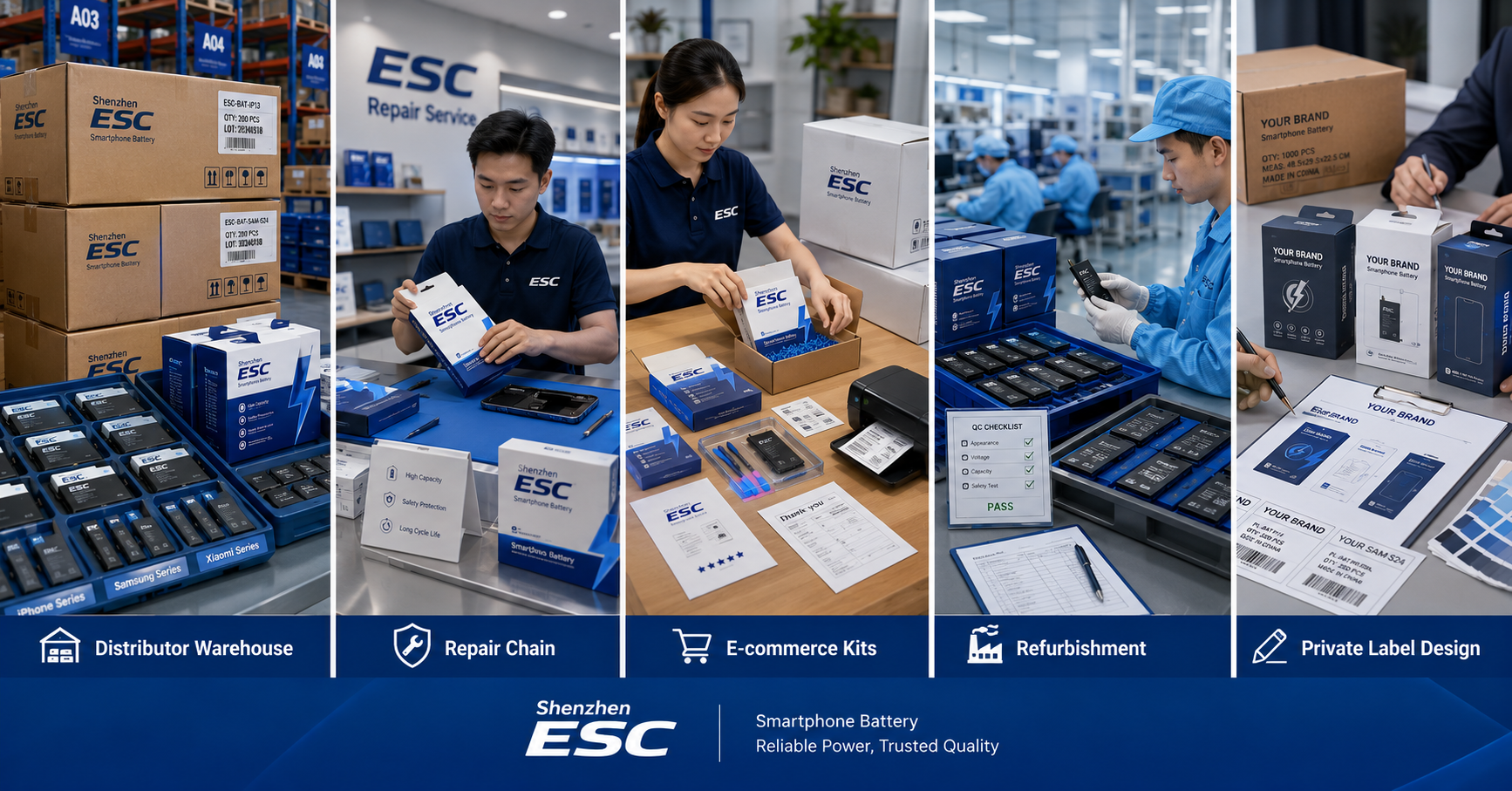
Application Scenarios: Where Custom Phone Battery Packaging Is Used
Mobile parts distributors use custom packaging to organize mixed battery models and support local repair-shop customers.
Repair chains use branded packaging to standardize service quality across multiple stores.
E-commerce sellers use retail packaging to improve product presentation, compatibility clarity and customer trust.
Refurbished phone suppliers use bulk packaging and model labels to improve installation efficiency and final QC flow.
Private label brands use custom packaging to build a recognizable battery product line in local markets.
Wholesalers use carton labels, barcode stickers and model marks to reduce warehouse errors and improve replenishment.
Repair kit sellers use packaging to combine battery, adhesive, tools and instruction sheets into one retail-ready product.
Selection Advice: How Different Buyers Should Customize Packaging
Repair shops should choose simple packaging with clear model names, compatible models and easy identification.
Mobile parts distributors should focus on barcode labels, carton marks, model stickers and mixed-model warehouse management.
E-commerce sellers should choose retail boxes with clear compatibility information, accessories list, instruction sheet and safe inner protection.
Refurbished phone suppliers should use bulk packaging that supports fast model sorting and repeated installation.
Private label buyers should build a full packaging system with logo, product series, warranty card, manual, barcode and carton marks.
Wholesalers should choose packaging that balances protection, cost and model clarity.
Before mass production, every buyer should confirm packaging files, product data, barcode content, carton information, sample packaging, shipping method and warranty language.
FAQ
How to customize phone battery packaging for a private label brand?
Start by defining your sales channel, target models, product series and packaging type. Then confirm battery data, logo design, barcode, model label, warranty card, user manual, carton mark and sample packaging before mass production.
What information should be printed on phone battery packaging?
Important information may include product name, compatible model, battery model code, capacity, voltage, battery type, warning information, barcode, batch number, brand logo and supplier details.
Can custom packaging reduce returns?
Yes.
Clear model labels, compatibility information, barcode tracking and stronger protection can reduce wrong orders, warehouse mistakes, shipping damage and customer confusion.
What packaging is best for phone battery wholesale?
Wholesale buyers usually need bulk packaging, model stickers, barcode labels, carton marks and strong outer cartons. The goal is efficient warehouse control and safe delivery.
What packaging is best for e-commerce phone battery kits?
E-commerce sellers usually need retail boxes, battery protection, adhesive, tools, instruction sheet, compatibility details and barcode labels.
Can Shenzhen ESC support OEM phone battery packaging?
Yes.
Shenzhen ESC can support battery labels, retail boxes, barcode labels, model stickers, warranty cards, instruction sheets, carton marks and private label packaging.
Is custom packaging only for large brands?
No.
Custom packaging is also useful for distributors, repair chains and e-commerce sellers that want better product presentation, lower price comparison and stronger customer loyalty.
What should I check before approving packaging production?
Check logo placement, model information, barcode readability, capacity data, warning text, box strength, battery fit, inner protection, carton mark and sample printing quality.
Conclusion
Understanding how to customize phone battery packaging helps B2B buyers build a more professional replacement battery product line.
Packaging is not only decoration.
It affects product protection, model accuracy, warehouse control, e-commerce conversion, private label trust and after-sales traceability.
Shenzhen ESC supports B2B customers with custom phone battery packaging, including battery labels, retail boxes, barcode labels, warranty cards, manuals, repair kit packaging, carton marks and private label solutions.
Contact Shenzhen ESC to request custom phone battery packaging options, model lists, sample packaging and wholesale pricing for your repair, distribution or private label battery business.