
In the 2026 high-end mobile power market, hardware homogenization has trapped most brands in a vicious cycle of price wars. For global wholesalers and OEM brands, sourcing a Custom Power Bank PCBA is no longer just about acquiring electronic components—it’s about acquiring charging algorithms, thermal management logic, and global compliance certifications.
Currently, about 80% of generic (reference design) PCBA solutions remain at the level of simple Buck topology. This leads to severe heat issues under high-power output (throttling) and potential damage to smartphone batteries. AOVOLT’s R&D team, with experience from Xiaomi, OPPO, and other top-tier smartphone brands, knows that true “factory-level speed” can only be achieved through proprietary MCU firmware and high-efficiency Dynamic Power Allocation.
Beware the “Reference Design” Trap: Why PCBA Determines Brand Lifespan
With cross-border e-commerce platforms like Amazon and Rakuten tightening oversight, using low-end, unoptimized reference PCBA has become a fatal risk for brands going global.
Performance Overstatements and Thermal Throttling
Many low-cost solutions claim support for 140W PD 3.1, but in real testing, poor PCBA layout triggers NTC overheat protection in under five minutes, dropping power to 30W or even shutting down. AOVOLT’s custom PCBA uses six-layer high-density thick copper foil and proprietary thermal compensation algorithms to keep temperature rise under full load at industry-leading 15°C at 25°C ambient.
Safety Compliance and Patent Barriers
In 2026, global lithium battery entry requirements have significantly increased. Generic designs often skip critical ESD protection and OVP overvoltage circuits to cut costs, making products unable to pass IEC 62133 or UL 2054 certification.
Industry Insight: According to the 2025 Global Consumer Electronics Accessory Quality Report, over 65% of power bank fires were caused by MOSFET breakdowns or BMS (Battery Management System) logic failures on the PCBA.
Homogenization Locks You in
If your internal circuitry is identical to 100 other brands, true ID design innovation is impossible. AOVOLT provides co-design services for PCBA and exterior cases, ensuring board stacking aligns perfectly with patented enclosures while mitigating infringement risks from the ground up.
Core Technologies of the 2026 Fast-Charging Market: PD 3.1, PPS, and High-Efficiency Topology
To build a competitive power bank, PCBA design must stay ahead of industry standards. Here’s a technical comparison of high-end custom projects:
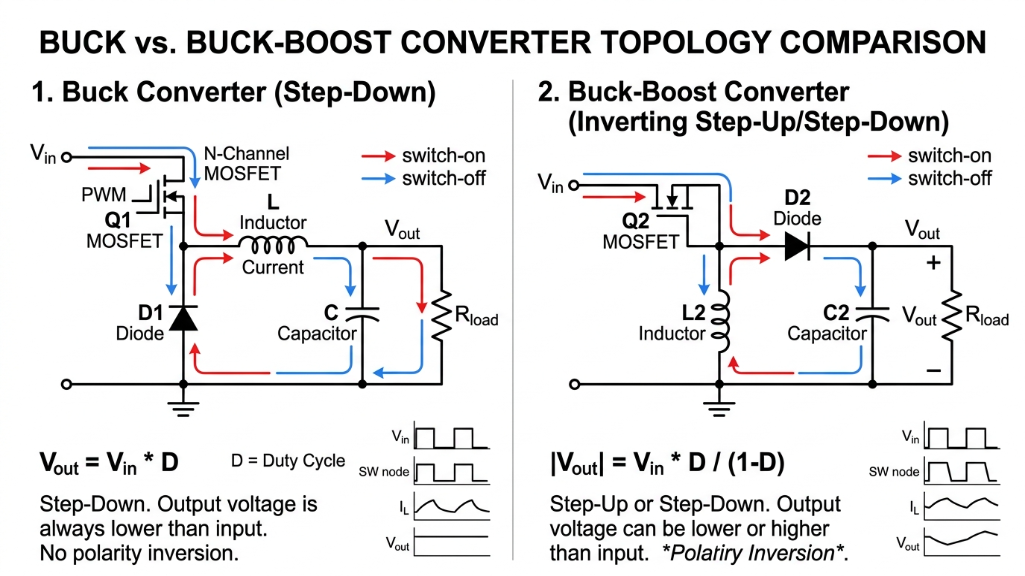
Table 1: AOVOLT Custom Solution vs. Industry Standard
| Technical Parameter | AOVOLT Custom Fast-Charge (Pro Series) | Industry Standard Generic (Standard) |
|---|---|---|
| Core Topology | Four-MOSFET synchronous Buck-Boost | Simple Buck Only |
| Max Output Power | 140W / 240W (PD 3.1 supported) | 22.5W - 65W (PD 3.0) |
| Energy Conversion Efficiency | 94% - 97% | 82% - 88% |
| Protocol Compatibility | Full compatibility (PD, PPS, QC 5.0, SCP, VOOC) | Basic PD/QC protocols |
| Standby Power | <50μA (ultra-low self-discharge) | >200μA |
| Safety Protection | 12-layer hardware + software self-test | 4-6 layers basic protection |
From PD 3.0 to PD 3.1: The Technical Leap
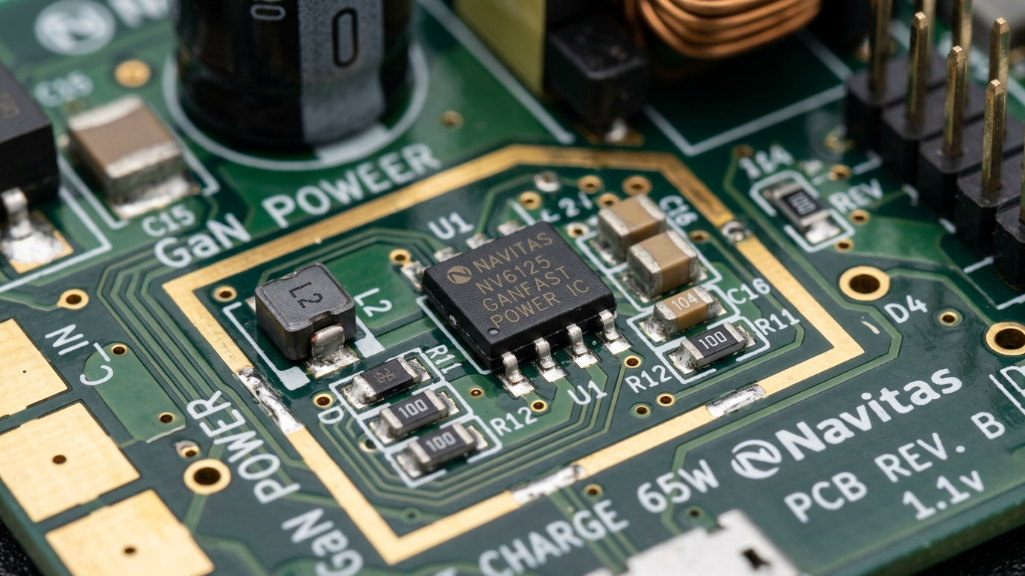
Achieving 28V/5A (140W) stable output requires extremely high PCBA anti-interference capability. AOVOLT uses high-frequency GaN integrated drivers, reducing PCB size and optimizing loop compensation to keep voltage ripple under 100mV, offering true factory-level protection for laptops and high-end flagship phones. Bringing you USB PD 3.1 vs. PD 3.0: A guide to high-watt fast charging in 2026.
Advanced Energy Distribution Algorithm: The Secret of Multi-Port Fast Charging
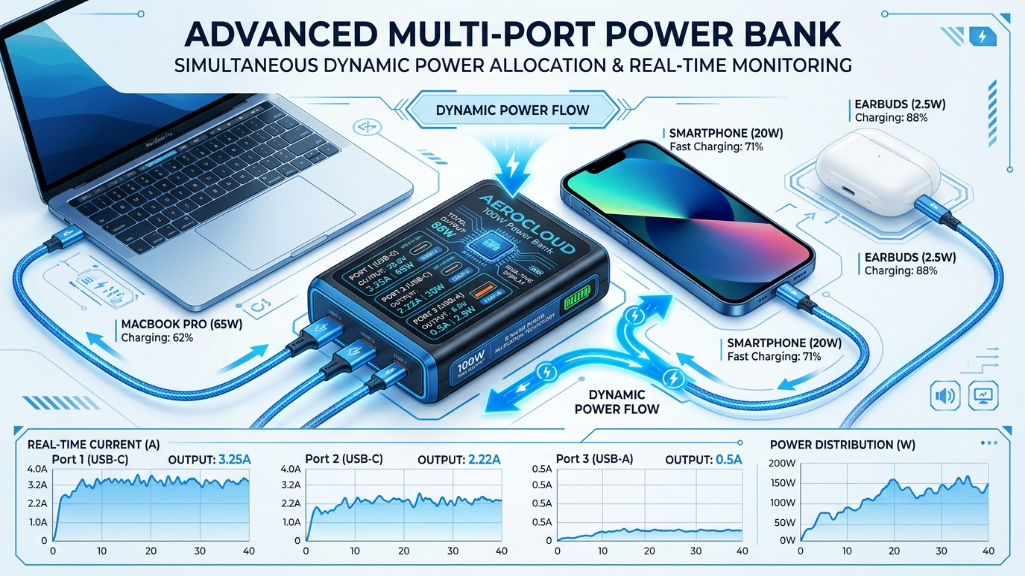
B2B clients often complain: “When I plug in a second device, the first device stops charging or restarts.”
AOVOLT’s PCBA uses Smart Power Splitting technology. By monitoring port current in real-time, the MCU recalculates power allocation in milliseconds, enabling smooth switching without physical disconnects—a core measure of PCBA maturity.
From Chip to Finished Product: AOVOLT’s Smartphone-Grade R&D and Quality Control
With 15 years of vertical integration in fast-charging technology, AOVOLT applies top-tier smartphone engineering standards throughout the PCBA lifecycle. B2B customers care less about peak speed than defect rates in mass production.
High-Precision SMT and AOI Automated Optical Inspection
70% of PCBA stability depends on soldering quality. AOVOLT’s factory uses fully automated ultra-high-speed SMT lines capable of placing 01005 micro-components.
AOI Inspection: Every board undergoes 3D AOI scanning post-reflow to ensure no cold solder joints, bridges, or misaligned components.
FAI (First Article Inspection): Each new batch undergoes 100% LCR testing on key inductors and capacitors to prevent performance degradation from supplier material variation.
Extreme Environment Aging and Stress Testing
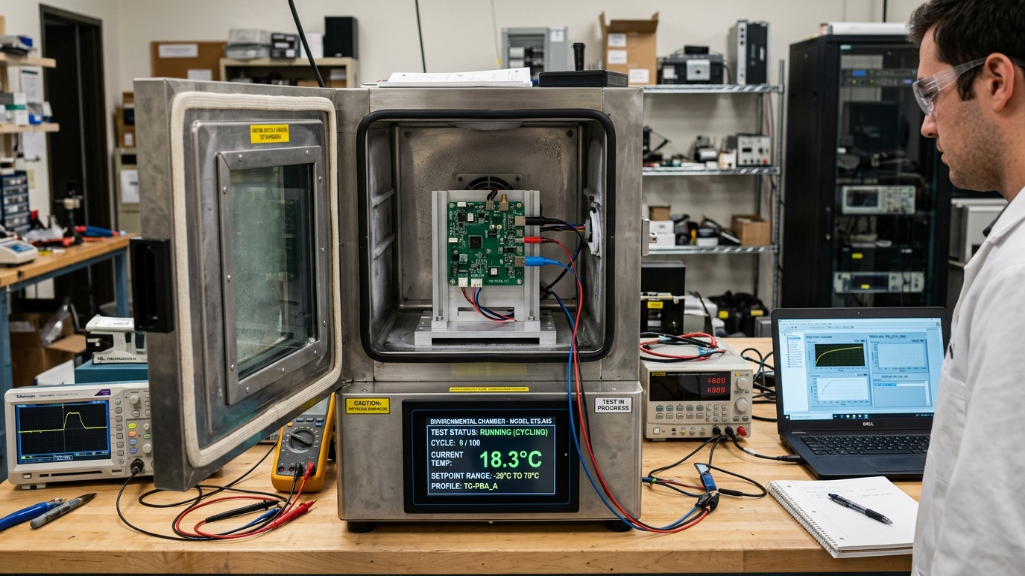
A qualified custom PCBA must perform in Dubai’s heat and Norway’s cold.
-
Temperature Cycling: Continuous charge-discharge for 48 hours in -20°C to 70°C chambers.
-
ESD Protection: Contact ±8KV, Air ±15KV to prevent MCU damage during dry winter use.
-
Salt Spray Test: For coastal markets, PCBA surfaces are coated with conformal protection, preventing corrosion-induced shorts.
Avoid Trade Barriers: Global Certification and Patent Protection
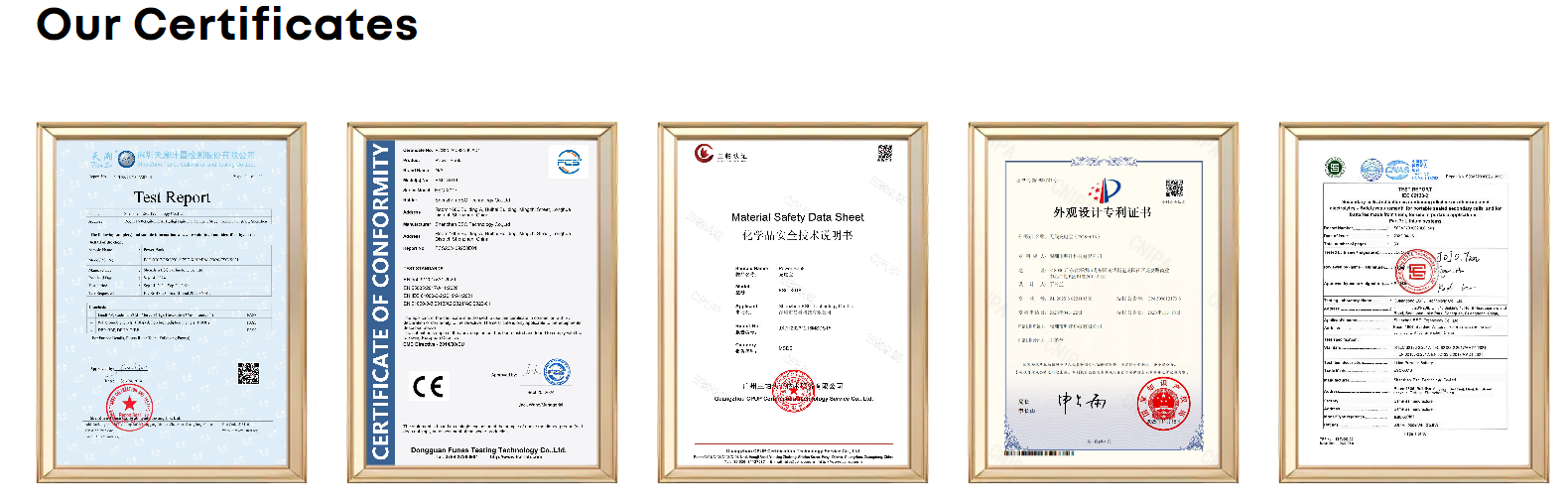
In 2026, compliance is not just a ticket—it’s a competitive advantage. AOVOLT offers one-stop certification support, ensuring products pass customs and platform entry without technical hurdles.
Table 2: Major Global Certifications Covered by AOVOLT
| Target Market | Core Certifications | AOVOLT Technical Support |
|---|---|---|
| North America (US/CA) | FCC / UL 2054 / ETL | High-standard OVP/OCP design; support UL lab testing |
| Europe (EU) | CE / RoHS / REACH | Lead-free environmental process; full materials list |
| Asia (JP/KR) | PSE / KC | Optimized NTC protection for Japan; compliance with diamond/circle PSE |
| Air/Sea Transport | UN38.3 / MSDS | Full transport safety report with cell supplier |
Co-Design for Patented Exterior (ID Protection)
Differentiation is the only way to escape price wars. AOVOLT holds over 50 patented exterior designs. When clients select custom solutions, we design bespoke enclosures (L-shaped, bar-shaped, etc.) based on PCBA layout, optimizing thermal paths and securing exclusive appearance for Amazon or other platforms, enabling immediate infringement claims if copied.
FAQ: Common Questions About Custom Power Bank PCBA
Q1: How long does it take to develop a custom PCBA?
A: With AOVOLT’s standard module library, initial design takes 5-7 working days. From prototyping to functional verification (EVT) takes 15-20 days. For complex PD 3.1 240W projects, total development is usually within 45 days.
Q2: Which fast-charge chip platforms do you support?
A: We partner with Injoinic, SW, Southchip, and global leaders like TI and PI. Solutions are recommended based on customer budget and performance needs.
Q3: How do you prevent power interference when multiple ports are used?
A: AOVOLT’s proprietary Smart-Link handshake algorithm reserves 100ms during multi-device connection, avoiding voltage drops that could cause shutdowns or restarts.
Q4: Can you support small-batch production for startups (MOQ)?
A: Yes, we support initial orders of 1K-2K units, with complete technical documentation.
Conclusion: Choosing AOVOLT for the Future of Mobile Power
Custom PCBA is not just a hardware stack—it embodies brand value, user safety, and technological innovation. AOVOLT (ESC Technology) leverages smartphone-grade R&D and vertically integrated manufacturing to deliver factory-speed and ultra-cool charging experiences.
Looking for a reliable PD 3.1 140W+ solution? [Contact AOVOLT Technical Marketing Team] today for a free technical evaluation and preliminary schematic draft, helping your brand stand out in 2026.
References:
USB Power Delivery 3.1 Specification — USB-IF official document
USB PD PPS (Programmable Power Supply) Technical Overview — USB-IF whitepaper