
How Deep is the Business of Power Bank Contract Manufacturing?
As a project manager who has been monitoring production on the front lines of the consumer electronics hardware supply chain for 15 years, I have seen too many North American top sellers lose out because they chased a small BOM (Bill of Materials) cost difference. In the end, they received entire batches of falsely labeled, or even swollen and leaking products, resulting in Amazon store bans and facing massive lawsuits.
Let’s cut to the chase and be transparent with procurement and brand owners: in 2026, finding reliable contract manufacturing for mobile power banks hinges on whether you can understand the true upstream costs. Take the currently hottest model—a 10,000mAh power bank with PD 20W fast charging and 15W magnetic wireless charging—as an example. If you use genuine automotive-grade high-density lithium cobalt oxide (Li-CoO₂) soft pack cells with a high-efficiency integrated BMS main control, the FOB wholesale price floor usually ranges from: $6.50 to $8.50
As for the market products priced as low as $4.5 or even lower? Avoid them. They inevitably use B-grade cells, or even recycled cells from electric vehicles (Recycled Cores), paired with substandard PCBs with disabled NTC temperature control.
Your real demand is not just finding a factory to assemble batteries and casings, but a partner that can handle PCBA-level design, cell grading, and full responsibility for global shipment of hazardous goods. Next, we’ll dissect the core “black box” of power bank contract manufacturing from an engineer’s perspective.
The Shifting Landscape of the Mobile Power Bank Market
Traditional 5V/2A “brick” power banks belong in the trash heap of history. Today’s power bank market is a battlefield of power density, protocol compatibility, and industrial design.
The Rise of MagSafe, Fast-Charging, and High-Capacity Solutions
According to the latest forecast from Grand View Research, the global mobile power bank market will surpass $20 billion by 2030. The growth driver is no longer low-end mass distribution but high-value, niche scenarios. With WPC (Wireless Power Consortium) officially launching the Qi2 magnetic wireless charging standard, the MagSafe ecosystems for Apple and Android have become fully compatible. Securing top-tier MagSafe wireless power bank ODMs has become a life-or-death competition for brands aiming at the high-end market.
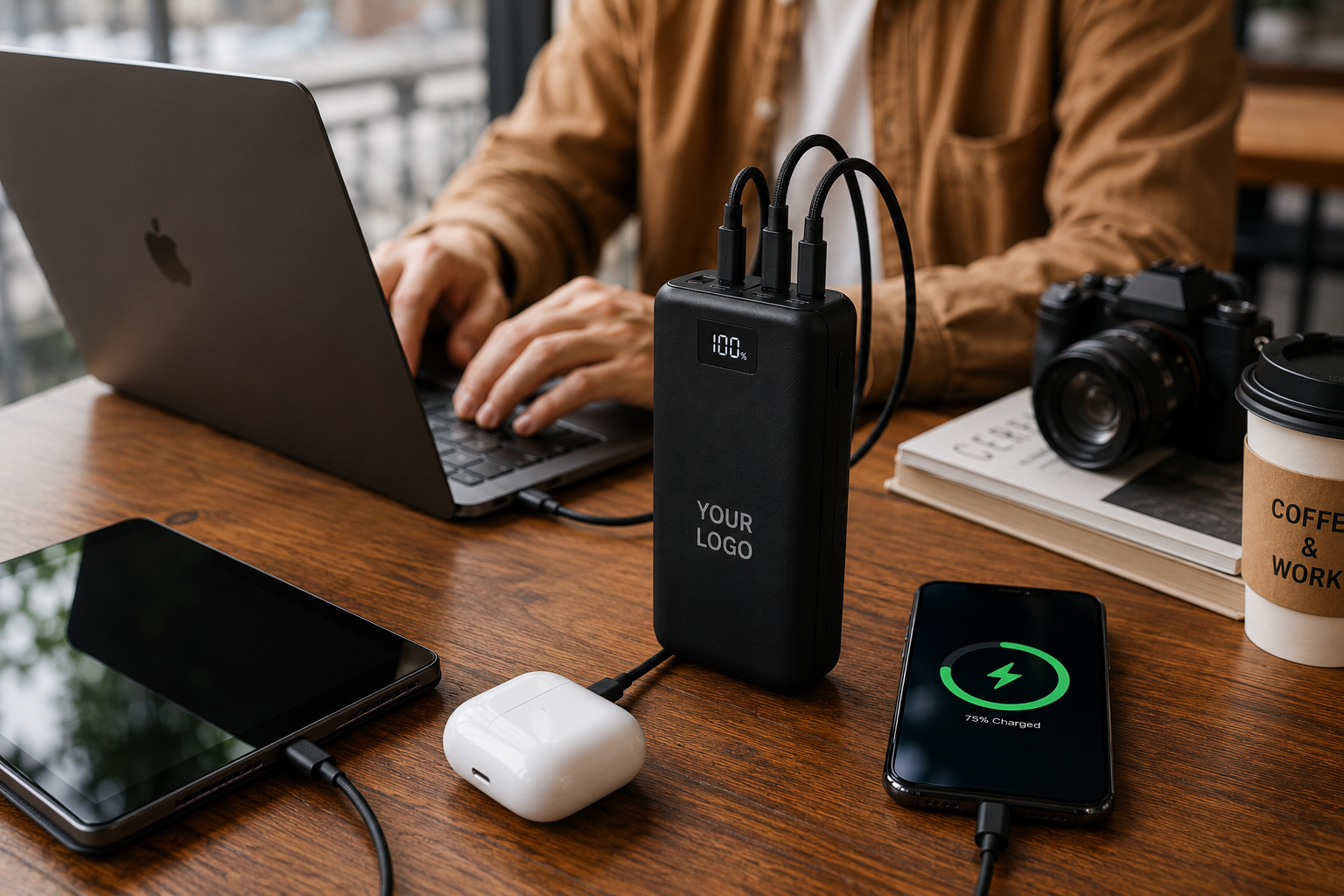
At the same time, consumers are voting with their wallets. They not only need to charge phones but also want “power beasts” capable of delivering 100W or even 140W to a MacBook Pro during business trips. This requires high-capacity power bank factories to master multi-series parallel architectures (like 4S1P/4S2P), which is a far cry from the technology used in single small-cell power banks.
Why Partnering with the Right Consumer Electronics EMS is Critical
Soldering a few cells onto a PCB can be done in a small workshop in Huaqiangbei, but that’s not true contract manufacturing. A top Consumer Electronics EMS provider sells risk control. When a 140W, 27,000mAh power bank is in pass-through charging, internal temperature accumulation is terrifying. Without advanced thermal management, thermal runaway leading to fire is only a matter of time. Choosing the right factory is choosing the lifeline of your brand. Providing you wholesale magnetic wireless power bank 2026: safe and fast.
Core Components: What Separates a Premium Power Bank from a Cheap Clone
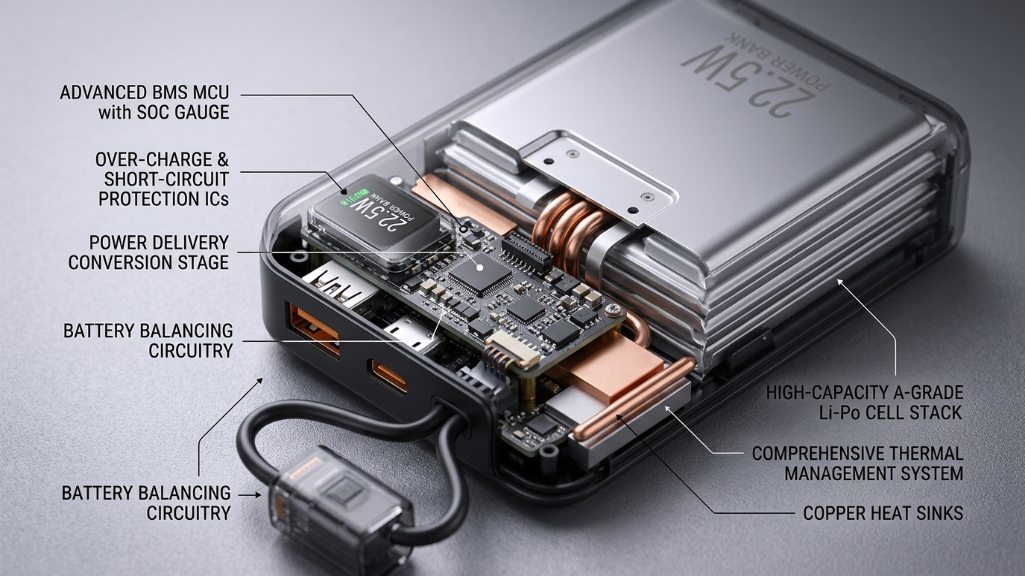
To judge whether an OEM/ODM power bank supplier is professional, don’t listen to sales pitches—request a teardown sample and examine the three cores: battery cells, BMS brain, and thermal layout.
The Truth About Battery Cells: A-Grade Li-Po vs. Recycled Cores
Battery cells account for over 60% of a power bank’s BOM cost, making them a hot spot for counterfeiters. Many cheap knockoffs contain low-quality 18650 cylindrical cells, or even sand-filled for weight balance.
Premium custom lines insist on A-grade battery cell sourcing. High-end products now use high-density lithium-polymer (Li-Po) soft pack cells. These cells can be shaped for thin designs, feature higher C-rate discharge than cylindrical cells, and crucially, maintain cycle life. A-grade cells retain over 80% capacity after 500 full charge-discharge cycles; B-grade or recycled cells often degrade sharply after 50 cycles, showing “capacity drop from 40% to 0% instantly.”
Comparison of Top-tier A-grade vs. Low-cost B-grade Solutions
| Evaluation Dimension | Top-tier A-Grade Standard | Cheap Knockoff B-Grade/Refurbished |
|---|---|---|
| Cell Type | High-density Li-Po | Recycled 18650 or low-quality soft pack |
| Actual Capacity | True capacity, error <2% | Severely inflated, e.g., 10,000mAh reads only 6,000mAh |
| Cycle Life | >500 cycles, ≥80% retention | <100 cycles, rapid degradation |
| Safety Mechanisms | Independent vent + multiple injection processes | Prone to thermal runaway, swelling, bulging |
| Assembly | Automated nickel strip spot welding + high-temp tape insulation | Manual soldering, easy to detach or short |
Top factories perform cell grading and internal resistance matching. Only cells with consistent voltage and resistance are packed together to prevent “weak link” failure of the battery pack.
PCBA Design and the Brains Behind It: Battery Management System (BMS)
Without a smart BMS, even premium cells are ticking time bombs. In fast-charging PCBA design, the main control chip determines conversion efficiency. Cheap boards often achieve only ~70% efficiency, wasting the remaining 30% as heat. Proper PCBA design with high-frequency synchronous rectification can push efficiency above 90%, delivering more energy to devices with minimal heat.
Precise State of Charge (SOC) calculation differentiates algorithm quality. Low-end power banks rely on simple voltage measurement; high-end BMS uses Coulomb counting, achieving ±1% accuracy regardless of plug/unplug cycles. Overcharge protection cuts off MOSFETs microseconds after the cell reaches the voltage threshold (e.g., 4.35V/4.4V), preventing explosion risk.
Industrial Design (ID), Casing, and Thermal Dissipation
Premium custom portable chargers require synchronized industrial design and internal structure stacking. Thermal management in tight plastic or aluminum enclosures is critical. Many factories place heat-generating inductors next to temperature-sensitive cells. The correct approach uses insulating sponges and graphene thermal pads to create physical barriers.
A critical component is the NTC thermistor. Low-end factories may skip it; skilled engineers place one thermistor on the cell’s hottest tab, another at the PCBA heat center. If temperature spikes, the system throttles voltage/current, cutting power before the casing melts.
Solving the Biggest B2B Pain Points in Power Bank OEM/ODM
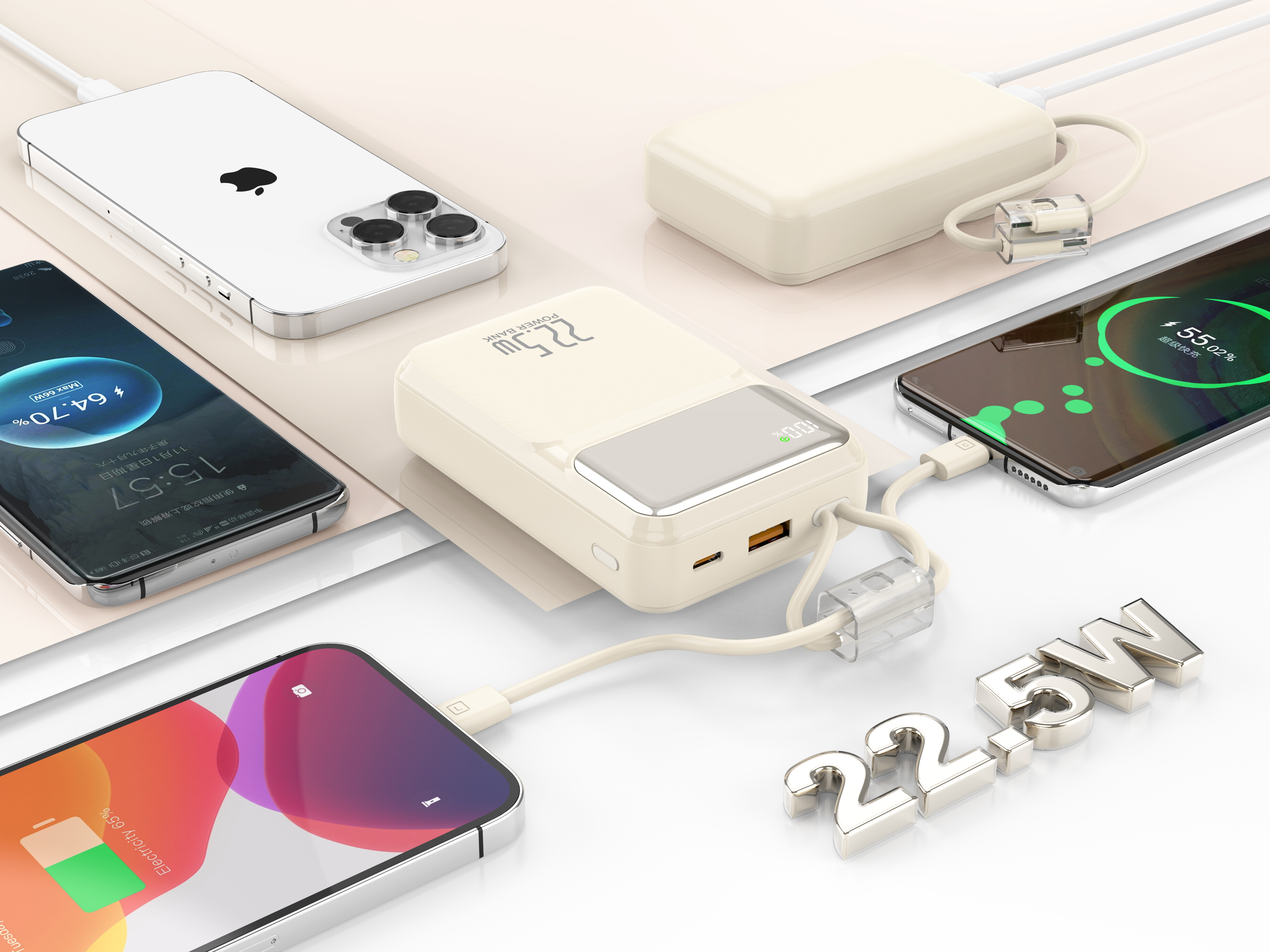
For 3C accessory procurement managers, the scariest sight is not falling sales but 1-star Amazon reviews showing swollen or burning power banks. PR disasters can lock listings or bankrupt a brand.
Eliminating Battery Swelling and Fake Capacities
Battery swelling is caused by poor cell quality (moisture or uneven coating) or BMS failure (microcurrent overcharge).
In one North American retail rescue project, previous suppliers used mixed batches of B-grade cells to save $1, resulting in a 4.2% swelling complaint rate in summer heat. After introducing automotive-grade A-grade high-density Li-CoO₂ Li-Po cells and repositioning NTC thermistors, the swelling complaint rate dropped to 0.15%.
Fake capacities arise when unscrupulous manufacturers label 6,000mAh cells as 10,000mAh. Top-tier factories implement strict discharge testing, ensuring actual capacity deviates by ±2% at most.
Overcoming Homogenization with Custom Mold Opening and Injection Molding
Product homogeneity is another pain point. Many power banks on AliExpress/Amazon look identical. To break this, you need a factory with full-chain development from drawings to finished products. Exclusive mold opening and injection molding workshops ensure unique industrial design, fire-retardant material selection (PC+ABS V0), and micron-level seam accuracy.
Certifications and Logistics: Navigating the "Dangerous Goods" Minefield
Producing the product is not enough; customs and freight forwarders will teach harsh lessons. Power banks are Class 9 Dangerous Goods (UN3480) internationally.
Mandatory Safety Certifications: UL, CB, CE, FCC, and RoHS
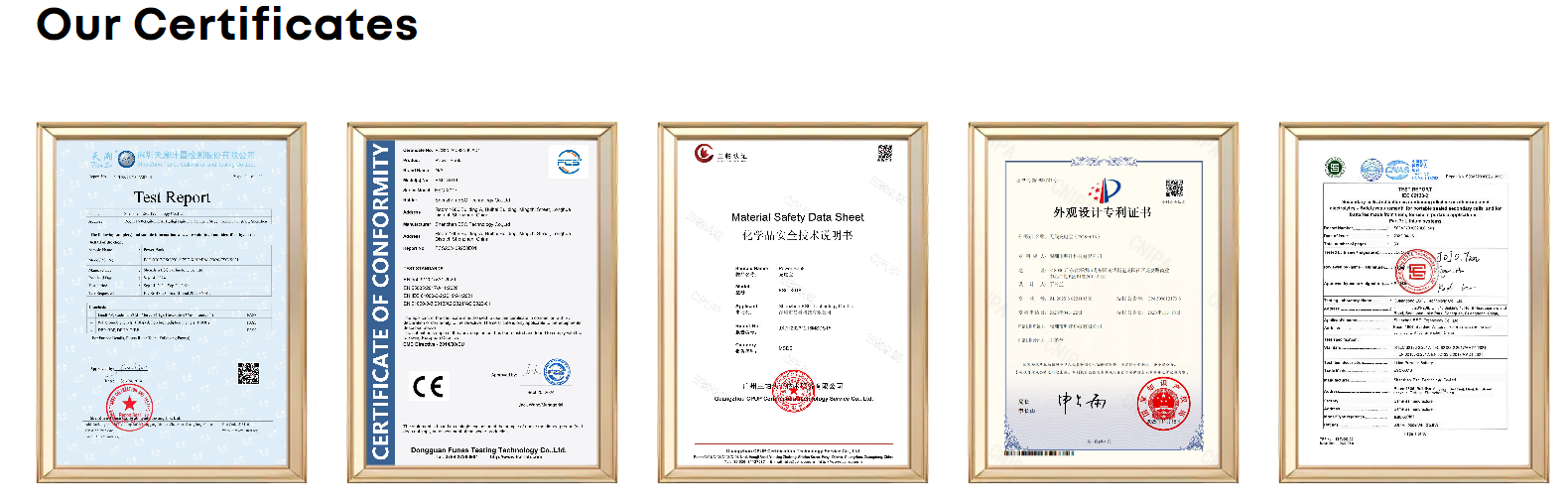
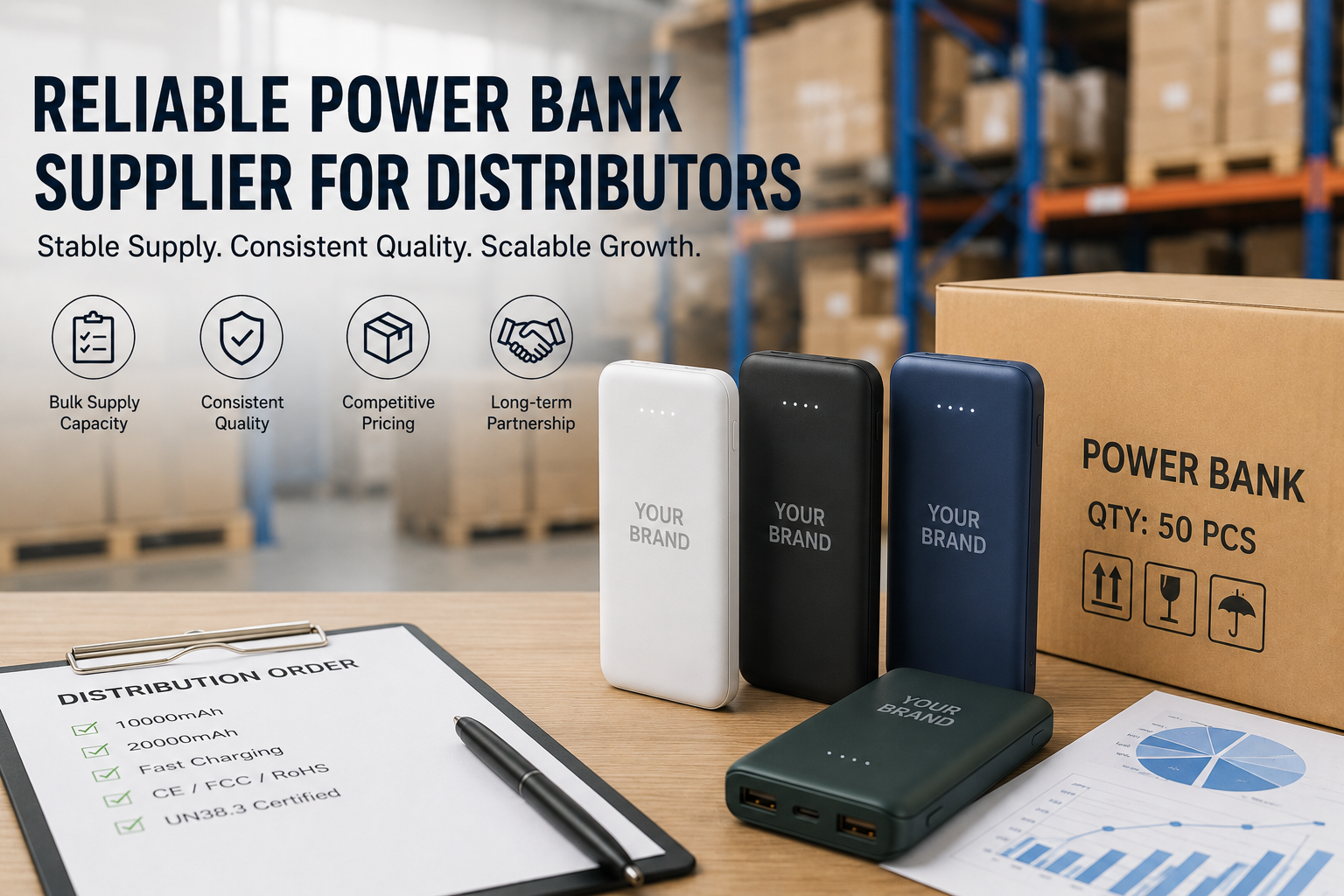
Selling in Europe requires genuine CE and RoHS reports; North America favors UL/ETL certification for large retailers and Amazon; Japan requires PSE. Reliable factories integrate safety standards into PCBA layout, not using copied certificates.
UN38.3 and MSDS: Why Battery Shipping Logistics Requires Experts
IATA PI965 mandates UN38.3 test reports and MSDS for air/sea shipment. Tests include low-pressure simulation, extreme temperature cycles, vibration, mechanical shock, external short circuit, and crush tests. Without certification, goods may be detained, incurring huge storage fines or destruction.
The End-to-End Contract Manufacturing Process for Power Banks
True end-to-end manufacturing combines materials science, electronics engineering, and precision mechanics.
Concept, Prototyping, and PCBA Layout
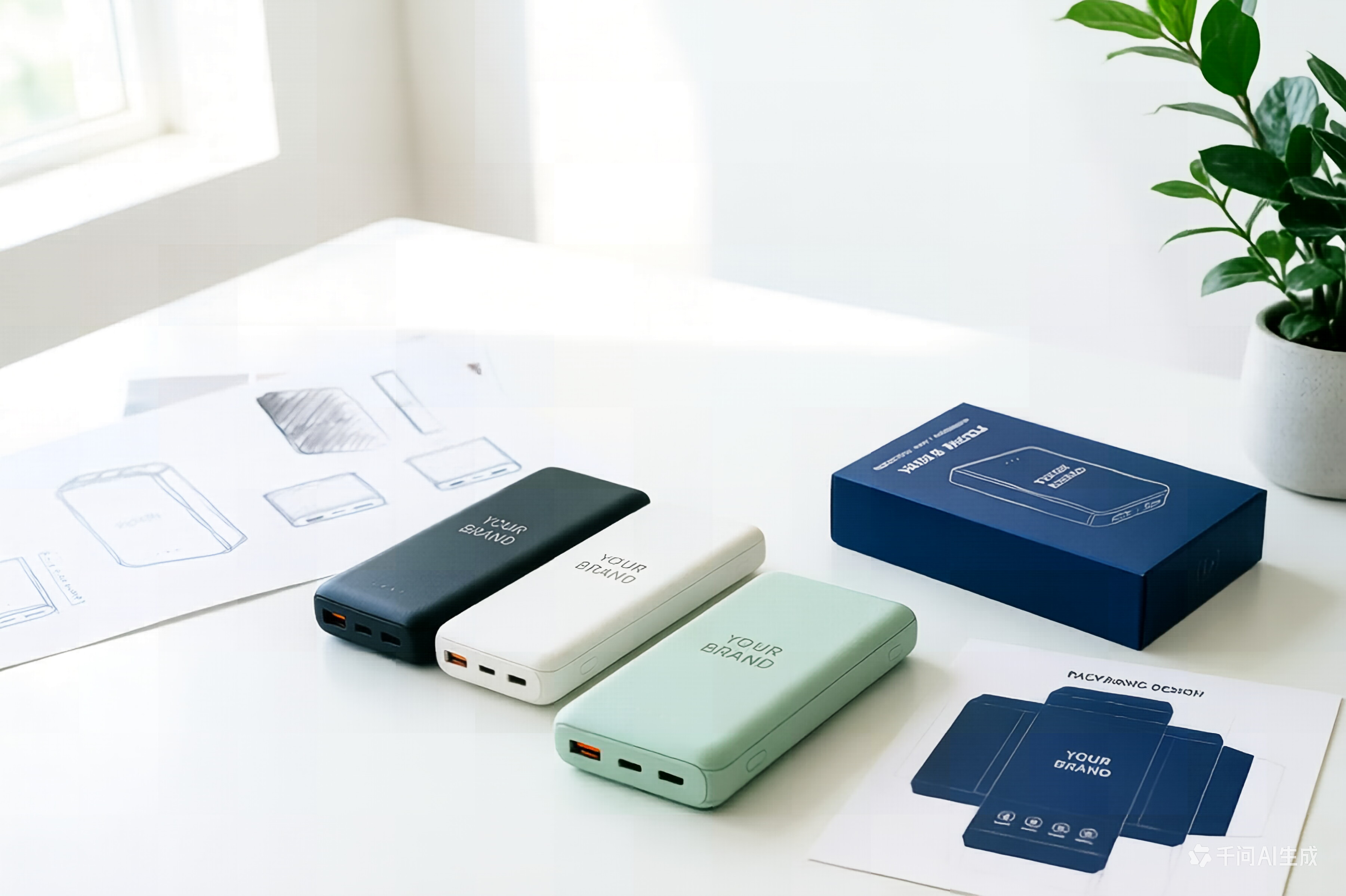
Starts with brand inputs (target users, power, size). Top factories produce 3D structural and electronic schematics, prototypes via 3D printing or CNC, and first-round PCBA layout optimization ensuring isolation and heat channels.
SMT Production, Battery Pack Assembly, and Ultrasonic Welding
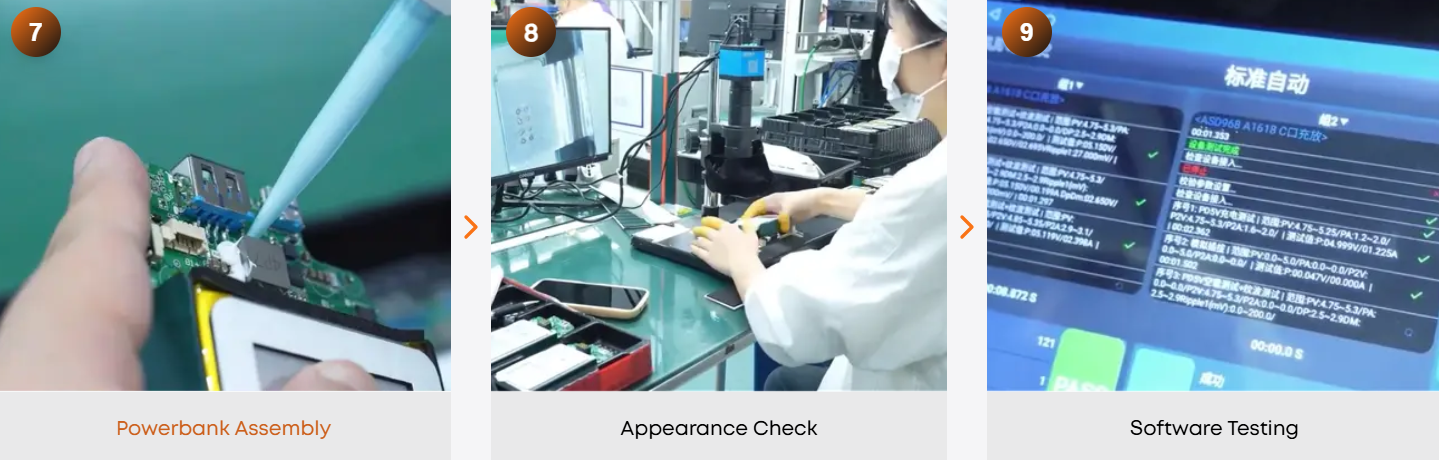
High-speed SMT machines place hundreds of tiny resistors, capacitors, and chips. Graded cells are spot welded to protection boards, and all components are enclosed via ultrasonic welding or precise screws into fire-retardant casings.
100% Aging Tests and Quality Control (QC)
Final QC involves full-load burn-in tests simulating high temperatures for hours. Only products passing extreme stress without overheating receive QC PASS.
Why AOVOLT is Your Ideal Custom Portable Charger Manufacturer
If you recognize the risks of simple assembly shops, a factory with core technology and heavy assets is essential.
AOVOLT, based in Dongguan, China, has 15 years of consumer electronics manufacturing expertise. Focused exclusively on OEM/ODM large clients, their core products are power banks, magnetic charging power banks, and multi-port fast chargers.
| Feature | Traditional Light-Asset Assembly Factory | AOVOLT (Vertically Integrated Source Factory) |
|---|---|---|
| R&D & Appearance | Purchased public boards/molds; high homogeneity | In-house ID team; unique, high-recognition design |
| Mold & Plastic | Outsourced; quality & delivery uncontrollable | Own mold opening & injection molding workshops |
| Tech Ceiling | Basic slow charging; severe heating | Up to 140W fast charging; full protocol support |
| Cell Supply | Mixed recycled/B-grade cells; fake capacity | Carefully selected A-grade high-density polymer cells; accurate capacity & long cycle life |
| Delivery & QC | Susceptible to upstream delays | Strict standardized QC; rapid response; stable delivery |
AOVOLT’s fast-charging architecture supports up to 140W output and full protocol compatibility (PD3.0, PPS, QC3.0, FCP, SCP, AFC, Apple 2.4A, BC1.2), ensuring instant handshake with all flagship devices. Internal R&D, mold, and injection production lines guarantee quality from concept to final PCBA integration.
References: