
In early 2026, a purchasing director of a German electronics accessories brand posted on LinkedIn that their Chinese ODM partner had just received an IP complaint from Apple due to the design of a magnetic wireless power bank. As a result, 11 SKUs were removed from Amazon Europe, causing a loss exceeding €400,000. Over 600 comments responded, almost unanimously saying, “I’ve experienced this too.”
This is not an isolated incident. It represents an industry-wide systemic risk—and it’s accelerating.
Conclusion first: if you are still relying on generic magnetic power banks in 2026, you are facing not only margin compression but also potential platform bans, IP litigation, and large-scale returns due to charging heat. Combined, these three risks can wipe out a five-year SKU matrix in a single quarter.
B2B Buyers’ Real Fear: Not Price, But Loss of Control
Most factories begin negotiations by emphasizing, “Our price is competitive.” But brand owners and cross-border sellers with 15 years of purchasing experience know that price is never the primary variable.
The real threats keeping them awake are:
1. Appearance Infringement Risk
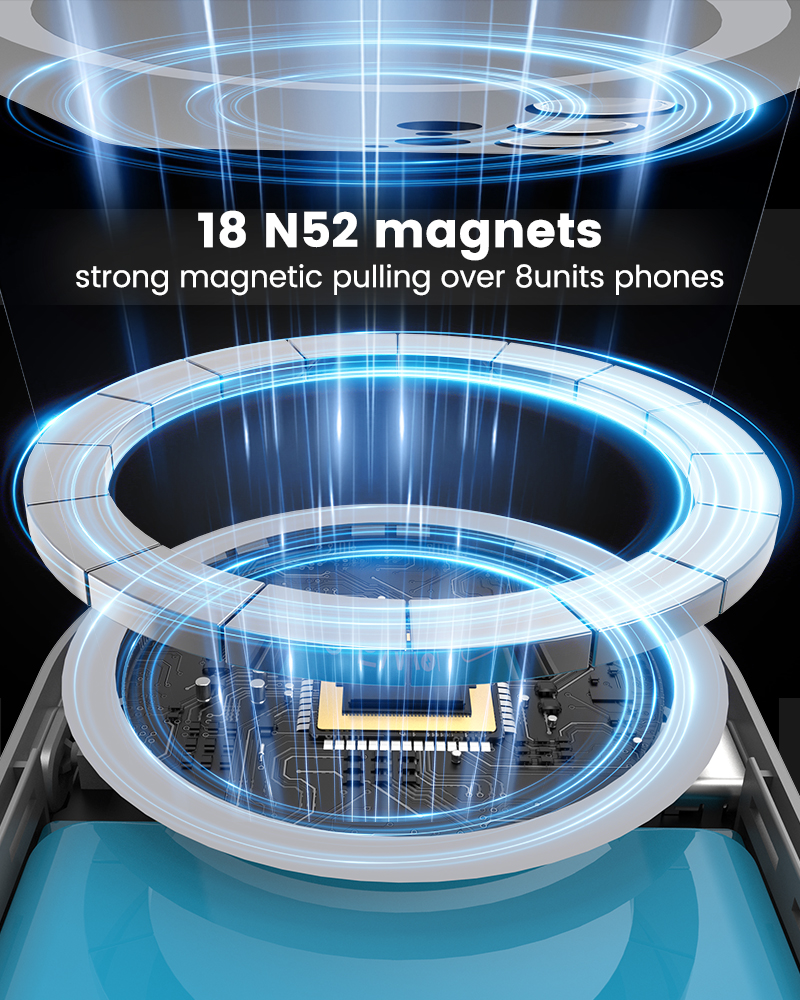
Apple holds over 200 patents related to MagSafe’s magnetic array layout, coil positioning, and casing curvature. About 90% of generic magnetic power banks infringe to some degree. Qi2 is an open standard managed by WPC, but Qi2 compliance ≠ visual safety. Any product resembling Apple’s MagSafe can trigger a complaint. Amazon’s IP complaint system does not require a court ruling; a single complaint can remove your listing.
2. Charging Safety Black Hole
Factories purchase chip solutions, outsource SMT assembly to contract electronics manufacturers (CEM), then send them to injection molding factories for casing assembly. No one oversees PCBA parameters end-to-end. As a result:
- Charging temperature rise is inconsistent.
- PPS voltage adjustment slopes are not precisely calibrated.
- In low temperatures (European winter, North American Midwest), lithium battery internal resistance rises sharply, and protection circuits may fail.
Minor cases slow charging; severe cases cause thermal runaway. This is not theoretical—it appears in daily 1-star Amazon reviews.
3. Delivery Time Black Hole
If the casing, PCBA, and battery come from three separate suppliers, your order faces three independent risks. Any issue delays shipment, and the factory typically replies, “We are waiting for supplier feedback.”
These three fears are not emotional—they are measurable business losses that can be mitigated if you choose the right factory.
140W Fast Charging + Full Protocol Support: Not Just Specs, But Market Coverage
“Fast charging” is overused. We won’t claim, “Our power bank charges quickly.” Let’s do the math.
In 2026, mainstream smartphones support fast charging as follows:
| Brand/Series | Main Protocols |
|---|---|
| Apple iPhone 12+ | USB PD 3.0 (up to 27W wired) + MagSafe/Qi2 wireless |
| Samsung Galaxy S series | USB PD 3.0 / PPS / AFC (45W+) |
| Huawei / Honor | SCP (40W) / FCP |
| Xiaomi / POCO | QC3.0 / QC4+ / PPS / Xiaomi proprietary |
| OPPO / OnePlus | VOOC / SuperVOOC (proprietary) / PD 3.0 |
| Universal | BC1.2 / Apple 2.4A fallback |
If your power bank only supports PD3.0, Huawei users will get only 5W. Without AFC, older Samsung phones won’t trigger fast charging. Imprecise PPS voltage adjustments can cause iPhones to throttle charging.
AOVOLT product line supports all protocols:
- USB PD 3.0 (PPS ±50mV)
- Qualcomm Quick Charge 3.0 / 4.0+
- Huawei FCP / SCP (dual-mode 9V/2A & 5V/4.5A)
- Samsung AFC
- Apple 2.4A + BC1.2
- MTK PE 3.0
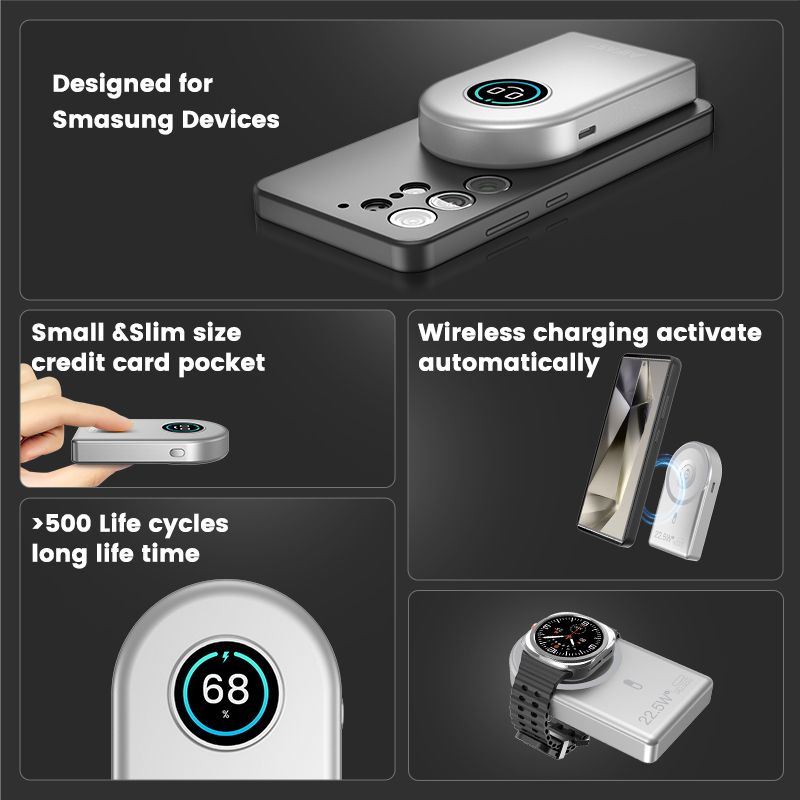
- Qi2 (15W wireless, WPC standard)
Wired peak output: 140W (single C port, 100W PD + 40W split output optional).
Result: One SKU covers 95%+ of smartphone users across brands, which is the true logic of wholesale market coverage.
Low-Temperature Safety: An Engineering Issue, Not a Marketing Point
Whether your power bank works in winter depends on PCBA design, not the battery brand.
- Lithium-ion internal resistance rises 30%-60% below 0°C.
- At -10°C, a nominal 10,000mAh battery may only deliver ~7,000mAh.
- Without dynamic current reduction, voltage spikes can trigger improper cutoffs—or worse, no response, causing overvoltage charging.
Most market solutions use fixed-threshold protection chips (e.g., DW01 + MOSFET), which cannot dynamically adjust.
AOVOLT’s PCBA solution includes:
- NTC Thermistor Arrays: Monitors three temperature points (battery ends + charging IC) for dynamic current slope adjustment.
- Low-Temperature Preheating: Below 5°C, a 0.1C preheat current warms cells to 10°C before normal fast charging.
- PPS Handshake Optimization: In low temperatures, PD3.0 PPS request intervals extend from 10ms to 25ms to allow adapters to adjust voltage, preventing protocol downgrade.
Tested across -20°C to +45°C; data available for procurement verification. This safety margin is designed at the blueprint level, not achievable by assembly-only factories.
Deep PCBA Solutions: Why Vertical Integration Is Your Key Supplier Criterion
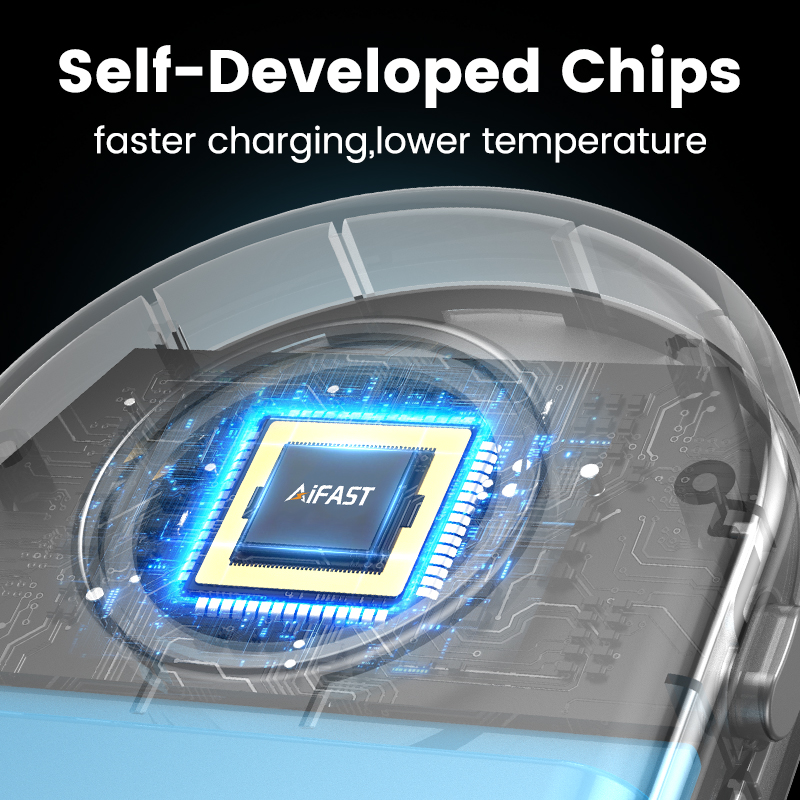
A factory’s PCBA R&D capability is often hidden but defines the upper limit of your partnership.
Comparison:
| Mode | Description | Pros | Cons |
|---|---|---|---|
| Mode A: Trading/Assembly Factory | Buys ready-made fast charge chips, outsources PCB layout & SMT, assembles final product | Fast startup | Every tech change requires supplier coordination; modifications take weeks |
| Mode B: Vertically Integrated Factory (AOVOLT/Shenzhen ESC) | Own R&D engineers, in-house SMT, full schematic→layout→debug | Fast iteration, full control | Requires initial investment in infrastructure |
Impact: Changing a PPS voltage range takes 3–4 weeks in Mode A vs. 5 working days at AOVOLT. For time-sensitive e-commerce, this 16–day gap is critical.
Self-developed PCBA also allows firmware customization (battery display, charging animation, NFC pairing), impossible with black-box ready-made solutions. Your guide to 15W Magnetic Wireless Chargers: Maximum Performance and Safety.
OEM/ODM Customization: From Sketch to Marketable SKU
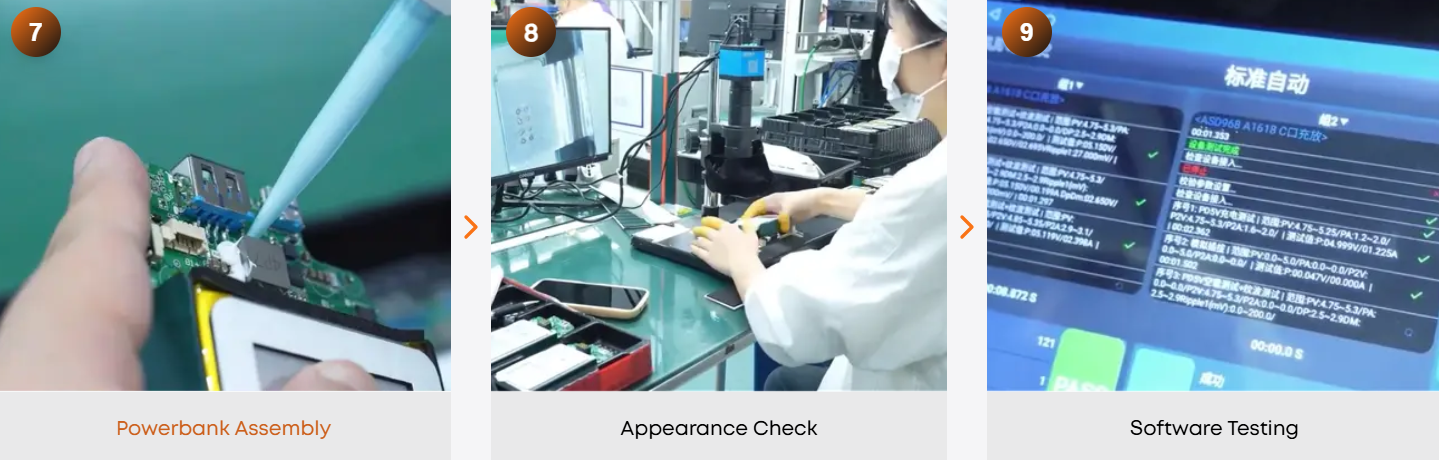
Many factories claim OEM/ODM but only print logos or change colors—minimal business value.
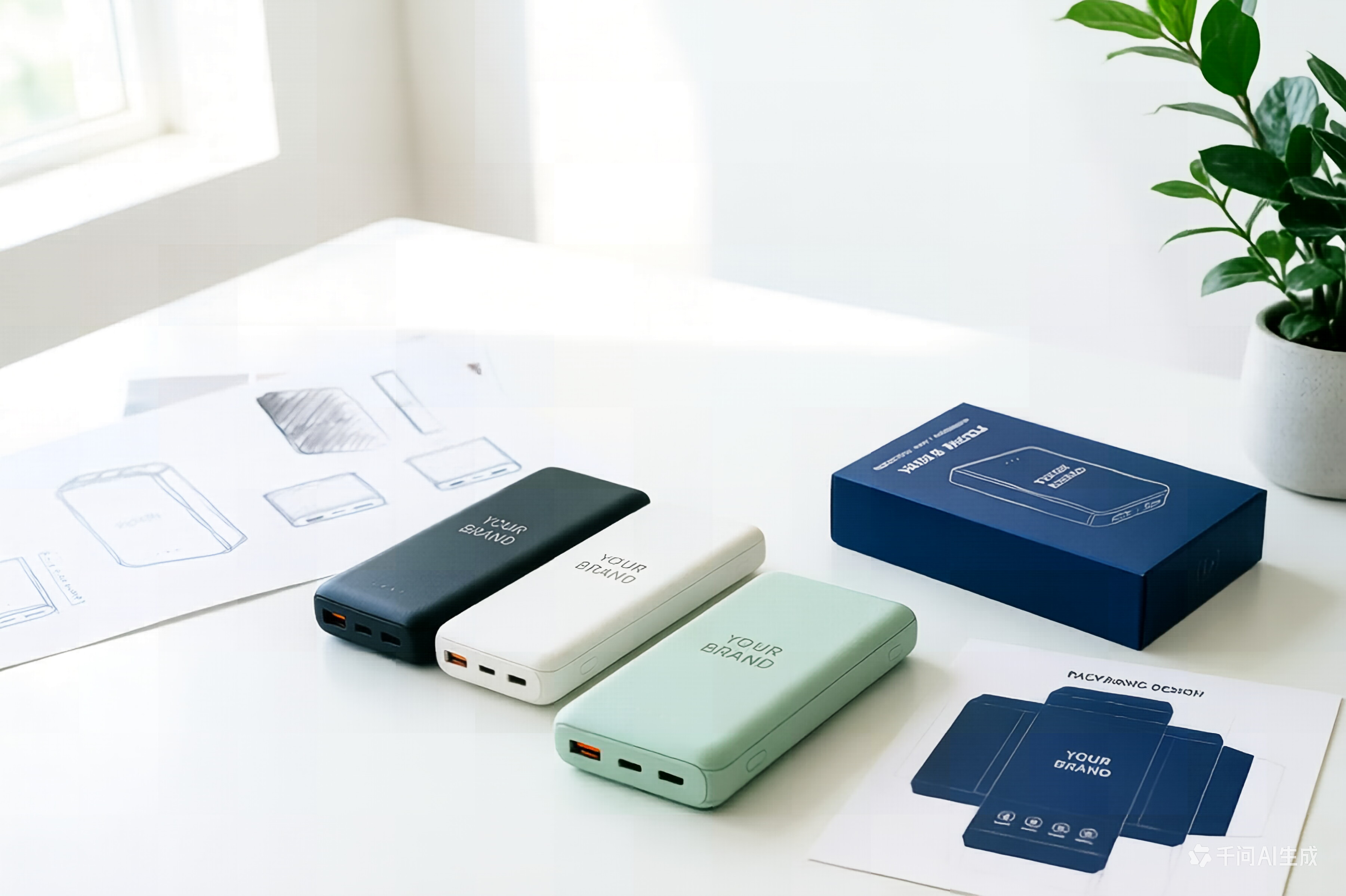
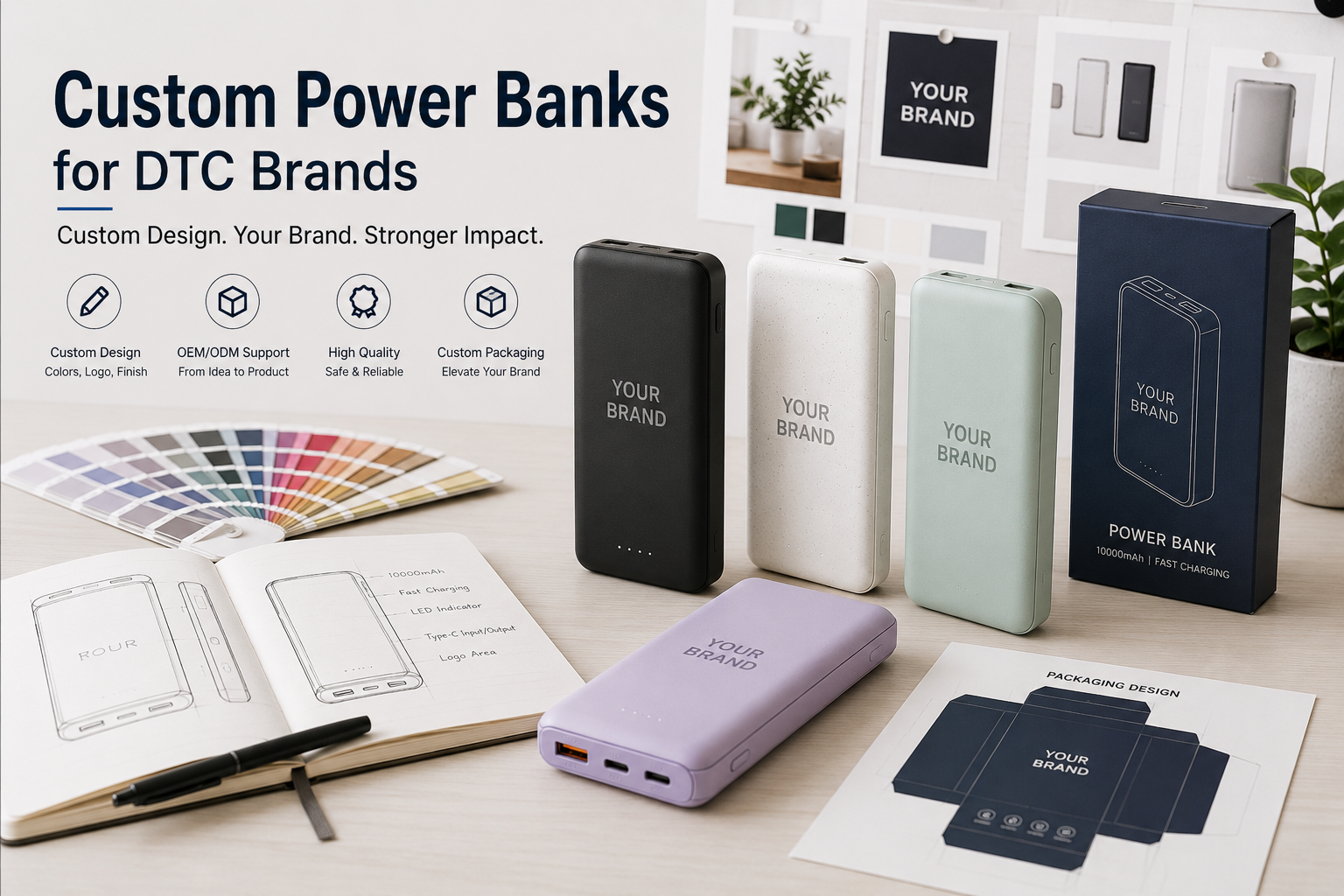
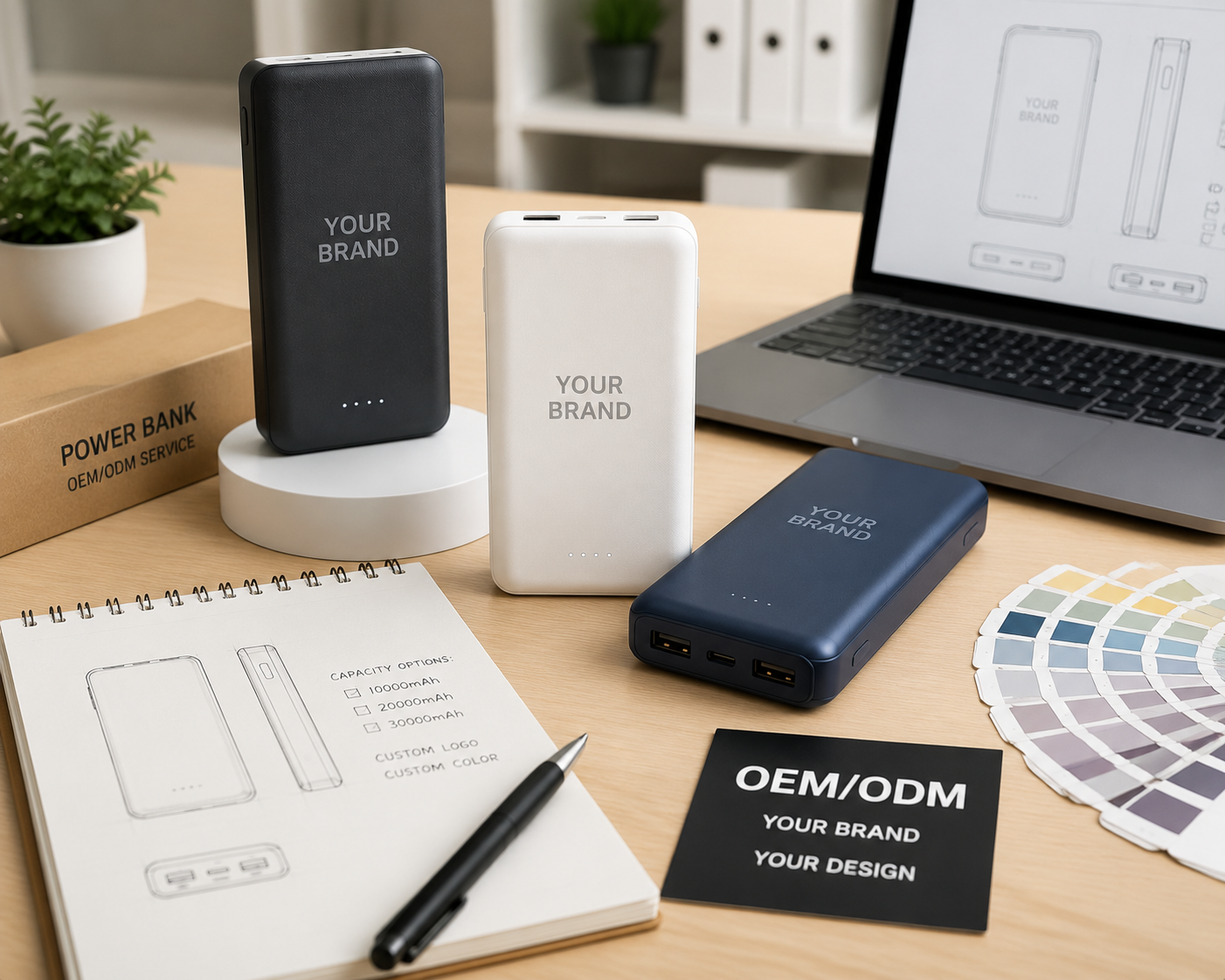
True OEM/ODM: Involves industrial design (ID) to create a unique shape, then moves from sketch → mass production entirely in-house:
Process:
R&D → ID Design → Mold Making → Injection Molding → PCBA Integration → Assembly → QC
Key points:
- ID Design: Shape, CMF (material/color/finish), and functional interface layout confirmed; 3D model & Keyshot render delivered.
- Mold Making: CNC + EDM in-house; steel P20/718H; 200,000+ injection cycles. First trial mold in 18–22 working days; max 3 iterations.
- Injection Molding: Wall thickness ±0.05mm (critical for Qi2 efficiency & thermal performance).
- PCBA & Assembly: SMT with SPI & AOI; burn-in test ≥2 hours under full load; early failures discarded.
This workflow is the result of 15 years of continuous improvement driven by return and complaint data.
Patented Appearance: Creating a Real Moat for Cross-Border Sellers
Returning to the German buyer’s story: the issue was not quality but patent infringement. Apple’s MagSafe patents cover:
- Magnetic array polarity layout
- Coil-to-magnet relative position
- Circular recess and casing curvature
80%+ of generic magnetic power banks overlap with these patents.
AOVOLT solution: Design-Around from the ID stage. Steps:
- Patent search in USPTO & EPO for target market
- Avoid risky design zones
Techniques:
- Change outer diameter of magnetic array
- Use non-circular casing (D-shaped, transitional forms)
- Relocate charging indicators & buttons
We can assist in registering a design patent in China and target markets, converting differentiation into a defensible IP asset. Amazon sellers gain a patent number to cite during IP complaints, enabling proactive defense.
Dongguan Vertical Integration: Stable High-Volume Delivery
For B2B wholesalers and brand owners, stable delivery in peak season depends on production structure, not sales promises.
Shenzhen ESC’s Dongguan facility:
- Injection molding: 12 full servo machines, in-house, no mold sharing
- SMT lines: 4 fully automatic, 8,000 PCBA/day per line
- Assembly staff: 150 regular, expandable to 220; average tenure >3 years
- Warehousing & logistics: 1,200 m²; supports batch storage, FBA timing
Lead times:
- Standard SKU: 22 days (3 production + 7 QC/packaging)
- Custom SKU: 18–30 additional days (mold complexity dependent)
Predictable delivery beats optimistic promises for planned procurement.
FAQ: Top Five Buyer Questions Before Purchasing Magnetic Wireless Power Banks
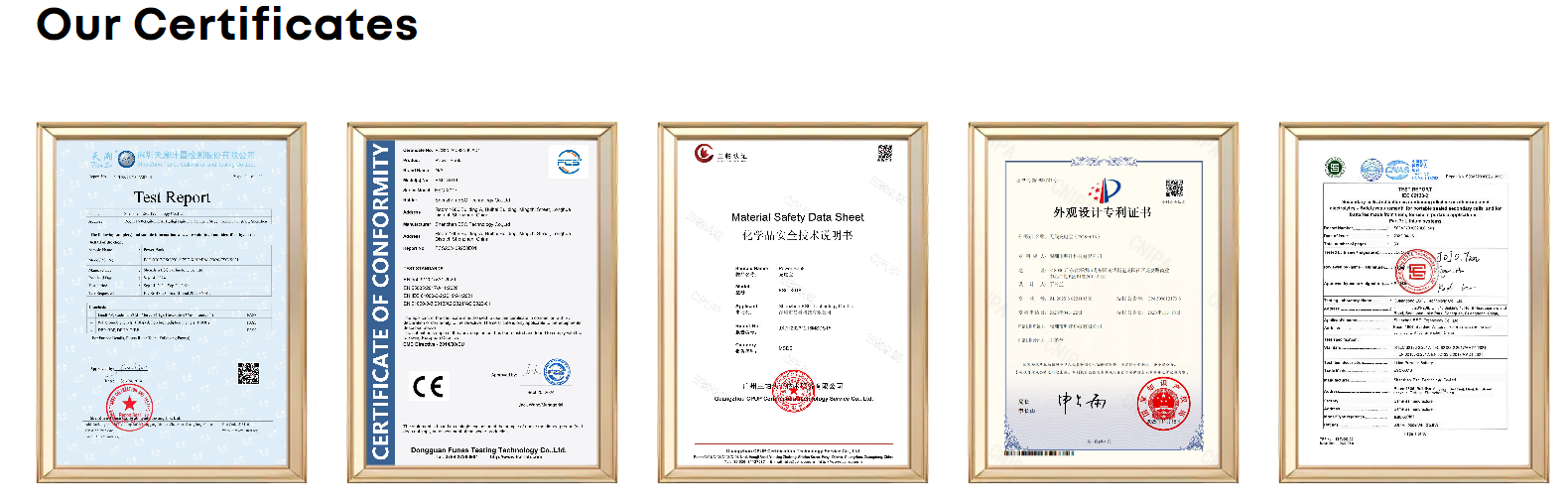
Q1: Certifications and required documents for EU/US markets?
A: CE, FCC, RoHS, UN38.3 included. Middle East & Southeast Asia certifications optional; 4–8 week extra cycle. Documents can be pre-reviewed.
Q2: Supported fast charge protocols? Compatible with various brands?
A: USB PD 3.0 (PPS), QC 3.0/4.0+, Huawei FCP/SCP, Samsung AFC, Apple 2.4A/BC1.2, MTK PE 3.0, Qi2 15W. Covers 95%+ of smartphones. Special requests can be discussed at PCBA customization stage.
Q3: MOQ for OEM customization and prototyping costs?
A: Logo + color: 500 units. Full customization: 1,000+ units depending on complexity. Standard sample: 2 free units; custom mold cost offset in mass production.
Q4: How to avoid patent infringement with Apple MagSafe?
A: Qi2 coil WPC standard used; ID route includes USPTO/EPO patent search and design-around. Patent analysis report available pre-sample. Option to register independent design patent.
Q5: Can firmware be customized (battery display, charging animation)?
A: Yes. Full MCU-level customization including display algorithm, LED animation, NFC pairing, low-battery vibration alerts. Incorporated in PCBA development stage without extra iteration cost.
Conclusion: Choosing the Right Factory Equals Choosing Your Growth Path
Magnetic wireless power banks still have growth potential in 2026. Qi2 adoption, 140W fast charge, and multi-device wireless ecosystems drive demand.
Competition has shifted from “cheapest product” to “safest, compliant, hard-to-copy product.” Generic routes are approaching a red ocean.
AOVOLT offers a differentiated path: from PCBA R&D → patented design → full protocol support → full-range temperature safety testing → 7-day sample → 22-day mass production. This combination ensures:
- Products work reliably on launch
- Responsibility exists if issues arise
- Stable supply at scale
Key questions to evaluate a magnetic power bank supplier:
- Is your PCBA self-developed or purchased?
- Can you provide Apple-patent-avoiding independent ID design?
- What is your sample lead time?
Answers reveal whether you are dealing with a true manufacturer or a factory-backed trader.
References:
Wireless Power Consortium – Qi & Qi2 Standard
Microchip – Qi2 (Qi v2.0) Technical Implementation Reference