
Portable Charging Demands Slim Designs Without Sacrificing Capacity
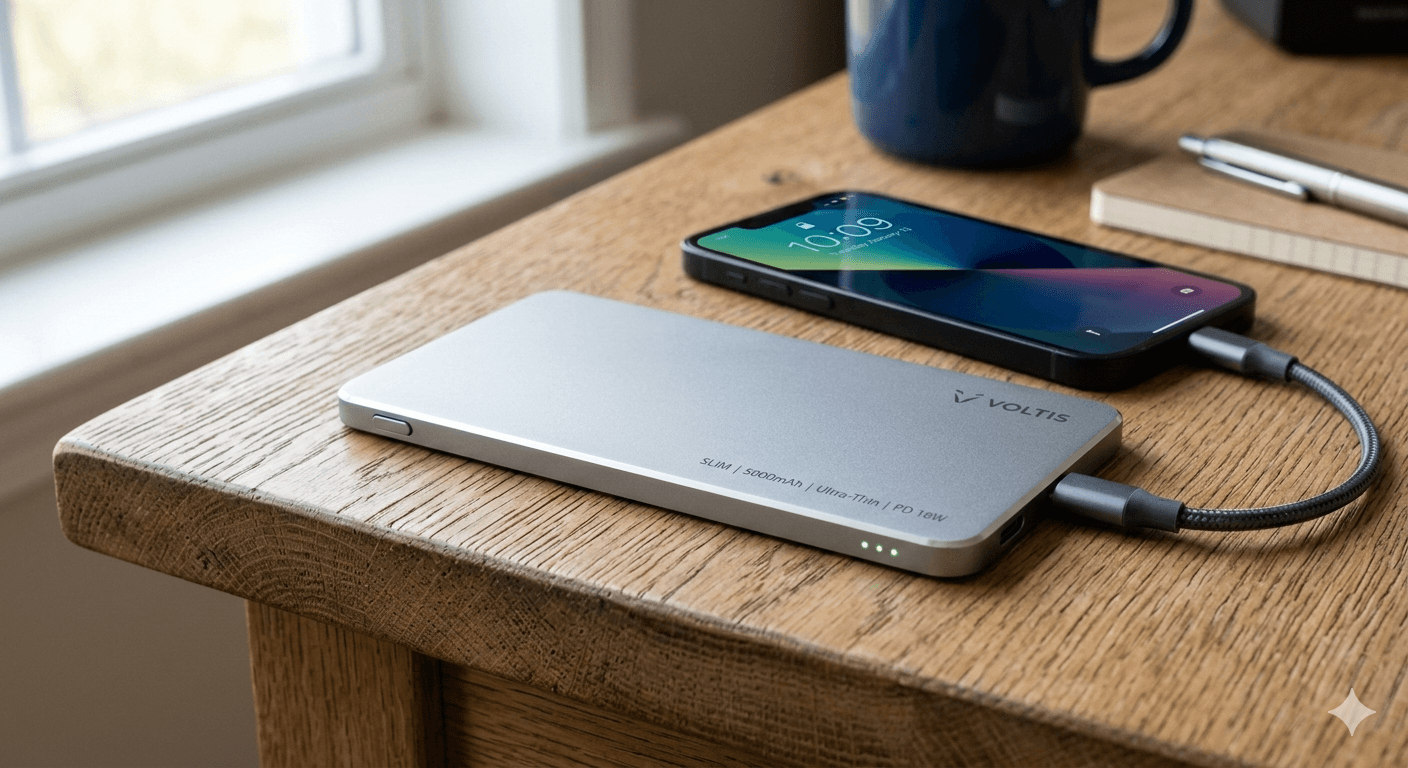
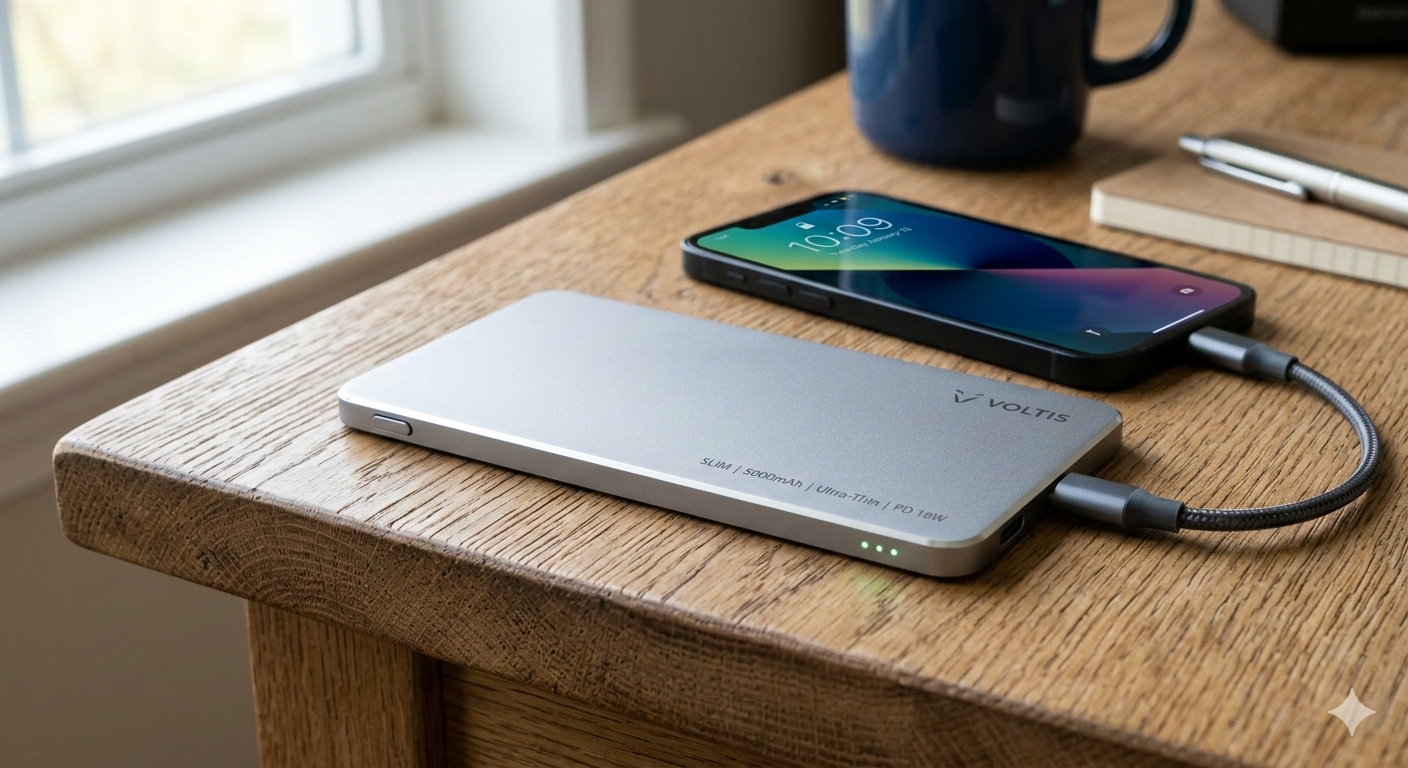
Slim power banks are becoming one of the most popular categories in the portable charging market. Consumers expect compact devices that easily fit into pockets or bags, yet still provide enough power to charge smartphones multiple times.
However, achieving a slim design while maintaining battery capacity and fast charging capability is technically challenging. Many ultra-thin power banks reduce battery capacity significantly or suffer from heat accumulation when charging at higher power levels.
For brands sourcing portable chargers, selecting the right slim power bank manufacturer becomes critical. Manufacturers must balance battery density, charging performance, thermal stability, and structural durability. At AOVOLT, slim power bank development focuses on optimized battery architecture, efficient power conversion systems, and carefully engineered internal layouts that allow compact products to deliver stable charging performance.
Battery Density Determines Whether a Power Bank Can Be Truly Slim
To achieve a thin design without sacrificing battery capacity, the most important factor is battery energy density.
Traditional cylindrical lithium batteries occupy significant space, which limits how thin a device can become. Slim power banks therefore rely on lithium polymer flat cells, which can be manufactured in customized shapes and sizes.
Typical battery options include:
| Battery Type | Thickness | Capacity Range |
|---|---|---|
| Standard cylindrical lithium battery | 10–12 mm | 5000–8000 mAh |
| Lithium polymer flat cell | 6–8 mm | 5000–12000 mAh |
| High-density polymer cell | 5–7 mm | 8000–15000 mAh |
High-density polymer cells improve energy density by approximately 20–30%, allowing manufacturers to maintain usable battery capacity while reducing overall device thickness.
When sourcing products from a slim power bank manufacturer, buyers should confirm the type of battery cells used and request battery specifications such as cycle life, discharge rate, and safety testing results.
At AOVOLT, slim power bank designs use high-density polymer cells with discharge rates between 2C–3C, which ensures stable current delivery during fast charging while maintaining long battery lifespan.
Internal Layout Must Balance Thin Structure and Heat Control
Slim power banks require carefully engineered internal layouts. In compact devices, batteries, circuit boards, charging ports, and thermal components must all fit within a limited space.
If internal layout is not optimized, heat accumulation becomes a common problem during fast charging.
Typical internal components include:
-
lithium polymer battery cells
-
fast charging controller board
-
USB-C charging interface
-
copper heat dissipation layers
The internal structure of a slim power bank must distribute heat efficiently. Thermal dissipation layers and optimized component placement help maintain stable operating temperatures during charging cycles.
Typical product dimensions include:
| Product Type | Thickness | Weight |
|---|---|---|
| Standard power bank | 20–25 mm | 280–350 g |
| Slim power bank | 10–14 mm | 180–230 g |
| Ultra-slim design | 8–10 mm | 150–200 g |
Reducing thickness by nearly 40–50% while maintaining charging performance requires careful structural design. This is one of the key capabilities buyers should evaluate when selecting a slim power bank manufacturer.
Fast Charging Capability in Thin Portable Chargers
Modern smartphones increasingly support fast charging technologies such as USB-C Power Delivery and Quick Charge. Slim power banks must therefore support these protocols without generating excessive heat.
Typical fast charging configurations include:
| Charging Interface | Output Power |
|---|---|
| USB-C Power Delivery | 20W–30W |
| USB-A Quick Charge | 18W |
| Wireless charging | 10W–15W |
Efficient power conversion circuits are essential in slim designs. High-efficiency DC-DC converters help reduce energy loss and heat generation.
Modern fast charging controllers can achieve conversion efficiency levels above 90%, which significantly improves charging stability.
A reliable slim power bank manufacturer should therefore provide detailed charging protocol support and performance data rather than simply advertising peak output wattage.
Safety Systems Are Critical in Compact Battery Products
Slim power banks pack high-capacity batteries and electronic circuits into smaller enclosures. Without proper safety systems, overheating and battery damage may occur during charging.
Essential safety protections include:
Battery protection
-
overcharge protection
-
over-discharge protection
-
overcurrent protection
-
cell balancing systems
Charging safety mechanisms
-
temperature monitoring sensors
-
short circuit protection
-
voltage regulation control
Most international markets also require certification compliance.
Typical certifications include:
-
CE certification
-
FCC electromagnetic compliance
-
RoHS environmental compliance
-
UN38.3 lithium battery transport certification
Organizations such as the International Electrotechnical Commission (IEC) emphasize strict safety standards for portable lithium battery devices. These safety requirements help ensure stable operation during consumer use and transportation.
When sourcing products from a slim power bank manufacturer, buyers should verify certification reports and battery safety documentation.
Export and Logistics Challenges for Lithium Battery Products
Portable power banks contain lithium batteries, which are classified as regulated goods in international transportation.
Typical export requirements include:
-
UN38.3 battery transport testing
-
MSDS battery safety documentation
-
certified packaging for lithium batteries
-
battery capacity labeling
Manufacturers must design packaging that protects battery products during shipping and prevents short circuits.
For global distributors, working with suppliers who understand international battery transport regulations helps avoid customs delays and shipping restrictions.
AOVOLT provides export documentation and compliant packaging solutions to ensure power bank products can be shipped safely to international markets.
Key Criteria When Selecting a Slim Power Bank Manufacturer
When evaluating suppliers, buyers should consider several technical and manufacturing factors.
Important evaluation criteria include:
-
battery energy density and cell quality
-
charging protocol compatibility
-
structural durability
-
safety certification compliance
-
production capability and testing standards
A qualified slim power bank manufacturer should provide product specifications, battery safety documentation, and testing reports to support procurement decisions.
Frequently Asked Questions
Q1: What thickness is realistic for a slim power bank?
Most slim power banks range between 8–14 mm depending on battery capacity. Designs thinner than 8 mm often require reduced battery capacity.
Q2: Can slim power banks support fast charging?
Yes. With optimized circuit design, slim power banks can support 20W–30W fast charging, which is sufficient for most smartphones.
Q3: Are slim power banks safe for international shipping?
Yes, provided the product meets lithium battery transport requirements such as UN38.3 certification and includes MSDS documentation.
OEM Development for Slim Portable Power Banks
Launching slim portable chargers requires coordination between battery engineering, electronic design, and manufacturing processes.
AOVOLT supports product development through:
-
slim power bank product design
-
battery configuration optimization
-
prototype validation testing
-
large-scale manufacturing
Through these capabilities, brands can develop compact portable charging products tailored to modern smartphone users.
Explore power bank products:
https://www.esccharge.com/products/
For OEM customization solutions:
https://www.esccharge.com/solution/customized-solution