
When Multiple Devices Connect, Charging Stability Breaks First
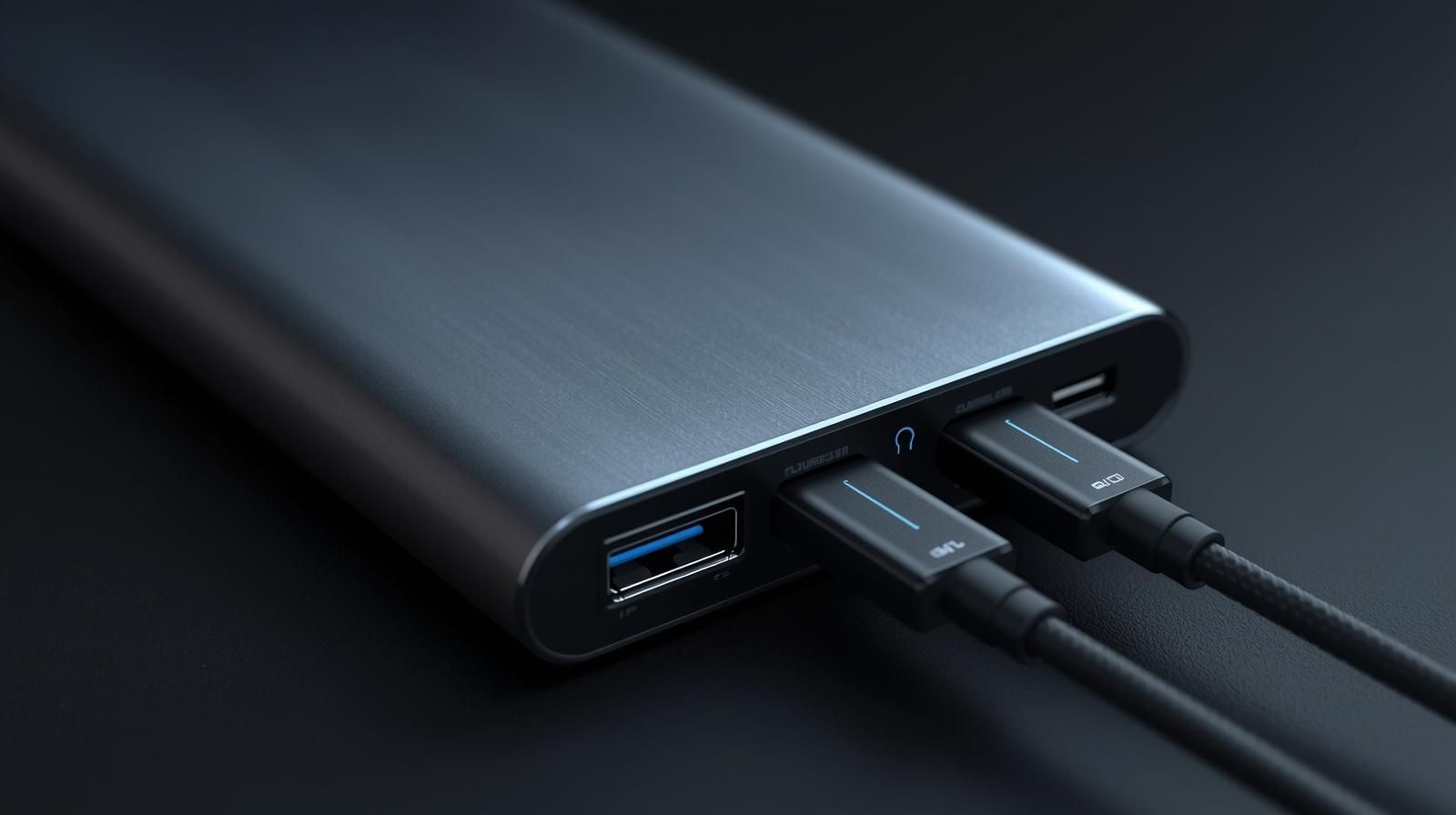
In real usage, instability appears the moment different devices are connected to the same power bank. A laptop starts drawing high voltage, a phone requests PPS fine adjustment, and another device enters with QC protocol. Within seconds, voltage begins to fluctuate, charging speed drops, and in some cases devices reconnect repeatedly.
For B2B buyers, this is not just a performance issue — it directly leads to higher return rates, inconsistent user experience, and negative feedback in end markets.
The root problem is not lack of protocol support, but lack of coordination between them.
At AOVOLT, we address this by building a unified protocol control system, integrating dynamic power allocation, coordinated handshake management, and thermal-linked output regulation. Instead of treating protocols independently, the system manages them as a single controlled structure, ensuring stable output even under mixed-device conditions.
This is what defines a reliable multi-protocol fast charging power bank.
Protocol Conflicts and Power Allocation Instability
The core issue is not protocol support itself, but how protocols interact with each other under load.
Each protocol has different requirements:
-
PD requires fixed voltage levels (5V / 9V / 12V / 20V)
-
PPS requires continuous voltage adjustment (3.3V–11V range)
-
QC operates with step-based voltage switching
When these operate simultaneously, the system must prioritize and redistribute power dynamically. If not properly controlled:
-
Voltage may drop when switching between modes
-
Devices may renegotiate repeatedly
-
Output efficiency decreases
-
Internal heat increases rapidly
AOVOLT addresses this by implementing a unified protocol management layer, where all charging requests are processed through a shared control system rather than independent port logic.
This is the difference between basic compatibility and true system-level control in a multi-protocol fast charging power bank.
Thermal Behavior Under Fast Charging Conditions
Fast charging increases current flow, which directly increases heat generation. In multi-protocol systems, heat is not constant — it fluctuates based on negotiation cycles and load redistribution.
In poorly designed products, heat accumulates in specific areas:
-
Power conversion components
-
Battery discharge path
-
Protocol control IC zones
Over time, this leads to:
-
Charging speed throttling
-
Reduced efficiency
-
Safety risk
AOVOLT manages thermal behavior through:
-
Distributed internal layout to avoid hotspot concentration
-
High-efficiency conversion (>92%) to reduce energy loss
-
Temperature feedback linked to output control
This allows the multi-protocol fast charging power bank to maintain stable output even after extended use.
Performance Comparison Under Multi-Protocol Load Conditions
Test Conditions: 25°C ambient / dual-device load (PD + PPS) / 90 min continuous charging
| Performance Factor | Generic Solution | AOVOLT Design |
|---|---|---|
| Protocol switching delay | 300–600 ms | <150 ms (-60%) |
| Voltage fluctuation | ±10–15% | ≤ ±5% (-50%) |
| Efficiency under load | 85–88% | 91–93% (+5–7%) |
| Thermal rise after 1h | +28–35°C | +18–22°C (-35%) |
| Charging speed drop | 15–25% | <5% (-70%) |
| Device reconnection rate | 6–10% | <1% (-85%) |
The difference becomes more obvious over time. Stability is not tested in the first few minutes, but after continuous charging.
A well-designed multi-protocol fast charging power bank must maintain consistent behavior across changing load conditions.
Battery and Output Structure Impact Charging Stability
Beyond protocol control, the internal battery system plays a critical role.
Key factors include:
-
Cell type and discharge capability
High-rate cells maintain stable output under fast charging -
Voltage regulation design
Prevents sudden drop when load increases -
Conversion circuit efficiency
Reduces heat and improves usable output
AOVOLT uses high-rate lithium cells combined with optimized boost conversion circuits to ensure that output remains stable even when multiple protocols are active.
Without this, even the best protocol design cannot maintain consistent performance.
Safety and Certification Under Multi-Protocol Operation
When multiple fast-charging protocols are active, safety requirements increase significantly.
AOVOLT integrates:
-
CE / FCC / RoHS certification
-
Overcurrent and overvoltage protection
-
Short-circuit protection
-
Temperature protection linked to real-time monitoring
Testing is conducted under real multi-protocol load scenarios rather than single-device conditions.
In B2B deployment, unstable multi-protocol behavior is one of the leading causes of return rates and safety complaints.
Why Stability Defines OEM Value in Power Bank Supply
For OEM buyers, performance consistency is more critical than maximum specifications.
Common issues in bulk orders include:
-
Sample performance not matching production
-
Inconsistent charging speed across batches
-
Thermal variation between units
AOVOLT ensures stability through:
-
Fixed BOM after validation
-
Controlled PCBA layout
-
Stable firmware across production
This ensures that every multi-protocol fast charging power bank performs consistently, regardless of production scale.
From Protocol Support to System-Level Stability
Supporting multiple protocols is no longer enough. The real challenge is managing them as a unified system.
When protocol negotiation, power allocation, battery output, and thermal control are aligned, charging becomes stable and predictable. When they are not, instability appears immediately under real usage conditions.
AOVOLT focuses on system-level design to ensure that every multi-protocol fast charging power bank delivers consistent performance across devices, usage patterns, and environments.
Explore power bank solutions:
https://www.esccharge.com/products/power-bank
For OEM customization and development:
https://www.esccharge.com/solution/customized-solution