

Slim Power Bank Manufacturer: Compact Design Meets High Performance
Why Slim Power Banks Are the New Standard
The rise of minimalism and mobile lifestyles has pushed the market toward slim power banks that balance power and portability.
Users want a power bank that slides easily into a pocket, yet still charges phones, tablets, and earbuds efficiently.
According to Statista, the demand for compact portable chargers has grown over 35% since 2020, particularly in urban regions and travel retail markets.
This trend reshapes the focus of every slim power bank manufacturer, forcing innovation in circuit design, battery density, and thermal control.
How Ultra-Thin Power Bank Factories Optimize Space and Power
A ultra-thin power bank factory must strike a delicate balance — reduce physical volume without sacrificing battery capacity or safety.
Key Design Innovations
-
High-Density Lithium Polymer Cells
-
Flat cells with up to 250 Wh/kg energy density, ideal for thin enclosures.
-
-
Single-Layer PCB Layouts
-
Reduces thickness by 30% while maintaining charging stability.
-
-
GaN Fast-Charging Integration
-
Enables PD3.0 and QC4.0 outputs up to 45W in a 10mm case.
-
-
Precision CNC Aluminum Housing
-
Provides rigidity and excellent heat dissipation.
-
-
Smart Power Distribution Chipsets
-
Automatically detect device voltage and adjust output dynamically.
-
By combining these features, slim power bank factories deliver compact yet powerful devices that appeal to both consumer brands and OEM distributors.
Comparing Slim vs. Standard Power Banks
| Feature | Slim Power Bank | Standard Power Bank |
|---|---|---|
| Thickness | 8–12 mm | 18–25 mm |
| Weight | 120–180 g | 250–400 g |
| Capacity | 5,000–15,000 mAh | 10,000–30,000 mAh |
| Output | PD 20W–45W | PD 65W–100W |
| Target Use | Everyday mobility | Extended outdoor use |
While slimmer designs trade a bit of raw capacity, they gain major advantages in portability and daily usability — a core reason why custom slim charger OEM solutions have surged in global demand.
OEM Customization and Production Flow
| Stage | Process | Duration |
|---|---|---|
| Concept Design | Select capacity, case, and brand concept | 3–5 days |
| Structural Layout | PCB design + shell mold configuration | 10 days |
| Sample Testing | Charging efficiency + safety check | 10–15 days |
| Certification | CE, FCC, RoHS, UN38.3, IEC 62133 | 15–20 days |
| Bulk Production | Automated assembly and packaging | 25–30 days |
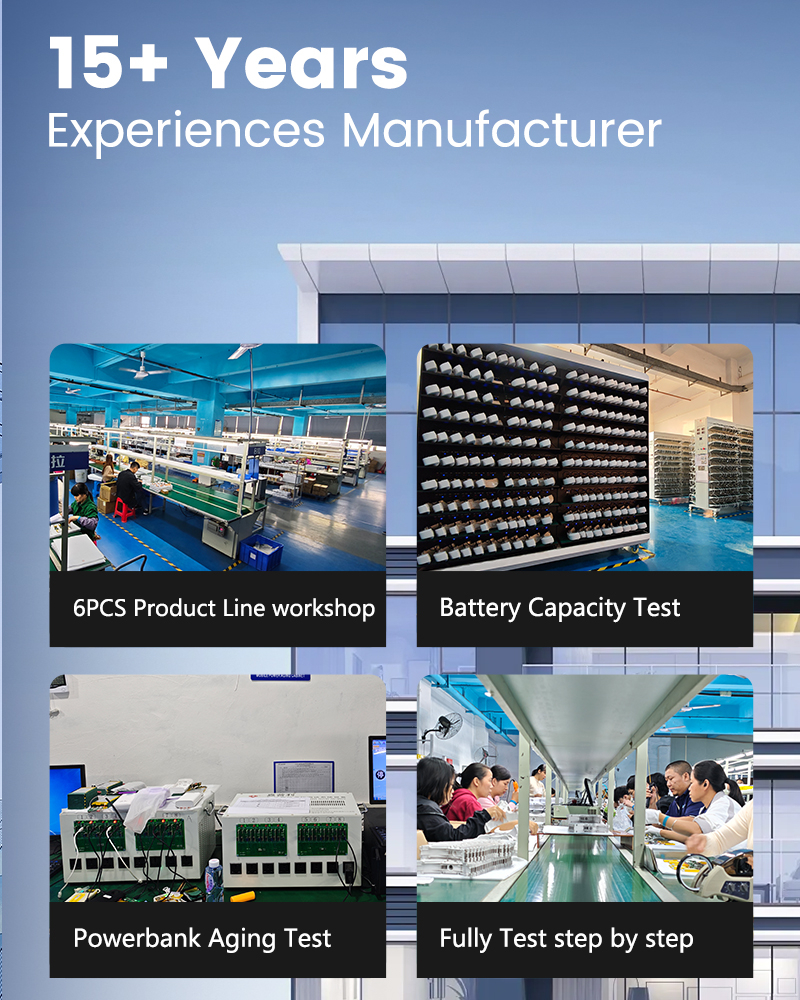
Leading slim power bank manufacturers such as ESCCharge integrate R&D, molding, and SMT lines under one facility — ensuring seamless OEM production and reduced delivery cycles.
Compliance and Safety Standards
High-density slim batteries require rigorous testing. OEMs typically adhere to IEC 62133 for rechargeable battery safety, ensuring each model meets international transportation and consumer protection standards.
| Standard | Function |
|---|---|
| UN38.3 | Battery air transport compliance |
| CE / FCC / RoHS | Electrical and environmental certification |
| IEC 62133 | Rechargeable lithium battery safety |
| MSDS | Material data and traceability |
| WPC Qi (optional) | Wireless charging module integration |
For deeper technical understanding, Battery University provides insight into how lithium-ion cells maintain stability and longevity in confined enclosures — a key challenge for slim power banks.
The Benefits of Slim OEM Design
-
Portability and Style — Sleek, travel-friendly, and compatible with modern gadgets.
-
Custom Branding Options — Surface logo engraving, matte finishes, or eco-material cases.
-
Global Compatibility — Dual USB-C and USB-A ports supporting international voltage.
-
Cost-Efficient Logistics — Lightweight units reduce shipping costs by up to 20%.
-
High Conversion Efficiency — GaN and PPS chips improve output performance by 15–20%.
Factories that combine slim profile design with PD charging technology offer OEM buyers a strong value proposition — minimal volume, maximum impact.
Use Scenarios
-
Travel & Commuting: Easy to carry for business travelers and daily commuters.
-
Corporate Gifting: Custom-engraved slim power banks as promotional giveaways.
-
E-Commerce Retail: Popular for minimalist product listings and influencer branding.
-
Hybrid Work Users: Perfect match for tablets, Bluetooth accessories, and phones.
These scenarios demonstrate how portable PD power banks are shaping the next phase of lifestyle-oriented electronics.
Common Questions
Q: How thin can an OEM power bank be made?
A: The thinnest models reach 8–9 mm with aluminum or ABS housing.
Q: Can slim models still support fast charging?
A: Yes. Many designs now support PD 20W–45W using GaN chipsets.
Q: What’s the MOQ for OEM production?
A: Usually 500–1000 units depending on customization level.
Q: Are there wireless versions available?
A: Yes. Some slim designs integrate 15W wireless coils without affecting form factor.
Q: How do manufacturers ensure battery safety in slim units?
A: By using flat Li-polymer cells with thermal insulation and dual protection ICs.
The Future of Portable Charging
Slim power banks represent the perfect blend of aesthetic minimalism and functional power.
As demand for lightweight, travel-ready devices continues to grow, OEM manufacturers are combining advanced GaN fast-charging with durable, elegant designs.
For brands seeking to build or customize their own slim charger series, visit ESCCharge Official Website to explore OEM options and production capabilities.