
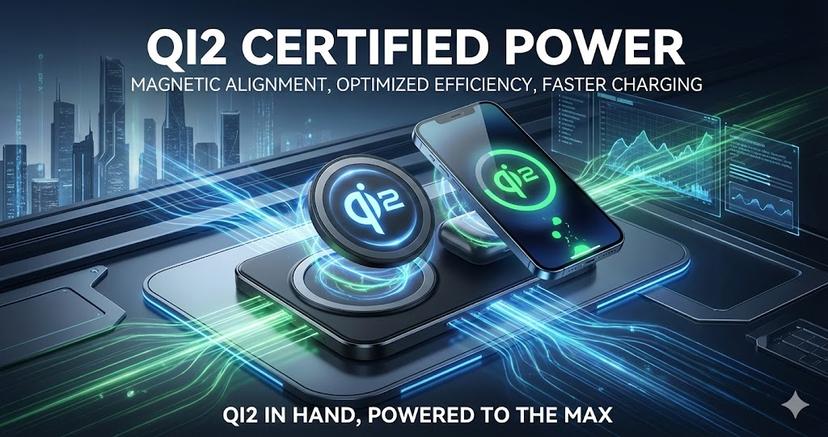

Why Magnetic Wireless Charging Solves Problems Standard Qi Pads Never Could
Wireless charging was supposed to simplify everything, yet early Qi pads brought a new list of frustrations:
-
Phones charged slowly unless placed at the exact right angle
-
Slight movement caused charging interrupts
-
Heat buildup reduced efficiency and hurt battery life
-
Different phone models had wildly different coil positions
-
Real-world environments (cars, desks, bedsides) made alignment nearly impossible
Users don’t want to babysit a charging pad.
They want something that clicks into place, stays locked, maintains temperature balance, and charges predictably.
This is why magnetic wireless chargers are overtaking standard Qi pads across global consumer electronics, hospitality, automotive, and corporate markets.
The magnet isn’t a convenience add-on — it’s a structural solution to a decades-old charging problem.
How Magnetic Wireless Charging Actually Works
At the core, magnetic wireless charging is simply Qi charging with a magnetic alignment system, but the internal engineering is far more complex.
1. Magnetic Positioning
A ring of high-grade magnets ensures that:
-
the phone snaps into the correct charging zone
-
coil overlap is maximized for power transfer
-
the device stays stable even in cars or unstable surfaces
-
wasted magnetic flux is reduced, improving thermal performance
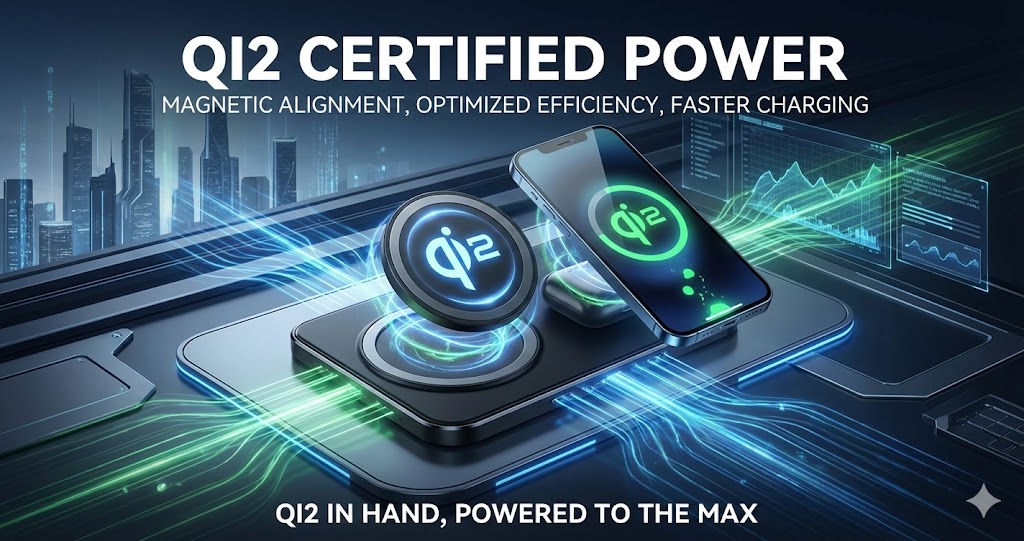
2. Wireless Charging Layer (Qi or Qi2)
Energy is transmitted through:
-
a transmitter coil
-
oscillating magnetic fields
-
a receiver coil inside the device
-
rectification circuitry that converts AC magnetic flux into battery-safe DC power
3. GaN Power Regulation
Modern magnetic chargers increasingly integrate GaN ICs, which allow:
-
faster switching frequencies
-
lower heat generation
-
higher stability during long charging cycles
-
compact form factors with better power density
4. Thermal & EMI Control
Magnetic chargers require multi-layer shielding to prevent:
-
overheating at the center coil
-
electromagnetic interference
-
charging speed drops due to thermal throttling
The result is a charging experience that feels effortless — but it is powered by precise engineering.
Magnetic Wireless vs Standard Qi Charging: What’s the Real Difference?
| Feature | Standard Qi Pad | Magnetic Wireless Charger |
|---|---|---|
| Alignment | Manual; error-prone | Automatic magnetic locking |
| Charging Speed | Often unstable | More stable, optimized 15–20W |
| Heat Control | Hotter | Faster heat dissipation |
| Device Movement | Causes interrupt | Secure and vibration-safe |
| Multi-Device Use | Difficult | Supports phones, earbuds, watches |
| Real-World Stability | Low | High — desk, bed, car, travel |
The consistent advantage comes from one principle:
perfect coil alignment creates perfect energy transfer.
How Manufacturers Engineer High-Performance Magnetic Wireless Chargers
A professional magnetic wireless charger must balance:
-
physics
-
materials science
-
firmware
-
heat management
-
charging protocols
Key engineering pillars include:
Coil Architecture
-
Multi-strand copper coil
-
optimized coil geometry for broader alignment tolerance
-
ferrite backing to reduce magnetic leakage
Magnetic System
-
N52/N54 rare-earth magnets
-
optimized pull force for safe attachment but easy removal
-
anti-vibration layout for car environments
IC and Power Management
-
GaN-based controllers for smaller sizes and cooler operation
-
real-time thermal balancing
-
adaptive charging curve for different brands
Build Materials
-
aluminum frames for heat dissipation
-
PC+ABS shells for durability
-
silicone rings for anti-slip surfaces
Every design decision influences performance, especially under heat, movement, or long charging sessions.
Application Scenarios Where Magnetic Wireless Charging Excels
Home & Office
-
stable alignment → fewer charging interruptions
-
silent, cable-free desk setup
Automotive
-
magnets counteract vibration
-
perfect for navigation mounts
-
supports fast charging while driving
Hospitality & Retail
-
user-friendly
-
low maintenance
-
high durability under constant use
Corporate Workspaces
-
shared desks
-
meeting rooms
-
wireless table modules
Travel & Portable Use
-
foldable stands
-
magnetic battery packs
-
multi-device travel kits
Magnetic wireless chargers fit environments where traditional Qi pads simply fail.
How to Choose the Right Magnetic Wireless Charger for Your Market
Consider Power Requirements
-
15W → universal fast wireless
-
20W → high-speed / multi-device ecosystems
-
hybrid → wireless + Type-C PD in one unit
Consider Form Factor
-
flat pad → minimalistic, everyday use
-
stand → video calls + desktop setup
-
car mount → requires anti-vibration engineering
-
3-in-1 dock → consumer electronics bundles
Material & Thermal Performance
Aluminum frames offer better heat control than standard plastic housings.
Device Ecosystem
Choose magnetic systems compatible with:
-
Samsung wireless charging
-
Google Pixel Qi
-
Huawei SuperCharge wireless
-
Multibrand Qi2
Certification Needs
Export markets require:
-
Qi / Qi2
-
CE
-
FCC
-
RoHS
-
MSDS
Frequently Asked Questions
Q: Are magnetic wireless chargers safe for all smartphones?
Yes—any Qi-compatible device works, and magnetic alignment protects the battery by reducing heat.
Q: Does magnetic charging reduce efficiency?
No. Coil alignment actually increases wireless charging efficiency and stability.
Q: Can magnetic chargers work through cases?
Yes—if the case includes magnetic rings or is thin enough for Qi transmission.
Q: Is GaN important for wireless chargers?
Yes. GaN keeps temperatures lower and improves efficiency, especially in compact designs.
Q: Do magnetic chargers support earbuds and watches?
Yes—many multi-device docks integrate second and third wireless coils.
Building a Better Magnetic Wireless Charging Future
Magnetic wireless charging is more than a trend — it's a structural improvement in how devices receive power.
As consumer electronics shift toward cleaner, portless designs, magnetic systems will become the default standard across homes, cars, offices, and public spaces.
For brands seeking stable manufacturing, balanced engineering, and OEM-ready solutions, exploring magnetic wireless charging is no longer optional — it’s a competitive advantage.
Discover magnetic wireless charging technologies, OEM capabilities, and full product solutions at https://www.esccharge.com/