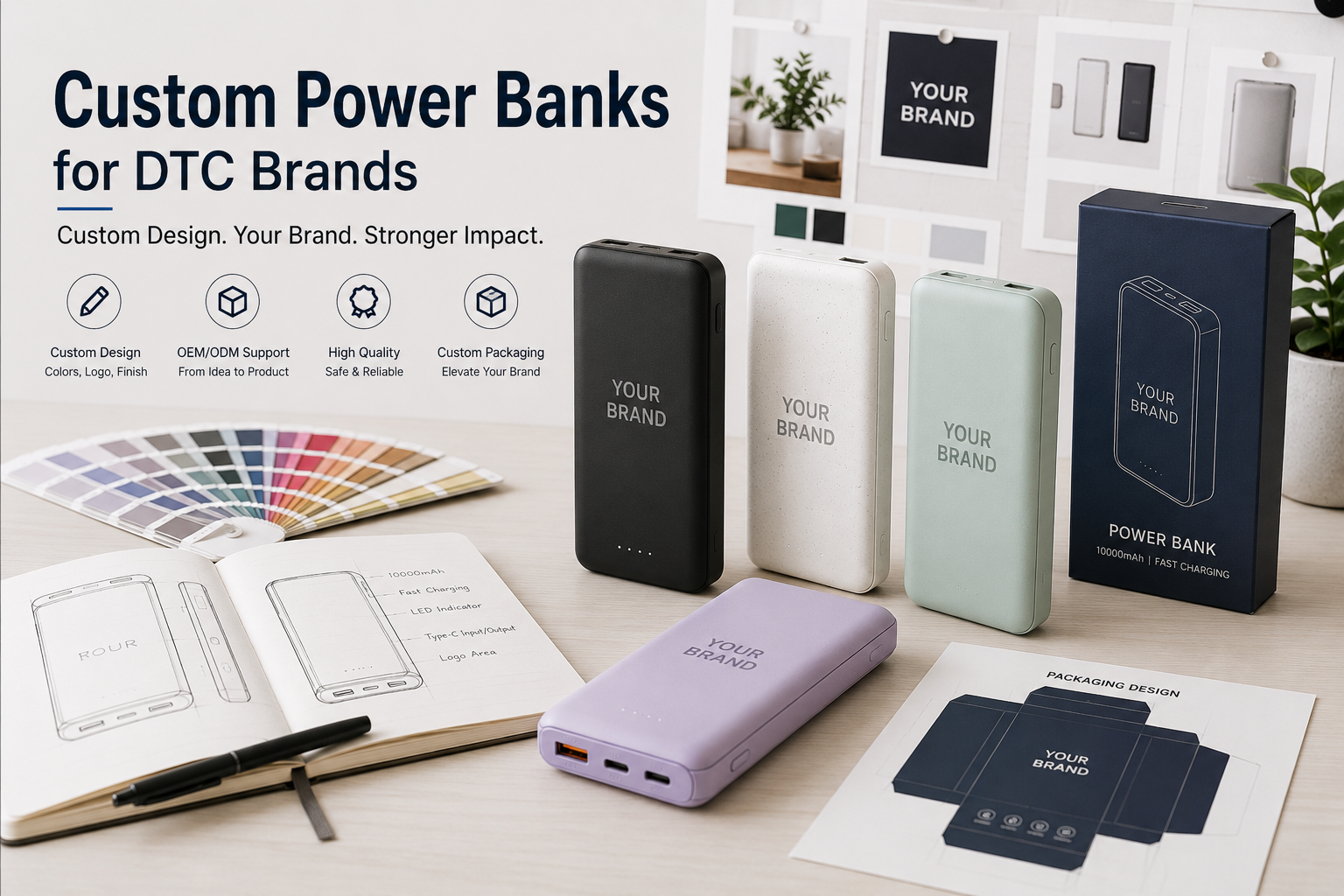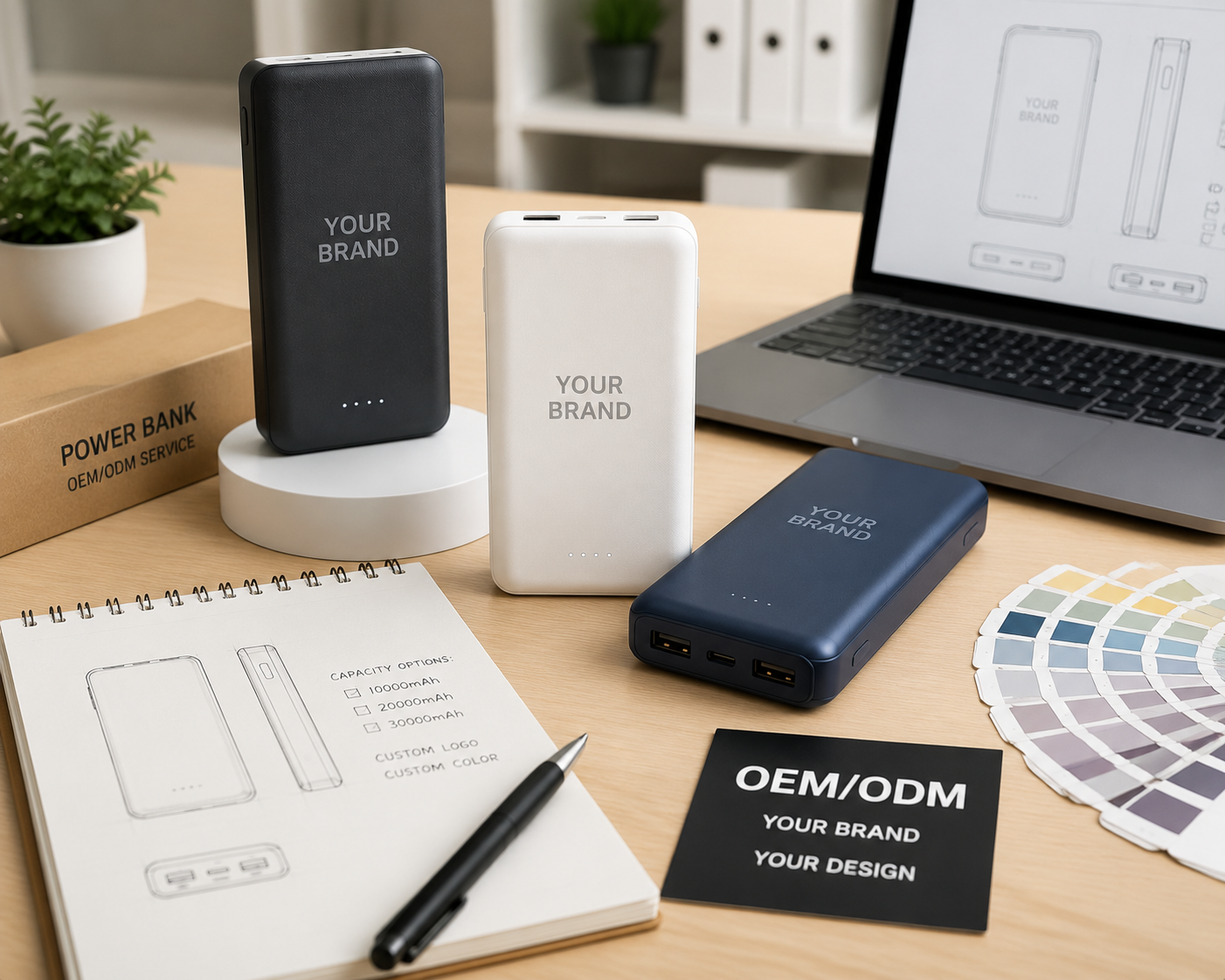

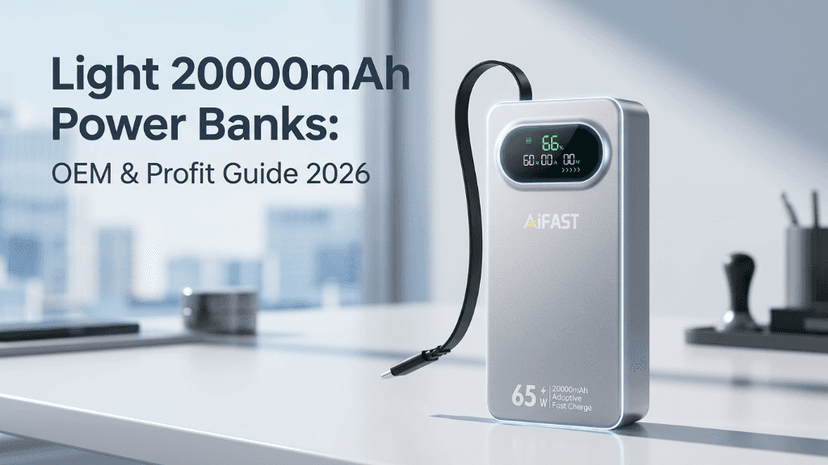
A 20,000mAh power bank can have a bulk purchase price as low as $6.50—but what you actually get in hand is very likely not 20,000mAh.
This is the most common yet least openly discussed issue in the B2B procurement market. In the Chinese market, there are over 3,000 SKUs labeled as "light 20000mAh power bank." However, according to third-party testing, only less than 30% reach at least 85% of their stated capacity. In early 2026, the European Consumer Safety Organization (BEUC) publicly named seven power bank brands from Shenzhen for false capacity claims and falsified cell safety data. This is not an industry secret—it is the starting point for procurement decisions.
This article is aimed at distributors, corporate gift procurement managers, and brand ODM buyers, providing a full decision-making framework from technical identification and supplier audits to compliance certifications. After reading, you will know how, starting from a minimum order quantity of 500 units, to obtain lightweight 20,000mAh products that truly comply with UN38.3 and CE dual certifications, achieve measured capacity no less than 92% of the stated value, and keep landed costs below $9 per unit.
The Real Meaning of "Light 20000mAh Power Bank" for B2B Buyers

The term “Light” carries two completely different business logics in this category, and confusing them can directly lead to procurement failures.
The first meaning is lightweight design. The market average weight of mainstream 20,000mAh power banks falls between 390–470g. Truly "light" products refer to units weighing less than 300g, achieved through high energy-density solutions. These products use Lithium Polymer Cells combined with a Carbon Fiber Unibody Shell, reducing weight by over 30% while maintaining the same capacity. The Nitecore Carbo 20000 is currently the most representative reference in public channels, weighing 295g with a retail price close to $180. Its B2B procurement logic versus its manufacturing cost will be analyzed in detail later.
The second meaning is LED lighting function. 20,000mAh power banks integrated with LED flashlights or ambient lights are rapidly expanding in the outdoor gear, emergency supply, and engineering equipment channels. Procurement decisions for these products are more complex: buyers need to verify the lamp’s IP protection rating (usually IP54 or higher), lumen output, and whether the LED module accelerates cell heat buildup. The standards for factory inspection differ completely between these two needs.
Industry Benchmarks for Weight and Capacity: Essential Numbers
The following table consolidates technical specifications from mainstream 20,000mAh products on the global market in 2025, providing reference benchmarks for procurement:
| Casing Material | Typical Weight | Cost Premium (vs ABS baseline) | OEM MOQ | Applicable Channel |
|---|---|---|---|---|
| ABS Engineering Plastic | 420–480g | Baseline | 500 units | General gifts / Retail |
| PC+ABS Composite | 380–430g | +8–12% | 500 units | Corporate gifts / E-commerce |
| Aluminum Alloy | 350–400g | +18–25% | 1,000 units | Business / High-end gifts |
| Polymer Soft Pack + PC Frame | 290–330g | +22–30% | 1,000 units | Outdoor / Tech brands |
| Carbon Fiber Unibody | 260–300g | +55–80% | 2,000 units | Professional outdoor / Military & Police |
Data Note: Cost premiums for aluminum and carbon fiber shells can be reduced to the lower range in the table through mold amortization for orders over 5,000 units.
Gravimetric Energy Density is the core indicator to determine if "lightweight" has technical backing. Mainstream polymer cells have energy densities of 230–260 Wh/kg, while low-quality lithium-ion prismatic cells typically reach only 180–200 Wh/kg. To achieve the same capacity, heavier cells are required, and manufacturers often reduce actual cell quantity while overstating capacity. This is the first technical entry point to detect false claims.
LED Versions: Real Needs vs. Marketing Hype
From late 2025 to early 2026, North America and Europe saw a noticeable increase in disaster preparedness procurement. The U.S. FEMA updated corporate emergency supply guidelines in 2026, recommending "mobile energy storage devices with lighting functions." This created quantifiable B2B incremental demand for the light 20000mAh power bank with LED flashlight segment.
However, not all LED-equipped products are worth purchasing. Below is a quick selection matrix:
| Procurement Scenario | LED Function Necessity | Minimum Illumination | Certification | Additional Requirements |
|---|---|---|---|---|
| Employee Travel Benefits | ❌ Not required | — | Standard CE/FCC | — |
| Outdoor Activities / Mountaineering | ✅ Core function | ≥100 lumens, IP54 | UN38.3 + IP certification | — |
| Emergency Supplies | ✅ Strong requirement | ≥200 lumens, IP65 | UN38.3 + RoHS | — |
| Engineering Site Equipment | ✅ Auxiliary function | ≥80 lumens | Per region requirements | — |
| Promotional Gifts / Exhibition Giveaways | ⚠️ Budget-dependent | ≥30 lumens | Standard CE | — |
The integration method of the LED module directly affects product lifespan. Low-quality designs connect the LED driver circuit directly to the main cell, accelerating cycle life degradation, often reducing capacity by over 20% after 300 charge/discharge cycles. Professional suppliers use an independent buck converter for the LED module; this detail should be explicitly required in the Spec Sheet rather than assumed.
Lightweight Technology Map: How Weight is "Engineered Away"
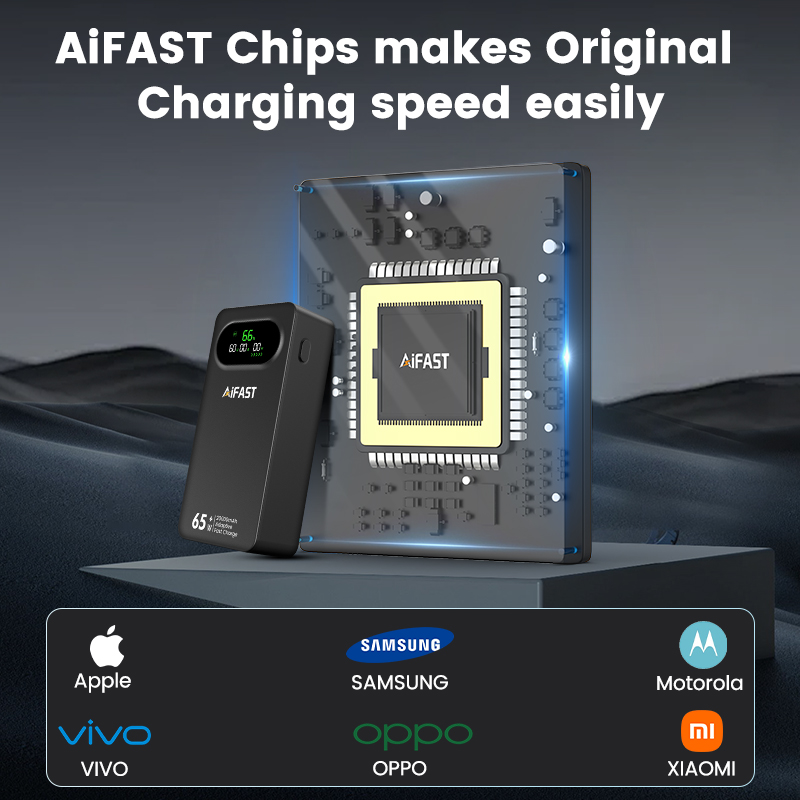
Most procurement guides stop at listing material names. To explain to brands or retail partners why a product is worth a premium, you need to clearly show where the weight comes from and how it is reduced.
Weight composition is generally divided into three parts:
- Cell pack: 68–75% of total weight
- Casing & structural components: 18–22%
- PCB & wiring: 7–12%
The core battlefield for lightweight design is the cell, not the casing.
Cell Selection: Polymer vs. Lithium-ion Cylindrical Cells
Lithium-ion cylindrical cells (18650/21700) offer a mature supply chain and lower unit cost. However, their cylindrical shape leaves unavoidable internal gaps, with space utilization typically 65–72%.
Lithium Polymer Cells can be custom-cut to fit the casing shape, increasing space utilization to 88–94%. This allows either more actual energy in the same volume or compresses the same energy by over 20%.
For B2B buyers, choosing polymer cells is not just about "lighter"—their thickness can be reduced from 22mm (cylindrical) to 13–15mm. This size difference determines whether the product fits inside a suit pocket for corporate gifts, subtly influencing end-user repurchase behavior. Provide you with 20000mAh mobile power supply: detailed explanation of high-speed fast charging.
PCB Conversion Efficiency: The Second Hidden Battlefield for False Capacity
Beyond nominal cell capacity, the boost converter on the PCB determines actual output energy. Low-end solutions typically have 82–85% conversion efficiency, meaning a 20,000mAh-labeled product may deliver only 16,400–17,000mAh to devices. High-end solutions reach 91–93% efficiency. This difference is rarely disclosed in procurement contracts.
Verification is straightforward: require suppliers to provide third-party discharge curve reports under standard conditions (5V/2A, 25°C), not just internal tests. Reputable factories deliver measured Wh values as contract benchmarks, which should be no less than 88% of nominal capacity.
Supplier Audit Framework & OEM Implementation Path
Five-Dimensional Factory Audit Standards
After technical selection, supply chain stability becomes the real cost factor for B2B procurement. The following five dimensions distinguish leading factories from simple assembly plants:
| Audit Dimension | Leading Vertically Integrated Factory | Standard OEM Assembly Plant | Verification Method |
|---|---|---|---|
| Cell Source | Grade A, with traceable brand proof | B/C mix, no traceability | IQC inspection report |
| Mold Capability | In-house, supports custom casing | Dependent on external mold suppliers, cycle uncontrollable | On-site mold room & CNC check |
| Injection Molding | In-house, tolerance ±0.1mm | Outsourced, quality control at breakpoints | Machine model & daily output data |
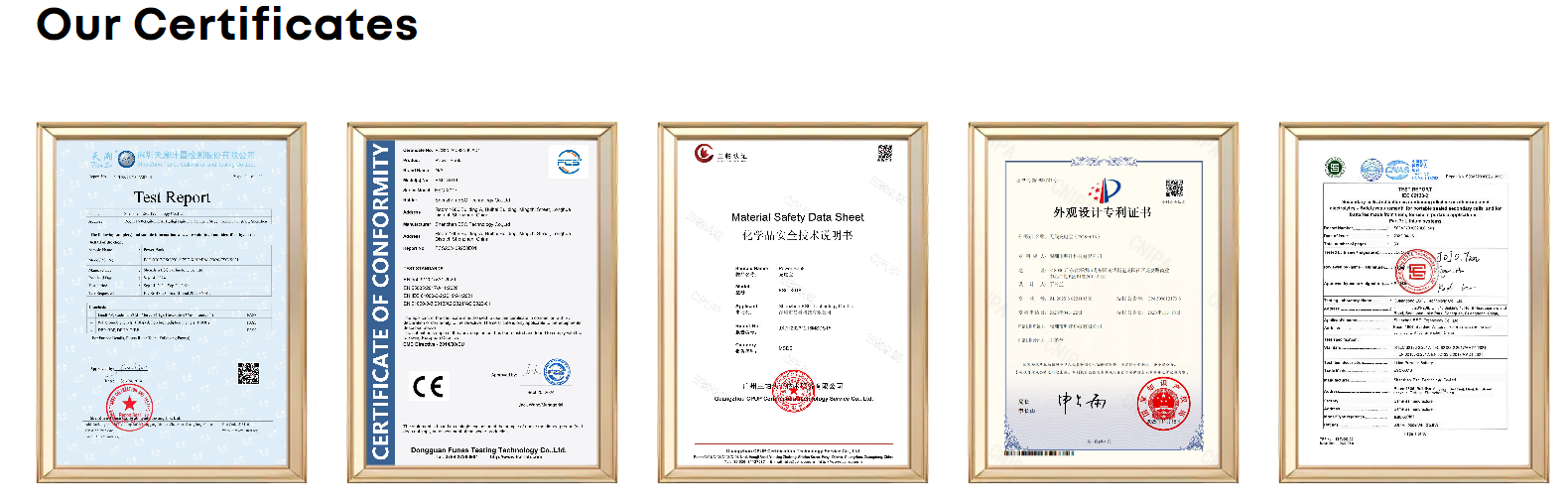
| Certification | Original UN38.3, CE, FCC | Copies or borrowed certificates, unverifiable online | Check certificate number on official site |
| Defect Rate | Provides past 12-month DPPM data | Refuse or unable to provide | Require quality commitment agreement |
Experience shows that factories with in-house R&D, mold opening, injection, and hardware integration maintain more stable lead times than assembly plants relying on external partners. Heavy-asset vertical integration gives direct control over every production node, making quotations and delivery promises more reliable during raw material fluctuations or supply chain disruptions.
Key Compliance Certification Points
Entering 2026, EU Battery Regulation (2023/1542) transition requirements are tightening. From 2027 onward, all power banks entering the EU must provide a Battery Passport and carbon footprint statement. Choosing suppliers now requires verifying their ability to track carbon footprint data—this is not optional but a two-year ticket to European channels.
A 20,000mAh battery converts to 74Wh, below the IATA single-cell limit of 100Wh, allowing carry-on transport, with a maximum of two units per person. This is a core compliance endorsement for air shipping and corporate travel gifts and must be clearly stated on product pages and contracts.
Why More B2B Buyers Choose AOVOLT as a Long-Term Factory Partner
AOVOLT has 15 years of experience in power bank ODM. Its factory in Dongguan, China, is part of the world’s densest consumer electronics manufacturing hub. AOVOLT is not a trading company but a source factory with a complete in-house production line: design & R&D, mold opening, injection, hardware integration—all under one roof for full quality control.
Core product lines cover power banks, magnetic power banks, and fast chargers. Technically, AOVOLT supports up to 140W fast charging, compatible with PD3.0, PPS, QC3.0, FCP, SCP, AFC, Apple 2.4A, and BC1.2, allowing one SKU to serve almost all mainstream devices, significantly reducing SKU management and customer complaint risks.
Unlike most factories outsourcing design, AOVOLT has an internal industrial design team capable of unique, highly recognizable aesthetics. Distributors and brands seeking visual differentiation in their private-label lines typically must pay several times more at large contract factories.
FAQ: 5 Most Common Questions from B2B Buyers
Q1: Can a light 20000mAh power bank be taken on a plane?
A: Yes. 20,000mAh equals about 74Wh, below the 100Wh IATA carry-on limit. Print the Wh value on packaging or documents to avoid security delays.
Q2: How to verify the true capacity without opening the device?
A: Require third-party discharge reports under standard conditions (5V/2A, 25°C). Back-calculate Wh based on 3.7V nominal voltage. Real 20,000mAh should measure no less than 74Wh; below 68Wh indicates false capacity.
Q3: Minimum order quantity for OEM custom light 20000mAh power banks?
A: Basic silk-screen logo: 500 units; custom casing color/material/structure: 1,000–2,000 units; full ODM (with new mold) recommended ≥3,000 units for cost calculation.
Q4: Do LED-equipped 20,000mAh power banks take longer to certify?
A: Yes, 15–25 working days longer. LED modules must pass lighting safety standards (e.g., EN 62471 for photobiological safety), and some markets require additional EMC testing. Allow 8–10 weeks for certification.
Q5: How does the 2027 EU Battery Regulation affect existing procurement plans?
A: Orders placed now, intended for long-term EU sales, should require suppliers to establish battery material traceability files. EU Battery Passport covers carbon footprint, recycled material ratio, and supply chain due diligence; factories with full data tracking will become scarce resources.
Conclusion
From a starting landed cost of $6.50 to high-end ODM customization with 140W fast charging and carbon-fiber lightweight shells, the business space for "light 20000mAh power banks" is far more complex than product listings on search results suggest. Protecting B2B profits is not about the lowest price but about a supply chain combination that meets cell traceability, conversion efficiency, certification compliance, and delivery stability simultaneously.
If you are sourcing factories with complete vertical integration for a new product line, or need visual differentiation on existing products, AOVOLT’s technical and commercial teams can provide quotation and sample timeline confirmation within 48 hours based on actual order quantities. The category’s window is narrowing with tightening EU compliance, and the supply chain relationships established now will directly determine whether you remain in this profit segment two years from now.
References:
Revised Regulation (EU) 2023/1542 – Official EU Law Text (EUR‑Lex)
IATA Lithium Battery Guidance Document – Official Industry Guidance for Transport