

The portable power market has shifted from capacity competition to speed competition.
Users now expect:
- rapid charging within limited time
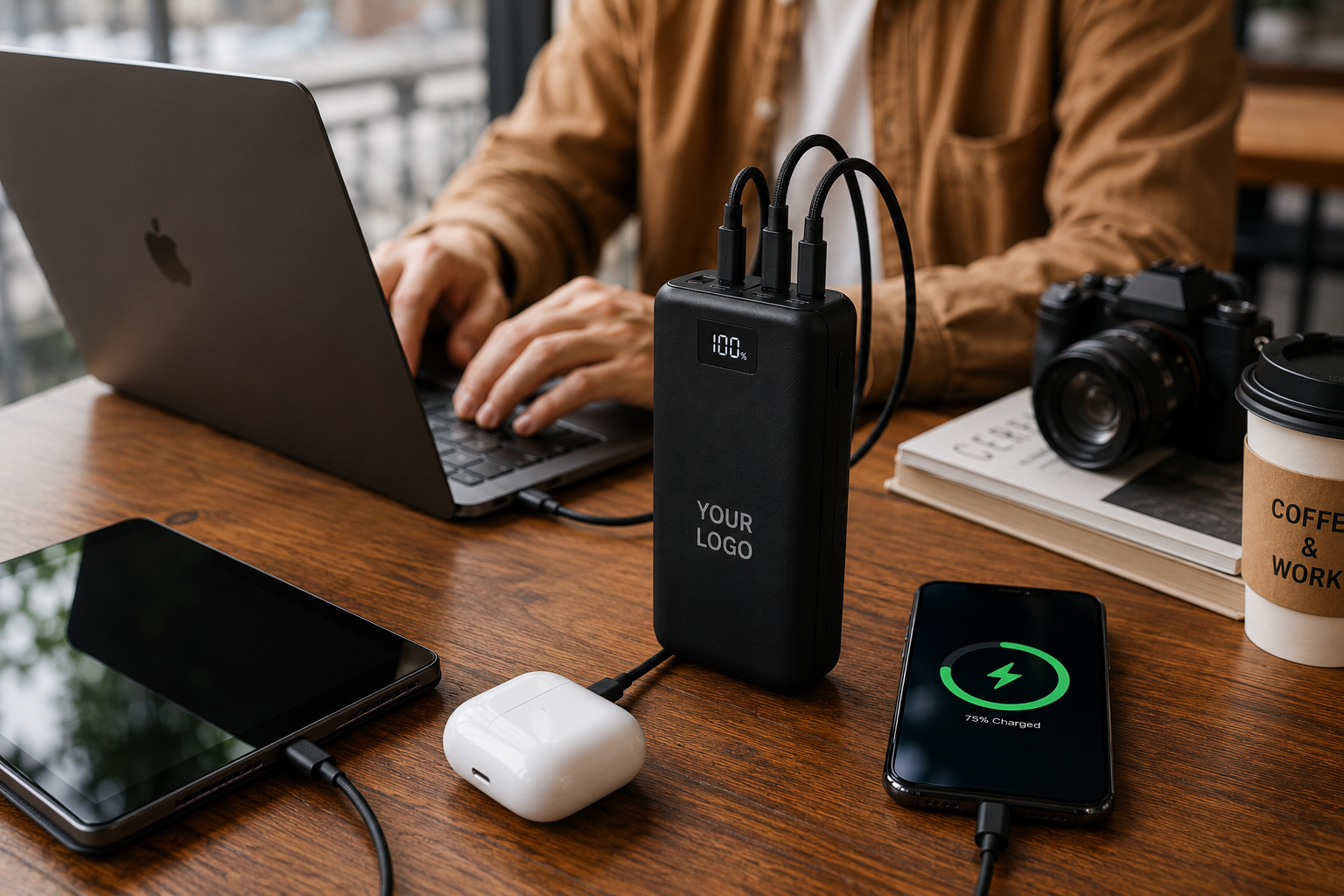
- support for multiple devices
- stable output under high load
This makes selecting the right fast charging power bank manufacturer critical for brands that want to stay competitive.

The Hidden Problems Behind Fast Charging Products
Fake or Unstable Fast Charging
Many products claim fast charging but fail in real scenarios:
- unstable voltage under load
- inconsistent charging speeds
- overheating during continuous use
This leads to poor user experience and high return rates
Protocol Compatibility Issues
Different devices require different protocols:
- PD (Power Delivery)
- PPS
- QC
A weak supplier cannot fully support these protocols across product lines.
What Defines a Professional Fast Charging Power Bank Manufacturer
A qualified fast charging power bank manufacturer must integrate hardware, firmware, and production control.
Advanced Charging Protocol Integration
- PD 3.0 / PD 3.1 support
- PPS dynamic voltage regulation
- multi-device intelligent allocation
Charging speed improves by 30–50% compared to standard models
High-Efficiency Circuit Design
- optimized PCB layout
- reduced energy loss
- stable voltage output
Efficiency can reach 85–92%
Thermal and Safety Engineering
- aluminum heat dissipation
- internal airflow optimization
- real-time temperature monitoring
Maintains operating temperature below 45°C
Manufacturing Capability: The Real Difference
Production System
- automated assembly lines
- strict component matching
- scalable manufacturing capacity
Quality Testing
| Test | Purpose |
|---|---|
| full-load test | output stability |
| protocol test | compatibility |
| thermal test | heat control |
| aging test (6–8h) | long-term reliability |
Defect rates can be reduced to below 2%
Fast Charging vs Standard Power Banks
Performance Comparison
| Feature | Standard Power Bank | Fast Charging Power Bank |
|---|---|---|
| Charging Speed | Slow | High |
| Device Compatibility | Limited | Wide |
| Heat Control | Basic | Advanced |
| Efficiency | 70–80% | 85–92% |
Working with a professional fast charging power bank manufacturer ensures real performance advantages
Real Application Scenarios
E-commerce Brands
- need high-performance differentiation
- require consistent product quality
Corporate and Business Use
- multiple devices per user
- continuous charging demand
Travel and Mobile Users
- limited charging time
- high reliance on fast charging
OEM Projects
- customized power solutions
- brand-specific configurations
These scenarios depend on a capable fast charging power bank manufacturer
How to Choose the Right Manufacturer
Key Evaluation Criteria
- PD / PPS protocol support
- real charging performance data
- thermal and safety design
- production consistency
- OEM customization capability
Practical Tip
Request real charging test reports, not just specifications
Matching Product Strategy with Market Demand
Entry-Level
- 20W–30W
- cost-effective
Mid-Range
- 30W–45W
- multi-device support
High-End
- 65W+
- laptop compatibility
A professional fast charging power bank manufacturer should support all segments
FAQ:
What wattage is best for fast charging power banks?
20W–45W for phones, 65W+ for laptops
Does fast charging damage batteries?
No, if proper BMS and thermal systems are used
How to verify real fast charging capability?
Check actual charging time and stability under load
Can manufacturers customize fast charging features?
Yes, a qualified fast charging power bank manufacturer supports protocol customization
Speed, Stability, and Scalability
Fast charging is not just about speed—it requires:
- stability
- compatibility
- safety
A reliable fast charging power bank manufacturer ensures all three, helping your brand deliver high-performance products that stand out.
If you are looking for a trusted OEM partner, explore:
https://www.esccharge.com/
ESCCharge provides advanced fast charging solutions with stable production and global delivery.